• Members of the previous forum can retrieve their temporary password here, (login and check your PM).

Bufotenine & other tryptamine analogs in coral

Woolmer

Established member
Found Bufotenine, 2-Br-NMT, and NMT in Paramuricea clavata in small quantities (~ 0.01% for each compound)

Found bufotenine in P. clavata

Just thought this was an interesting find that further shows the pervasiveness of these types of compounds in nature -- P. clavata being a soft coral part of the kingdom animalia!

Combine it with methylaplysinopsin and you may have seahuasca 😁
 
Kind of reminds me of the report of DMT in seaweed fertilizers that was floating around a few years back. There's a conceivable overlap between soft coral and calcareous seaweed, different biological kingdoms notwithstanding.
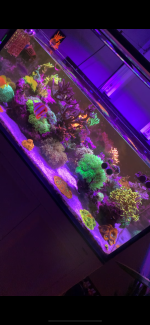
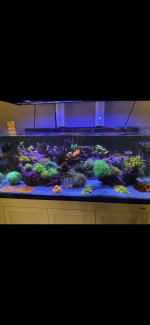
I gotta read on this report but transform brought me here from a side conversation I was having. I’m truly Fascinated by the title of this thread alone. I’m not shocked though. We known about these compounds on land / earth but the ocean is a mystical place. It’s the land of the even more unknown. This is why I have a salt water tank that is more money than my car lol. I felt I would share this picture in relation to this post.

Transform mentioned that these colors of color resemble natural color of the alkaloids. Tbh this aquarium I have is nothing you can see in real life unless you know someone like me. There is not a public aquarium worth showing the true colors of these corals. I can artificially enchance then with blue, UV, purple and then throwing an orange lense over the photo. In real life I need to wear polarized glasses to see the truly remarkable colors. It truly is a speechless moment and anyone I show has no idea this ever exists. This is a photo graph of my tank..
imagine just imagine what it’s like with sunglasses on and some mushrooms. I haven’t tried DMT yet so I can’t speak. But the truth is

A mushroom experience is what led me to buying my first tank when COVID came to USA and I was lonely needing a new hobby.
 
I gotta read on this report but transform brought me here from a side conversation I was having. I’m truly Fascinated by the title of this thread alone. I’m not shocked though. We known about these compounds on land / earth but the ocean is a mystical place. It’s the land of the even more unknown. This is why I have a salt water tank that is more money than my car lol. I felt I would share this picture in relation to this post.

Transform mentioned that these colors of color resemble natural color of the alkaloids. Tbh this aquarium I have is nothing you can see in real life unless you know someone like me. There is not a public aquarium worth showing the true colors of these corals. I can artificially enchance then with blue, UV, purple and then throwing an orange lense over the photo. In real life I need to wear polarized glasses to see the truly remarkable colors. It truly is a speechless moment and anyone I show has no idea this ever exists. This is a photo graph of my tank..
imagine just imagine what it’s like with sunglasses on and some mushrooms. I haven’t tried DMT yet so I can’t speak. But the truth is

A mushroom experience is what led me to buying my first tank when COVID came to USA and I was lonely needing a new hobby.
How do they look without the blue/UV? I'm interested to see how much of the colour is due to fluorescence, as that's an initial presumptive indicator for homing in on various indoles (tryptamines/β-carbolines). Not that we'd necessarily be viably extracting from corals, especially given the ethical question of them being animals.
 
How do they look without the blue/UV? I'm interested to see how much of the colour is due to fluorescence, as that's an initial presumptive indicator for homing in on various indoles (tryptamines/β-carbolines). Not that we'd necessarily be viably extracting from corals, especially given the ethical question of them being animals.
Without blue and UV they still are something you would say you never have seen. They will look like they do in nature to be the most straight forward. They look quite dull but you would still see true fluorescence. The fluorescence comes from the bacteria I believe. When you lose the natural fluorescence in a corral in this hobby it’s on its way to die because the bacteria is leaving the corral.

I could be wrong but I believe if I recall the natural fluorescent of corral is from bacteria. So if they are finding tryptamine in corrals, it’s possible the tryptamine is Just part of the bacteria if that makes sense. If tryptamine has a certain color, there must be no tryptamine in a dead corral. A dead corral is a pale white corral that lost its bacteria from my understanding.
 
How do they look without the blue/UV? I'm interested to see how much of the colour is due to fluorescence, as that's an initial presumptive indicator for homing in on various indoles (tryptamines/β-carbolines). Not that we'd necessarily be viably extracting from corals, especially given the ethical question of them being animals.
If you are wondering about ethicality. Hundreads of corrals die from people taking from the ocean we already do that. I have soft corrals that grow too fast I need to throw them away… no one wants them and I run out of space. Some soft corrals grow so damn fast they are weeds. What’s the concentration in these bad boys lol ???
 
If you are wondering about ethicality. Hundreads of corrals die from people taking from the ocean we already do that. I have soft corrals that grow too fast I need to throw them away… no one wants them and I run out of space. Some soft corrals grow so damn fast they are weeds. What’s the concentration in these bad boys lol ???
A fast-growing, methylated-tryptamine-positive coral would be amazing. We can only keep our fingers crossed, scour the literature for prior art, and then forge onwards with the analysis if things look promising. The bacteria angle is also fascinating - it gives me fledgling ideas contemplating coral bleaching events in the context of the biochemical 'mind' of the planet, for one thing.
 
A fast-growing, methylated-tryptamine-positive coral would be amazing. We can only keep our fingers crossed, scour the literature for prior art, and then forge onwards with the analysis if things look promising. The bacteria angle is also fascinating - it gives me fledgling ideas contemplating coral bleaching events in the context of the biochemical 'mind' of the planet, for one thing.
I’m sure there is some way I could test these corrals I have ..? I’m already throwing them away lol. Personally it’s way more ethical killing a corral. They don’t even move it’s truly like killing a plant which we already do.
 
Found Bufotenine, 2-Br-NMT, and NMT in Paramuricea clavata in small quantities (~ 0.01% for each compound)

Found bufotenine in P. clavata

Just thought this was an interesting find that further shows the pervasiveness of these types of compounds in nature -- P. clavata being a soft coral part of the kingdom animalia!

Combine it with methylaplysinopsin and you may have seahuasca 😁

I’m having a hard time opening these studies. Can you link the actual study by chance? It just goes to a home page when I click it without the study.
 
I’m sure there is some way I could test these corrals I have ..? I’m already throwing them away lol. Personally it’s way more ethical killing a corral. They don’t even move it’s truly like killing a plant which we already do.
Whoops, the past couple of weeks slipped by in the blink of an eye again!

Do you have species name for these fast-growers of yours? That would help get the ball rolling.

I'll also look at sorting out the links for those science papers in the OP.

EDIT: They both work for me, it could be a browser or ISP issue if they're stll not displaying at your end.
 
Last edited:
Whoops, the past couple of weeks slipped by in the blink of an eye again!

Do you have species name for these fast-growers of yours? That would help get the ball rolling.

I'll also look at sorting out the links for those science papers in the OP.

EDIT: They both work for me, it could be a browser or ISP issue if they're stll not displaying at your end.
Just getting back to logging in. Have been busy with organic chemistry class :D

Rhodactis mushroom corral
Acropora species - stony corral
Gorgonia

There are so many species under Rhodactis, acropora and gorgonia.

I’m able to load the links now. I’ll give them a read.

Would be neat if there is any Info how to process a living corral. I’m sure blending it ip and somehow isolating? I have no clue how to go about it but I would be so open to try if anyone helped guide me.
 
Just getting back to logging in. Have been busy with organic chemistry class :D

Rhodactis mushroom corral
Acropora species - stony corral
Gorgonia

There are so many species under Rhodactis, acropora and gorgonia.

I’m able to load the links now. I’ll give them a read.

Would be neat if there is any Info how to process a living corral. I’m sure blending it ip and somehow isolating? I have no clue how to go about it but I would be so open to try if anyone helped guide me.
We'd best be looking at the extant literature for tips on marine gorgonian analysis.

My kid asked if we could get an aquarium, this may yet get somewhere. Still need to finish renovations before there's any room for it, however. I'd rather put it in the boiler room, where it's consistently warm.
 
Back
Top Bottom