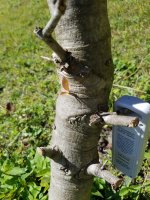
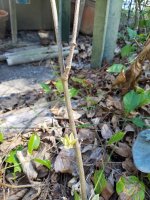
I've been growing now for a number of years, and have some good data to share. Last year I had a very below average winter exposing my plants to 28F (-2C) for a couple of hours. Most of my winters bottom out around 31F(0c) - 34F (1c) I think it will also be useful to denote there are 2 types of cold events here in the tropics. There is radiative cooling which occurs from cool air radiating down the ground level. The other kind is an advective event where it is primarily wind driven cool air that makes the temps the same at ground level and tree top level. Advective cooling is devastatingly worse than radiative. When radiative cooling occurs microclimates have more of a chance to protect plants with bodies of water and canopy coverage. The only way to protect plants in an advective event is if you protect the plants from wind. I will go more into this later. Other factors include if the cold comes with rain. Sometimes moisture at lower temps leads to bad fungus forming that can kill a plant. Important post-freeze care depends a lot on what your temps will look like after the freeze, my climate has these cold events for 2-3 days then its back to 80F, so after a bad cold event I have been taught to give a dose of copper fungicide, slow release fertilizer and a foilar fertilizer spray. I've only done this for coconuts, but it could be beneficial for other plants.
Psychotria Viridis - cold hardy down to 31F with minimal damage, 28f (covered) defoilated completely, ones deeper in my jungle did better.
Psychotria Nexus - Cold Hardy down to 31f with no damage, 28f (covered) minimal damage
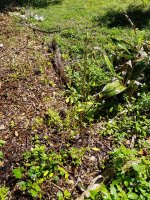
Bansteriopsis Caapi - Cold hardy down to 31f with minimal damage (leaf purpleing), 28F destroyed the top 75% of the vine, it grew back most of its mass in a single season. (unprotected) pic 3
Banisteropsis Muricata - Cold Hardy down to 31f with minimal damage, 28f completely defoilated, came back. (unprotected) pic 7
Acacia Confusa - Coldest seen 28f (not covered) no damage apparent (unprotected) pic 5
Mimosa Hostillis - Coldest seen 28F, protected from wind some damage, unprotected from wind total death. The one I had protected from the wind survived with no issues while the one not protected died completely and never came back.
Trichocereus (all species) - 28f no damage (unprotected)
Iboga - Coldest tested 40f, some plants showed damage most did not. (greenhouse)
Kava - seems to die consistently below 50F (greenhouse)
Kratom - 28F defoilated completely, grew back almost entire mass in one season. (unprotected) pic 6
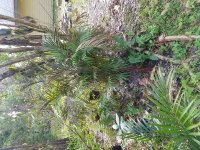
V. Africana - 28f mostly defoilated, came back (unprotected) pic 1
Tabernaemontana Undulata - 28F completely defoilated, came back. (unprotected) pic 1
Tabernaemontana Sanaho? - 40f Died completely (greenhouse)
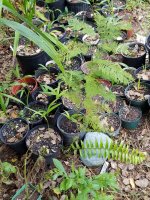
Yopo - 28F no damage seen (unprotected) pic 2
Vilca - 28f no damage seen (unprotected)
Hawaiian baby wood rose - damage noticed below 50F
Chaliponga - Coldest seen 40F some minimal damage (greenhouse)
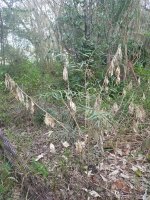
Erythroxylum Novogranatense
- Cold hardy down to 31f with minimal damage. 28F defoilated 75% of the plant. (unprotected?) pic 4
Salvia Divinorum - 28F wrecked the plants but most recovered. (open greenhouse in the jungle)
Psychotria Viridis - cold hardy down to 31F with minimal damage, 28f (covered) defoilated completely, ones deeper in my jungle did better.
Psychotria Nexus - Cold Hardy down to 31f with no damage, 28f (covered) minimal damage
Bansteriopsis Caapi - Cold hardy down to 31f with minimal damage (leaf purpleing), 28F destroyed the top 75% of the vine, it grew back most of its mass in a single season. (unprotected) pic 3
Banisteropsis Muricata - Cold Hardy down to 31f with minimal damage, 28f completely defoilated, came back. (unprotected) pic 7
Acacia Confusa - Coldest seen 28f (not covered) no damage apparent (unprotected) pic 5
Mimosa Hostillis - Coldest seen 28F, protected from wind some damage, unprotected from wind total death. The one I had protected from the wind survived with no issues while the one not protected died completely and never came back.
Trichocereus (all species) - 28f no damage (unprotected)
Iboga - Coldest tested 40f, some plants showed damage most did not. (greenhouse)
Kava - seems to die consistently below 50F (greenhouse)
Kratom - 28F defoilated completely, grew back almost entire mass in one season. (unprotected) pic 6
V. Africana - 28f mostly defoilated, came back (unprotected) pic 1
Tabernaemontana Undulata - 28F completely defoilated, came back. (unprotected) pic 1
Tabernaemontana Sanaho? - 40f Died completely (greenhouse)
Yopo - 28F no damage seen (unprotected) pic 2
Vilca - 28f no damage seen (unprotected)
Hawaiian baby wood rose - damage noticed below 50F
Chaliponga - Coldest seen 40F some minimal damage (greenhouse)
Erythroxylum Novogranatense
- Cold hardy down to 31f with minimal damage. 28F defoilated 75% of the plant. (unprotected?) pic 4
Salvia Divinorum - 28F wrecked the plants but most recovered. (open greenhouse in the jungle)