• Members of the previous forum can retrieve their temporary password here, (login and check your PM).

Extraction Vessel - With pump

Migrated topic.

cyantific

Journeyman
Joined
May 10, 2012
Messages
194
Merits
42
While searching for a new HDPE extraction vessel, I came across this spray pump made entirely of HDPE. The design would be an interesting way to siphon the NPS layer off the base and into a sep funnel. Using a small amount of pressure, one could seemingly regulate the transfer stopping when any base is being picked up. Just an idea. I'd appreciate any thoughts or feedback.

These sprayers feature a white, translucent high density polyethylene (HDPE) tank so it's easy to see the fill level. All-polyethylene flow control and discharge. White translucent polyethylene tank equipped with poly pump handle. Includes polyethylene extension wand wth a poly flat-fan nozzle

 
Regarding safety, I've had a thick glass carboy break during extraction, (from lye etching) This is scary and dangerous.

ipumaestro said:
i thought hdpe2 was suggested for nps like xylene

Xlylene/Tolulene is the NPS I'm referring to.
 
cyantific said:
Regarding safety, I've had a thick glass carboy break during extraction, (from lye) This is scary and dangerous. Once this happens, HDPE is your next best best.
No, your next best bet is to get glass that won't become brittle from the lye -- preferably lab-grade glass.

SnozzleBerry said:
918glory said:
I'd recommend what I'm using. Go to family dollar. They have hdpe wide mouthed jugs. I'm using the gnarly big 3500ml but the come smaller. Use that for you're lye water plant and solvent solution.
Please don't use HDPE for organic solvents, as they are not rated or intended for such use. Phillips, the company that manufactures HDPE, states that they, "permeate excessively and cause package deformation."

According to Phillips, there are many household chemicals that will degrade HDPE, permeating it (passing through it), making it lose its strength, softening it, or making it become brittle and crack...

In addition to many individual chemicals (mentioned below), Phillips lists two major classes of chemicals that are not compatible with HDPE: aromatic hydrocarbons, and halogenated hydrocarbons. The basic aromatic hydrocarbon is benzene (a major component of gasoline); others are toluene (also called methylbenzene), and the three xylenes (o-, m-and p-xylene). Others include naphthalene (moth balls), and pdichlorobenzene (also moth balls). These aromatic hydrocarbons "permeate excessively and cause package deformation," says Phillips.

Source
 
Thanks for all the info. So pyrex won't etch and break like a glass beer carboy?

One more question, could stainless steel be used for an extraction?
 
Are you positive it was lye etching and not thermal shock that caused your glassware to break?

I am not aware of any problems with stainless steel, but I've done zero research on using it for extractions.
 
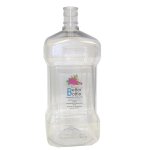
I'm not entirely sure. It was only the second time I used it for extraction. (lye slowly added to water) I can't really afford a 2 gallon pyrex vessel, so I'm exploring other options. A friend was telling me about a product called Better Bottle.

http://www.capancork.com/better_bottle.htm

In a nutshell –BetterBottle PET carboys are BPA-free, DEHP-free, plasticizer-free, light weight, and safe .

BetterBottle carboys are made from a special, scientifically tested, polyethylene terephthalate copolymer (PET), which does not have the disadvantages of other plastics.

BetterBottle carboys are: are: 1) Designed to be strong, scuff resistant, easy to handle, and essentially unbreakable, 2) Pure – Taste- and odor-free, BPA-free, DEHP-free, and plasticizer-free, 3) Virtually impermeable to oxygen, 4) Clear and colorless, and 5) Incredibly light weight. BetterBottle carboys are not at all like other plastic carboys. The special PET, used to make BetterBottle carboys, is non-absorbing, non-porous, and non-wetting (hydrophobic), so it will not carry over flavors from one batch of wine or beer to the next and it is easier to clean and sanitize than glass or other plastics.
 

Attachments

  • 6024p.jpg
    6024p.jpg
    38.4 KB · Views: 0
If you need something inexpensive yet strong/thick glass look for Carlo Rossi wine at your local store. Not as good as lab glass, but it will get the job done w/o the fear of easily breaking or plastic contaminates.

Drink.jpg
 
^top of the line wine
lol
edit: a rossi bottle wouldn't be my choice for extraction vessel
 
dg said:
^top of the line wine
lol
edit: a rossi bottle wouldn't be my choice for extraction vessel
lol - I wasn't recommending the wine.

Have any other suggestions or just naysaying?
 
the quickest and easiest way i have found to siphon of the nps is simply a small glass cup and a pair of gloves, press it into the top until it breaks the surface tension of the nps and it fills up, im sloppy the first time not worrying about picking up the cactus aswell as it goes into the first 1 litre pyrex jug, then i let it settle for 5 minute before i pour it through a cotton filter into the salting container. i use about 300ml size cup so takes me no time to get out a litre. i used to use a turkey baster (for my mhrb xtractions) but cup is a lot quicker. would be hard with one of those carboys though as the top is too small.....

i had another glass mason jar crack on me recently, so i used a hdpe bucket for mixing and a hdpe container that my xylene was shipped in for titrations.

if its being recrystallized i cant see a problem with plastic contamination.
I can however with spilling everything everywhere.
 
a1pha said:
dg said:
^top of the line wine
lol
edit: a rossi bottle wouldn't be my choice for extraction vessel
lol - I wasn't recommending the wine.

Have any other suggestions or just naysaying?

yup i'm just naysaying cheap glass used as extraction vessel- seen too much broken cheap glass

i use hdpe plastic- and dont personally see any evidence of it degrading. and dont understand peoples fear of hdpe plastic(lacking evidence of toxicity from the trace amounts you might possibly consume.) if people are so concerned why would they be using NPS in the first place?

 
cyantific said:
dg, thank you for your feedback about HDPE.

i'm open to hearing arguments against hdpe. beyond irrational "plastic is bad mmkayy"
like scientific evidence that trace hdpe exposure is harmful to your health etc
 
dg said:
i'm open to hearing arguments against hdpe. beyond irrational "plastic is bad mmkayy"
I'm guessing you missed this post from Snozzleberry... unless you think he (and the manufacturer of HDPE) are full of BS. It's a little stronger than "plastic is bad mmkayy". I'm open to hearing arguments that plastic is safe, btw, other than "plastic is safe, mmkayy".

SnozzleBerry said:
918glory said:
I'd recommend what I'm using. Go to family dollar. They have hdpe wide mouthed jugs. I'm using the gnarly big 3500ml but the come smaller. Use that for you're lye water plant and solvent solution.
Please don't use HDPE for organic solvents, as they are not rated or intended for such use. Phillips, the company that manufactures HDPE, states that they, "permeate excessively and cause package deformation."

According to Phillips, there are many household chemicals that will degrade HDPE, permeating it (passing through it), making it lose its strength, softening it, or making it become brittle and crack...

In addition to many individual chemicals (mentioned below), Phillips lists two major classes of chemicals that are not compatible with HDPE: aromatic hydrocarbons, and halogenated hydrocarbons. The basic aromatic hydrocarbon is benzene (a major component of gasoline); others are toluene (also called methylbenzene), and the three xylenes (o-, m-and p-xylene). Others include naphthalene (moth balls), and pdichlorobenzene (also moth balls). These aromatic hydrocarbons "permeate excessively and cause package deformation," says Phillips.

Source
 
Back
Top Bottom