• Members of the previous forum can retrieve their temporary password here, (login and check your PM).

How did/do indigenous people use Morning Glory seeds?

Migrated topic.

RhythmSpring

Established member
So if Morning Glory seeds have been used traditionally in Mexico and beyond, how did they prepare it? Surely not with a coffee grinder and naptha...

 
RhythmSpring said:
So if Morning Glory seeds have been used traditionally in Mexico and beyond, how did they prepare it? Surely not with a coffee grinder and naptha...

Haha

The best way I’ve found is to make a tincture of green seed pods in a pint of Jose Cuervo
 
ijahdan said:
Mortar and pestle and cold water, I think.
it seems like that yes.

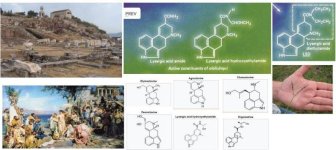
The convolvulaceae are a family of herbaceous ornamental plants with infundibular (bell-shaped) flowers. Different species have seeds containing different alkaloids of the LSD family, such as d-lysergic acidamide (ergine) and isoergine, which act as partial serotonergic agonists. The seeds of Turbina corymbosa (ololiuhqui) and Ipomea violacea (tlilitzin) were consumed by the Maya and Aztec for their psychotropic effects on perception and emotions and to induce trance states. They were commonly used by Mixtec and Zapotec peoples in the state of Oaxaca, and they are used to this day by the local healers who conduct 15714 Hallucinogenic drugs in the Americas 47 curative and divination ceremonies. Ololiuhqui is very common in Mexico, and it is a type of morning glory so named because its flowers close during the night to reopen in the morning. In Spanish, it is also known as quiebracajete blanco, or flor de la virgen, since it had religious connota- tions in the 16th century. T. corymbosa has round coffee coloured seeds, whereas those of Ipomea violacea are black and called badoh negro. These seeds are ground into powder and taken in water, and they induce sensory/perception alterations that include visual illusions, synaesthesia, euphoria, memory changes, and discrete somnolence. In its cultural context, in contrast with the practices associated with peyote or hallucinogenic mushroom use, ololiuhqui is most often taken alone with the healer. The first phase is marked by a psychic void, which is at times accompanied by vasovagal response and vertigo; some hours later, this is followed by a period of intense serenity and sedation.
Redirecting

interesting stuff here too with information on usage https://www.samorini.it/doc1/alt_au...ution-to-our-knowledge-of-rivea-corymbosa.pdf
 
Rhythmspring said:
So if Morning Glory seeds have been used traditionally in Mexico and beyond, how did they prepare it? Surely not with a coffee grinder and naptha...
Good to see you Rhythmspring, love your posts. Shamanic traditional history (very important): It just so happens that the ancient Aztec and Mayan added the fresh or dried pulverized morning glory seeds to a drink containing alcohol, they learned this would extract all the stimulating actives from the seeds:

Page 515 "Encyclopedia of Psychoactive Plants" Christian Ratsch:
The fresh or dried morning glory seeds normally were added by the Aztec and Mayan to alcoholic drinks (sugarcane liquor; c. alcohol), tepache (maize beer, chicha), and balche' (Schultes 1941, 37).
The merck index shows that (1) elymoclavine, (2) agroclavine, (3) chanoclavine & (4) penniclavine in the seeds are best soluble in alcohol (sparingly soluble in water).

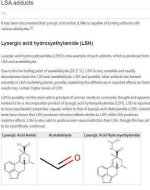
(5) Lysergic acid hydroxyethylamide (LSH) in the seeds only survives outside the seeds in an acidic environment (example: such as cold sherry wine which is already at ph=4). LSH decomposes in ionic conditions, neutral water (plain water), when heated, or in alkaline environments. See very bottom attached illustration of how LSH decomposes to LSA unless extracted into acidic water, wine, etc.

LSH is the main active of the seeds, along with penniclavine. LSA is a decomposition product of LSH. LSA is sedating, not psychedelic. LSH is highly psychedelic, extract the seeds into cold sherry wine, contains loads of acetaldehyde, store in fridge as acetaldehyde boils off at 70 degree F, can reform into LSH from any leftover LSA under proper conditions as LSH is a simple adduct of LSA + acetaldehyde. LSH can ONLY survive in acidic solutions, like wine. It decomposes into LSA when extracted into plain water. Very visual and euphoric, see trip reports below.

Post #10 has 5 pages of info with pics, along with LSH compared to LSD (2021 receptorome study):
hxxps://www.dmt-nexus.me/forum/default.aspx?g=posts&t=96861

(1) Hermes (the Lycaeum) "Saw strong 4D lattice-like open eye visuals and warping and melting of furniture with only 400 seeds. There are around 32 to 36 seeds to a gram. So 12 to 14 grams is 400 seeds to 500 seeds. I extract into water pre-acidified with a squirt of lemon juice. I see amazing three and seemingly four-dimensional shapes morphing and bifurcating. Often I get religious and esoteric themed visuals, like fractal cherub wings and winged eyes like those in some of Alex Grey's work. Eyes are all over everything. I see pyramids and sphinxes and Gigeresque biomechanical forms. I see amazing geometric lattice structures. I watch mathematical space-filling algorithms doing their thing, all of this with nothing more than 500 seeds."

(2) Nogal (the Nook) "Yes I know of someone who tried the CWE method with the Heavenly Blue variety, except with the substitution of a coffee grinder in place of a stone metate (I think that's what is called but I could be wrong), and a squirt of lemon in the water, with around 400-500 seeds. Closed and open eyed visuals were extremely breath taking. Some of the most prominent visions were of Aztec/Mayan glyphic patterns, a menacing and demonic technicolor nymph made of light who tried to seduce the viewer, and this bizare trail of energy spheres which each contained a different stylized animal form (again definately of Aztec/Mayan origin)."

(4) Piper methysticum: "Morning Glory seeds are definitely the most euphoric psychedelic I've ever taken during the onset and the first part of the peak. Not even a strong dose of MDA could compete with the euphoria I felt from 12g of Morning Glory seeds. However, the comparison of LSA alkaloids to MDA is ridiculous. The visuals from Morning Glory seeds are quite inconsistent for me. The first time I tried them, at 9g, the visuals were very dull, but the mental and physical aspects were awesome. My second time at 12g, the visuals were beyond amazing. I got the feeling of being completely in a warp through time and visuals were flying past me and unimaginable speeds. A couple of my unexperienced friends were talking about the tracers they were seeing at the same time this was happening to me. I had to laugh. With just 6g my third time, I also had some pretty amazing visuals, though they weren't nearly as mind blowing."

(5) Myself, 400 black hard fresh seeds right off vine, grown in 75% miracle grow & 25% cow manure compost: extracted with 2 shots (60ml) of fresh just opened cold sherry wine with added 10mg of DL tartaric acid powder added (auction sites or *ma*on), and stirred together in the wine really well.

DO NOT ADD MORE THAN 10mg DL tartaric acid to the 2 shots (60ml) of sherry wine...too much DL tartaric acid can upset ph balance of the body and you will feel really bad...10mg will keep ph no lower than 3.5. The wine will go from natural ph=4 down to ph=3.5, but no lower. You will need a 1mg (0.001g) electronic scale to do this, like the AWS GPR-20 20g x 0.001g scale for example. It needs to be DL tartaric acid and not just plain L tartaric acid, The d-form salt is the form LSD is active as for example, not the L-form.

Turn main light off in room or garage and replace a nearby lamp with a red light bulb (can find in grocery store), this way the fragile light-sensitive alkaloids in the seeds will not be destroyed. I always do this.

You crush the seeds inbetween a paper plate with ends folded in, you hammer the plate on a concrete surface, then you add the crushed seed powder to a coffee grinder, and grind it till it is nearly a dust...then you add the dust like seed powder to the 60ml of cold sherry wine in a tall 1/2 pint jar, then you let it sit in fridge for 3 hours, with shaking & stirring once per hour.

Then at the end of 3 hour period, you decant off the top liquid from the seed debris at the bottom....filter the sherry wine liquid thru a cotton ball in a funnel which sits in a jar, change out the cotton ball when or if it clogs, I usually have to change the cotton ball out once or twice, the top of the cotton will turn black or dark brown. The cotton ball will remove ALL the nauseating debris from the sherry wine/seed mixture. You will be left with a golden clear to light brown golden liquid, this is what you drink--no nausea as all the debris has been removed!

Before you consume, always remember to keep the 2 shot sherry wine extract of the morning glory seeds cold at all times (in the fridge) as acetaldehyde boils off at room temp or 69 degree F. You don't want your LSH decomposing to LSA do you? You can freeze it too if you plan to use it at a later time.

I saw geometric patterns on the surface of everything, with closed eyes, colored vectors spun 360 degrees while traveling from left to right across visual plane. Sounds were not only amplified & music heavenly but audio hallucinations were produced, heavy euphoria component & very strong appreciation for beauty. Remember watching Scarlett Johansson interview on a small television and melting into the seat from her beauty amidst all the breath taking geometrics. Tripped hard as hell.

Note: Cold sherry cooking wine is recommended as an extraction solution since it is already at ph=4 and is 18% alcohol, and is also very cheap ($5 per bottle). It can be found in the wine isle of any grocery store, and is often on sale. It also contains 10mg acetaldehyde per each shot (30ml). A $9 wine preserver canister can be bought at Amazon which contains a gas mixture of argon, carbon dioxide & other inert gases which can be sprayed into an open bottle of sherry wine before sealing cork to preserve the wine indefinitely, otherwise the acetaldehyde in the wine converts to acetic acid over time, giving the wine a vinegar taste. The wine preserver contains enough gas to last for years of sealing many bottles.

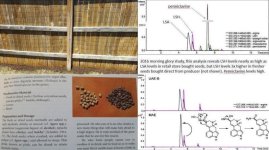
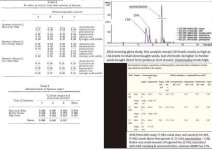
2016 Polish morning glory study found 3x higher amounts of LSH in MG seeds direct from grower/producer vs retail:
seeds direct from growers: 1.71 LSH to 5.08 penniclavine ratio
seeds off retail racks: 0.54 LSH to 4.75 penniclavine ratio
Immediately vacuum pack and freeze freshly picked dark hard black seeds off vine to preserve potency indefinitely.

Erowid report:
400 older dried seeds is similar to a little less than one hit LSD. 400 fresh off vine is like about 2 or three hits.
dmthead420:
Seems this does do alot more, its alot more refined, clean, less body high all mind high.. i extracted 700 riveas into 100 ml of lemon juice , 50ml water .. that sat 9hrs in the fridge(water stayed the color of lemon juice but smelled like alkaloids) i filtered and added 100ml of sherry wine and that sat 6hours..

A buddy and i sampled 12ml of this and the effect is way different from just eating the seeds or just a simple water extract..

No body feelings AT ALL, not even the normal body buzz.. just a extreme lsd like head and abstract thoughts, better sense of understanding.... Real soon i am def going to try a large dose ..I Feel GreaT...I will no longer do it any other way.....my friend says the same.
Norman said on 16 September 2019:
Years ago I stumbled across a simple method for dosing HBWR.
Grind the seeds and cover them with white wine, let sit in the fridge for a day or so, shaking occasionally, decant, filter and drink.
No nausea no aches no vasoconstriction.
I am now off alcohol completely so I’m thinking of an alternative method short of a full on extraction.
I’m convinced that something in the wine besides water and alcohol is what makes the trip so clean. I’ve tried twelve percent water alcohol mixes in the past and still had the nasty side effects and at the same time the trip is not as strong.
I’m thinking acetaldehyde and or tartaric acid may be involved or at least a good place to start.
Any thought on what chemically may be going on?
Vecktor (advanced chemist like myself):
Ava69, you have probably rediscovered something that has long been a curiosity, for example on the now defunct blacklight site there was TLC posted of morning glory seed extract treated with methanol, acetaldehyde-methanol or with acetaldehyde-methanol-water, the extract treated with acetaldehyde-methanol showed a clear difference in the alkaloid profile, with a shift to several new non polar spots which couldn't be identified. IIRC Erhlichs was used to develop the plates so these were indole compounds.
69ron:
I know some of you out there are apt to believe the statements above because you've failed at making LSH and those statements above help you feel better about you're failure. Don't fall victim to that kind of crap. Try it again. Find out what you did wrong. When it works, the difference is HUGE, not a tiny difference, the experience is TOTALLY DIFFERENT. SWIM knows the effects of LSA and LSD very well. He’s used them many times. He guarantees that when the reaction works, there is NO NOTICEABLE LSA left at all in the experience. It becomes almost identical to an LSD experience at low doses. Totally different from LSA.

According to Albert Hofmann (the inventor of LSD), LSH is an adduct of LSA and acetaldehyde. Adducts are very simple to make. You just mix them in solution, that's all.

The effect of adding acetaldehyde is HUGE. SWIM cannot feel any leftover LSA when the process is done right. So, like I said, I think those guys don't know what they're talking about and I believe Hoffman does, and that LSH is an adduct of LSA and acetaldehyde and nothing more. No complex reaction is needed to make it. You just mix the two together and LSH forms. And I believe all of the LSA forms LSH, not just a small amount of it because you cannot feel any of the effects of LSA after this is done right.

When the conversion from LSA to LSH is complete it feels COMPLETELY DIFFERENT. The reason some people can't tell the difference is because their conversion failed. It doesn't always works, but when it does, the difference in effects are night and day. No one would ever think the effects of LSH are anything at all like LSA. It's that different.
fastandbulbous (chem wizard from bluelight):
Apparently N-(1-hydroxyethyl)lysergamide (LSH) is an adduct compound formed from lysergamide (lysergic acid amide, LSA/LAA, LA-111) and acetaldehyde. This hints towards the idea that isn't the most stable of compounds, but would be pretty easily formed by the combination of lysergamide (LSA) & acetaldehyde under physiological conditions (ie a way to get much more & better psychedelic activity from any lysergamide extracted from seed sources).
Chemist Peter Webster who spoke at the LSD symposium:
LSH is a labile adduct of ergine (LSA) and acetaldehyde.

In closing: morning glory compared with HBWR:

Please keep in mind that HBWR has high levels of ergometrine, causes cramping and vasoconstriction, ergometrine levels in morning glory for comparison is very low. Also, HBWR has no history of Shamanic use, whereas morning glory seed usage goes back several hundreds of years. HBWR only has history of medicinal use. HBWR also has high levels of LSA, very sedating and not really all that psychedelic at all. But yes, all studies published after 2011 indicate that no LSH has been found yet in HBWR.

Interestingly, when a boy was found dead at the bottom of his apartment building (he jumped out, apparently this really does happen), they detected levels of LSH or Lysergic acid Hydroxyethylamide in his blood, he had also been drinking heavily and taking HBWR seeds that night. Here is the actual toxicology study:

hxxps://pubmed.ncbi.nlm.nih.gov/20018470/

Remember, LSH is just a labile (unstable) adduct of LSA + acetaldehyde which can remain stable in acidic solutions, for example: outside the body in ph=4.0 cold fresh just opened sherry wine solution (under 70 degree F so the acetaldehyde does not boil off), and sherry is high in acetaldehyde. And you have to seal off the wine with a ten dollar wine preservation canister of inert argon gas (from *mazon with enough gas to last years of sealing) you shoot into the bottle, before placing back into the fridge, to keep the acetaldehyde from decomposing to vinegar via oxidation. Keep cold at all times. Whether this forms outside the liver as well as within is a whole nother discussion.

This is the paper that shows the alkaloid content of HBWR is vastly different from the alkaloid content of morning glory: Paulke A, Kremer C, Wunder C, Wurglics M, Schubert-Zsilavecz M, Toennes SW. Identification of legal highs—ergot alkaloid patterns in two Argyreia nervosa products. Forensic Sci Int. 2014;242:62–71.

No high levels of stimulating LSH, agroclavine, elymoclavine, chanoclavine, penniclavine found in HBWR seeds, only in morning glory seeds. A 2014 forensics paper from Paulke found no LSH in HBWR seeds, but only found LSA & iso-LSA (83-84%) & ergometrine (10-17%) & rest minimal: lysergol, elymoclavine & chanoclavine.

Sandgrease: "HBWR has more of a sedative effect compared to MG."

Nogal: "HBWR is more body related while MG seeds have effects more similar to LSD."

attached: 2016 Polish morning glory study, Austin 1994: Tryptophan analogues form adducts by cooperative reaction with aldehydes and alcohols. Mayan and Aztec extracted seeds into home-made wine, balche, etc., how to extract the seeds using cold sherry wine, 2020 receptorome chart compares LSH to LSD, groundbreaking new study, pics 1-5
 

Attachments

  • morning+glory+1.JPG
    morning+glory+1.JPG
    76.9 KB · Views: 3
  • morning+glory+6.JPG
    morning+glory+6.JPG
    132.7 KB · Views: 3
  • Austin+1994+Tryptophan+analogues+form+adducts+by+cooperative+reaction+with+aldehydes+and+alcoh...pdf
    725.3 KB · Views: 1
  • 2016+Polish+morning+glory+study.pdf
    1.2 MB · Views: 0
  • morning+glory+5.JPG
    morning+glory+5.JPG
    59.8 KB · Views: 2
  • morning+glory+4.JPG
    morning+glory+4.JPG
    74.5 KB · Views: 1
  • morning+glory+3.JPG
    morning+glory+3.JPG
    82.4 KB · Views: 1
  • morning+glory+2.JPG
    morning+glory+2.JPG
    58.3 KB · Views: 3
This has been written about quite a bit in the last century.

The plants were used in different forms and in some cases leaves were reported to be used.
There were also sorcerers or shamanic seers dedicated to the plant itself, where a person seeking an answer didn't take the plant but instead consulted the seer who would take the plant and seek an answer. This type of use was common for several substances and not just the Morning Glory material.

There was documented use of ground seeds being soaked for a short time in cool water and then the material strained or sieved out and then ingested. A metate was used to grind the seeds in those cases.

Some codex material may also indicate that there were cooked preparations or decoctions combining morningglory material with other plants and or substances. The blood of a serpent does appear to be a common ingredient to some old potions containing psychoactive plants, as an example.

The plants were reportedly ingested in various form including leaf and seed to treat different ailments as well, including tumors. Even the psychoactive morning glories tend also to contain resinous chemicals that act as irritants to the intestine and one of the most common uses of morning glory was to promote defecation. In fact this use is found in Asia, Africa and the Americas and one species Merremia tuberosa or Woodrose (not Hawaiian baby Woodrose)is such a strong irritant that people who have overdosed on in it the past have literally shat themselves to death. Most morning glory species will not make you poop to death, but many of them will make you poop. In fact the intestinal discomfort they can cause is a common reported effect for people who eat seeds.

Eating the seeds whole however is not reported as a traditional way to use the psychoactive morning glory material. Cold Water Extraction is essentially the traditional method that avoids the pronounced discomfort that the purgative resins can cause.

Many morning glory species are eaten for food, like Ipomoea batatas (batatas=potatoes by the way) but also Ipomoea muricata and Ipomoea aquatica, both of which may contain some clavine and lysergic acid alkaloid content. Since the alkaloids of morning glory are made by Periglandula symbiotes any species of active morning-glory can also be inactive (if it lacks the fungus) and active and inactive forms (active=ergine alkaloid +) are known for some species. Ipomoea fistulosa even has both active and dangerously toxic forms reported for it. and it is regarded as having seen some traditional use.

In the early literature it was reported that some clones were used or preferred over others, and in one report a single plant was used for an entire village. This makes sense given the symbiote status of the plants can vary, in some cases going out and trying random plants in nature could result in death or a profound psychedelic experience and so using safe proven material also appears to be a part of the tradition of use. Modern use of Hawaiian Baby Woodrose also appears to reflect similar discrepancies.

This has been a summary of my answer to the OP question, which is an extensive topic.
 
Thank you! I had no idea the historic documentation was so in-depth. Would you mind sharing some of your sources?

So cold water extraction... and also grinding up the soaked seeds and eating them, too?

I like the idea of steeping them as a tea for a few hours--I've had some success with that method--and then eating the seeds, too.
 
These first two links have basic sections about the topic.

I am attaching a PDF file on the topic as well, it a major source of a lot of the information I shared.
It is specifically about Ololuihqui, but applies largely to the use of Badoh Negro (black seed) as well, which is presently identified as Ipomoea tricolor though the old literature uses the name Ipomoea violacea.

Some of the traditional use literature is more focused upon the application than the substance, for example several traditional entheogens have seen use in divination for things like finding lost objects or even causing harm to an enemy. In those cases those specific practices must be studied to learn their use and or application and they cannot be learned by focusing upon the material ingested. For this reason such practices are not typically expounded upon nor studied in any real detail by ethnobotanists, but such material can be learned about from sources involved in cultural anthropology. I suggest the book Nagualism by Brinton to learn more about the context and traditions involved in the use of Morning Glory entheogens as well as others.

Here is a link to that:
 

Attachments

  • schultes-a-contribution-to-our-knowledge-of-rivea-corymbosa.pdf
    821.5 KB · Views: 2
Thanks!

Though I must point out: the two erowid sources you listed do not discuss morning glories. Yes, the plants are similar, but they are also different!
 
RhythmSpring said:
Thanks!

Though I must point out: the two erowid sources you listed do not discuss morning glories. Yes, the plants are similar, but they are also different!
Notes on the Present Status of Ololiuhqui
and the Other Hallucinogens of Mexico

R. GORDON WASSON
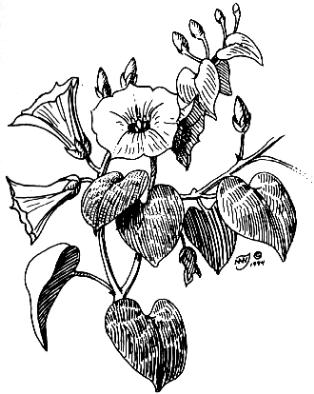
That Erowid source lists Ololiuhqui and Tlitliltzen, both are morning glories and both are at present taxonomically defined as Ipomoea species though older epithets are still widely used for the plant, and here is it's wikipedia page.
And the first sentence of that page is:
Ipomoea corymbosa is a species of morning glory

Tlitliltzen is also listed in that work and it is now known as Ipomoea tricolor though in the old literature it is called Ipomoea violacea, another morning glory species.

The other link page was titled:
Teonanácatl and Ololiuqui, two ancient magic drugs of Mexico
The second substance is a previously mentioned morning glory; Ipomoea corymbosa.

I apologize if I have created some confusion regarding the topic.
I grow over a dozen different species of Morning Glory and have seeds of nearly 2 dozen species and or forms.

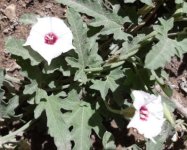
I am including a photo I just took of a Morning Glory native to Texas, Convolvulus equitans.
 

Attachments

  • Equit.jpg
    Equit.jpg
    56.1 KB · Views: 0
harvested a couple thousand MG seeds today from my yard which gets overgrown by them each year. they are all brown/black, so not fresh by any means. seems like cold water extraction is the go-to method?

Can the pint of cuervo be used for a tincture on dried goods or must they be fresh? that's sort of more my style.

Also-- should I go the cold water route, must the mixture be consumed immediately or is it stable to keep longterm?

thanks!
 
pointy hat said:
harvested a couple thousand MG seeds today from my yard which gets overgrown by them each year. they are all brown/black, so not fresh by any means. seems like cold water extraction is the go-to method?

Can the pint of cuervo be used for a tincture on dried goods or must they be fresh? that's sort of more my style.

Also-- should I go the cold water route, must the mixture be consumed immediately or is it stable to keep longterm?

thanks!

What color are those flowers? Do they tend toward purple instead of blue? (look at a few since they can vary some)
 
DFZero-- roundish, sort of like a misshapen capital D, or a fat teardrop.

there is an elongated type seed that comes from a pod similar to the MGs that grow in my yard but they belong to a type of hibiscus flower like vine
 
Those are likely Grandpa ott. They are the most common escaped Morning Glory and have purple flowers.

I haven't found much on them as to alkaloid level but what I have found seems to indicate either much less than Heavenly Blue or none. Remembering that these plants also have things which will make you nauseous in them and remembering that Heavenly Blue is pretty easy to grow, I decided not to mess with the Grandpa ott all over my yard.
 
Yep, confirms my suspicion too that they're purpureas like Grandpa Ott (funny cooincidence with that name - or is it?) Grandpa Ott's have even semi-naturalised in my garden in Northern Europe! The lovely flowers do a good job of compensating for their minimal value as a psychedelic.
 
Back
Top Bottom