• Members of the previous forum can retrieve their temporary password here, (login and check your PM).

Mimosa Arenosa Root Bark Extraction (Max Ion Tek)

Migrated topic.

iracema

Rising Star
OG Pioneer
Merits
42
Ongoing extraction from 50g MARB, following Cyb's max ion tek.
Plants found dead on a farm, many seeds saved from them.
First pull kept in the freezer and will wait for second pull tomorrow, see what is left.
Thanks to nature for the bark and to Cyb and nexus university for the knowledge.
:)
 
Entheogenerator said:
Looks promising! Do you have any information on the alkaloid content of this species? Is it mostly DMT?
This one is not very known or popular, but I'm sure the profile's the same as MHRB. Probably a bit higher % by weight, because the root bark as you see is not divided in inner/outter like MHRB, it's one piece and compact fiber.
 
Very interesting, thanks for sharing :)

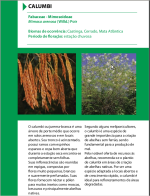
Im posting a page about Mimosa arenosa from a book about plants visited by bees in Brazil`s caatinga.

It says:


Biomas of occurrance: Caatinga, Cerrado, Atlantic rainforest.

Flowering period: Rainy season.


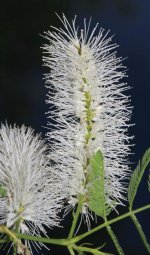
The calumbi, or white jurema, is a medium sized tree that occurs in sandy soils and open areas. The trunk is greyish with branches with spines spread appart and very open brancho orientation (iracema, can you help me translate `copa bem aberta` ). that in dry season finds itself without any leaves. The flowers are in 'corncob'shape, made up of very small white and gently perfumed flowers.

The flowers provide nectar and polen to a lot of insects like flies and bees. According to some honey producers, the calumbi is a species of great importance to the creation of bees without stings, being of fundamental importance to the honey production. Due to the notable offer of resources to the bees, it is recommended to plant calumbi in areas of ccreation of native bees. Being a species adapted to open areas and of fastgrowth, the calumbi is ideal for reforesting of degraded areas.

 

Attachments

  • mimosa+arenosa.png
    mimosa+arenosa.png
    221.1 KB · Views: 0
  • mimosa+arenosa.jpg
    mimosa+arenosa.jpg
    69.2 KB · Views: 0
You're welcome folks, well the seeds are not difficult to find on sts.
I believe they were dead for a few weeks, no signs of mold yet.
For "copa bem aberta" I would say wide spread branches, yes the bees love all mimosas!
In fact the time when the bees are more active it's a bit dangerous fooling around there.
I did the second pull now, first pull easily melts after reaching ambient temperature, it gets waxy.
 
How did your second pull come out? What kind of yeild did you end up with? I have six of these plants and they seem to grow a lot faster for me than mimosa hostilis.
 
Back
Top Bottom