• Members of the previous forum can retrieve their temporary password here, (login and check your PM).

Most effective DMT tek

Migrated topic.

GordonFreem4nn

Rising Star
Hi guys,

i was wondering if there is a difference in yield with al the tek's .
Currently i have been content with Cybs' Hybrid ATB 'Salt' Tek ( i do skip the vinegar step ).
I saw this guy extracting dmt from mimosa h root bark and his yields were fenomenal.

My question for the forum, is there a superior tek or extraction method ?

Much regards,
Stefaan
 
Hi,

strictly tek yield categorization is absent, likely for a reason. If so we would all do that tek predominantly for just that reason.

Choice of tek is usually done in accordance to convenience: less steps (stb) vs more steps (mini ab + reX), accessible chemicals, food-safe or not, smell or not (xylene)...

...I saw this guy extracting dmt from mimosa h root bark and his yields were fenomenal...
Interesting, what tek did he use?
Source material potency can play a huge role too.
 
...I saw this guy extracting dmt from mimosa h root bark and his yields were fenomenal...
Interesting, what tek did he use?
Source material potency can play a huge role too.[/quote]

I learned this the hard way, wasted about 500 g before realising that my source bark was not potent at all.

I'm going to keep searchinig for the video on youtube, it was a dude in brazil i think.
Can't seem to find it atm.

regards
 
I like an A/B tek. Bark is powdered, 3x acetic boils, filter, reduce, base with 1/4 of starting bark weight of NaOH (so, if you started with 200 grams bark use 50 grams NaOH). Pull with VM&P naphtha. Freeze precipitate.

I still recall fondly the first time I did this with half pound of bark. First pull was close to a gram.
 
I have been looking for 5% distilled water vinegar here in Australia, can't seem to find it anywhere. And can you use apple cider vinegar instead? As it appears to have similar acidic acid content. I'm a bit nervous about using the white cooking vinegar because the labels do not appear to state the acidic acid content
 
I have been looking for 5% distilled water vinegar here in Australia, can't seem to find it anywhere. And can you use apple cider vinegar instead? As it appears to have similar acidic acid content. I'm a bit nervous about using the white cooking vinegar because the labels do not appear to state the acidic acid content
The white cooking vinegar is fine and is in general around 5%, with allot of these things it doesn’t have to be so precise. If you want to be sure you could use ph paper to check, but in all honesty it’s not necessary, just pour some in and you should be fine.
 
Last edited:
There's no real solid answer to this.. the reason being is that plants vary in chemical composition a lot.. even by the month/day/hour. Depending on the plant, a different tek might work better than another. Swap to another species and that tek might not be so effective. Most of the STB teks on here for example will not get the best yields with most Acacia species in Australia. In fact from what I see most people don't favor STB with Acacia confusa either.. with Mimosa hostilis root bark it works well and is very widely utilized.. albiet still not the cleanest approach.

My point here is it is best to learn the chemistry behind DMT extraction instead of following a recipe to a tee. Why? Because when you make a mistake you won't know how to get yourself out of it if you don't have a basic understanding of the chemistry. Understanding the basic principles of extracting and converting alkaloids from plant matter through to their solubilities in polar and non polar solutions is a very good start. Then you never need a tek.. make a mistake and you will have a better idea of how to fix it without pouring your spice down the drain by accident. You'll always know which partition your DMT is in.

Might seem like a lot to grapple with at first but its really easy. This is something I feel passionately about...and is something I am constantly stressing to people. There are many benefits to having a basic understanding of the chemistry behind the steps in these teks. At the very least you will understand the teks better.

@bazza don't stress too much about the vinegar.. store bought plain white vinegar is fine.. a splash is all that's needed. No need to go overboard with it. Quality of lye and non polar solvent is much more important and will have more tangible effects on your extract. Test your solvent by evaporating it and seeing if it leaves a residue.. lye can have impurities too which can cause issues.

 
Last edited:
The white cooking vinegar is fine and is in general around 5%, with allot of these things it doesn’t have to be so precise. If you want to be sure you could use ph paper to check, but in all honesty it’s not necessary, just pour some in and you should be fine.
Thank you :) very much appreciated Varallo!
 
There's no real solid answer to this.. the reason being is that plants vary in chemical composition a lot.. even by the month/day/hour. Depending on the plant, a different tek might work better than another. Swap to another species and that tek might not be so effective. Most of the STB teks on here for example will not get the best yields with most Acacia species in Australia. In fact from what I see most people don't favor STB with Acacia confusa either.. with Mimosa hostilis root bark it works well and is very widely utilized.. albiet still not the cleanest approach.

My point here is it is best to learn the chemistry behind DMT extraction instead of following a recipe to a tee. Why? Because when you make a mistake you won't know how to get yourself out of it if you don't have a basic understanding of the chemistry. Understanding the basic principles of extracting and converting alkaloids from plant matter through to their solubilities in polar and non polar solutions is a very good start. Then you never need a tek.. make a mistake and you will have a better idea of how to fix it without pouring your spice down the drain by accident. You'll always know which partition your DMT is in.

Might seem like a lot to grapple with at first but its really easy. This is something I feel passionately about...and is something I am constantly stressing to people. There are many benefits to having a basic understanding of the chemistry behind the steps in these teks. At the very least you will understand the teks better.

@bazza don't stress too much about the vinegar.. store bought plain white vinegar is fine.. a splash is all that's needed. No need to go overboard with it. Quality of lye and non polar solvent is much more important and will have more tangible effects on your extract. Test your solvent by evaporating it and seeing if it leaves a residue.. lye can have impurities too which can cause issues.
thanks Acacian, very much appreciated :) using Bunnings diggers shellite and food-grade sodium hydroxide or do you have a better option for mimosa? Are these kind of questions ok here because I have a few questions about e-mesh devices and where to acquire them?
 
Bun
thanks Acacian, very much appreciated :) using Bunnings diggers shellite and food-grade sodium hydroxide or do you have a better option for mimosa? Are these kind of questions ok here because I have a few questions about e-mesh devices and where to acquire them?
Diggers Shellite works poorly.. it seems that its composition has changed in the last decade. It used to work well. Hexane or heptane would be a safer bet than shellite in Australia if you can source it.
 
Bun

Diggers Shellite works poorly.. it seems that its composition has changed in the last decade. It used to work well. Hexane or heptane would be a safer bet than shellite in Australia if you can source it.
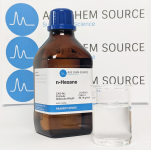
Thank you, would this do the job and would you use the same amount?
1716152995498.png
 
Thank you, would this do the job and would you use the same amount?
View attachment 98290
Try and get heptane if you can - it's more forgiving at higher temperatures, since hexane can evaporate off rather too quickly, plus hexane itself presents a neurotoxicity hazard which is prudent to be aware of.
 
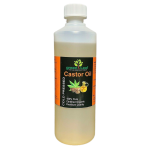
No the above is out of stock.... so hexane is the same as caster oil? will this View attachment 98295View attachment 98295
Eh, what - no!?! Hexane and castor oil are completely different :ROFLMAO:

Castor beans may be dangerously toxic, but that's nothing to do with it! You could, however, possibly use castor oil for an extraction, if you did an A/B and only used sodium carbonate for the base stage. You would then have to recover the alkaloids from the castor oil using an acid (white vinegar would do) and subsequently decide how to clean up your crude acetates.

If you're really struggling to find hydrocarbons and aren't afraid of something a little experimental, you might want to take a look at the vodka/lime method which is currently in development:
 
Back
Top Bottom