• Members of the previous forum can retrieve their temporary password here, (login and check your PM).

My chacruna plant

Migrated topic.

BundleflowerPower

Rising Star
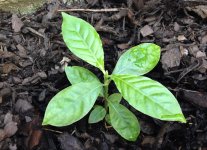
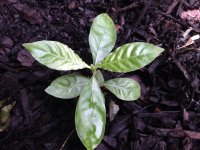
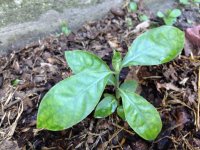
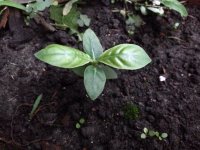
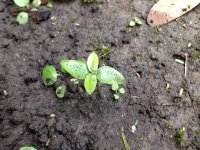
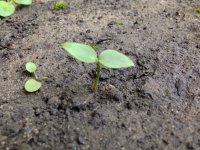
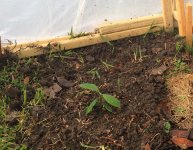
Last spring I ordered 5 chacruna seeds. I planted them directly into the ground along the north side of my house , in a protected spot. It took 4 months, but one grew. I was so happy. Just wanted to show you guys the progress my baby has made since it sprouted in late July.
 

Attachments

  • image.jpg
    image.jpg
    1 MB · Views: 0
  • image.jpg
    image.jpg
    871.7 KB · Views: 0
  • image.jpg
    image.jpg
    894 KB · Views: 0
  • image.jpg
    image.jpg
    874.3 KB · Views: 0
  • image.jpg
    image.jpg
    756.6 KB · Views: 0
  • image.jpg
    image.jpg
    989 KB · Views: 0
  • image.jpg
    image.jpg
    965.1 KB · Views: 0
  • image.jpg
    image.jpg
    1,014.2 KB · Views: 0
Each time she's grows a new set of leaves, her growth rate picks up steam. The shorter days don't seem to be slowing her down a bit.
 
I'll be cloning her. I figured id give seeds a shot first though. I figured they could deal with my climate better if they lived they're entire life here, as opposed to a clone from a plant in another region. I do get the occasional frost.
Same with my mimosas, which sprouted outdoors on a 40 degree night believe it or not. Of course only a few grew, the cold killed a bunch, but the few that grew had the right genetic makeup.
The parent chacruna plant is growing outside in Tampa in the same climate as here. I need to get more plants so they can reproduce and give me more genetic diversity. I may get a cutting now since it won't be a clone of my existing plant.
 
Congrats on your success, but that much growth in 3 1/2 months seems like an awful lot for chacruna, usually considered to be P. viridis. Are you sure it's not chacrunilla (P. alba)?

Be aware that alba will withstand frosts and freezes, regrowing from the base if it freezes back. A freeze will kill a viridis outright, even when planted in the ground. Either way that little guy will appreciate some protection when the weather gets harsh.
 
Healthy looking plant- congrats!

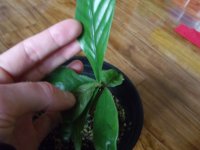
However, pinkoyd might be on to something there about that being an alba. One of the differences you can see between viridis and alba is where the leaves attach to the stem. In viridis, the leaves remain wide all the way down to the point of attachment, where in alba they narrow down to center margin of the leaf before the point of attachment. It looks in your three most recent pics like the leaves narrow down. A pic of the attachment for a viridis is attached, so maybe you can do a little compare and contrast since your view of the plant is better than the pics can represent.

Either way, it's awesome to see success from seeds, especially out in the elements. Good luck with it!

 
To me that looks like alba, beautiful plant either way. As for growth rate some of my plants are over 1.5 years old and only on their 9th leaf set (Granted they do have a y branches that will slow vertical growth.

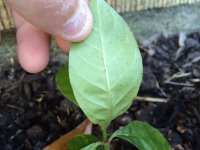
Could you post a pic of the back side of the leafs?
 
Sorry I took so long to reply, I broke my phone last week at work and just got around to getting a new one. It's my only internet connection. Either way, viritis or alba, the plant has def grown on me, here's the pic of the back side
 

Attachments

  • image.jpg
    image.jpg
    629.3 KB · Views: 1
Yep, alba!

Continuum's is a viridis.

Another way I use to tell the difference is the angle the veins make in relation to the midrib. Viridis makes a more acute angle while alba has a wider angle giving the leaf a more 'open' look overall. Alba are also typically that lighter shade of green.
 
Thanks for the positive id. Alba is native to south Florida right? I think I've read that somewhere. If that's the case I wonder if it's also native to let's say, extreme southeast Louisiana. Ipomoea alba is an example of shared native plants of these two places, although as far I know moonflower isn't listed as a native plant in LA, even though I've found large populations of it in areas that either never freeze or very rarely freeze. Perhaps P. Alba can be found as well.

Do any of you grow psychotria outdoors in a zone 9 climate? How much protection do you give them in cold weather? I've been covering mine with a clear Tupperware container and piling mulch around the side when the temp gets below say 45 F. Is this overkill? I ask because my mimosa trees take frost with no problem, don't drop their leaves and continue to grow new leaves.
 
To my knowledge alba is not a FL native. P. nervosa, sulnzneri and bahamensis are the natives I'm aware of. I think there may be some more, but alba is not one of them. They've all tested negative for DMT.

I'm in zone 9a and provide no protection for the albas. They can freeze to the ground but reliably come back in spring. I have in fact had to control them in the yard because they produce lots of seeds that easily germinate wherever they land. It would likely be an invasive species in this area if left unchecked.

Viridis on the other hand is not quite as cold tolerant. I keep them in pots so I can move them in when cold weather threatens. They'll take temps down to the mid-30's or even a bit lower, but don't ever let them freeze. They sometimes will drop quite a few leaves during cold snaps whether they are protected or not.
 
Got alba confused with nervosa, the wild coffee bush. Thanks for sharing your experience with alba and cold weather. That pretty much means I can leave it unprotected all the time, except for the rare hard freeze.
 
Last week I built a greenhouse for one of each type of plant I have, as an insurance policy on the winter. My psychotria has been looking kinda depressed and droopy ever since. She must have knew there was now a more suitable habitat for her now. So I dug her up and planted her in the ground in the greenhouse. I have a feeling that in a few days she'll be looking nice and perky.
 

Attachments

  • image.jpg
    image.jpg
    785.7 KB · Views: 0
Back
Top Bottom