uma
Rising Star
Preface: After a bit a refinement I found that this experiment produced notable results, so I decided to share the experiment. However this is not intended to replace the Manske method or any type of declaration that the results are completely pure and do not require further refinement.
I conducted some experiments with peganum harmala involving extracting the alkaloids without using the Manske extraction method. During the experiments it I found a lot of the filtering problems after alkaloids where precipitated out by making the peganum harmala+water solution more alkaline, were due to non-polar compounds being released. I am unsure what these compounds are exactly.
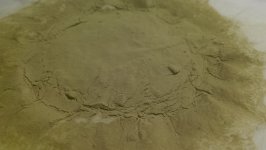
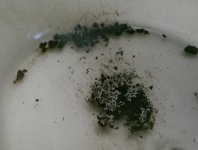
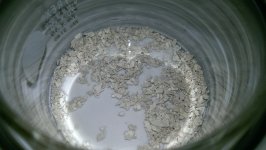
I found by using d-limonene after making the solution alkaline it allowed for removal of these non-polar compounds. And afterwards simple water washing could be used to remove the unwanted compounds that are water soluble. Something else I found interesting was there seems some compound while in the solution containing the d-limonene that look like alkaloid solids but are not. When removed and tested on some absorbent paper they seem to melt into what I can only describe as a small oil blobs which slowly get absorbed by the paper. These kind of float in the d-limonene layer and in between the water layer. And should be removed. Below is the outline of the experiment attached is an image of the filter and alkaloids after drying.
Note: Excessive filtering isn’t needed in the second step it just has to be well enough not to allow any dirt like contaminates to pass into the solution. Also because this can be done easily with various containers and tools I didn’t create a material list.
1. Heat 100g whole peganum harmala seeds in 500ml water at 230c for 2.5hrs
2. Filter using a coarse disk (170-200 micron pore) filter funnel.
3. While the solution is still hot, slowly add sodium hydroxide while stirring until the solution turns a brown milky color.
4. Refrigerate container long enough for all of the alkaloids to settle at the bottom.
5. Siphon off (do not pour) as much water as possible without disturbing the alkaloids resting at the bottom of the container.
6. Slowly add 300ml fresh water followed by 50ml d-limonene. Stir well or if using a jar shake well then heat to 160c for 30mins. Refrigerate the container for long enough for all the alkaloids to settle at the bottom.
7. Siphon off (do not pour) all of the d-limonene including anything floating in the d-limonene layer or in-between the d-limonene and water layers. Followed by siphoning off as much of the remaining water without disturbing the alkaloids.
8. Slowly add 400ml fresh water. Refrigerate the container for long enough for all of the alkaloids to settle at the bottom. Siphon off (do not pour) as much water as possible without disturbing the alkaloids. Repeat this step least one more time.
9. Filter the remaining solution through 3 stacked coffee filters in a funnel. Wash the alkaloids by slowly adding a minimal amount of water into the filter and allow it to completely drain. Wash the alkaloids with a least 500ml water. Remove the filter combination from the funnel and lay it out to allow the alkaloids to dry.
I conducted some experiments with peganum harmala involving extracting the alkaloids without using the Manske extraction method. During the experiments it I found a lot of the filtering problems after alkaloids where precipitated out by making the peganum harmala+water solution more alkaline, were due to non-polar compounds being released. I am unsure what these compounds are exactly.
I found by using d-limonene after making the solution alkaline it allowed for removal of these non-polar compounds. And afterwards simple water washing could be used to remove the unwanted compounds that are water soluble. Something else I found interesting was there seems some compound while in the solution containing the d-limonene that look like alkaloid solids but are not. When removed and tested on some absorbent paper they seem to melt into what I can only describe as a small oil blobs which slowly get absorbed by the paper. These kind of float in the d-limonene layer and in between the water layer. And should be removed. Below is the outline of the experiment attached is an image of the filter and alkaloids after drying.
Note: Excessive filtering isn’t needed in the second step it just has to be well enough not to allow any dirt like contaminates to pass into the solution. Also because this can be done easily with various containers and tools I didn’t create a material list.
1. Heat 100g whole peganum harmala seeds in 500ml water at 230c for 2.5hrs
2. Filter using a coarse disk (170-200 micron pore) filter funnel.
3. While the solution is still hot, slowly add sodium hydroxide while stirring until the solution turns a brown milky color.
4. Refrigerate container long enough for all of the alkaloids to settle at the bottom.
5. Siphon off (do not pour) as much water as possible without disturbing the alkaloids resting at the bottom of the container.
6. Slowly add 300ml fresh water followed by 50ml d-limonene. Stir well or if using a jar shake well then heat to 160c for 30mins. Refrigerate the container for long enough for all the alkaloids to settle at the bottom.
7. Siphon off (do not pour) all of the d-limonene including anything floating in the d-limonene layer or in-between the d-limonene and water layers. Followed by siphoning off as much of the remaining water without disturbing the alkaloids.
8. Slowly add 400ml fresh water. Refrigerate the container for long enough for all of the alkaloids to settle at the bottom. Siphon off (do not pour) as much water as possible without disturbing the alkaloids. Repeat this step least one more time.
9. Filter the remaining solution through 3 stacked coffee filters in a funnel. Wash the alkaloids by slowly adding a minimal amount of water into the filter and allow it to completely drain. Wash the alkaloids with a least 500ml water. Remove the filter combination from the funnel and lay it out to allow the alkaloids to dry.