
• Members of the previous forum can retrieve their temporary password here, (login and check your PM).

Perlolyrine in Codonopsis pilosula

Migrated topic.

kerelsk

Esteemed member
I was looking into the traditional Chinese herb dang shen or codonopsis, and it turns out there's a rather interesting looking harmala alkaloid called perlolyrine. There's not a lot of info out on it, somebody may be interested in this
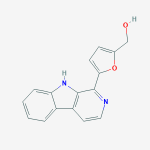
 

Attachments

  • imgsrv.png
    imgsrv.png
    4 KB · Views: 0
  • s-2006-962513.pdf
    179.1 KB · Views: 1
Unfortunately, the link given requires registration and proved to be of very little use at all.

A quick search shows up with perlolyrine occurring in several other plant species; I'll attempt to make a list of what I can find.

Shulgin misspells this compound as 'perolyrine' in the betacarbolines appendix of TIHKaL, and a search with this misspelling gives six more results. Other misspellings may turn up something as well.

I get the impression that the amounts of this alkaloid in Dang Shen roots are rather meagre; a Chinese medical references lists alkaloids as only a trace component of these roots. Other plants may prove to be more fruitful sources of perlolyrine.
PubChem said:
Perlolyrine is found in herbs and spices. Perlolyrine is an alkaloid from Korean ginseng and Japanese soy sauce
 
Sorry about the link, that was what I got from google scholar. I uploaded a copy.

I have a feeling you're correct, that it's probably a trace constituent of these plants and soy sauce.
Still it's always interesting to know what small signal molecules are around and what our body apparently tolerates.

Codonopsis has been part of an adoptogen stack I've been taking that I feel is potentiating psychedelics somehow.
Just a hunch to look at the adaptogens, I believe Rhodiola has some minor MAOI activity.

Here's a snippet from the paper:
The pharmacological activity of [perlolyrine], which is a B-carboline substituted at C-1, will be examined elsewhere
with respect to that of gingseng, as it is known that substitution at the C-3 position is essential to produce activity toward the benzodiazepine and GABA receptors(4).
 
Thanks for posting the paper, and also thanks for reminding me that I have a fairly large amount of Rhodiola tincture that may be of use to me right now! (Not for MAOI purpose, however.)
 
Back
Top Bottom