MagicGing
Rising Star
This thread is here to demonstrate and explain the theory behind sheet muching, a no till organic and super fertile way to prepare a veggie bed and prevent weeds from sprouting in this bed. If done properly, the soil underneath will quickly be alive with microorganisms, soon to result in mushrooms working for you to connect and bring life to your bed! If you wish, and if you have some knowledge and experience with growing mushrooms, you could even include a layer of inoculated grain into your sheet mulching (i would recommend a somewhat native species,or at least a species you know will thrive)!
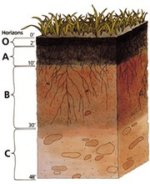
In theory, tilling destroys the layers of soil created by nature, kills microorganisms, is unsustainable, and can quickly become quite labor intensive.
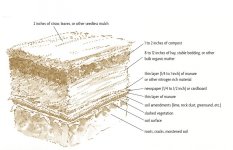
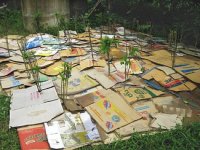
There are many ways to sheet mulch, the simplest being trimming the plant matter you wish to start a veggie bed on and laying down 2-3ish layers of recycled carboard/newspaper/ anything similiar, then throwing a thick layer of organic matter (generally the woodier the better, however diversity is important) to weigh down this cardboard and to prevent sunlight and oxygen from hitting the cardboard, which would prevent microorganism growth.
With that being said, if you want a healthy and robust microclimate and environment for your soil to thrive with life, then this way of sheet mulching is the way to go! Its not really much more complicated than the above procedure, just an extra layer or two is added!
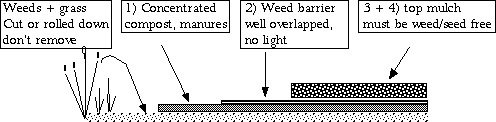
First, trim the plants that are growing where you wish to sheet mulch nearly as much as possible. You could throw the trimmings back so the organic matter stays there.
Second, throw a layer of fresh/composted chicken/animal poo down, with some compost or rock dust or lime or whatever your specific soil may require to thrive (pH wise). The poo and compost is pretty important. Also, the rock dust will slowly remineralize the soil, especially with the mycelium that is soon to come (even if you dont plan on including inoculated grain in your mulching, wild spores will most likely germinate eventually and thrive!) since most (or some may be a more accurate term to use) mycelium can dissolve minerals, thereby making it more available to plants. All of the poo/compost/amendments should be spread as evenly as possible. You could also include excess organic matter and leaves (legume tree/shrub leaves contain loads of natural nitrates, such as ammonium nitrate).
Next, you could include the inoculated grain, and dump it all over, or mix it in with the poo layer. The inoculated grain is definatly not required.
Then comes the sheets. This, again, could be 2-3ish layers of recycled cardboard (just not the cardboard with plastic in/on it), newspaper (veggie based inks would be ideal), or whatever else you think would do the job and is fairly quickly biodegradable. Also paper grocery bags could be used. Just make sure its thick enough to do the job, and theres no cracks/holes that would allow the plants underneath that you are attempting to cover to come back up.
You could then put another layer of organic matter/ leaves.
After this layer comes the woody mulch. I would recommend very shredded woody mulch directly above the paper or leaves, then a layer of less shredded mulch that is thick on top of the very shredded mulch.
About 2 weeks or so after a good rain, the sheets should be more than degraded enough to start planting, as roots can generally do a much better job at penetrating the sheets than grass blades or whatever. Also, maybe in a month or less after installation and a good rain, there could definatly be mushrooms popping up all throughout the mulching!
The theory behind sheet mulching could be applied to a variety of situations, from planting lil baby trees in a place overgrown with a cover crop, to food forests (although chicken tractoring would be more efficient/easy for large areas), to many other situations.
Also, planting a native, running, and vigourosly growing nitrogen fixing/legume cover crop could definatly help to keep unwanted plants/weeds at bay, while simultaneously and continuosly increasing the fertility of your mulched area!
Hope this helps and inspires
I will be attaching a pic and a few links about sheet mulching.
Enjoy the abundance of nature !
Geoff lawton, bill mollison, and david holmgren are all great permaculture teachers that know there stuff and have quite a bit of info on the web, including many great youtube videos! However, id say the best teacher would be mother nature
Sheet mulching 1
Sheet mulching Oregon state pdf
Permaculture News sheet mulching
In theory, tilling destroys the layers of soil created by nature, kills microorganisms, is unsustainable, and can quickly become quite labor intensive.
There are many ways to sheet mulch, the simplest being trimming the plant matter you wish to start a veggie bed on and laying down 2-3ish layers of recycled carboard/newspaper/ anything similiar, then throwing a thick layer of organic matter (generally the woodier the better, however diversity is important) to weigh down this cardboard and to prevent sunlight and oxygen from hitting the cardboard, which would prevent microorganism growth.
With that being said, if you want a healthy and robust microclimate and environment for your soil to thrive with life, then this way of sheet mulching is the way to go! Its not really much more complicated than the above procedure, just an extra layer or two is added!
First, trim the plants that are growing where you wish to sheet mulch nearly as much as possible. You could throw the trimmings back so the organic matter stays there.
Second, throw a layer of fresh/composted chicken/animal poo down, with some compost or rock dust or lime or whatever your specific soil may require to thrive (pH wise). The poo and compost is pretty important. Also, the rock dust will slowly remineralize the soil, especially with the mycelium that is soon to come (even if you dont plan on including inoculated grain in your mulching, wild spores will most likely germinate eventually and thrive!) since most (or some may be a more accurate term to use) mycelium can dissolve minerals, thereby making it more available to plants. All of the poo/compost/amendments should be spread as evenly as possible. You could also include excess organic matter and leaves (legume tree/shrub leaves contain loads of natural nitrates, such as ammonium nitrate).
Next, you could include the inoculated grain, and dump it all over, or mix it in with the poo layer. The inoculated grain is definatly not required.
Then comes the sheets. This, again, could be 2-3ish layers of recycled cardboard (just not the cardboard with plastic in/on it), newspaper (veggie based inks would be ideal), or whatever else you think would do the job and is fairly quickly biodegradable. Also paper grocery bags could be used. Just make sure its thick enough to do the job, and theres no cracks/holes that would allow the plants underneath that you are attempting to cover to come back up.
You could then put another layer of organic matter/ leaves.
After this layer comes the woody mulch. I would recommend very shredded woody mulch directly above the paper or leaves, then a layer of less shredded mulch that is thick on top of the very shredded mulch.
About 2 weeks or so after a good rain, the sheets should be more than degraded enough to start planting, as roots can generally do a much better job at penetrating the sheets than grass blades or whatever. Also, maybe in a month or less after installation and a good rain, there could definatly be mushrooms popping up all throughout the mulching!
The theory behind sheet mulching could be applied to a variety of situations, from planting lil baby trees in a place overgrown with a cover crop, to food forests (although chicken tractoring would be more efficient/easy for large areas), to many other situations.
Also, planting a native, running, and vigourosly growing nitrogen fixing/legume cover crop could definatly help to keep unwanted plants/weeds at bay, while simultaneously and continuosly increasing the fertility of your mulched area!
Hope this helps and inspires
I will be attaching a pic and a few links about sheet mulching.
Enjoy the abundance of nature !
Geoff lawton, bill mollison, and david holmgren are all great permaculture teachers that know there stuff and have quite a bit of info on the web, including many great youtube videos! However, id say the best teacher would be mother nature
Sheet mulching 1
Sheet mulching Oregon state pdf
Permaculture News sheet mulching