• Members of the previous forum can retrieve their temporary password here, (login and check your PM).

Some Islamic Architecture=DMT

OneIsEros

Esteemed member
Merits
293
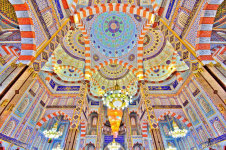
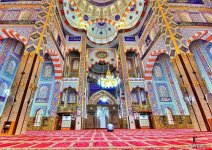
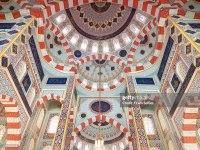
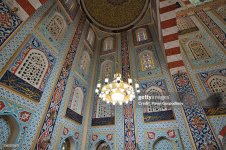
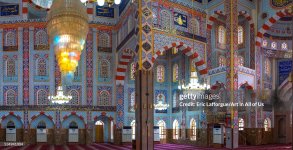
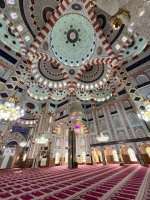
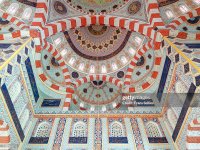
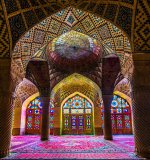
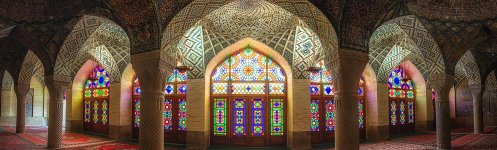
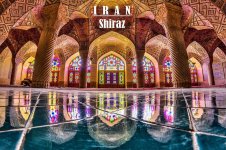
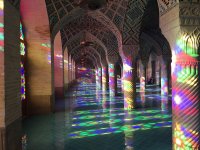
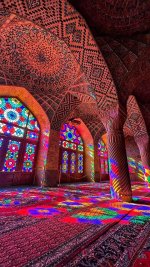
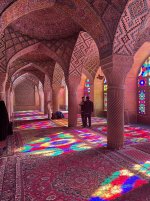
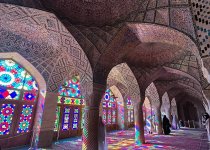
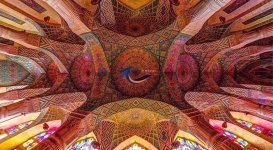
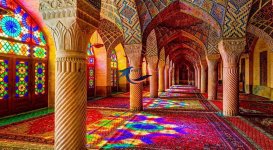
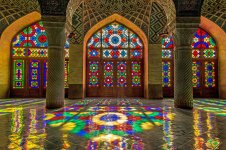
My favourite mosque in the world is in Iran, Nasir Al-Mulk, built in the 1800’s. It is like a vaporized breakthrough DMT trip was made into a real place. Of all religions, their architectural tradition approximates it the most - and not only the most, but with justice to it. Another is in Iraq, Jalil Khayat. It was finished in 2007. It is astonishing and true: Islam with 100% accuracy built a DMT architectural tradition. Alex Grey isn’t even close, compared with what these people have built. I am not a Muslim. I am a Buddhist. But I am also a psychedelic enthusiast, and there is no possible way to deny - Islam, without ever having experienced it, perfectly reflects DMT in much of its art. Not all! Plenty of mosques out there aren’t it at all. But Iranian stuff in particular, tends to have it. A religious prohibition against depictions of images imitating the world led to a deep emphasis on abstract geometry, among the most ancient and mathematically advanced peoples in the world (Middle Eastern, which prior to Islam was Pagan/Christian Roman, before that Pagan Greek, and before that ancient Egyptian and Mesopotamian and Persian - Western Europe was a colonial project that had collapsed along with the Roman Empire that had been colonizing the barbaric white tribes)

- were all suddenly ordered to collaborate and experiment within these religious confines to build a new art form for the new ascendant religious identity - which, being new, didn’t really have an imperial identity yet, unlike the Roman imperialists who had converted to Christian. The Islamic rulers ordered their new subjects to both be collaborative and inventive in fashioning a new artistic identity both under Islam, and importantly for Islam, as an identity to assume

- which they responded to enthusiastically, as it also naturally tapped deep into the metaphysical spiritualized mathematics of Aristotelianism-Neoplatonism remaining from Roman/Middle Eastern Paganism as well as Christianity. Arguably, an art has never been closer to Plato’s ideas about how best to turn the mind to the Ideas. And yes, it looks exactly like DMT in some of their art. Those two mosques in particular, but a whole host of others as well. Especially Iran, where Neoplatonism uncoincidentally was most strongly expressed via Ibn Sina’s Plotinian/Procline reading of Aristotle, which become the intellectual basis of many mystical Islamic traditions such as Sufism.

The result was DMT. They were the closest. Not in every one of their buildings, mind you! But, it was able to get it, and some are really just ridiculously it. Those two by far are the closest I’ve seen.

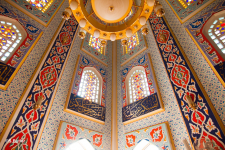
The set with the stained glass windows is Nasir Al-Mulk in Iran. It is my favourite, but they are both ridiculously good, and two small selections from a much larger body of work. These two are simply the most dramatically obvious.

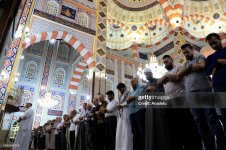
The other set with the ceiling is Jalil Khayat in Iraq.
 

Attachments

  • IMG_0728.png
    IMG_0728.png
    1.5 MB · Views: 18
  • IMG_0737.jpeg
    IMG_0737.jpeg
    416.3 KB · Views: 18
  • IMG_0735.jpeg
    IMG_0735.jpeg
    727.9 KB · Views: 18
  • IMG_0734.jpeg
    IMG_0734.jpeg
    1.4 MB · Views: 18
  • IMG_0733.jpeg
    IMG_0733.jpeg
    796.5 KB · Views: 19
  • IMG_0729.jpeg
    IMG_0729.jpeg
    719.1 KB · Views: 18
  • IMG_0736.jpeg
    IMG_0736.jpeg
    350.9 KB · Views: 18
  • IMG_0730.jpeg
    IMG_0730.jpeg
    1.2 MB · Views: 18
  • IMG_0739.png
    IMG_0739.png
    1.8 MB · Views: 19
  • IMG_0741.jpeg
    IMG_0741.jpeg
    933.4 KB · Views: 19
  • IMG_0745.jpeg
    IMG_0745.jpeg
    247.6 KB · Views: 18
  • IMG_0747.jpeg
    IMG_0747.jpeg
    197.7 KB · Views: 17
  • IMG_0748.jpeg
    IMG_0748.jpeg
    153.3 KB · Views: 16
  • IMG_0760.jpeg
    IMG_0760.jpeg
    296.3 KB · Views: 16
  • IMG_0757.jpeg
    IMG_0757.jpeg
    366.8 KB · Views: 15
  • IMG_0753.jpeg
    IMG_0753.jpeg
    209.6 KB · Views: 14
  • IMG_0763.jpeg
    IMG_0763.jpeg
    137.6 KB · Views: 13
  • IMG_0762.jpeg
    IMG_0762.jpeg
    158.6 KB · Views: 12
  • IMG_0740.jpeg
    IMG_0740.jpeg
    398.9 KB · Views: 19
My favourite mosque in the world is in Iran, Nasir Al-Mulk, built in the 1800’s. It is like a vaporized breakthrough DMT trip was made into a real place. Of all religions, their architectural tradition approximates it the most - and not only the most, but with justice to it. Another is in Iraq, Jalil Khayat. It was finished in 2007. It is astonishing and true: Islam with 100% accuracy built a DMT architectural tradition. Alex Grey isn’t even close, compared with what these people have built. I am not a Muslim. I am a Buddhist. But I am also a psychedelic enthusiast, and there is no possible way to deny - Islam, without ever having experienced it, perfectly reflects DMT in much of its art. Not all! Plenty of mosques out there aren’t it at all. But Iranian stuff in particular, tends to have it. A religious prohibition against depictions of images imitating the world led to a deep emphasis on abstract geometry, among the most ancient and mathematically advanced peoples in the world (Middle Eastern, which prior to Islam was Pagan/Christian Roman, before that Pagan Greek, and before that ancient Egyptian and Mesopotamian and Persian - Western Europe was a colonial project that had collapsed along with the Roman Empire that had been colonizing the barbaric white tribes)

- were all suddenly ordered to collaborate and experiment within these religious confines to build a new art form for the new ascendant religious identity - which, being new, didn’t really have an imperial identity yet, unlike the Roman imperialists who had converted to Christian. The Islamic rulers ordered their new subjects to both be collaborative and inventive in fashioning a new artistic identity both under Islam, and importantly for Islam, as an identity to assume

- which they responded to enthusiastically, as it also naturally tapped deep into the metaphysical spiritualized mathematics of Aristotelianism-Neoplatonism remaining from Roman/Middle Eastern Paganism as well as Christianity. Arguably, an art has never been closer to Plato’s ideas about how best to turn the mind to the Ideas. And yes, it looks exactly like DMT in some of their art. Those two mosques in particular, but a whole host of others as well. Especially Iran, where Neoplatonism uncoincidentally was most strongly expressed via Ibn Sina’s Plotinian/Procline reading of Aristotle, which become the intellectual basis of many mystical Islamic traditions such as Sufism.

The result was DMT. They were the closest. Not in every one of their buildings, mind you! But, it was able to get it, and some are really just ridiculously it. Those two by far are the closest I’ve seen.

The set with the stained glass windows is Nasir Al-Mulk in Iran. It is my favourite, but they are both ridiculously good, and two small selections from a much larger body of work. These two are simply the most dramatically obvious.

The other set with the ceiling is Jalil Khayat in Iraq.
Absolutely yes, some of these are amazing. I wouldn't say ultimately it is 'Islamic art' as much as this traditional art depicts mystical experience, which is what the DMT and Harmalas space can show you. Iran in particular is home of Peganum Harmala and likely they were doing with some DMT containing plants in the past as part of the pre Islamic Zoroastrian tradition which influenced the Sufi mystics.

You find similar in Christian mystic art and cathedrals, the difference is that since Islamic doesn't permit depiction of figures the resulting art represents the mystic experience in a more pure way free from iconography.
Having smoked DMT in old churches and graveyards before I can attest to the synergy of the experience with these types of art and stained glass works in particular.

There is a good article here discussing this

 
No, there’s no “secret Muslim DMT” group of architects out there. These people aren’t anonymous, they’re global, and Jalil Khayat was completed only a short time ago, it’s not in the deep remote past where conspiracy can project a “lost DMT tradition” in Islam. And yes, the Syrian Rue thing is a very cool coincidence - but, it is a coincidence.

Personally, I find it more interesting that they didn’t have access to it, and yet these philosophical traditions within these aniconic religious constraints among these mathematical archictectural creative collaborations ended up generating traditions that depict it so well, without ever having seen it. That itself is fascinating, quite a bit more interesting than if they had actually seen it, actually. It shows something deeper than drawing a picture of something someone saw once.

And also - it definitely would be appropriate to call it “Islamic art”. It was constructed out of a creative collaboration among the older cultures of the Middle East it is true, but it is radically innovative, in that region’s 5000 year history it was legitimately new and ground breaking. We’ve got to give them props for this one. The Mesopotamians, Persians, Egyptians, Romans, and Greeks all contributed, but in a conscious, intentional, and creative synthesis that was a distinctly new and different art from any of these previous cultures’ arts. Absolutely mind boggling. The Christians, to the extent that they resemble it, are plagiarists - it’s honestly like a bad copy of their own work, which the Crusaders brought back in inadequate sketches, along with a host of other intellectual spoils from their assaults on those lands at that time. Would that we were as cultured in our current mindless aggression against them again….
 
Last edited:
My favourite mosque in the world is in Iran, Nasir Al-Mulk, built in the 1800’s. It is like a vaporized breakthrough DMT trip was made into a real place. Of all religions, their architectural tradition approximates it the most - and not only the most, but with justice to it. Another is in Iraq, Jalil Khayat. It was finished in 2007. It is astonishing and true: Islam with 100% accuracy built a DMT architectural tradition. Alex Grey isn’t even close, compared with what these people have built. I am not a Muslim. I am a Buddhist. But I am also a psychedelic enthusiast, and there is no possible way to deny - Islam, without ever having experienced it, perfectly reflects DMT in much of its art. Not all! Plenty of mosques out there aren’t it at all. But Iranian stuff in particular, tends to have it. A religious prohibition against depictions of images imitating the world led to a deep emphasis on abstract geometry, among the most ancient and mathematically advanced peoples in the world (Middle Eastern, which prior to Islam was Pagan/Christian Roman, before that Pagan Greek, and before that ancient Egyptian and Mesopotamian and Persian - Western Europe was a colonial project that had collapsed along with the Roman Empire that had been colonizing the barbaric white tribes)

- were all suddenly ordered to collaborate and experiment within these religious confines to build a new art form for the new ascendant religious identity - which, being new, didn’t really have an imperial identity yet, unlike the Roman imperialists who had converted to Christian. The Islamic rulers ordered their new subjects to both be collaborative and inventive in fashioning a new artistic identity both under Islam, and importantly for Islam, as an identity to assume

- which they responded to enthusiastically, as it also naturally tapped deep into the metaphysical spiritualized mathematics of Aristotelianism-Neoplatonism remaining from Roman/Middle Eastern Paganism as well as Christianity. Arguably, an art has never been closer to Plato’s ideas about how best to turn the mind to the Ideas. And yes, it looks exactly like DMT in some of their art. Those two mosques in particular, but a whole host of others as well. Especially Iran, where Neoplatonism uncoincidentally was most strongly expressed via Ibn Sina’s Plotinian/Procline reading of Aristotle, which become the intellectual basis of many mystical Islamic traditions such as Sufism.

The result was DMT. They were the closest. Not in every one of their buildings, mind you! But, it was able to get it, and some are really just ridiculously it. Those two by far are the closest I’ve seen.

The set with the stained glass windows is Nasir Al-Mulk in Iran. It is my favourite, but they are both ridiculously good, and two small selections from a much larger body of work. These two are simply the most dramatically obvious.

The other set with the ceiling is Jalil Khayat in Iraq.
I can say from my own experience that these are truly very impressive buildings. The colour of the stained glass in the photo is not exactly how it is in real life, but still, it’s really impressive.

IMO the mosque in Isfahan, Jameh, is missing from these pictures, it’s completely covered in blue mosaic is absolutely beautiful. When there, and after some discussion, I was allowed to lie down under the dome. It was completely empty, everyone was gone. I lay there exactly in the middle under this huge dome for a while, and it felt like the whole dome was moving, like everything was alive, like one big chrysanthemum.

I’m not an very religious person but this sure was something that came very close.

There’s also one mosk completely covered in mirror mosaic, can’t remember the name though, but that’s pretty nice to as in a way it felt like an transparant layer.

And yes, the Syrian Rue thing is a very cool coincidence - but, it is a coincidence.
I also agree with you that DMT has nothing to do with it, other then that this architecture is reminiscent of some DMT spaces.
 
I can say from my own experience that these are truly very impressive buildings. The colour of the stained glass in the photo is not exactly how it is in real life, but still, it’s really impressive.

IMO the mosque in Isfahan, Jameh, is missing from these pictures, it’s completely covered in blue mosaic is absolutely beautiful. When there, and after some discussion, I was allowed to lie down under the dome. It was completely empty, everyone was gone. I lay there exactly in the middle under this huge dome for a while, and it felt like the whole dome was moving, like everything was alive, like one big chrysanthemum.

I’m not an very religious person but this sure was something that came very close.

There’s also one mosk completely covered in mirror mosaic, can’t remember the name though, but that’s pretty nice to as in a way it felt like an transparant layer.


I also agree with you that DMT has nothing to do with it, other then that this architecture is reminiscent of some DMT spaces.
Great to be reminded of this! I've been to Jameh in Isfahan and the mirror mosque you mention (but where I don't remember) This was many years before any psychedelics and DMT for me so I didn't make the connection. But I've been curious of the sufi traditions for a long time.
The state of Iran right now is really bad and my thoughts goes to the people there. I had a great time and met so mush hospitality and friendliness. And as a sine note this was where I shared opium with the family fathers, two times in different places. Gotta share the traditions :)
 
Honestly, I think that DMT might have inspired these images long ago. I understand that there is no evidence of historical DMT use, but the fact that these representations are so similar to tryptamine visions points toward a connection. It may be, however, that I simply want to see a link where one might not exist.

Anyhow, I really like this artwork and what it stands for. I appreciate Islam for its apparent lack of iconic worship; even the name of God is symbolic and simply points toward the One. Sufism would be my religion of choice if I lived in that part of the world. One should not forget other devotional expressions, such as music and dance.
 
No, there’s no “secret Muslim DMT” group of architects out there. These people aren’t anonymous, they’re global, and Jalil Khayat was completed only a short time ago, it’s not in the deep remote past where conspiracy can project a “lost DMT tradition” in Islam. And yes, the Syrian Rue thing is a very cool coincidence - but, it is a coincidence.

The Harmala use is far from 'coincidental' - its the most sacred plant in Zoroastrianism and happens to be an analogue of the Ayahuasca vine. I would say thats a pretty strong indication of a likely connection to historic DMT use but I make no claim to it being conclusively proven. Regardless, the artistic and architectural tradition has its own style which has been long established however it came about.

Personally, I find it more interesting that they didn’t have access to it, and yet these philosophical traditions within these aniconic religious constraints among these mathematical archictectural creative collaborations ended up generating traditions that depict it so well, without ever having seen it. That itself is fascinating, quite a bit more interesting than if they had actually seen it, actually. It shows something deeper than drawing a picture of something someone saw once.
It doesn't matter either way, I see it as representing intereligious mystic or spiritual experiences, whether induced via DMT or spontaneous mystical experience or Sufi practices or similar. Thus it will tend to look similar and they captured the fractal art and ambience exceptionally well.

And also - it definitely would be appropriate to call it “Islamic art”. It was constructed out of a creative collaboration among the older cultures of the Middle East it is true, but it is radically innovative, in that region’s 5000 year history it was legitimately new and ground breaking. We’ve got to give them props for this one. The Mesopotamians, Persians, Egyptians, Romans, and Greeks all contributed, but in a conscious, intentional, and creative synthesis that was a distinctly new and different art from any of these previous cultures’ arts. Absolutely mind boggling.
Yes, I prefaced by saying 'ultimately' it is mystical art that is probably represented most purely in the Islamic traditon art form.

The Christians, to the extent that they resemble it, are plagiarists - it’s honestly like a bad copy of their own work, which the Crusaders brought back in inadequate sketches, along with a host of other intellectual spoils from their assaults on those lands at that time. Would that we were as cultured in our current mindless aggression against them again….
Well yes, the West in general have been plagiarists and thieves who stood on the shoulders of giants then failed to give credit and indeed exploited in a vast amount of domains I would say. The beauty of some of these Gothic cathedrals even if inspired by Islamic art and architecture is still great though I would say in conveying a similar feeling.
 
where Neoplatonism uncoincidentally was most strongly expressed via Ibn Sina’s Plotinian/Procline reading of Aristotle, which become the intellectual basis of many mystical Islamic traditions such as Sufism
The Christians, to the extent that they resemble it, are plagiarists

So when the Christians were influenced by something they were plagiarists, but when the Muslims did, it was a "strong expression"? If you're going to do religious/cultural flaming, at least be consistent. But better do not do any flaming at all. Bashing other cultures and religions adds nothing to your (otherwise good) post. It's not necessary to attack Europe and its culture(s) from the Romans onwards in order to appreciate Islamic culture(s).

Take this as your first warning to not characterize whole human groups, religions, and/or cultures in broad, negative terms.
 
Last edited:
So when the Christians were influenced by something they were plagiarists, but when the Muslims did, it was a "strong expression"? If you're going to do religious/cultural flaming, at least be consistent. But better do not do any flaming at all. Bashing other cultures and religions adds nothing to your (otherwise good) post. It's not necessary to attack Europe and its culture(s) from the Romans onwards in order to appreciate Islamic culture(s).

Take this as your first warning to not characterize whole human groups, religions, and/or cultures in broad, negative terms.
As someone who profoundly appreciates the European tradition, classical and modern, I’ll say it loud and clear: I stand by that assessment. And so would they, for that matter. Aquinas called Aristotle “the Philosopher”, and Ibn Rushd “the Commentator” (on Aristotle). The debt of Europe to the Islamic Golden Age era is nothing short of the end of what Europeans themselves refer to as the “dark age”. And yes, I’d say it would be more accurate to describe that as importation as opposed to innovation. As I mentioned before, the Roman Christians before the fall of the empire did not create a new culture, they were the established culture already and had taken on a new religion, Christianity, whereas Islam literally had to create a new identity. Western Europe, after the dark age, resuscitated itself by looking to the Islamic World and its transmission of the earlier classical culture. I do not mean to say Europeans have never been inventive - that’s preposterous. The Graeco-Roman classical culture was one such phase in that creativity. But, I don’t think that more Euro-leaning culture of the Mediterranean and later Western Europe can be said to have been “creative” during its Middle Ages period the way it was in its classical period or modern Enlightenment period - hence why *Europeans* refer to it as “classical”, “dark”, and “enlightened”. Those two were definitely strong periods of creativity, but I would stand by the assertion that the Middle Ages European period was not creative in the same way as those two periods; the Golden Age Islamic period though? Yeah, I’d put that alongside classical Graeco-Roman antiquity and Modern Enlightenment period ingenuity. I’d assert that pretty comfortably, and I think the medievals themselves would have thought so as well.
 
Last edited:
All this art is not about opinions or any conceptual understanding. It simply points toward the ineffable - something that is always present behind the words. If it creates endless mental chatter, then you are missing the point. Look at it and observe what happens inside yourself and the kind of shift it produces. Then, simply rest in that shift. God and everything connected to the divine is about direct experience. Even philosophies are created solely to lead you back to the direct experience of the present moment.
"God is Truth and Truth is God"
 
All this art is not about opinions or any conceptual understanding. It simply points toward the ineffable - something that is always present behind the words. If it creates endless mental chatter, then you are missing the point. Look at it and observe what happens inside yourself and the kind of shift it produces. Then, simply rest in that shift. God and everything connected to the divine is about direct experience. Even philosophies are created solely to lead you back to the direct experience of the present moment.
"God is Truth and Truth is God"
Like I said, it could be cool, but...
 
It’s always fun watching fools squirm when their drivel isn’t blindly permitted. “I think what this culture I know nothing about, is about what I happen to already think; without knowing anything about it or its history. They totally smoked DMT, too.”

The appropriation is astonishing.
 
It’s always fun watching fools squirm when their drivel isn’t blindly permitted. “I think what this culture I know nothing about, is about what I happen to already think; without knowing anything about it or its history. They totally smoked DMT, too.”

The appropriation is astonishing.
Yeah, I think watching muthafuckas booty talking (talking out of your ass) is hilarious before they're dragged to the depths.
 
As someone who profoundly appreciates the European tradition, classical and modern, I’ll say it loud and clear: I stand by that assessment. And so would they, for that matter. Aquinas called Aristotle “the Philosopher”, and Ibn Rushd “the Commentator” (on Aristotle). The debt of Europe to the Islamic Golden Age era is nothing short of the end of what Europeans themselves refer to as the “dark age”. And yes, I’d say it would be more accurate to describe that as importation as opposed to innovation. As I mentioned before, the Roman Christians before the fall of the empire did not create a new culture, they were the established culture already and had taken on a new religion, Christianity, whereas Islam literally had to create a new identity. Western Europe, after the dark age, resuscitated itself by looking to the Islamic World and its transmission of the earlier classical culture. I do not mean to say Europeans have never been inventive - that’s preposterous. The Graeco-Roman classical culture was one such phase in that creativity. But, I don’t think that more Euro-leaning culture of the Mediterranean and later Western Europe can be said to have been “creative” during its Middle Ages period the way it was in its classical period or modern Enlightenment period - hence why *Europeans* refer to it as “classical”, “dark”, and “enlightened”. Those two were definitely strong periods of creativity, but I would stand by the assertion that the Middle Ages European period was not creative in the same way as those two periods; the Golden Age Islamic period though? Yeah, I’d put that alongside classical Graeco-Roman antiquity and Modern Enlightenment period ingenuity. I’d assert that pretty comfortably, and I think the medievals themselves would have thought so as well.
I do not care and that's not the point. The point is not your criticism, which would have been fine in its own thread. The point is your recourse to attacking several cultures in juxtaposition to the elevation of another one, in a very simplistic way. So simplistic that it's flaming and baiting, e.g. your characterization of the Roman conquests vs. the Islamic ones. Absolutely none of that is necessary on a thread about DMT and Islamic art, and you're going to be banned (again) if you persist.

It’s always fun watching fools squirm when their drivel isn’t blindly permitted. “I think what this culture I know nothing about, is about what I happen to already think; without knowing anything about it or its history. They totally smoked DMT, too.”

The appropriation is astonishing.
Yeah, fools don't realize that they need to ask you. You would prove them the incontrovertible and widely documented fact that DMT was smoked in the Islamic world. Or they didn't, whatever it is what you believe, I really don't care.

Again, quit the inflammatory attitude. This is not your house, it's not welcome here.
 
Fair.

Personally I don’t think the Roman Christian tradition was really denigrated in what I meant. Christians conceptualize themselves as an unlikely consummation of the Roman empire, it’s a strange history of underdog rising to rule the empire and subsequent empires to come. I don’t mean to flame so much as point out the more apt comparison in creative period would be the pre-Alexandrian Middle East societies, and the classical Graeco-Roman period.

Augustine wrote as someone who was heir to the wisdom as a local within his own culture effecting an internal shift within that culture. Islam fashioned their’s quite differently, from outside.

That’s when people started to pile on.

I do apologize. I was a bit sharp about the history of these arts, because, I do love their origins in Neoplatonism a lot…. But sincerely, Islamic DMT use is not a thing on record, and you must admit, it almost certainly wasn’t going on with that guy in Iraq in the mid-2000’s, and I selected him as one of the best representatives of it.

This work, to me, represents a very unique trajectory in world art, and I take it as a kind of artistic vindication of certain mathemetized ideas about the nature of God, Beauty, the reason for existence itself. Plato’s philosophy, in its Aristotelian and Neoplatonic iterations, with the wealth of mathematical development across the mid-East, and the unique emphasis on abstraction which complemented those ideas so well, arguably in ways someone like Plato would probably appreciate significantly more than his own native art forms, gave rise to an artform that crucially without knowing it constructing DMT representations based on those ideas alone. I do not interpret this as something that indicates anything about Muhammad, but I count it as a strong credit in terms of philosophical theological validity that they represented DMT the best…. And did it blind.
 
For the question above: 6-10th was the “dark” period. Aquinas was part of the resuscitation of the classics, from the Islamic world, which led to the Renaissance. They borrowed a lot architecturally and philosophically.

I suspect they themselves would not have viewed themselves as an original rupture from the Roman period… and I’d say, Islam would describe itself that way. Aquinas would have seen himself as basically continuous with the Roman Augustine, as did Dante who consciously described himself as a peer of Virgil, Horace, and Ovid, and put the traitors to Caesar in the mouth of Satan alongside Judas.

Plagiarism isn’t as harsh as you may think. Dionysius was a plagiarist of Proclus (word for word), but this is no reason to think it was bad. Just not as original as may be initially thought. *edit*: similarly with Augustine in De Doctrina, he cites the Exodus passage where God permits the Hebrews to raid the gold of the Egyptians - basically saying, even if the wisdom of the pagans is appropriated wholesale (i.e. if an unoriginal philosophy is the basis of the Christian faith), this is no objection - truth belongs to God, not mortals. Followers of the true faith are only “returning” wisdom to its more proper owner, those who follow the personally revealed Christian God.

Originality can actually be the more offensive term, in some classical circles.
 
Last edited:
Back
Top Bottom