• Members of the previous forum can retrieve their temporary password here, (login and check your PM).

stamets portobello controversy

I’d really like to help, but I need you to be a bit more specific. Could you please write your hypothesis in no more than three or four sentences? Once we have that, we can break it down and go through the smaller questions step by step.
ok, here's the condensed version

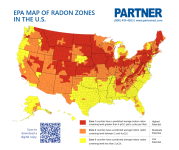
indoor cultivation of comercial fungis, in decades old facilities, is a serious health risk due to radon222 decay progenies, especialy polonium 210, a silent alpha radiation emiting killer, with a half life of 138 days, resulted from the decay of parent isotope pb210 with a halflife of 22.3 years, in such areas that are prone to high radon activities like pensylvania, silezia and lombardia.
radon is a conatant flowing valve, that accumulates over time through microcracks in the flooring of those old facilities, alpha radiation is not detectable with regular geiger counters, only through speciffic alpha spectrometry or luquid scintillation counting
 
I would not trust anything from Joe Rogan. The only radioactive mushrooms I've heard about are growing at Chernobyl.
i never said i trust them, nor this hypothesis having anything to do with those 2
 
ok, here's the condensed version

indoor cultivation of comercial fungis, in decades old facilities, is a serious health risk due to radon222 decay progenies, especialy polonium 210, a silent alpha radiation emiting killer, with a half life of 138 days, resulted from the decay of parent isotope pb210 with a halflife of 22.3 years, in such areas that are prone to high radon activities like pensylvania, silezia and lombardia.
radon is a conatant flowing valve, that accumulates over time through microcracks in the flooring of those old facilities, alpha radiation is not detectable with regular geiger counters, only through speciffic alpha spectrometry or luquid scintillation counting
You can basically take two paths here. What you’re currently trying to do is move from downstream to upstream: starting with a very detailed mechanism (radon → specific progeny → deposition → uptake → dose) and then working backwards to argue that this must be a serious health risk. That might feel logical, but it’s also the kind of approach that can take a lifetime, because every link in the chain becomes its own complex project. Also the underlying question is whether there is an health risk.

The other path is to go from upstream to downstream, and that would be my advice. Start with the big, upstream question: do we actually see a measurable effect in the real world among people who work in these facilities (e.g., higher lung cancer risk or higher measured occupational dose compared to a comparable group, controlling for smoking and other confounders)? If you see a signal there, then it makes sense to go downstream and ask which part of the mechanism explains it. If you don’t see a signal, then you’ve learned something important early, and you can reframe the whole question.

Now if this is something that can be done just by reading literature is the question, but I suspect that it would have been known by now, if significant, especially in these familie operations, growing mushrooms, in Italy.

 
Interesting hypothesis.

I would assume that this risk is known as danger of radon contamination indoors is well known and especially in part of the world affected by Chernobyl, tendency of some mushrooms to accumulate radioactive isotopes has been studied.

Definitely something worth of more investigation.
 
especially in part of the world affected by Chernobyl
I was told from childhood to be wary of wild mushrooms due to Chernobyl. We had a portable Geiger counter at home too. From what I remember, it was mostly about cesium, though. By the way, nature is in full recovery mode there:
The soils contain unique microorganisms capable of decomposing cesium and strontium isotopes. Nature, it seems, has begun to cleanse itself — without help, without technology, without man.
 
Interesting hypothesis.

I would assume that this risk is known as danger of radon contamination indoors is well known and especially in part of the world affected by Chernobyl, tendency of some mushrooms to accumulate radioactive isotopes has been studied.

Definitely something worth of more investigation.
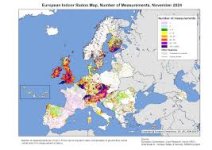
it has nothing to do with the nuclear hazzard of cernobyl/fukushima. cesium 137 is easely detected with a handheld geiger muller counter. radon and its progenies is a gas that infiltrates buildings everywhere on earth, with some areas being more active than others. there are maps published about radon activity areas, and coincidence or not, the greatest players worldwide in mushroom cultivation have their facilities in those particular areas.
radon and its progenies are alpha emitting particles
 
You can basically take two paths here. What you’re currently trying to do is move from downstream to upstream: starting with a very detailed mechanism (radon → specific progeny → deposition → uptake → dose) and then working backwards to argue that this must be a serious health risk. That might feel logical, but it’s also the kind of approach that can take a lifetime, because every link in the chain becomes its own complex project. Also the underlying question is whether there is an health risk.

The other path is to go from upstream to downstream, and that would be my advice. Start with the big, upstream question: do we actually see a measurable effect in the real world among people who work in these facilities (e.g., higher lung cancer risk or higher measured occupational dose compared to a comparable group, controlling for smoking and other confounders)? If you see a signal there, then it makes sense to go downstream and ask which part of the mechanism explains it. If you don’t see a signal, then you’ve learned something important early, and you can reframe the whole question.

Now if this is something that can be done just by reading literature is the question, but I suspect that it would have been known by now, if significant, especially in these familie operations, growing mushrooms, in Italy.
i read alot of literature to form this hypothesys. will leave a compiled list of materials i found most relevant to the topic. i also believe the only way to clarify this hazard noone checked out so far is to actually run alpha spectrometry on the comercially grown mushrooms, sold at supermarkets, with a big emphasis on growers located at these high radon activity areas.
here are the papers i read so far so i could conect all the disparsed dots to form my hypothesys:


Attachments

  • images.jpeg
    images.jpeg
    10.5 KB · Views: 3
  • EPA-Map-Radon-Zones-US-2022-9.5x8_1-1024x862.png
    EPA-Map-Radon-Zones-US-2022-9.5x8_1-1024x862.png
    494.6 KB · Views: 3
i read alot of literature to form this hypothesys. will leave a compiled list of materials i found most relevant to the topic. i also believe the only way to clarify this hazard noone checked out so far is to actually run alpha spectrometry on the comercially grown mushrooms, sold at supermarkets, with a big emphasis on growers located at these high radon activity areas.
here are the papers i read so far so i could conect all the disparsed dots to form my hypothesys:


From a scientific perspective that would not reinforce your hypothesis, but could be an pointer.
 
Back
Top Bottom