phyllode
Rising Star
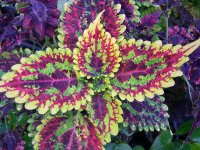
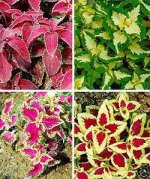
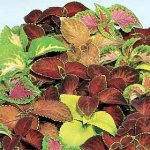
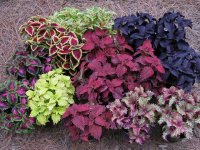
Here is a Thread from the Shaman Australis corroboree forums on Coleus blumei aka Solenostemon scutteloides. Coleus blumei
It is now Plectranthus scutteloides (Lamiaceae), and reported by Schultze and Hoffmann to be a Salvia divinorum alternative.:
And went right off topic at points. It's also got some good bioassay reports, along with the skeptics.
Amongst my posts in that thread:
After sourcing 40 leaves from a friend's strain, and boiling this down like an ayahuasca tea, that it was "entheogenic". To me, somewhere between milder Salvia D and real absynth. Bit fuzzy in a good way for a few hours. I think different colours may have differences. Anyone else tried a type of this one?
It is now Plectranthus scutteloides (Lamiaceae), and reported by Schultze and Hoffmann to be a Salvia divinorum alternative.:
It's one of the best threads on that site, and a classic example of phyllode causing a big argumentWasson also mentioned the curious datum that the Mazatecs regarded Salvia divinorum to be the most important member of a ‘family’ (all, botanically speaking, indeed members of the same family, Labiatae), being la hembra, ‘the female,’ whereas el macho or ‘the male’ was Coleus pumilus Blanco, and el nene, ‘the child,’ or el ajihado, ‘the godson,’ was Coleus blumei Bentham. This is more than strange, given the fact that both species of Coleus are post-conquest introductions to Mexico (Schultes 1967), and their juxtaposition with Salvia divinorum in the minds of the Mazatecs might be seen as reinforcing the suspicion that their use of the ‘leaves of Mary Shepherdess’ too is a post-conquest innovation. Unfortunately, we have no firm evidence for the psychoactivity of either species of Coleus.
And went right off topic at points. It's also got some good bioassay reports, along with the skeptics.
Amongst my posts in that thread:
It seems more likely to me that it would be strain variable, or technique, rather than affecting some people and not others. Almost all plants not selected over time in traditional usage, and with wide geographical range, have wide chemical variability. 'Coleus' has been asserted (in conjuction with p. harmala) as an entheogen by one correspondent in Entheogen Review. The person who had 40-50 leaves said that it worked the same in two other people. Scultze and Hoffman reported that the Mazatec called it 'the child' and said it was related to Ska Maria Patoria. This is good enough evidence for me of 1) effects and 2) probable strain variability. Different strains even smell different!
It has been mostly ignored until the study in Chem Pharm Bull (Tokyo). 2001 Jul;49(7):927-9.Diastereomeric diterpenes from Coleus blumei.Ragas CY, Templora VF, Rideout JA.
These are in a similar class as Salvia diterpenes.They have been tested only for antimicrobial activity. No scientfic tests in humans or animals of psychoactivity have been conducted [AFAIK]. My point regarding it's unusually wide wild distribution, is that it seems to have moved around a lot in preconquest times, and that it's taxonomic status is complex and not uniformly agreed upon.
After sourcing 40 leaves from a friend's strain, and boiling this down like an ayahuasca tea, that it was "entheogenic". To me, somewhere between milder Salvia D and real absynth. Bit fuzzy in a good way for a few hours. I think different colours may have differences. Anyone else tried a type of this one?