• Members of the previous forum can retrieve their temporary password here, (login and check your PM).

A legal psychedelic market

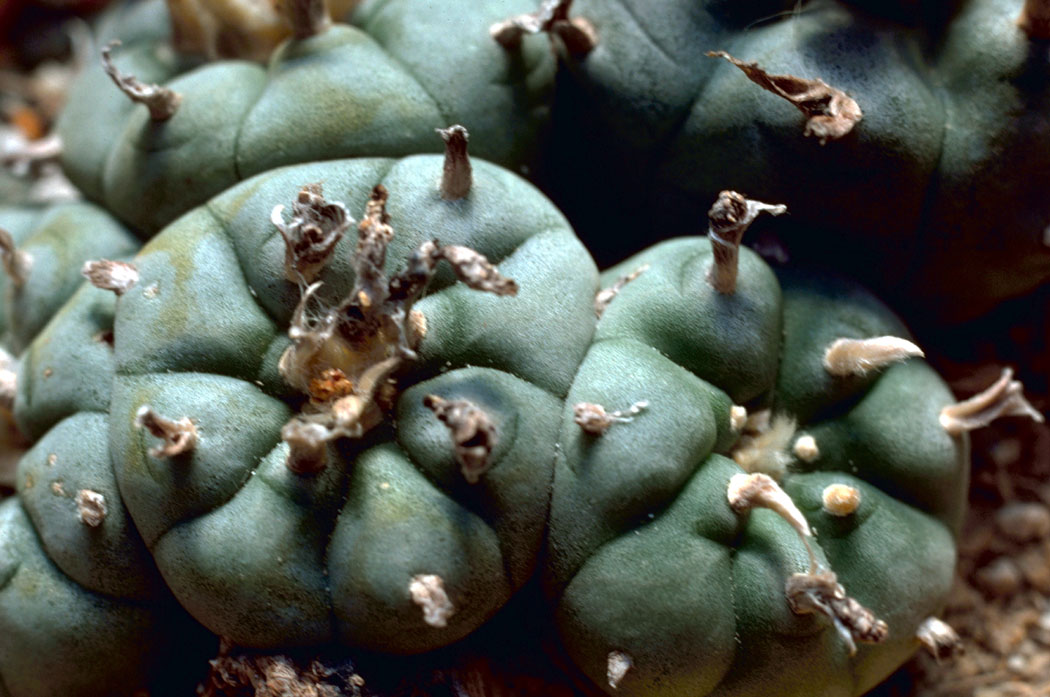
I think I'm missing something here because there's evidence that peyote use is at least 5,000 years old.

One love

Wikipedia said:
From earliest recorded time, peyote has been used by indigenous peoples, such as the Huichol[29] of northern Mexico and by various Native American tribes, native to or relocated to the Southern Plains states of present-day Oklahoma and Texas. Its usage was also recorded among various Southwestern Athabaskan-language tribal groups. The Tonkawa, the Mescalero, and Lipan Apache were the source or first practitioners of peyote religion in the regions north of present-day Mexico.[30] They were also the principal group to introduce peyote to newly arrived migrants, such as the Comanche and Kiowa from the Northern Plains. The religious, ceremonial, and healing uses of peyote may date back over 2000 years.[31]

Under the auspices of what came to be known as the Native American Church, in the 19th century, American Indians in more widespread regions to the north began to use peyote in religious practices, as part of a revival of native spirituality.

[...]

Traditional Navajo belief or ceremonial practice did not mention the use of peyote before its introduction by the neighboring Utes. The Navajo Nation now has the most members of the Native American Church.

 
The reality though still is in truth, some psychedelics/entactogens are great party drugs and a giant section of users use them this way. Burning man is a good example of this.

True Jamie, I'm one of them. The warning label in my head was aimed at adolescents I suppose. It is a very complicated topic in general.
 
It's not just about the indigenous people of today (some of which contribute to psychedelic marketing like aya retreats), but about how we started using these plants. Of course it depends on each individual's worldview, but if someone sees them as living entities that built a relationship with us, the thought of companies profiting off them just for money won't feel right.
 
what do you mean? i meant the source plant material
In a world where DMT is legal, most production would likely occur in laboratories, costing less than a dollar per gram. Plant sources would remain relevant but with reduced demand. I don’t believe it’s unethical to use plants for any purpose, including profit, as long as it’s done sustainably.
 
As far as my own research, peyote use in certain native American tribes is actually a recent development; the actual ancient ceremonial sacrament being mescal beans.

Of course that doesn't take away cultural rights of these people.

I also remember reading in at least one source that adding Chacruna or chaliponga (I.e. any DMT at all) to Caapi is also a relatively recent development. I forgot the exact source, and the information may be more nuanced.

But that doesn't take away the Cofan's right to sue Ayahuasca international / İnner Mastery.

The concept of sacredness does not neatly fit into the "free market" or "capitalism."

İn my ideal world, people would grow or harvest their own medicines from nature respectfully and sustainably. This requires serious education and a serious cultural development. The government should not have a say in this. I have nothing to say about synthetics.
 
Last edited:
I think part of the reason for laws and restrictions is because the world sadly is not ideal. Sacredness is hard to quantify. The best we can do is give grown adults the benefit of the doubt and respect others freedom and right to choose until they become a harm.
 
I think part of the reason for laws and restrictions is because the world sadly is not ideal. Sacredness is hard to quantify. The best we can do is give grown adults the benefit of the doubt and respect others freedom and right to choose until they become a harm.
From my bent-straw-perspective, mofos are too stuck on stupid to be giving the benefit of the doubt🤣
 
To discuss my free market psychedelic eutopia I would be remise if I didn't quote Vice... "We'd like to congratulate drugs, for winning the war on drugs."

A hypothetical let's envision, and maybe hop and skip with a humm and smile over some of the nuance that might trip up a realist on most days such as myself. Those pesky "well actually..." types.

Lets first pretend to take out the power that comes with the governments ability to seize land, property, and assets at their whim... Of which I don't see that being something governments have any motivation to stop utilizing to grease the messy wheels. Your freedom is optional, privatized, and for profit after the cuffs go on. I don't think the world at large is willing to wave the white flag and admit defeat to drugs anytime soon.

Lets try to take out manipulation as well. It is perverse in every aspect of our modern lives. One could argue, correctly, the algorithms people interact with daily already transact in drugs... Dopamine. Gasp. Add the malleability of people when you start to shatter their egos, dissolve entire belief structures, or feed them "currently legal but still an opiate and make sure you exercise self restraint!" The eutopia is a ripe playground for those who don't belong but let's hope an industry where these compounds make those bad actor's stand out like a glow stick in the dead of night. Clever mechanisms need put in place that dissuade this archetype entirely.

The eutopia must take note of all the lobbying and bureaucratic processes that keep small fish from participating. Plenty of these issues take place in the cannabis industry today. The eutopia must understand all these hinderances restrict people with good intention but no money from participating entirely. The eutopia must mitigate unnecessary obstacles put between the law abiding business and understand they pace the ones willing and able to bypass said laws strides ahead. The habitual line steppers have been and are winning the supply and demand drug market that isn't so eutopian for decades. Many corners to be cut when laws and morals are optional.

The eutopia must realize that patents, marketing, and monopolies are inherent in capitalist society and fight against it in this particular proclivity of the alter my concious damnit animal condition. Another archetype that needs dissuaded entirely. Obligations to shareholders in this eutopia need replaced with obligations to giving back, culture, community, and ecosystems disproprtionately affected by their consumers patronage. Pyschedelics don't need marketing, if anything they need painful truths to the youth, vulnerable, peer pressured, or foolish at the right times in their life.

My eutopia is one where the products are labeled with their compound names, batch purity, how it was sourced, and maybe their "dirty little pictures"of the chemical structure. No colors, puctures, brand names, or corpo buzzwords to placebo and bias my trip prelaunch. New and novel psychedelic compounds are welcome but a shift away from the RC "we modified it because they made the other derivative illegal" mentality. That from what I've noticed attracts actors interested in profit over well intentioned exploration and user safety.

The eutopia where users don't have to worry if the content in their bag, vial, or on their blotter is what they paid for. One where the user can microdose without much guess work between every batch. A world where testing compounds is readily available and competitively priced without requiring giving up every iota of privacy to do so. A market where the person you interacted with asked you how much you know about the compound your buying, the risk factors, what interactions it has with other compounds, what to expect, and spent a few minutes disseminating good information instead of someone elses dogma and judgement.

My eutopia would have a price structure that is competitive enough to funnel the money into the local system instead of into cartels but profitable enough for the place to remain open. The legal system would then use the additional revenue effectively with appropriate structures to measure and reallocate funds dynamically as trends arise and inefficiencies rear their head. It would age verify it's patrons but not track them or require a license to be a consumer. Community and guides available but not required.

I picture industrial vats the size you see in large scale breweries making in vivo DMT, psilocybin, an maybe someday ergot precursors en masse to meet demand and keep costs reasonable. I see alternatives, wherever viable, prioritized to avoid exploitation and overharvesting common today but not researched. That may mean consumers not having access to full plant extracts that some prefer or tricocereus derived mescaline instead of peyote. The horror. The acceptance of people growing and making their own at home if they have the skill to do so.

My eutopia assumes a restructing of aspects far outside the simple marketplace where the seller interacts with the buyer. Invariably most will not manifest even if others do. Since most psychedelics are not pyschically addictive I glossed over hypothetical systems and issues that arise from implementing around those drugs. In small well thought out and effecient systems the nuance will hit you in face constantly, let alone at scale.

:unsure:👾
 
I don't have good solutions. Full legalization will likely lead to a take over by capitalist dynamics ; of course that's already the case with many substance - and just happens illegaly. But if it's legal it get to another scale.

All these ideas about synthetic mass production is missing the point for me. These substance are teachers of the wisdom of the Earth if they are part of an eco-system, a natural , harmonious relationship with humans and the land. I wish they can be produced locally, and empower local producers and nature lovers ; the relationship the cacti or mushroom has with the land provide a teaching much more valuable than the mere neuron-stimulation of the compound.

So in a way, a form of decriminalization, where small producers are not prosecuted (a kind of grey area) , but maybe not fully legalized neither so it doesn't enter productivist-capitalist non-sense.

And i get the idea of a "no branding" approach, but ... i like to know where and who made the stuff, it matters much more than the "purity" of a crystal ! the energy, intent, state of mind behind the production is VERY relevant !
 
i like to know where and who made the stuff, it matters much more than the "purity" of a crystal
No branding doesn't mean that you don't know the manufacturer, knowing who made it is important information for multiple reasons. What it means is that you'll be buying DMT and not "Dr. Brainmelt's ULTRA POWER Deemzster X (patent pending)".
 
When you have the magic of creating and extracting your own, this becomes less of a concern.

One love

No branding doesn't mean that you don't know the manufacturer, knowing who made it is important information for multiple reasons. What it means is that you'll be buying DMT and not "Dr. Brainmelt's ULTRA POWER Deemzster X (patent pending)".
One love
 
@Voidmatrix I agree, however the thread is specifically about a hypothetical legal market ;)
Oh, I know, just thought a little reiterating and encouragement for our own autonomy amidst the growing legal psychedelic market was apt. 😏

One love

Edit: From where I'm standing (where I live) it's not hypothetical anymore.
 
It’s stupid to decriminalize drugs that already have a huge base of users while criminalizing the acquisition of those same drugs. It’s a frickin no brainer.
 
Back
Top Bottom