I was rewatching Dune tonight to brush up so I can see Part 2 in theaters tomorrow (yay!) and ended up going down a deep psychedelic rabbit hole regarding this story. When I read the book and initially watched the 2021 movie, the parallels between 'spice' and psychedelics absolutely occurred to me, and I had heard something to the same effect around the internet but never really gave it much thought - after all, I generally parallel any tale slightly profound or introspective with psychedelics, but psychedelics (specifically mushrooms) were in fact incredibly influential to this even more incredibly influential book, so I figured I'd share what I learned for those who might be interested.
Spice, or melange, is a hallucinogenic drug in Dune considered to be the most important substance in the universe. It supposedly prolongs life, bestows "heightened vitality and awareness," and unlocks prescience within certain humans. Naturally, this seems very clearly influenced by psychedelics, and to further the evidence, Frank Herbert was a cultivator and enthusiast of magic mushrooms. But the influence didn't end there. In Paul Stamet's book "Mycelium Running" there's a passage detailing Frank's direct testament of the influence of psilocybin mushrooms in Dune. An article can be found here, but I'll post the excerpt below.
“Frank went on to tell me that much of the premise of Dune—the magic spice (spores) that allowed the bending of space (tripping), the giant sand worms (maggots digesting mushrooms), the eyes of the Fremen (the cerulean blue of Psilocybe mushrooms), the mysticism of the female spiritual warriors, the Bene Gesserits (influenced by the tales of Maria Sabina and the sacred mushroom cults of Mexico)—came from his perception of the fungal life cycle, and his imagination was stimulated through his experiences with the use of magic mushrooms" (Stamets 127).
It sounds like fanatic extrapolation when in fact it was the message of Frank himself. I find it incredibly fascinating how one of (if not the most) famous sci-fi books ever largely exists because of mushrooms, yet isn't really an acknowledged work of 'psychedelic literature' or associated with it. Of course, I don't think this should distract from the book's focal message, which spice doubles as a metaphor for, being an analogy of our greed for oil in the Middle East and our severe crimes against indigenous people - which is part of what made Dune as revolutionary as it is. Sci-fi was a very western-centric genre during and before the '60's, so for a sci-fi story written by an American white guy (as they all were), Herbert was the first key player in creating a space story that centered around so many Eastern ideas. Although, I believe these two things are inherently connected, as can be seen in the impact that people like Maria Sabina had on the story. Frank Herbert had a fascination with different world religions, which can be seen in the spiritual and introspective aspects throughout the book, and the medicinal and spiritual use of psychoactive substances in these different religions had an invaluable impact upon his books and message. The Dune Deluxe Edition states he had some experience with peyote as well, but I'm not sure of any other hallucinogens which might have contributed to his work.
Aside from the impacts of mushrooms and cults, there was another aspect of spice I found fascinating that deals with, in a sense, psychedelic geometry. It's not an integral part of Dune, merely mentioned in passing to seemingly give a justification for why this substance is just so important to the universe, but one of its uses is to facilitate interstellar travel, which without spice, would be completely impossible. I've encountered this being mistaken as 'in addition to spice being a hallucinogen, it is also used as fuel for ships,' when it's the hallucinogenic qualities of spice that make interstellar travel possible. This is because, as Herbert proposed, spice allows navigators to navigate "folded space" and presumably get ships through wormholes and the like to cover vast distances quickly. (I'll be extrapolating here), but this is similar to a question I've had about psychedelics for years, which is how the change of geometric perception in the psychedelic experience could have practical uses. If this is the idea Frank Herbert was trying to explore in 1964, that was wildly futuristic for a man in a culture that had 'discovered' these drugs in only the past few years. And sixty years later, it's still a question we've yet to explore. We generally think of the practical uses of psychedelics in terms of the mental or spiritual - it's a question of what we can derive from the experience to better ourselves and to take inspiration from, or to become more in touch with the spirit world. I believe though, that there could be some objective benefit directly relating to the experience that could be taken as well. After all, if we're experiencing geometry and concepts impossible to comprehend in a sober state (such as wormholes or 'folded space'), surely there must be some sort of logical application to take from this. Non-euclidian geometry, differential geometry, spatial geometry, and other abstract mathematical fields are some of the most difficult fields because they're just so hard to comprehend, yet have very practical applications in higher-level mathematics that most people are incapable of performing...
It seems to me that if such concepts could be comprehended, it could really lead to breakthroughs in not just mental health, but applicable science, allowing people to comprehend the abstract. And it seems to me that Frank Herbert was exploring this idea at the very birth of American psychedelic culture. Perhaps not in a way grounded in actual science, but as with most sci-fi, its importance is in the proposition of its ideas. And Dune certainly had many of those - from the impact of our oil extraction on the environment, to the diversity and influence of religion, the importance of introspection, the scientific progress to be found in altering our minds, and our injustices against indigenous people, all being a very important lesson for humanity... and fascinatingly enough, influenced by psychedelics!
Anybody else watching Dune Part 2?? =)
Spice, or melange, is a hallucinogenic drug in Dune considered to be the most important substance in the universe. It supposedly prolongs life, bestows "heightened vitality and awareness," and unlocks prescience within certain humans. Naturally, this seems very clearly influenced by psychedelics, and to further the evidence, Frank Herbert was a cultivator and enthusiast of magic mushrooms. But the influence didn't end there. In Paul Stamet's book "Mycelium Running" there's a passage detailing Frank's direct testament of the influence of psilocybin mushrooms in Dune. An article can be found here, but I'll post the excerpt below.
“Frank went on to tell me that much of the premise of Dune—the magic spice (spores) that allowed the bending of space (tripping), the giant sand worms (maggots digesting mushrooms), the eyes of the Fremen (the cerulean blue of Psilocybe mushrooms), the mysticism of the female spiritual warriors, the Bene Gesserits (influenced by the tales of Maria Sabina and the sacred mushroom cults of Mexico)—came from his perception of the fungal life cycle, and his imagination was stimulated through his experiences with the use of magic mushrooms" (Stamets 127).
It sounds like fanatic extrapolation when in fact it was the message of Frank himself. I find it incredibly fascinating how one of (if not the most) famous sci-fi books ever largely exists because of mushrooms, yet isn't really an acknowledged work of 'psychedelic literature' or associated with it. Of course, I don't think this should distract from the book's focal message, which spice doubles as a metaphor for, being an analogy of our greed for oil in the Middle East and our severe crimes against indigenous people - which is part of what made Dune as revolutionary as it is. Sci-fi was a very western-centric genre during and before the '60's, so for a sci-fi story written by an American white guy (as they all were), Herbert was the first key player in creating a space story that centered around so many Eastern ideas. Although, I believe these two things are inherently connected, as can be seen in the impact that people like Maria Sabina had on the story. Frank Herbert had a fascination with different world religions, which can be seen in the spiritual and introspective aspects throughout the book, and the medicinal and spiritual use of psychoactive substances in these different religions had an invaluable impact upon his books and message. The Dune Deluxe Edition states he had some experience with peyote as well, but I'm not sure of any other hallucinogens which might have contributed to his work.
Aside from the impacts of mushrooms and cults, there was another aspect of spice I found fascinating that deals with, in a sense, psychedelic geometry. It's not an integral part of Dune, merely mentioned in passing to seemingly give a justification for why this substance is just so important to the universe, but one of its uses is to facilitate interstellar travel, which without spice, would be completely impossible. I've encountered this being mistaken as 'in addition to spice being a hallucinogen, it is also used as fuel for ships,' when it's the hallucinogenic qualities of spice that make interstellar travel possible. This is because, as Herbert proposed, spice allows navigators to navigate "folded space" and presumably get ships through wormholes and the like to cover vast distances quickly. (I'll be extrapolating here), but this is similar to a question I've had about psychedelics for years, which is how the change of geometric perception in the psychedelic experience could have practical uses. If this is the idea Frank Herbert was trying to explore in 1964, that was wildly futuristic for a man in a culture that had 'discovered' these drugs in only the past few years. And sixty years later, it's still a question we've yet to explore. We generally think of the practical uses of psychedelics in terms of the mental or spiritual - it's a question of what we can derive from the experience to better ourselves and to take inspiration from, or to become more in touch with the spirit world. I believe though, that there could be some objective benefit directly relating to the experience that could be taken as well. After all, if we're experiencing geometry and concepts impossible to comprehend in a sober state (such as wormholes or 'folded space'), surely there must be some sort of logical application to take from this. Non-euclidian geometry, differential geometry, spatial geometry, and other abstract mathematical fields are some of the most difficult fields because they're just so hard to comprehend, yet have very practical applications in higher-level mathematics that most people are incapable of performing...
It seems to me that if such concepts could be comprehended, it could really lead to breakthroughs in not just mental health, but applicable science, allowing people to comprehend the abstract. And it seems to me that Frank Herbert was exploring this idea at the very birth of American psychedelic culture. Perhaps not in a way grounded in actual science, but as with most sci-fi, its importance is in the proposition of its ideas. And Dune certainly had many of those - from the impact of our oil extraction on the environment, to the diversity and influence of religion, the importance of introspection, the scientific progress to be found in altering our minds, and our injustices against indigenous people, all being a very important lesson for humanity... and fascinatingly enough, influenced by psychedelics!
Anybody else watching Dune Part 2?? =)





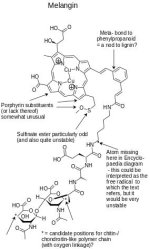
 )
)
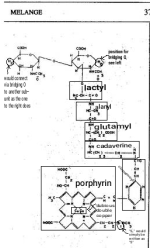
 Sorry for any and all butchery of chemistry.


 ) with any rôle in neurochemistry is the glutamate portion. That's a fairly meaningless assertion of course, but it does make me wonder how the glucopeptide part of the molecule compares with known neuropeptides. What if melanginᵗᵐ turned out to be a kappa opioid agonist like salvinorin A?