




Hello friends,
I've been fascinated with Rapé for a while now, in fact ever since @rOm sent me a sample from his blend as a gift many years ago. It wasn't until I participated in an aya ceremony led by a Yawanawa shaman that I experienced Rapé in its full force and understood that there's far more there than just getting high for a bit.
Since then I've semi-regularly been using it, and lately I've increased the frequency to practically once every day. It's not an enormous dose, but enough to feel it. With the daily use came a rational concern about cancer risk, so I had to do a deep dive into this and see what literature exists.
Disclaimer: the Consensus LLM was used to help this research happen. What follows is a detailed summary of the findings. TL;DR is at the bottom.
I will not go into detail about what Rapé is since this information can be easily found on the forum already, and besides most people that clicked on that thread already know what it is anyway, so I'll jump straight into the data. I'm in the process of preparing my own blend, experimenting with various ratios and ingredients to find what suits me the most, and once I've nailed the recipe, I will create a thread explaining my process step by step so anyone that wants to try can follow and then share their results and lessons.

Glossary
- 95% CI
- A 95% confidence interval (CI) is a range of values, calculated from sample data, that is likely to contain the true, unknown population parameter. The "95%" indicates a property of the statistical procedure: if the same study were repeated over and over with different samples from the same population, 95% of the calculated intervals would be expected to capture the true population value.
In the notation 3.94 (2.70-5.76), the central number (3.94) is the point estimate - the best single guess for the true effect based on the study sample. The range in parentheses (2.70-5.76) provides the lower and upper bounds of the 95% CI, defining the interval of plausible values for the true population parameter.
- A 95% confidence interval (CI) is a range of values, calculated from sample data, that is likely to contain the true, unknown population parameter. The "95%" indicates a property of the statistical procedure: if the same study were repeated over and over with different samples from the same population, 95% of the calculated intervals would be expected to capture the true population value.
- OR (odds ratio)
- A value used to compare the odds of an outcome between two groups
- RR (relative risk)
- A value used to compare the actual chance of that outcome between those groups
- All of the above combined
- For ratio measures like odds ratios (OR) or relative risks (RR), the "no difference" marker is 1.0. If the entire 95% CI falls above 1.0, the result is statistically significant, indicating higher risk or odds in the exposed group. If the CI crosses 1.0 (e.g., containing values both below and above 1), the result is not statistically significant because the true effect could plausibly be null.
- The width of the CI reflects the precision of the estimate: narrower intervals indicate greater precision, while wider intervals suggest more uncertainty, often due to smaller sample sizes or greater data variability. A 95% CI is more informative than a p-value alone because it reveals both statistical significance and the potential magnitude of the effect.
Preface
No peer-reviewed epidemiological study has directly measured cancer incidence or mortality in Rapé users or in any indigenous South American population using nasal tobacco-and-ash blends, making risk estimation entirely inferential from related smokeless tobacco products. The broader smokeless tobacco literature documents significant cancer risk for oral and pharyngeal cancers, with pooled OR ranging from 3.94 to 8.81 depending on product and region.Tobacco-specific nitrosamines (TSNAs) - cancer-causing chemicals formed naturally during tobacco curing and storage - including NNN (N-nitrosonornicotine) and NNK (4-(methylnitrosamino)-1-(3- pyridyl)-1-butanone), are the dominant carcinogens in smokeless tobacco and are strongly implicated in mucosal carcinogenesis. Polycyclic aromatic hydrocarbons (PAHs) - a class of chemicals formed during incomplete combustion - are also present in tobacco products and are established carcinogens that damage DNA through reactive metabolites.
Introduction
The question of whether frequent intranasal use of Rapé and similar Amazonian tobacco-and-ash blends increases cancer risk sits at the intersection of indigenous medicine, tobacco toxicology, and upper aerodigestive tract oncology. Rapé is one of several traditional smokeless tobacco products catalogued globally, alongside products such as Iq'mik (Alaska, tobacco with fungus ash), Pituri (Australia, tobacco with wood ash), and various South Asian chewing tobaccos. Despite this cataloguing, no study has followed Rapé users longitudinally to measure cancer outcomes, and the entire evidence base for cancer risk must be inferred from related non-combusted tobacco products.The smokeless tobacco literature is substantial but geographically- and product-specific. Systematic reviews have identified stark regional differences: European snus shows minimal cancer risk, while South Asian and Middle Eastern smokeless tobacco products are associated with dramatically elevated oral cancer risk. A global meta-analysis of 37 studies found significant oral cancer risk for smokeless tobacco in Southeast Asia (OR 4.44) and the Eastern Mediterranean (OR 1.28), but not for European snus (OR 0.86). Product- specific analyses reveal that oral snuff carries an OR of 4.18 for oral cancer, while gutkha reaches 8.67. The mechanistic basis for these differences lies in carcinogen content: TSNAs dominate in smokeless tobacco, and their concentrations vary by product type, curing method, and additives.
Head and neck squamous cell carcinoma (HNSCC) - cancers of the oral cavity, pharynx, hypopharynx, larynx, and nasal cavity - represents the seventh most common cancer worldwide, with tobacco use accounting for an estimated 75% of cases. Heavy tobacco and alcohol use combined increases HNSCC risk over 35-fold. Regular chewing tobacco use is associated with a 1.7 OR for HNSCC and 3.0 OR for oral cancer specifically. These figures provide context for estimating the magnitude of risk that intranasal tobacco-and-ash blends may carry, though direct extrapolation to Rapé remains uncertain.
Methods
The search ran over 170 million research papers in Consensus, drawing from Semantic Scholar, PubMed, and other bibliographic sources. The multi-step strategy targeted six research groups:- Direct evidence on Rapé and Amazonian nasal snuffs
- Indirect nasal snuff evidence
- Smokeless tobacco and cancer
- Carcinogen and mechanistic studies
- Limitations and null findings
- Foundational epidemiology
The strategy combined targeted searches for Rapé-specific and indigenous South American tobacco use with broader systematic reviews of smokeless tobacco carcinogenesis, ensuring coverage of both direct and inferential evidence pathways.
Results
Key Papers
The foundational papers in this corpus anchor the evidence on smokeless tobacco cancer risk, carcinogen mechanisms, and global disease burden.- Siddiqi et al. (2020) provide the most directly relevant cataloguing of Rapé as a smokeless tobacco product and pooled risk estimates for oral, pharyngeal, and esophageal cancers.
- Johnson et al. (2020) detail the carcinogenic mechanisms of TSNAs and PAHs in tobacco-related mucosal cancers.
- Asthana et al. (2019) provide the global meta-analysis of smokeless tobacco and oral cancer by product type.
Direct Evidence on Rapé
The single direct reference to Rapé in the peer-reviewed literature appears in Siddiqi et al. (2020), which catalogues it as a Brazilian nasal snuff made from tobacco mixed with finely ground plant materials and alkaline ashes, with pH ranging from 5.2 to 10.2 and nicotine content of 6.3-47.6 mg/g. This study does not report cancer outcomes specific to Rapé users; it includes Rapé in a broader categorisation of smokeless tobacco products for which pooled oral cancer risk estimates were calculated. No other paper in the corpus provides direct epidemiological data on Rapé, Amazonian nasal snuff, or indigenous South American populations using these products. The scoping review of traditional Indigenous medicine in North America catalogues ceremonial tobacco use but does not report cancer outcomes.Indirect Evidence: Smokeless Tobacco (SLT) and Cancer Risk
The indirect evidence base draws from systematic reviews and meta-analyses of smokeless tobacco products, which differ from Rapé in route of administration (oral vs. nasal), tobacco species ( Nicotiana tabacum vs. N. rustica), and additives, but share the non-combusted delivery of TSNAs to mucosal tissue.| Product/Region | Cancer Site | Effect Measure | Magnitude (95% CI) | Citation |
|---|---|---|---|---|
| All SLT (global, 36 studies) | Oral | RR | 3.94 (2.70-5.76) | Siddiqi et al., 2020 |
| SLT India | Oral | RR | 0.95 (0.70-1.28) | Siddiqi et al., 2020 |
| SLT USA | Oral | RR | 0.95 (0.70-1.28) | Siddiqi et al., 2020 |
| All SLT | Pharyngeal | OR | 2.23 (1.55-3.20) | Siddiqi et al., 2020 |
| All SLT | Esophageal | OR | 2.17 (1.70-2.78) | Siddiqi et al., 2020 |
| Oral snuff (global) | Oral | OR | 4.18 (2.37-7.38) | Asthana et al., 2019 |
| Snus (European) | Oral | OR | 0.86 (0.58-1.29) | Asthana et al., 2019 |
| Naswar (Pakistan) | Oral | OR | 11.8 (11.4-25.3) | Hajat et al., 2021 |
| Chewing tobacco | HNSCC | OR | 1.71 (1.08-2.70) | Hajat et al., 2021; Gormley et al., 2022 |
The global burden of disease attributable to smokeless tobacco is substantial: at least 2.5 million disability-adjusted life-years and 90,791 deaths annually from oral, pharyngeal, and esophageal cancers combined. Chewing tobacco has been associated with weak-to-moderate evidence of increased risk for lip and oral cavity cancer, esophageal cancer, nasopharyngeal cancer, other pharyngeal cancer, and laryngeal cancer. The estimated relative risk for nasopharyngeal cancer from chewing tobacco is 2.50, though with wide confidence intervals (0.49-12.66) reflecting substantial heterogeneity. A systematic review of Swedish snus users found no significant association with oral cancer (HR 0.93, 95% CI 0.59-1.44) but reported increased risk of esophageal, pancreatic, stomach, and rectal cancers.
Mechanistic Evidence: Carcinogens and Mucosal Exposure
The carcinogenic mechanism of non-combusted tobacco centers on TSNAs, which are the dominant carcinogens in smokeless tobacco products. NNN and NNK undergo metabolic activation in mucosal tissue, forming reactive metabolites that create covalent DNA adducts - chemical bonds between the carcinogen and DNA. If DNA repair fails, these adducts cause permanent mutations in tumour suppressor genes such as TP53 and CDKN2A, driving carcinogenesis. The balance between metabolic activation, detoxification, and DNA repair determines individual susceptibility.PAHs, while more prominent in combusted tobacco smoke, are also present in some smokeless products and are metabolized into reactive intermediates that cause DNA damage and promote carcinogenesis. Chronic PAH exposure has been linked to respiratory diseases and cancer through oxidative stress and DNA adduct formation. Tobacco use also triggers inflammation in exposed tissues, with local production of cytokines and growth factors that promote proliferation, angiogenesis, and ultimately carcinogenesis.
Nicotiana rustica, the tobacco species used in Rapé, contains substantially higher nicotine concentrations than Nicotiana tabacum used in commercial smokeless products, with levels reported as high as 47.6 mg/g in Rapé preparations. Higher nicotine content may drive higher TSNA formation during curing and storage, though no study has directly measured TSNA levels in Rapé or related Amazonian nasal snuffs. The alkaline ashes mixed into Rapé (pH up to 10.2) may alter mucosal absorption and carcinogen bioavailability, but this has not been studied.
Discussion
The evidence base for cancer risk from Rapé and related nasal tobacco-and-ash blends is fundamentally inferential. The single paper that directly references Rapé catalogues it among global smokeless tobacco products but does not report product-specific cancer outcomes. All quantitative risk estimates must be drawn from studies of other smokeless tobacco products that differ from Rapé in critical dimensions: route of administration (oral vs. nasal), tobacco species (N. tabacum vs. N. rustica), additive profile (slaked lime, areca nut, betel leaf vs. plant ashes), and user population.The strongest indirect evidence supports a causal association between smokeless tobacco and oral cancer, with consistent dose-response relationships and pooled ORs of 3.94 to 8.81 across meta-analyses. The Institute of Medicine concluded that some smokeless tobacco products increase oral cavity cancer risk in a dose-dependent manner, though risk is lower than for cigarette smoking. Product-specific risk varies enormously: European snus shows no significant oral cancer risk (OR 0.86), while South Asian products like gutkha (OR 8.67) and naswar (OR 11.8-23.4) carry dramatically elevated risk. This variation likely reflects differences in carcinogen content, pH-altering additives, and concurrent exposure to synergistic carcinogens like areca nut.
For sinonasal cancer specifically - the most anatomically relevant cancer for an intranasal product - the evidence is notably sparse. The International Consensus Statement on sinonasal tumors provides a comprehensive framework for understanding these malignancies but does not identify smokeless or nasal tobacco as a specific risk factor. A pooled analysis of 11 US studies found increased odds for head and neck cancer in snuff users (OR 1.71) with a dose-response effect. Chewing tobacco shows weak evidence for nasopharyngeal cancer risk (RR 2.50, 95% CI 0.49-12.66). The anatomical route of Rapé - direct application to nasal mucosa - would theoretically expose sinonasal epithelium to TSNAs and other carcinogens at concentrations comparable to or exceeding those in oral mucosa from chewing tobacco, but no study has tested this hypothesis.
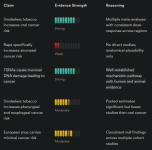
Final SOE (strength of evidence) assessment at a glance
Summary/TL;DR
The overall finding is that regular use of Rapé or similar tobacco-and-ash snuffs likely raises cancer risk, but the exact size of that risk is still unknown because almost no human studies have examined Rapé itself directly. What is clear is that non-burned tobacco products are not all alike: some, especially products used in parts of South Asia, Africa, and the Middle East, are consistently linked with cancers of the mouth, throat, and food pipe, while Swedish snus tends to show much lower risk in the studies available. Because Rapé is placed directly on delicate nasal tissues and contains tobacco chemicals known to damage genetic material and inflame exposed surfaces, the balance of evidence points toward real cause for concern, especially for cancers in nearby tissues of the nose, mouth, and throat, even though direct proof for nasal cancers from Rapé is still missing.Just as important, the review found major gaps in the evidence. Indigenous and traditional use patterns are poorly studied in mainstream medical research, and scientists still do not have good long-term data for Amazonian users, women, or many rare cancers of the nasal area. Even so, the wider cancer literature leaves little doubt that tobacco exposure is one of the strongest avoidable causes of cancers in the head, neck, and lungs, and that risk generally falls when exposure stops.
In plain terms, the most careful reading of the evidence is this: Rapé has not been proven safe, and the science from related tobacco products strongly suggests that frequent long-term use is more likely to increase cancer risk than to leave it unchanged.
In the current state of research, what would provide a more or less definitive answer to the main questions this thread tries to answer is a controlled study targeting indigenous populations where Rapé has been used for centuries, and analyzing trends related to cancer, controlling for confounding factors. Unfortunately, we currently don't have that, so if there are any willing graduates or post-docs that have the money and patience, this is a golden opportunity to be a pioneer and further our understanding of the health effects of this otherwise wonderful medicine.
For the time being, I will continue doing it, but will try to reduce the frequency at least in half to hopefully offset any buildup of failed DNA repair jobs that might be happening up there in me noggin.
If you got this far, thank you for reading. I appreciate your time and interest in the topic. If you have any additional info or data that I've missed, please chime in. We are here to learn, share, and expand after all. Love and light to you all


- (2020). Head and neck squamous cell carcinoma. *Nature Reviews Disease Primers*, 6, pp. 1. doi: 10.1038/s41572-020-00233-2.
- Anand, U., Dey, A., Chandel, A. S. K., Sanyal, R., Mishra, A., Pandey, D., De Falco, V., Upadhyay, A. P., Kandimalla, R., Chaudhary, A., Dhanjal, J., Dewanjee, S., Vallamkondu, J. and De La Lastra, J. P. M. (2022). Cancer chemotherapy and beyond: Current status, drug candidates, associated risks and progress in targeted therapeutics. *Genes & Diseases*, 10, pp. 1367 - 1401. doi: 10.1016/j.gendis.2022.02.007.
- Aredo, J., Luo, S. J., Gardner, R., Sanyal, N., Choi, E., Hickey, T., Riley, T., Huang, W.-Y., Kurian, A., Leung, A., Wilkens, L., Robbins, H., Riboli, E., Kaaks, R., Tjønneland, A., Vermeulen, R., Panico, S., Marchand, L. L., Amos, C., Hung, R., Freedman, N., Johansson, M., Cheng, I., Wakelee, H. and Han, S. S. (2021). Tobacco Smoking and Risk of Second Primary Lung Cancer. *Journal of thoracic oncology : official publication of the International Association for the Study of Lung Cancer*, 16, pp. 968 - 979. doi: 10.1016/j.jtho.2021.02.024.
- Asthana, S., Labani, S., Kailash, U., Sinha, D. and Mehrotra, R. (2019). Association of Smokeless Tobacco Use and Oral Cancer: A Systematic Global Review and Meta-Analysis.. *Nicotine & tobacco research : official journal of the Society for Research on Nicotine and Tobacco*. doi: 10.1093/ntr/nty074.
- Barbosa, F., Rocha, B., Souza, M., Bocato, M., Azevedo, L., Adeyemi, J., Santana, A. and Campiglia, A. (2023). Polycyclic aromatic hydrocarbons (PAHs): Updated aspects of their determination, kinetics in the human body, and toxicity. *Journal of Toxicology and Environmental Health, Part B*, 26, pp. 28 - 65. doi: 10.1080/10937404.2022.2164390.
- Barsouk, A., Aluru, J., Rawla, P., Saginala, K. and Barsouk, A. (2023). Epidemiology, Risk Factors, and Prevention of Head and Neck Squamous Cell Carcinoma. *Medical Sciences*, 11. doi: 10.3390/medsci11020042.
- Barta, J., Powell, C. and Wisnivesky, J. (2019). Global Epidemiology of Lung Cancer. *Annals of global health*, 85. doi: 10.5334/aogh.2419.
- Bergengren, O., Pekala, K., Matsoukas, K., Fainberg, J., Mungovan, S., Bratt, O., Bray, F., Brawley, O., Luckenbaugh, A., Mucci, L., Morgan, T. and Carlsson, S. (2023). 2022 Update on Prostate Cancer Epidemiology and Risk Factors—A Systematic Review. *European urology*, 84, pp. 191 - 206. doi: 10.1016/j.eururo.2023.04.021.
- Botteri, E., Borroni, E., Sloan, E., Bagnardi, V., Bosetti, C., Peveri, G., Santucci, C., Specchia, C., Van Den Brandt, P. A., Gallus, S. and Lugo, A. (2020). Smoking and Colorectal Cancer Risk, Overall and by Molecular Subtypes: A Meta-Analysis.. *The American journal of gastroenterology*. doi: 10.14309/ajg.0000000000000803.
- Bowden, S., Doulgeraki, T., Bouras, E., Markozannes, G., Athanasiou, A., Grout-Smith, H., Kechagias, K., Ellis, L., Zuber, V., Chadeau-Hyam, M., Flanagan, J., Tsilidis, K., Kalliala, I. and Kyrgiou, M. (2023). Risk factors for human papillomavirus infection, cervical intraepithelial neoplasia and cervical cancer: an umbrella review and follow-up Mendelian randomisation studies. *BMC Medicine*, 21. doi: 10.1186/s12916-023-02965-w.
- Chugh, A., Arora, M., Jain, N., Vidyasagaran, A., Readshaw, A., Sheikh, A., Eckhardt, J., Siddiqi, K., Chopra, M., Mishu, M., Kanaan, M., Rahman, M., Mehrotra, R., Huque, R., Forberger, S., Dahanayake, S., Khan, Z., Boeckmann, M. and Dogar, O. (2023). The global impact of tobacco control policies on smokeless tobacco use: a systematic review.. *The Lancet. Global health*, 11 6, pp. e953-e968. doi: 10.1016/s2214-109x(23)00205-x.
- Clarke, E., Thompson, K., Weaver, S., Thompson, J. and O’Connell, G. (2019). Snus: a compelling harm reduction alternative to cigarettes. *Harm Reduction Journal*, 16. doi: 10.1186/s12954-019-0335-1.
- Cumberbatch, M., Rota, M., Catto, J. and La Vecchia, C. (2016). The Role of Tobacco Smoke in Bladder and Kidney Carcinogenesis: A Comparison of Exposures and Meta-analysis of Incidence and Mortality Risks.. *European urology*, 70 3, pp. 458-66. doi: 10.1016/j.eururo.2015.06.042.
- Cumberbatch, M., Jubber, I., Black, P., Esperto, F., Figueroa, J., Kamat, A., Kiemeney, L., Lotan, Y., Pang, K., Silverman, D., Znaor, A. and Catto, J. (2018). Epidemiology of Bladder Cancer: A Systematic Review and Contemporary Update of Risk Factors in 2018.. *European urology*, 74 6, pp. 784-795. doi: 10.1016/j.eururo.2018.09.001.
- Forder, A., Zhuang, R., Souza, V. G. P., Brockley, L. J., Pewarchuk, M. E., Telkar, N., Stewart, G., Bénard, K. H., Marshall, E., Reis, P. and Lam, W. (2023). Mechanisms Contributing to the Comorbidity of COPD and Lung Cancer. *International Journal of Molecular Sciences*, 24. doi: 10.3390/ijms24032859.
- Ghasemiesfe, M., Barrow, B., Leonard, S. J., Keyhani, S. and Korenstein, D. (2019). Association Between Marijuana Use and Risk of Cancer. *JAMA Network Open*, 2. doi: 10.1001/jamanetworkopen.2019.16318.
- Gil, G., Anderson, J. A., Aravkin, A., Bhangdia, K., Carr, S., Dai, X., Flor, L. S., Hay, S., Malloy, M. J., Mclaughlin, S. A., Mullany, E. C., Murray, C. J. L., O’Connell, E. M., Okereke, C., Sorensen, R. J. D., Whisnant, J. L., Zheng, P. and Gakidou, E. (2024). Health effects associated with chewing tobacco: a Burden of Proof study. *Nature Communications*, 15. doi: 10.1038/s41467-024-45074-9.
- Gormley, M., Creaney, G., Schache, A., Ingarfield, K. and Conway, D. (2022). Reviewing the epidemiology of head and neck cancer: definitions, trends and risk factors. *British Dental Journal*, 233, pp. 780 - 786. doi: 10.1038/s41415-022-5166-x.
- Hajat, C., Stein, E., Ramstrom, L., Shantikumar, S. and Polosa, R. (2021). The health impact of smokeless tobacco products: a systematic review. *Harm Reduction Journal*, 18. doi: 10.1186/s12954-021-00557-6.
- Hlatshwayo, S., Thembane, N., Krishna, S., Gqaleni, N. and Ngcobo, M. (2025). Extraction and Processing of Bioactive Phytoconstituents from Widely Used South African Medicinal Plants for the Preparation of Effective Traditional Herbal Medicine Products: A Narrative Review. *Plants*, 14. doi: 10.3390/plants14020206.
- Hu, X.-J., Wang, X., Liang, Y., Chen, X., Zhou, S., Fei, W., Yang, Y. and Que, H. (2022). Cancer Risk in Hashimoto’s Thyroiditis: a Systematic Review and Meta-Analysis. *Frontiers in Endocrinology*, 13. doi: 10.3389/fendo.2022.937871.
- Jassem, J. (2019). Tobacco smoking after diagnosis of cancer: clinical aspects.. *Translational lung cancer research*, 8 Suppl 1, pp. S50-S58. doi: 10.21037/tlcr.2019.04.01.
- Johnson, D. E., Burtness, B., Leemans, C., Lui, V., Bauman, J. and Grandis, J. (2020). Head and neck squamous cell carcinoma. *Nature reviews. Disease primers*, 6, pp. 92 - 92. doi: 10.1038/s41572-020-00224-3.
- Jubber, I., Ong, S., Bukavina, L., Black, P., Compérat, E., Kamat, A., Kiemeney, L., Lawrentschuk, N., Lerner, S., Meeks, J., Moch, H., Necchi, A., Panebianco, V., Sridhar, S., Znaor, A., Catto, J. and Cumberbatch, M. (2023). Epidemiology of Bladder Cancer in 2023: A Systematic Review of Risk Factors.. *European urology*. doi: 10.1016/j.eururo.2023.03.029.
- Khalifeh, M., Ginex, P. and Boffetta, P. (2024). Reduction of head and neck cancer risk following smoking cessation: a systematic review and meta-analysis. *BMJ Open*, 14. doi: 10.1136/bmjopen-2023-074723.
- Kuan, E. C., Wang, E. W., Adappa, N., Beswick, D., London, N., Su, S., Wang, M. B., Abuzeid, W., Alexiev, B., Alt, J., Antognoni, P., Alonso-Basanta, M., Batra, P., Bhayani, M., Bell, D., Bernal-Sprekelsen, M., Betz, C. S., Blay, J., Bleier, B., Bonilla-Velez, J., Callejas, C., Carrau, R., Casiano, R., Castelnuovo, P., Chandra, R. K., Chatzinakis, V., Chen, S. B., Chiu, A. G., Choby, G. W., Chowdhury, N. I., Citardi, M., Cohen, M. A., Dagan, R., Dalfino, G., Dallan, I., Dassi, C., De Almeida, J., Tos, A., DelGaudio, J., Ebert, C. S., El-Sayed, I., Eloy, J., Evans, J. J., Fang, C. H., Farrell, N., Ferrari, M., Fischbein, N., Folbe, A., Fokkens, W., Fox, M. G., Lund, V., Gallia, G., Gardner, P., Geltzeiler, M., Georgalas, C., Getz, A., Govindaraj, S., Gray, S., Grayson, J., Gross, B. A., Grube, J. G., Guo, R., Ha, P., Halderman, A., Hanna, E., Harvey, R., Hernandez, S. C., Holtzman, A., Hopkins, C., Huang, Z., Huang, Z., Humphreys, I., Hwang, P., Iloreta, A., Ishii, M., Ivan, M. E., Jafari, A., Kennedy, D. W., Khan, M., Kimple, A., Kingdom, T., Knisely, A., Kuo, Y., Lal, D., Lamarre, E., Lan, M., Le, H., Lechner, M., Lee, N., Lee, J. K., Lee, V., Levine, C. G., Lin, J.-C., Lin, D., Lobo, B. C., Locke, T. B., Luong, A., Magliocca, K., Markovic, S., Matnjani, G., McKean, E., Meço, C., Mendenhall, W., Michel, L., Na’ara, S., Nicolai, P., Nuss, D., Nyquist, G., Oakley, G., Omura, K., Orlandi, R., Otori, N., Papagiannopoulos, P., Patel, Z., Pfister, D., Phan, J., Psaltis, A., Rabinowitz, M. R., Ramanathan, M., Rimmer, R. A., Rosen, M., Sanusi, O. R., Sargi, Z., Schafhausen, P., Schlosser, R., Sedaghat, A., B., Shrivastava, R., Sindwani, R., Smith, T., Smith, K. A., Snyderman, C., Solares, C., Sreenath, S. B., Stamm, A., Stölzel, K., Sumer, B., Surda, P., Tajudeen, B., Thompson, L. D. R., Thorp, B., Tong, C., Tsang, R. K., Turner, J., Turri-Zanoni, M., Udager, A., Van Zele, T., Vankoevering, K., Welch, K. C., Wise, S., Witterick, I., Won, T., Wong, S. N., Woodworth, B., Wormald, P., Yao, W., Yeh, C., Zhou, B., Palmer, J., Abiri, A., Adams, C., Ayoub, N., Bitner, B., Boyd, J. T., Chang, M. T., Chapurin, N., Chaskes, M. B., Chua, A., Chung, S., Contrera, K. J., Dilley, K. K., Dutra, A. Z., Eide, J., Fenberg, R. B., Godse, N., Jawad, B. A., Johnson, J., Johnson, B. J., Judd, R. T., Khalife, S., Khosravi, P., Kolarski, M., Kong, K., Kshirsagar, R. S., Lee, J., Lin, T.-Y., McCormick, J. P., Melder, K. L., Morse, E., Nguyen, T. V., Norwood, T. G., Pang, J. C., Parsel, S. M., Patel, P. S., Ringel, B., Schneider, A. L., Spielman, D., Spock, T. and Vasudev, M. (2023). International Consensus Statement on Allergy and Rhinology: Sinonasal Tumors. *International Forum of Allergy & Rhinology*, 14, pp. 149 - 608. doi: 10.1002/alr.23262.
- Laredo, V., García-Mateo, S., Martínez-Domínguez, S., De La Cruz, L. J., Gargallo-Puyuelo, C. and Gomollón, F. (2023). Risk of Cancer in Patients with Inflammatory Bowel Diseases and Keys for Patient Management. *Cancers*, 15. doi: 10.3390/cancers15030871.
- Li, S., Chen, X., Shi, H., Yi, M., Xiong, B. and Li, T. (2025). Tailoring traditional Chinese medicine in cancer therapy. *Molecular Cancer*, 24. doi: 10.1186/s12943-024-02213-6.
- Luo, H., Vong, C., Chen, H., Gao, Y., Lyu, P., Qiu, L., Zhao, M., Liu, Q., Cheng, Z., Zou, J., Yao, P.-F., Gao, C., Wei, J., Ung, C., Wang, S., Zhong, Z. and Wang, Y. (2019). Naturally occurring anti-cancer compounds: shining from Chinese herbal medicine. *Chinese Medicine*, 14. doi: 10.1186/s13020-019-0270-9.
- Markozannes, G., Kanellopoulou, A., Dimopoulou, O., Kosmidis, D., Zhang, X., Wang, L., Theodoratou, E., Gill, D., Burgess, S. and Tsilidis, K. (2022). Systematic review of Mendelian randomization studies on risk of cancer. *BMC Medicine*, 20. doi: 10.1186/s12916-022-02246-y.
- Maso, D. L., Torelli, N., Biancotto, E., Di Maso, M., Gini, A., Franchin, G., Levi, F., La Vecchia, C., Serraino, D. and Polesel, J. (2016). Combined effect of tobacco smoking and alcohol drinking in the risk of head and neck cancers: a re-analysis of case–control studies using bi-dimensional spline models. *European Journal of Epidemiology*, 31, pp. 385-393. doi: 10.1007/s10654-015-0028-3.
- McGee, E. E., Jackson, S. S., Petrick, J. L., Van Dyke, A. L., Adami, H., Albanes, D., Andreotti, G., Beane-Freeman, L., De González, B. A., Buring, J., Chan, A., Chen, Y., Fraser, G., Freedman, N., Gao, Y., Gapstur, S., Gaziano, J., Giles, G., Grant, E., Grodstein, F., Hartge, P., Jenab, M., Kitahara, C., Knutsen, S., Koh, W., Larsson, S., Lee, I., Liao, L. M., Luo, J., Milne, R., Monroe, K., Neuhouser, M., O’Brien, K., Peters, U., Poynter, J., Purdue, M., Robien, K., Sandler, D., Sawada, N., Schairer, C., Sesso, H., Simon, T. G., Sinha, R., Stolzenberg-Solomon, R., Tsugane, S., Wang, R., Weiderpass, E., Weinstein, S., White, E., Wolk, A., Yuan, J.-M., Zeleniuch-Jacquotte, A., Zhang, X., Zhu, B., McGlynn, K., Campbell, P. and Koshiol, J. (2019). Smoking, Alcohol, and Biliary Tract Cancer Risk: A Pooling Project of 26 Prospective Studies.. *Journal of the National Cancer Institute*. doi: 10.1093/jnci/djz103.
- Montano, L., Baldini, G. M., Piscopo, M., Liguori, G., Lombardi, R., Ricciardi, M., Esposito, G., Pinto, G., Fontanarosa, C., Spinelli, M., Palmieri, I., Sofia, D., Brogna, C., Carati, C., Esposito, M., Gallo, P., Amoresano, A. and Motta, O. (2025). Polycyclic Aromatic Hydrocarbons (PAHs) in the Environment: Occupational Exposure, Health Risks and Fertility Implications. *Toxics*, 13. doi: 10.3390/toxics13030151.
- Norum, J. and Nieder, C. (2018). Tobacco smoking and cessation and PD-L1 inhibitors in non-small cell lung cancer (NSCLC): a review of the literature. *ESMO Open*, 3. doi: 10.1136/esmoopen-2018-000406.
- Patel, A., Shaikh, S. S., Jain, K. R., Desai, C. and Madamwar, D. (2020). Polycyclic Aromatic Hydrocarbons: Sources, Toxicity, and Remediation Approaches. *Frontiers in Microbiology*, 11. doi: 10.3389/fmicb.2020.562813.
- Peng, B., Dong, Q., Li, F., Wang, T., Qiu, X. and Zhu, T. (2023). A Systematic Review of Polycyclic Aromatic Hydrocarbon Derivatives: Occurrences, Levels, Biotransformation, Exposure Biomarkers, and Toxicity.. *Environmental science & technology*. doi: 10.1021/acs.est.3c03170.
- Redvers, N. and Blondin, B. (2020). Traditional Indigenous medicine in North America: A scoping review. *PLoS ONE*, 15. doi: 10.1371/journal.pone.0237531.
- Reitsma, M., Kendrick, P., Ababneh, E., Abbafati, C., Abbasi-Kangevari, M., Abdoli, A., Abedi, A., Abhilash, E., Abila, D., Aboyans, V., Abu-Rmeileh, N., Adebayo, O., Advani, S., Aghaali, M., Ahinkorah, B., Ahmad, S., Ahmadi, K., Ahmed, H., Aji, B., Akunna, C., Al-Aly, Z., Alanzi, T. M., Alhabib, K., Ali, L., Alif, S. M., Alipour, V., Aljunid, S., Alla, F., Allebeck, P., Alvis-Guzmán, N., Amin, T., Amini, S., Amu, H., Amul, G. G., Ancuceanu, R., Anderson, J. A., Ansari-Moghaddam, A., Antonio, C., Antony, B., Anvari, D., Arabloo, J., Arian, N., Arora, M., Asaad, M., Ausloos, M., Awan, A., Ayano, G., Aynalem, G. L., Azari, S., B, D., Badiye, A. D., Baig, A., Bakhshaei, M., Banach, M., Banik, P. C., Barker-Collo, S., Bärnighausen, T., Barqawi, H., Basu, S., Bayati, M., Bazargan-Hejazi, S., Behzadifar, M., Bekuma, T. T., Bennett, D. A., Benseñor, I., Berfield, K., Bhagavathula, A., Bhardwaj, N., Bhardwaj, P., Bhattacharyya, K., Bibi, S., Bijani, A., Bintoro, B. S., Biondi, A., Birara, S., Braithwaite, D., Brenner, H., Brunoni, A., Burkart, K., Butt, Z., Santos, F. C. D. L., Cámera, L., Car, J., Cárdenas, R., Carreras, G., Carrero, J., Castaldelli-Maia, J., Cattaruzza, M., Chang, J.-C., Chen, S., Chu, D., Chung, S., Cirillo, M., Costa, V. M., Couto, R. A. A., Dadras, O., Dai, X., Damasceno, A., Damiani, G., Dandona, L., Dandona, R., Daneshpajouhnejad, P., Gela, J. D., Davletov, K., Molla, M. D., Dessie, G., Desta, A., Dharmaratne, S., Dianatinasab, M., Diaz, D., H., Douiri, A., Duncan, B. B., Durães, A., Eagan, A., Kalan, M. E., Edvardsson, K., Elbarazi, I., Tantawi, E. M., Esmaeilnejad, S., Fadhil, I., Faraon, E. J., Farinha, C., Farwati, M., Farzadfar, F., Fazlzadeh, M., Feigin, V. L., Feldman, R., Prendes, F. C., Ferrara, P., Filip, I., Filippidis, F., Fischer, F., Flor, L., Foigt, N., Foláyan, M., Foroutan, M., Gad, M., Gaidhane, A., Gallus, S., Geberemariyam, B. S., Ghafourifard, M., Ghajar, A., Ghashghaee, A., Giampaoli, S., Gill, P. S., Glozah, F. N., Gnedovskaya, E., Golechha, M., Gopalani, S., Gorini, G., Goudarzi, H., Goulart, A., Greaves, F., Guha, A., Guo, Y., Gupta, B., Gupta, R., Gupta, R., Gupta, T., Gupta, V., Hafezi-Nejad, N., Haider, M. R., Hamadeh, R., Hankey, G., Hargono, A., Hartono, R. K., Hassankhani, H., Hay, S. I., Heidari, G., Herteliu, C., Hezam, K., Hird, T., Hole, M. K., Holla, R., Hosseinzadeh, M., Hostiuc, S., Househ, M. J., Hsiao, T., Huang, J., Iannucci, V. C., Ibitoye, S. E., Idrisov, B., Ilesanmi, O. S., Ilic, I., Ilic, M., Inbaraj, L., Irvani, S., Islam, J. Y., Islam, R. M., Islam, S. M. S., Islami, F., Iso, H., Itumalla, R., Iwagami, M., Jaafari, J., Jain, V., Jakovljevic, M., Jang, S., Janjani, H., Jayaram, S., Jeemon, P., Jha, R., Jonas, J., Joó, T., Jürisson, M., Kabir, A., Kabir, Z., Kalankesh, L., Kanchan, T., Kandel, H., Kapoor, N., Karimi, S., Katikireddi, S., Kebede, H., Kelkay, B., Kennedy, R. D., Khoja, A., Khubchandani, J., Kim, G., Kim, Y.-E., Kimokoti, R., Kivimäki, M., Kosen, S., Laxminarayana, S. K. L., Koyanagi, A., Krishan, K., Kugbey, N., Kumar, G., Kumar, N., Kurmi, O., Kusuma, D., Lacey, B., Lam, J. O., Landires, I., Lasrado, S., Lauriola, P., Lee, D. W., Lee, Y. H., Leung, J., Li, S., Lin, H., Linn, S., Liu, W., Lopez, A., Lopukhov, P. D., Lorkowski, S., Lugo, A., Majeed, A., Maleki, A., Malekzadeh, R., Malta, D. C., Mamun, A. A., Manjunatha, N., Mansouri, B., Mansournia, M., Martínez-Raga, J., Martini, S., Mathur, M., Medina-Solís, C., Mehata, S., Mendoza, W., Menezes, R. G., Meretoja, A., Meretoja, T., Miazgowski, B., Michalek, I., Miller, T. R., Mirrakhimov, E., Mirzaei, H., Mirzaei-Alavijeh, M., Misra, S., Moghadaszadeh, M., Mohammad, Y., Mohammadian-Hafshejani, A., Mohammed, S., Mokdad, A., Monasta, L., Moni, M. A., Moradi, G., Moradi-Lakeh, M., Moradzadeh, R., Morrison, S. D., Mossie, T. B., Mubarik, S., Mullany, E. C., Murray, C., Naghavi, M., Naghshtabrizi, B., Nair, S., Nalini, M., Nangia, V., Naqvi, A., Swamy, N. S., Naveed, M., Nayak, S., Nayak, V. C., Nazari, J., Nduaguba, S., Kandel, S. N., Nguyen, C. T., Nguyen, H. L. T., Nguyen, S. H., Nguyen, T., Nixon, M., Nnaji, C., Norrving, B., Noubiap, J. J., Nowak, C., Ogbo, F., Oguntade, A., Oh, I.-H., Olagunju, A., Oren, E., Otstavnov, N., Otstavnov, S. S., Owolabi, M., A, M. P., Pakhalé, S., Pakshir, K., Palladino, R., Pană, A., Panda-Jonas, S., Pandey, A., Parekh, U., Park, E.-C., Park, E.-K., Kan, F. P., Patton, G., Pawar, S., Pestell, R., Pinheiro, M., Piradov, M., Pirouzpanah, S., Pokhrel, K., Polibin, R., Prashant, A., Pribadi, D. R. A., Radfar, A., Rahimi-Movaghar, V., Rahman, A., Rahman, M. H. U., Rahman, M. A., Rahmani, A., Rajai, N., Ram, P., Ranabhat, C., Rathi, P., Rawal, L. B., Renzaho, A. M. N., Reynales-Shigematsu, L., Rezapour, A., Riahi, S., Riaz, M. A., Roever, L., Ronfani, L., Roshandel, G., Roy, A., Roy, B., Sacco, S., Saddik, B., Sahebkar, A., S., Salimzadeh, H., Samaei, M., Samy, A., Santos, I., Santric-Milicevic, M. M., Sarrafzadegan, N., Sathian, B., Sawhney, M., Saylan, M., Schaub, M. P., Schmidt, M., Schneider, I., Schutte, A., Schwendicke, F., Seidu, A., Kumar, S. N., Sepanlou, S., Seylani, A., Shafaat, O., Shah, S. M., Shaikh, M., Shalash, A. S., Shannawaz, M., Sharafi, K., Sheikh, A., Sheikhbahaei, S., Shigematsu, M., Shiri, R., Shishani, K., Shivakumar, K., Shivalli, S., Shrestha, R., Siabani, S., Sidemo, N. B., Sigfusdottir, I., Sigurvinsdóttir, R., Silva, D., Silva, J., Singh, A., Singh, J. A., Singh, V., Sinha, D., Sitas, F., Skryabin, V., Skryabina, A., Soboka, M., Soriano, J. B., Soroush, A., Soshnikov, S., Soyiri, I. N., Spurlock, E., Sreeramareddy, C., Stein, D., Steiropoulos, P., Stortecky, S., Straif, K., Abdulkader, R. S., Sulo, G., Sundström, J., Tabuchi, T., Tadakamadla, S., Taddele, B. W., Tadesse, E. G., Tamiru, A. T., Tareke, M., Tareque, M. I., Tarigan, I. U., Temsah, M., Thankappan, K., Thapar, R., Tichopád, A., Tolani, M., Topouzis, F., Tovani-Palone, M., Tran, B. X., Tripathy, J., Tsegaye, G. W., Tsilimparis, N., Tymeson, H. D., Ullah, A., Ullah, S., Unim, B., Updike, R., Vacante, M., Valdez, P., Vardavas, C., Pérez, V. P., Vasankari, T., Venketasubramanian, N., Verma, M., Vetrova, M. V., Vo, B., Vu, G., Waheed, Y., Wang, Y., Welding, K., Werdecker, A., Whisnant, J. L., Wickramasinghe, N., Yamagishi, K., Yandrapalli, S., Yatsuya, H., Yazdi-Feyzabadi, V., Yeshaw, Y., Yimmer, M. Z., Yonemoto, N., Yu, C., Yunusa, I., Yusefzadeh, H., Moghadam, T. Z., Zaman, M., Zamanian, M., Zandian, H., Zar, H. J., Zastrozhin, M., Zastrozhina, A., Zavala-Arciniega, L., Zhang, J., Zhang, Z.-J., Zhong, C., Zuniga, Y. M. H. and Gakidou, E. (2021). Spatial, temporal, and demographic patterns in prevalence of smoking tobacco use and attributable disease burden in 204 countries and territories, 1990–2019: a systematic analysis from the Global Burden of Disease Study 2019. *Lancet (London, England)*, 397, pp. 2337 - 2360. doi: 10.1016/s0140-6736(21)01169-7.
- Saginala, K., Barsouk, A., Aluru, J., Rawla, P., Padala, S. and Barsouk, A. (2020). Epidemiology of Bladder Cancer. *Medical Sciences*, 8. doi: 10.3390/medsci8010015.
- Shah, S. C. and Itzkowitz, S. (2021). Colorectal Cancer in Inflammatory Bowel Disease: Mechanisms and Management. *Gastroenterology*, 162, pp. 715 - 730.e3. doi: 10.1053/j.gastro.2021.10.035.
- Siddiqi, K., Husain, S., Vidyasagaran, A., Readshaw, A., Mishu, M. and Sheikh, A. (2020). Global burden of disease due to smokeless tobacco consumption in adults: an updated analysis of data from 127 countries. *BMC Medicine*, 18. doi: 10.1186/s12916-020-01677-9.
- Stapleton, F., Abad, J., Barabino, S., Burnett, A., Iyer, G., Lekhanont, K., Li, T., Liu, Y., Navas, A., Obinwanne, C. J., Qureshi, R., Roshandel, D., Şahin, A., Shi, K., Tichenor, A. A. and Jones, L. (2023). TFOS lifestyle: Impact of societal challenges on the ocular surface. *The Ocular Surface*, 28, pp. 165 - 199. doi: 10.1016/j.jtos.2023.04.006.
- Thandra, K., Barsouk, A., Saginala, K., Aluru, J. and Barsouk, A. (2021). Epidemiology of lung cancer. *Contemporary Oncology*, 25, pp. 45 - 52. doi: 10.5114/wo.2021.103829.
- Tiwari, A., Mishra, S. and Kuo, T. (2025). Current AI technologies in cancer diagnostics and treatment. *Molecular Cancer*, 24. doi: 10.1186/s12943-025-02369-9.
- Valen, H., Becher, R., Vist, G., Holme, J., Mdala, I., Elvsaas, I. Ø., Alexander, J., Underland, V., Brinchmann, B. and Grimsrud, T. (2023). A systematic review of cancer risk among users of smokeless tobacco (Swedish snus) exclusively, compared with no use of tobacco. *International Journal of Cancer*, 153, pp. 1942 - 1953. doi: 10.1002/ijc.34643.
- Van Osch, F. V., Jochems, S. H. J., Van Schooten, F. V., Bryan, R. and Zeegers, M. (2016). Quantified relations between exposure to tobacco smoking and bladder cancer risk: a meta-analysis of 89 observational studies.. *International journal of epidemiology*, 45 3, pp. 857-70. doi: 10.1093/ije/dyw044.
- Wang, B., Hu, S., Teng, Y., Chen, J., Wang, H., Xu, Y., Wang, K., Xu, J., Cheng, Y. and Gao, X. (2024). Current advance of nanotechnology in diagnosis and treatment for malignant tumors. *Signal Transduction and Targeted Therapy*, 9. doi: 10.1038/s41392-024-01889-y.
- Westwood, M., Ramaekers, B., Lang, S., Grimm, S., Deshpande, S., De Kock, S., Armstrong, N., Joore, M. and Kleijnen, J. (2018). Risk scores to guide referral decisions for people with suspected ovarian cancer in secondary care: a systematic review and cost-effectiveness analysis.. *Health technology assessment*, 22 44, pp. 1-264. doi: 10.3310/hta22440.
- Wong, Y., Meehan, M., Burrows, S., Doolan, D. and Miles, J. J. (2021). Estimating the global burden of Epstein–Barr virus-related cancers. *Journal of Cancer Research and Clinical Oncology*, 148, pp. 31 - 46. doi: 10.1007/s00432-021-03824-y.
- Xi, Z., Dai, R., Ze, Y., Jiang, X., Liu, M. and Xu, H. (2025). Traditional Chinese medicine in lung cancer treatment. *Molecular Cancer*, 24. doi: 10.1186/s12943-025-02245-6.


