Librazy345
Rising Star
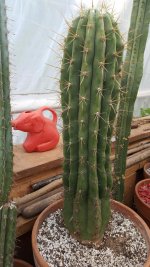
Trichocereus terscheckii contains alpha-methyl-mescaline aka 345-Trimethoxy-Amphetamine (TMA)
Browningia candelaris contains 4-Methoxyamphetamine (PMA)
besides that these 2 cactus can produce substituted amphetamines, they share another unique trait in that they contain very high levels of N-di-methylated precursors. (whereas precursors in san pedro are relatively trace ie >0.01%). Tershcheckii containing high levels of di-methyl-mescaline (trichocerine) and browningia candelaris containing high fraction of N-dimethyl-4-methoxy-pea. I roughly calculate yield to be around 0.01% for alpha-methyl-mescaline and 0.03% for 4-Methoxyamphetamine (PMA).
it seams the di-methylated pea's are direct precursors to these substituted amphetamines. the reaction is not elucidated yet but probably appears to be a 1-step reaction something like a phenylpropanoid-like imine methyl-transferase all-in-one. where one methyl is donated and the other relocating to alpha carbon.
both san pedro and peyote contain trace quantities 0.01%> of hordenine and lobovine which are N-di-methylated pea's. It appears they dont exist in sufficient quantity at any given time to produce an amphetamine homolog at any detectable amount. Whether its due to insufficient N-methylation enzymes or oversufficient N-demthylation enzymes (probably both) they exist in low quantity. The methylation enzymes in cactus are very fast. Whereas Demethylations are slower (9:1) it seams completely plausible that san pedro and peyote could naturally produce alpha-methylations given the right (human intervention) circumstances, the products being MDA and Gepefrine.
Why have I not seen this discussed anywhere else, this is an important discovery in my opinion that has profound implications in the organic/biochemical fields.
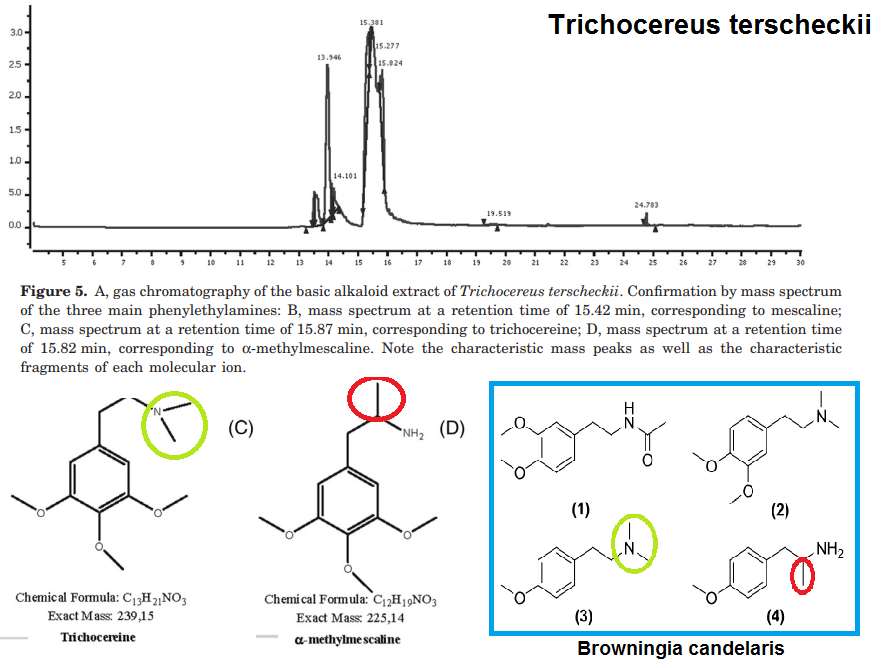
My image isnt loading but below link is an image showing gcms & relevant biosynthesis data I compiled
Browningia candelaris contains 4-Methoxyamphetamine (PMA)
besides that these 2 cactus can produce substituted amphetamines, they share another unique trait in that they contain very high levels of N-di-methylated precursors. (whereas precursors in san pedro are relatively trace ie >0.01%). Tershcheckii containing high levels of di-methyl-mescaline (trichocerine) and browningia candelaris containing high fraction of N-dimethyl-4-methoxy-pea. I roughly calculate yield to be around 0.01% for alpha-methyl-mescaline and 0.03% for 4-Methoxyamphetamine (PMA).
it seams the di-methylated pea's are direct precursors to these substituted amphetamines. the reaction is not elucidated yet but probably appears to be a 1-step reaction something like a phenylpropanoid-like imine methyl-transferase all-in-one. where one methyl is donated and the other relocating to alpha carbon.
both san pedro and peyote contain trace quantities 0.01%> of hordenine and lobovine which are N-di-methylated pea's. It appears they dont exist in sufficient quantity at any given time to produce an amphetamine homolog at any detectable amount. Whether its due to insufficient N-methylation enzymes or oversufficient N-demthylation enzymes (probably both) they exist in low quantity. The methylation enzymes in cactus are very fast. Whereas Demethylations are slower (9:1) it seams completely plausible that san pedro and peyote could naturally produce alpha-methylations given the right (human intervention) circumstances, the products being MDA and Gepefrine.
Why have I not seen this discussed anywhere else, this is an important discovery in my opinion that has profound implications in the organic/biochemical fields.
My image isnt loading but below link is an image showing gcms & relevant biosynthesis data I compiled