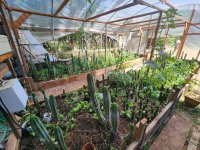
Project research on growing trichocereus in syntropic systems (regenerative agroforestry )
Objective :
-reducing importacion of trichocereus from south america
-establishing a diverse genetic bank of pachanois, bridgesii and hybrids (over 30 different varieties)
-production of food
-production of aromatic plants and fowers for perfumery
DESIGN
Long term species (climax):
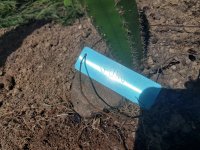
-A trichocereus seedling (2-4 years old). Selected crosses from new zealand (guru, dino, decosta, notch...) and from portugal.
-almonds
-oaks
- Damask Rose (end of lines)
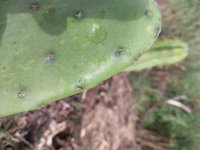
Support : prickly pears (condensator of air moisture / chop and drop)
Medium term for both production & support (secundaries)
Rosemary
Lavender
Sages (white sage, officinalis & more)
elaeagnus
Acacia (acuminata, maidenii, longifolia)
Short term (placenta)
Production: pumpkins
Support : Sunflower (VERY IMPORTANT, gives shade from the midday sun the first summer. The cactus really appreciate!) , cruciferas, mostards, and a mix of random seeds of a bit everything.
Implementation :
80m long line, running east-west, with one drip irrigation
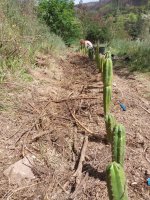
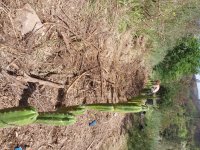
Middle line : cactus every 30 cm (240 tricho in total)
Interplanted with the almonds, acacias and oaks (every 4 m or so)
Front line : Prickly pears, aromatics , sunflowers
back line : pumpkins
Workflow :
-cut existing veggetation and keep the biomass aside
-Looseing of the soil over 1.20m wide
-Concentrating top soil in the middle
-integrating manure (300L)
-Planting of all the seedlings
-Adding the support species & the seeds
-Using all the biomass of the area and place it along the line. Then mulching with woodchips (1500 liter) – this is an important step to reduce the amount of grass coming back.
Worktime : 4 days with 2 people
Maintenance :
weeding the grass, thinning the sunflowers (probably keeping one every 30 cm), managing the ground covers to give space to the young aromatics...
->1h every 2 weeks (without counting the time standing there in contemplation... I prefer not to say how much this is)
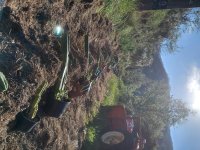
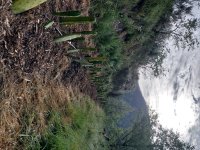
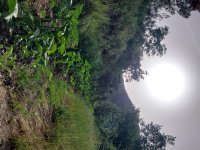
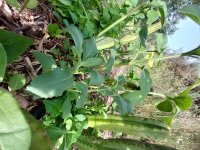
ps: can't find a way to put the image in the correct orientation :/
Objective :
-reducing importacion of trichocereus from south america
-establishing a diverse genetic bank of pachanois, bridgesii and hybrids (over 30 different varieties)
-production of food
-production of aromatic plants and fowers for perfumery
DESIGN
Long term species (climax):
-A trichocereus seedling (2-4 years old). Selected crosses from new zealand (guru, dino, decosta, notch...) and from portugal.
-almonds
-oaks
- Damask Rose (end of lines)
Support : prickly pears (condensator of air moisture / chop and drop)
Medium term for both production & support (secundaries)
Rosemary
Lavender
Sages (white sage, officinalis & more)
elaeagnus
Acacia (acuminata, maidenii, longifolia)
Short term (placenta)
Production: pumpkins
Support : Sunflower (VERY IMPORTANT, gives shade from the midday sun the first summer. The cactus really appreciate!) , cruciferas, mostards, and a mix of random seeds of a bit everything.
Implementation :
80m long line, running east-west, with one drip irrigation
Middle line : cactus every 30 cm (240 tricho in total)
Interplanted with the almonds, acacias and oaks (every 4 m or so)
Front line : Prickly pears, aromatics , sunflowers
back line : pumpkins
Workflow :
-cut existing veggetation and keep the biomass aside
-Looseing of the soil over 1.20m wide
-Concentrating top soil in the middle
-integrating manure (300L)
-Planting of all the seedlings
-Adding the support species & the seeds
-Using all the biomass of the area and place it along the line. Then mulching with woodchips (1500 liter) – this is an important step to reduce the amount of grass coming back.
Worktime : 4 days with 2 people
Maintenance :
weeding the grass, thinning the sunflowers (probably keeping one every 30 cm), managing the ground covers to give space to the young aromatics...
->1h every 2 weeks (without counting the time standing there in contemplation... I prefer not to say how much this is)
ps: can't find a way to put the image in the correct orientation :/