• Members of the previous forum can retrieve their temporary password here, (login and check your PM).

Defatting/Purifying San Pedro Resin

Migrated topic.
I plan on trying CIELO during this summer, so if I still have some resin then I'll do it. After an initial attempt at normal CIELO, just to make sure I can complete it correctly.

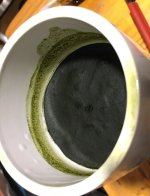
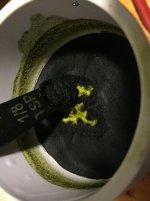
A few hours after trying 2g (quite wet still) of this resin, I'm thinking that I may not bother further purifying it, as the effects felt somewhere between 100-200mg mescaline.
 
A few hours after trying 2g (quite wet still) of this resin, I'm thinking that I may not bother further purifying it
This rather reminds me of all the samples I've eaten instead of sending them off for laboratory analysis :oops:

[NB - they were nominally safe plant extracts that I'm talking about, rather than random RCs!]
 
A few hours after trying 2g (quite wet still) of this resin, I'm thinking that I may not bother further purifying it, as the effects felt somewhere between 100-200mg mescaline.
Once I've extracted from cactus resin and it turned out that its mescaline content was lower that its effects suggested. Most likely some entourage effects from other full spectrum compounds.
 
Once I've extracted from cactus resin and it turned out that its mescaline content was lower that its effects suggested. Most likely some entourage effects from other full spectrum compounds.
It seems very likely to be the case here, yes. As I want to get some experience with the full spectrum alkaloids, this is not a problem. And given my limited access to cactus, it's an advantage to me if I can get more doses out of the same plant matter (unless I end up not liking the full spectrum, we'll see when I try higher doses).
 
Tried the resin yesterday. It was an excellent experience, one of my most joyful psychedelic experiences ever. Much superior to the synthetic mescaline experience I had before, and I already liked that one. There was more nausea during the come-up, but it still was mild when compared to Aya, and it dissipated completely once that phase ended. So it was not a problem.

The subjective potency was consistent with it being about 5% mescaline.

I likely will try the IPA or ethanol purification of the resin though, as it was very messy to handle. I also suppose that should lead to a more consistent potency between extractions of different cacti.
 
Thanks for replying to this thread. Got some gears turning for me. I was contemplating how I could do a companion extract prior to CIELO to make my way through more cacti material with a solvent I have easy access to. Some side researching I ran into House's resin extraction on the Nexus Wiki and LSDuck's variants of it with and without vinegar on Reddit.

I thought it would be useful to experience the full spectrum effects of cacti. It would have high utility for me if it can be re-hydrated into a minimal amount of water as it would be friendly in either Kash's A/B, a direct CIELO from resin, or substituting water in CIELO with what I'll call for now resin infused water.

My optimism faded a bit though based on Loveall's reply:
Not all the cactus resin re-dissolves in water. Doubledog has mentioned this several before and is what I also observed. Not sure why, one possibility could be proteins that denature when dry, becoming insoluble.

You can also try add acetone to the re-dissolved water. Some proteins and maybe other stuff should crash while mescaline stays dissolved . I found that mescaline from a water extraction is very persistent staying in solution (doubledog had also mentioned this before), even after two volumes of acetone are added. Some kind of plant stuff must be helping it dissolve. If you use little water and a lot of acetone maybe mescaline will crash eventually (a lot of other stuff would crash first though). Solution becomes cloudy each time something new crashes.

But then doubledog made it seem straightforward with the replies of:
...
If you want pure product, add little bit of water and mix it with calcium hydroxide. I would also add some inert material (sand) to improve penetrability to solvent. Wash it with EA and so on.
Principle here is that adding solvent with lower polarity (but still polar) decreases solubility of inactive plant stuff, while alkaloids are still soluble. So yes, IPA or even acetone work similarly.
It's better to redissolve the resin in hot water (just to make it liquid, not more), then add IPA slowly, cool it afterwards.
Separate and keep liquid and re-extract sediment again. Evaporate.

I would like to hear if someone has tried this, or has some additional thoughts on it.

...

Edit: I see CIELO mentions that it's possible to add resin to cactus powder, but it's not clear to me whether the cactus powder is always necessary or not.

Regardless, I am interested in this as well and did not previously see the call out in the CIELO FAQ section. Good catch! I'm scrolling through r/mescaline to see if there is any examples of this. I didn't see much when searching Nexus but the amount of posts in the archives is vast...
If you have the cactus powder it would be great to know how CIELO from a resin-plus-powder paste turns out. Make sure you use cactus tea for thinning it :D

I'm actually interested in knowing whether there's a tipping point where mesc over-concentration in the EA goes towards goo formation, so maybe try adding citric to only a small portion of the first EA pull to start with, if you end up trying this out.

I am currently well situated to perform some tests on this if it would be of use. I have plenty of the PC cactus material I performed my initial CIELO extract on, I believe a couple kg there abouts. I also have plenty of other wet and dry cacti of named cultivars that would allow plenty of tinkering. I don't have ultimate faith in my analytical chemistry skills yet to confidently eliminate a certain amount of variability due to user error.

Is the proposed CIELO modification both adding powdered resin in conjunction with cacti powder as well as resin infused water? I was mostly thinking resin infused water and fresh cacti powder.
I have fumaric and citric acid which I saw you mention citric initially. Is your theory about goo formation contingent upon which acid is used, is mostly in relation to mescaline concentration, or some degree of both?

 
I thought it would be useful to experience the full spectrum effects of cacti. It would have high utility for me if it can be re-hydrated into a minimal amount of water as it would be friendly in either Kash's A/B, a direct CIELO from resin, or substituting water in CIELO with what I'll call for now resin infused water.

Purified resin can be easily rehydrated and used for A/B. It's not the best approach (too much work), but it's possible.
 
Not all the cactus resin re-dissolves in water. Doubledog has mentioned this several before and is what I also observed. Not sure why, one possibility could be proteins that denature when dry, becoming insoluble.
I was thinking a bit about this one too, and there's the possibility that the branched-chain polysaccharides responsible for the bulk of the mucilaginous properties have a lot to do with this. As I envisage it, on dehydrating, these tree-like chains of sugar molecules that normally hold onto a lot of water between their branches would start to 'zip' together as they become more and more dehydrated. Instead of bonding to water molecules, the branches start to hydrogen-bond to each other within the individual macromolecules, and the molecules thus fold up tightly a bit like umbrellas. This would be more or less a kind of intramolecular (i.e., within the molecule) crystallisation, and would present a considerable energy barrier against rehydration, especially if hydrophobic auxiliary groups end up presented on the outside of the arrangement.

I would suggest that a combination of pressure, heat, and possibly addition of a non-ionic surfactant would help to expedite the rehydration of a fully-dehydrated resin. Alternatively, a means of selectively leaching out the target substances from (presumably) the dried up polysaccharides could prove to be advantageous.

At least, that's my one hypothesis, and I'd like to check the literature concerning the structural specifics of cactus mucilage polysaccharides one more time, as it also raises some questions about the degree to which smaller molecules could become trapped within this intramolecular matrix.
 
That was almost exactly my thinking why it happens - partial loss of water catching properties by change in spatial configuration of heteropolysacharides' branches.
However, not so important, I doubt that the undissolved stuff contains significant amount of alkaloids.
 
That was almost exactly my thinking why it happens - partial loss of water catching properties by change in spatial configuration of heteropolysacharides' branches.
However, not so important, I doubt that the undissolved stuff contains significant amount of alkaloids.
My thoughts on the possibility of alkaloid retention were centered around the likelihood of uronic acid residues being included in the polysaccharides - something which would require somewhat extensive delving in the literature to either discount or verify.

Do we know anything about whether the cactus polysaccharides incude any prosthetic groups, like flavonoids?
 
Back
Top Bottom