• Members of the previous forum can retrieve their temporary password here, (login and check your PM).

Desmanthus illinoensis success PICS

Migrated topic.

skoobysnax

Esteemed member
Joined
Jun 8, 2013
Messages
632
Merits
95
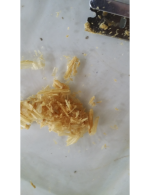
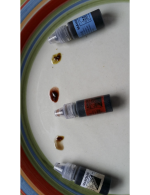
52g of DIRB yielded 900mg of a light tan wax that is easy to handle. Did 6X pulls with 99% IPA on a q21q21 style tek for preparation of the material which was dried completely before the pulls. The pulls were combined, settled and filtered several times over 3 weeks until I got a clear yellowish solvent. This was slowly evaporated over 2 weeks. Smells like new shoes with a floral hint.

I am unsure if gramine came through. Sending a bit out to have it tested. EDIT: Did a naptha Re-X today and a lot of gunk did not dissolve. will post results. The naptha clouded in the dis so I am hopeful but nowhere cloese to the first yield.
 

Attachments

  • DIRB.png
    DIRB.png
    6.9 MB · Views: 16
  • des.png
    des.png
    7.1 MB · Views: 16
That's great news, skoobysnax!

I collected about 300 grams of DIRB last July with high hopes of announcing results like yours, but was greatly disappointed as my final yield was only about 30mg of goo. I held back from announcing my results in the desmanthus thread in the Collaborative Research Project, as I didn't want to take the chance of discouraging others.

I collected my specimens from a government planted prairie restoration, and have some suspicions that the particular variety may have been the cause of my low yield.

The plants were all mature with brown pods that were dropping seed and about waist high (fully grown in my area). I'm wondering what the growing conditions/maturity were like for your DIRB sample?
 
Here are the first set of results via Energy Control (props and thx to ENDLESSNESS) for helping me connect.

The DI IPA contains (presumably in order of quantity): hordenine + DMT + NMT + unknown + 2-MTHBC + another minor unknown
DI naphta (a basic clean-up of the first extraction looked to be around 100mg of goo) contains: hordenine + DMT + NMT + 2-MTHBC

The high level of hordenine as a result of a drytek rather than aqueous basing is presumed.

1st year plants, zone 8, harvested after plants seeded and appeared dead on top, (roots overwinter though)
 
Thx for your work ! I'm really grateful people like you are researching a potential DMT source for our climate :)
 
Great work skooby.
Was there any estimation of relative proportions of those alkaloids?
Its good to see there was more DMT than NMT but I'm curious just how far hordenine dominated.
roninsina said:
...I collected about 300 grams of DIRB last July with high hopes of announcing results like yours, but was greatly disappointed as my final yield was only about 30mg of goo...
July would have been the worst time to harvest, in terms of alkaloid yield. You could try again in november or just before the ground freezes.
 
So the results were not great :| The way it smelled I thought I struck gold lol, that sweet indole...
First sample is 0.012%DMT and 0.008% NMT
Re-x sample is 0.037%DMT and 0.0024%NMT

So that means hordenine was really high.

In early winter I will try the second year plants and do cyb's tek (this was a dry tek with IPA as solvent) and see if the results are better. The advice that hordenine would stay in the aqueous phase was given and waiting until November is a great idea.
 
ok cool. thanks! didnt know about energy control. was always asking myself if there is something like this in europe.
What kind of analysis protocol do you get from them?
 
Seeing your results I feel kind of silly I didn't continue my Illioensis projects. In any case bravo!
 
Yumi said:
Seeing your results I feel kind of silly I didn't continue my Illioensis projects. In any case bravo!
TBH the DMT yield was very low. I did find seeds for D. leptobulus I will plant in the spring. I don't trust the soils the original plants were in so I did not harvest roots. Railroad tracks and spray...
 
Railroads would be an awesome place to plant some plants. Sadly railway companies often spray tons of Glyphosat and other chemicals to keep the vegetation small.
 
So the results were not great :| The way it smelled I thought I struck gold lol, that sweet indole...
First sample is 0.012%DMT and 0.008% NMT
Re-x sample is 0.037%DMT and 0.0024%NMT

So that means hordenine was really high.

In early winter I will try the second year plants and do cyb's tek (this was a dry tek with IPA as solvent) and see if the results are better. The advice that hordenine would stay in the aqueous phase was given and waiting until November is a great idea.
Not sure if this thread is too old to comment on, Im new at this so sorry if thats the case. The key to getting the hordenine to stay in the basic aqueous phase is to be sure and raise the ph all the way to 12, then do your pulls.
 
Reading this thread, what strikes me is the lack of Gramine and the fact that the NMT seemed to come through the Naptha extraction when I thought NMT was not soluble in Naptha.
 
Reading this thread, what strikes me is the lack of Gramine and the fact that the NMT seemed to come through the Naptha extraction when I thought NMT was not soluble in Naptha.
Hm, we've seen any NMT present coming over in naphtha since about forever, from what I recall. Maybe the solubility's lower, but there wouldn't be those various threads on NMT removal if this wasn't occurring.
 
Hm, we've seen any NMT present coming over in naphtha since about forever, from what I recall. Maybe the solubility's lower, but there wouldn't be those various threads on NMT removal if this wasn't occurring.
Hey, thank you so much for all the info I get here. It's invaluable.
Can I assume that a Naptha extraction will eliminate any Gramine? and
What's up with Gramine and it's presence and possible toxicity (or not)?
With low yield being commonly reported, Aya becomes a thought.

I know these questions have all been asked, but there hasn't been a definitive response that I have seen. Just wonder what the latest thoughts from the experts are.

Interesting for me... I have been idly keeping plant growing for years now to spread the seed as much as anything. It grows rather easily here, springing up in corners of the yard on it's own. But, just recently I have noticed that it seems to be getting common along the sides of the highway. Common and in distinct patches to where I'm fairly sure it is being spray planted by the highway dept for erosion control(?).
 
Hey, thank you so much for all the info I get here. It's invaluable.
Can I assume that a Naptha extraction will eliminate any Gramine? and
What's up with Gramine and it's presence and possible toxicity (or not)?
With low yield being commonly reported, Aya becomes a thought.

I know these questions have all been asked, but there hasn't been a definitive response that I have seen. Just wonder what the latest thoughts from the experts are.

Interesting for me... I have been idly keeping plant growing for years now to spread the seed as much as anything. It grows rather easily here, springing up in corners of the yard on it's own. But, just recently I have noticed that it seems to be getting common along the sides of the highway. Common and in distinct patches to where I'm fairly sure it is being spray planted by the highway dept for erosion control(?).
Good that you have some old(ish?) plants of your own - the roots of those should be more potent, although I'm not sure off the top of my head exactly what seasonal variation you'd have to contend with.

Gramine seems to be less of an issue than some people were suggesting back in the day, both in terms of toxicity (it's not particularly toxic) and also with its low solubility in naphtha. There are a few threads discussing gramine, along with more posts in the phalaris threads. Some of these should be relatively up to date, enough so that you should be able to draw some sensible conclusions.

We may still need to trawl the literature for more data regarding seasonal variation in alkaloid concentration - otherwise it's up to one of you lot over in its natural range to get the ball rolling!

I tried growing D. illinoensis once. It got devastated in the seedling stage by slugs and woodlice :(
 
Back
Top Bottom