• Members of the previous forum can retrieve their temporary password here, (login and check your PM).

Ethanol freeze precipitated crystals

modern

Titanium Teammate
Joined
Oct 3, 2015
Messages
718
Merits
1,389
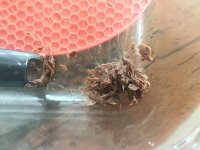
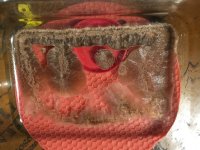
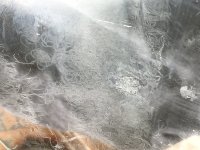
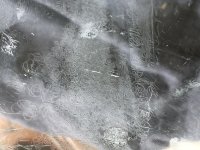
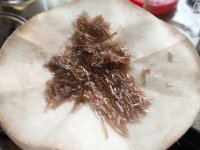
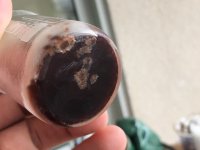
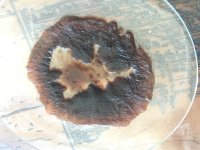
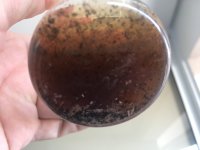
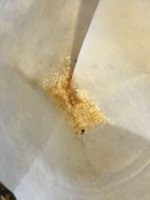
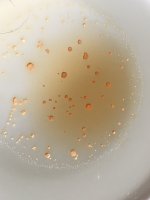
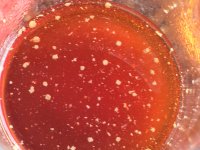
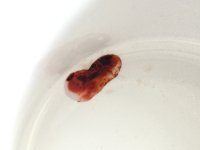
so after a chloroform extraction I ended up using a little excess sulfuric acid which lead to color impurities and pulling other alkaloids. I washed with sieve dried ethanol 2ml at a time and then froze the solution overnight. This lead to a dark precipitate that once reaching room temperature it melted and only some white crystals which I suspect is mescaline sulfate on the bottom. I decided to combine with the 'washed' crystals and added hot ethanol to recrystallize and will freeze again then attempt to separate after. Visually not a small amount of material.

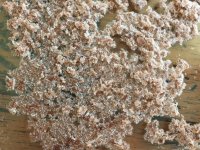
first 3 photos are the first extraction washed with isopropanol which I later recrystallized everything qince I used excess later. Only based on visual volume and appearance the freeze precipitate is insoluble in isopropanol.
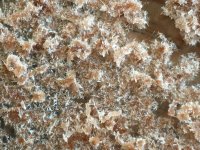
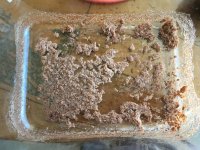
photos 4-5 is recrystallized with everything and washed with minimal ethanol in 2ml batches. Not as much color removed compared to original washes.
photo 6-7 is the collected ethanol washes which precipitated after hours in the freezer near absolute ethanol so not ice.
Final photo is the collected crystals from 4-5 quite dirty still.

I'll likely do a mini a/b on this material rather than repeated crystallization. The freeze precipitated crystals were most interesting sofar.

Personally I liked chloroform as the non-polar solvent but had a terrible emulsion due to shaking even after defatting with hexane. I did methanol extract folloqed by acid to remove tar/fats then lye freebase chcl3 pulls and sulfuric acid pull. Original papers would evaporate solvent to dryness which I may attempt next time.
 

Attachments

  • IMG_1148.JPG
    IMG_1148.JPG
    2.6 MB · Views: 3
  • IMG_1247.JPG
    IMG_1247.JPG
    1.2 MB · Views: 4
  • IMG_1246.JPG
    IMG_1246.JPG
    712.5 KB · Views: 4
  • IMG_1245.JPG
    IMG_1245.JPG
    1 MB · Views: 5
  • IMG_1240.JPG
    IMG_1240.JPG
    1.6 MB · Views: 5
  • IMG_1239.JPG
    IMG_1239.JPG
    1.6 MB · Views: 2
  • IMG_1152.JPG
    IMG_1152.JPG
    2.5 MB · Views: 2
  • IMG_1149.JPG
    IMG_1149.JPG
    1.5 MB · Views: 4
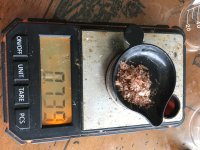
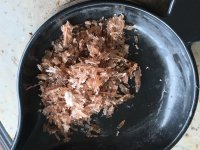
from 2.1g total crude to around 700mg of pretty thick sulfate crystals. Around .66% yield this is the yield I normally get after excessive cleaning of HCL. The washes have been saved.

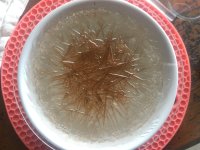
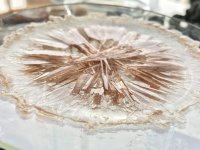
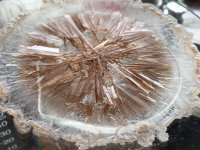
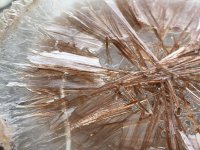
I qashed in 2ml batches of Iso99 to keep losses until no color removed. dry ethanol didn't remove any either... did HOT water slow crystallization for the pretty crystals. There qas a small amount of brown water under the crystals and was collected in picture 6. washed once more with dry alcohol and now doing a final water crystallization.

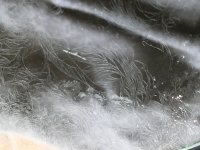
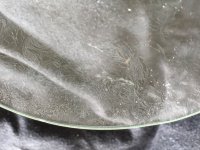
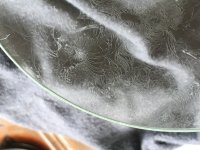
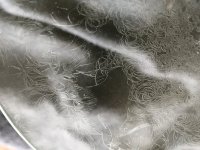
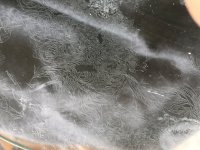
The swirls was interesting pattern from the alcohol washed glass of the crystals. usually get some mini needles not swirls.
 

Attachments

  • IMG_1340.JPG
    IMG_1340.JPG
    1.3 MB · Views: 4
  • IMG_1341.JPG
    IMG_1341.JPG
    1.4 MB · Views: 4
  • IMG_1342.JPG
    IMG_1342.JPG
    1.6 MB · Views: 4
  • IMG_1343.JPG
    IMG_1343.JPG
    1.3 MB · Views: 4
  • IMG_1344.JPG
    IMG_1344.JPG
    1.3 MB · Views: 4
  • IMG_1345.JPG
    IMG_1345.JPG
    1.8 MB · Views: 3
  • IMG_1346.JPG
    IMG_1346.JPG
    1.4 MB · Views: 3
  • IMG_1339.JPG
    IMG_1339.JPG
    1.4 MB · Views: 4
  • IMG_1337.JPG
    IMG_1337.JPG
    1.6 MB · Views: 4
  • IMG_1336.JPG
    IMG_1336.JPG
    1.3 MB · Views: 4
  • IMG_1322.JPG
    IMG_1322.JPG
    1.4 MB · Views: 6
  • IMG_1323.JPG
    IMG_1323.JPG
    1.3 MB · Views: 9
  • IMG_1329.JPG
    IMG_1329.JPG
    1.4 MB · Views: 9
  • IMG_1330.JPG
    IMG_1330.JPG
    1.8 MB · Views: 9
  • IMG_1331.JPG
    IMG_1331.JPG
    1.6 MB · Views: 8
  • IMG_1332.JPG
    IMG_1332.JPG
    1.1 MB · Views: 8
  • IMG_1333.JPG
    IMG_1333.JPG
    1.7 MB · Views: 5
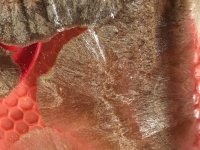
I need to reread the posts to follow along on your process but the long crystal photos with a twinge of brown are beautiful ( 1331, 1330, 1329, 1323 ). While it must have sucked to eventually break them apart and collect I'm guessing it was oddly satisfying at the same time.
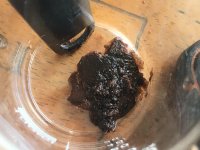
 
I actually recrystallized once more in maybe 50/50 isopropanol water solution for these shiney crystals.

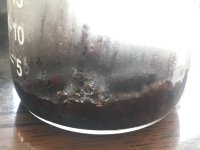
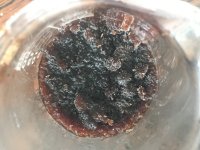
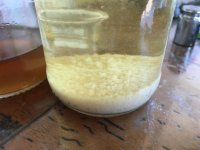
I froze all the decanted and washes again and have dark crystals that remained and also a dark portion from washes that forms lighter crystals but dissolves later. This photo shows the lighter crystals starting to form but overnight it covered the entire bottom

What I’ll be doing with these dark crystals normally treated as impurities is after weighing them add lime and water to freebase then pull with ethyl acetate and see if it’ll crystallize as fumarate salt.
 

Attachments

  • 2BDEC25D-812A-4E9E-9669-F6F38A5E8284.jpeg
    2BDEC25D-812A-4E9E-9669-F6F38A5E8284.jpeg
    1 MB · Views: 6
  • 775B61CA-D493-49CA-85CB-F724C29611E2.jpeg
    775B61CA-D493-49CA-85CB-F724C29611E2.jpeg
    1.1 MB · Views: 5
  • AEDE80B5-F9CA-40D0-8958-7B42E5EC389F.jpeg
    AEDE80B5-F9CA-40D0-8958-7B42E5EC389F.jpeg
    1.6 MB · Views: 3
  • 98B2C05E-051A-4E2C-95FA-51E947727B4E.jpeg
    98B2C05E-051A-4E2C-95FA-51E947727B4E.jpeg
    1.1 MB · Views: 4
  • 5226BE9F-9E94-4E3A-A880-5745BAC0D123.jpeg
    5226BE9F-9E94-4E3A-A880-5745BAC0D123.jpeg
    1.3 MB · Views: 6
I’m gonna make a guess that the dark crystals are different hydrate or different polymorph? Considering about 2/3 of the crude content being “impurities” or other alkaloids seems high but not impossible I guess.

I’ll report back whenever I get around to trying to use EtOAc
 
Last edited:
so i read this a cpl times and it dosn't really say what your extracting from what plant .
so i see its under cactus .......my first clue .ha ha

but what kind of cactus , so on i'm interested in those details maybe i just missed it .

thanks for sharing interesting photos process .
 
so i read this a cpl times and it dosn't really say what your extracting from what plant .
so i see its under cactus .......my first clue .ha ha

but what kind of cactus , so on i'm interested in those details maybe i just missed it .

thanks for sharing interesting photos process .
It was a mix of bridgesii that I cut back. 110g dry no special clones really just seed grown plants.

The strangest thing I’m experiencing which hopefully doing a mini cielo on the “impurities” will help me hopefully understand why there is a discrepancy between older papers which rarely pass 0.7% and recent extractions pull 2-3%. I get this but as crude salts but once “washed” always drops to that range. Even using xylene and hcl or other salt forms. I don’t quite understand why but do know the excess acid does pull more impurities.
 
so I've come to the conclusion that the 'impurities' from a/b salting regardless of color or solubility is all mescaline. The different solubility of impurities and the insoluble 'pure/clean' mescaline is most likely due to different hydrate form or polymorph of the mescaline salt. I've tested TLC in the past and showed that the impurities is mescaline and now I did a mini a/b using ethyl acetate and fumaric acid on the 'impure washes' and remaining sulfuric acid and recovered 650mg of mescaline fumarate. I estimated around 1.4g sulfate but that was wet material due to sulfuric acid remaining and never 'drying' due to being very hygroscopic. I removed 100mg of a black powder impurity from just doing sodium carbonate freebase. Then did two pulls on the liquid using around 150ml EtOAc. For my references I estimate around 3mg/mL freebase in ethyl acetate. 550mg first pull and 100mg second pull.

Ceilo makes a uniform crystal where as salting qith aqueous hcl or sulfuric acid make different forms. I may try gassing hcl in the future to see if it prevents this but not a big fan of the idea. However I've used equal values of mescaline in these different salt forms of mescaline and there seems to be quite a notable subjective difference and most agree that hcl is stronger not only by weight but the experience itself.

Interested in different salt forms to test bioavailability. Many on reddit report lacking experience from citrate and fumarate perhaps since provide dose based on weight and bioavailability is a bigger factor than that? HCL is always reported as strong and my experience has been the same. The only form I felt was as strong or stronger was 'carbonate'
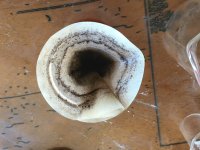
 

Attachments

  • IMG_1648.JPG
    IMG_1648.JPG
    1.3 MB · Views: 2
  • IMG_1649.JPG
    IMG_1649.JPG
    1.2 MB · Views: 0
  • IMG_1650.JPG
    IMG_1650.JPG
    1.1 MB · Views: 0
  • IMG_1655.JPG
    IMG_1655.JPG
    1 MB · Views: 0
  • IMG_1661.JPG
    IMG_1661.JPG
    1.2 MB · Views: 2
  • IMG_1744.JPG
    IMG_1744.JPG
    1.4 MB · Views: 3
  • IMG_1904.JPG
    IMG_1904.JPG
    1.9 MB · Views: 3
Last edited:
Based on Loveall suggestion I tried freeing the fumaric acid with hcl. I evaporated after mixing since didn’t precipitate when adding alcohol. When dry I added isopropanol and had a yellow precipitate which later became white powder of only 5mg in the end very likely just fumaric acid judging by visual.

The product remains soluble in isopropanol which mescaline hcl isn’t. Whatever this product is it is active just weaker and not as visual just introspective. At 60mg has activity at 60mg sublingual of minor color saturation and uplifting mood.
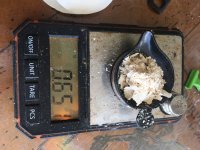
So ethyl acetate doesn’t only salt mescaline? I assume it may still be mescaline in a different polymorph? Once a polymorph forms it is hard to revert from my understanding. It is active and maybe less bioavailability than other form leading to different subjective effects.

So now have a mix of the hcl salt and fumaric acid since both are soluble
 

Attachments

  • 4FEEE669-24AF-46D4-BA45-5D617A6ECFAA.jpeg
    4FEEE669-24AF-46D4-BA45-5D617A6ECFAA.jpeg
    716.4 KB · Views: 1
  • FED77CC9-EDDA-4564-A8FF-D05634008AD7.jpeg
    FED77CC9-EDDA-4564-A8FF-D05634008AD7.jpeg
    933.7 KB · Views: 1
The San Pedro is the firest sample from left.
Marquis and Mecke both matched for Mescalin. As i wrote before, the only strange thing i noticed was that libermann turned first black (thats OK for mescalin) but then slowly faded to red and disapperared. Wonder if s.o. else noticed that before, as I didn't find any record of this reaction in the www.

so I got a similar result to this old post and IDK if normal reaction I thought it would remain black?
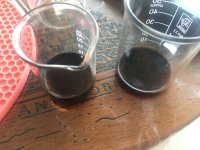
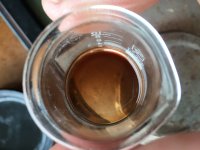
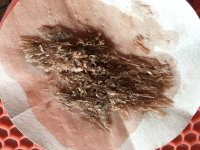
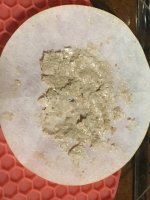
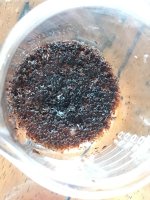
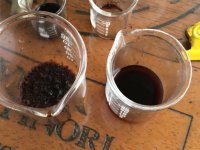
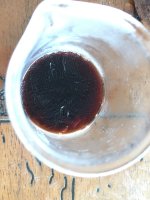
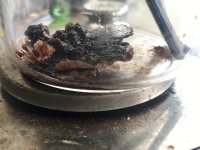
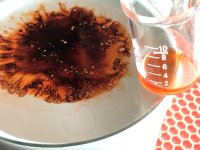
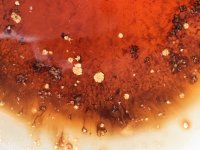
the small beaker has the "pure" mescaline sulfate and also reacted back then became a bright orange color... the 'impurities' on the dish you can see starts black but becomes dark orange to red tone... doesn't this indicate an amphetamine? I'd guess likely TMA aka α-methylmescaline. IDK if recorded before so could be something else... am I doing the reagent test wrong?

I think I'd never get a 'pure' extract but is the orange color after a while normal I'd guess synthetic mescaline may be different?

did libermann reagent by adding 1g sodium nitrite and 12ml sulfuric acid
 

Attachments

  • IMG_2129.JPG
    IMG_2129.JPG
    1.1 MB · Views: 1
  • IMG_2131.JPG
    IMG_2131.JPG
    1 MB · Views: 1
  • IMG_2144.JPG
    IMG_2144.JPG
    947.6 KB · Views: 1

so I got a similar result to this old post and IDK if normal reaction I thought it would remain black?
the small beaker has the "pure" mescaline sulfate and also reacted back then became a bright orange color... the 'impurities' on the dish you can see starts black but becomes dark orange to red tone... doesn't this indicate an amphetamine? I'd guess likely TMA aka α-methylmescaline. IDK if recorded before so could be something else... am I doing the reagent test wrong?

I think I'd never get a 'pure' extract but is the orange color after a while normal I'd guess synthetic mescaline may be different?

did libermann reagent by adding 1g sodium nitrite and 12ml sulfuric acid
Just to be clear are you saying you potentially found TMA in a trichocerues extract? That'd be quite an interesting development
 
Just to be clear are you saying you potentially found TMA in a trichocerues extract? That'd be quite an interesting development
Idk what it is really but the red color in the reaction indicates amphetamine like compound no?

I redid the test with only a single drop… starts black but becomes red later on… idk what to make of it… black indicates mescaline present but what about the red? Just side reaction?
 

Attachments

  • IMG_2145.MOV
    IMG_2145.MOV
    105.4 MB
  • 33DB28F7-21D2-4964-85CB-BF2A2B001A3F.jpeg
    33DB28F7-21D2-4964-85CB-BF2A2B001A3F.jpeg
    731.4 KB · Views: 0
Idk what it is really but the red color in the reaction indicates amphetamine like compound no?
AFAIK (from when I was looking into mescaline reagent testing) Liebermann also turns red for phenols. E.g. tyramine or hordenine are much more likely than TMA, which has never been found in nature.

Also, how long does it take to turn red? Only the changes that happen in the first few minutes should be taken into account.

Do you have the possibility of running TLC on it?
 
AFAIK (from when I was looking into mescaline reagent testing) Liebermann also turns red for phenols. E.g. tyramine or hordenine are much more likely than TMA, which has never been found in nature.

Also, how long does it take to turn red? Only the changes that happen in the first few minutes should be taken into account.

Do you have the possibility of running TLC on it?
You know people assume I know chemistry, when in actuality, I never finished highschool biology, let alone chem 101.
Tyramine or hordenine make infinitely more sense.
Thanks blig-blug!
 
You know people assume I know chemistry, when in actuality, I never finished highschool biology, let alone chem 101.
Tyramine or hordenine make infinitely more sense.
Thanks blig-blug!
I don't know much chemistry either, only what I've been learning here. Just by coincidence I had been reading about different reagents and mescaline a few weeks ago, as I got some unexpected results testing synthetic mescaline.

So I may be wrong. I count on our actual chemists like @Transform to correct my potential nonsense :D
 
Back
Top Bottom