
Hi, I'm Darkerweb, I'm newly registered, but have been lurking for a long time. It has occurred to me lately, that nobody has made up a cheap, easily built device to scavenge the solvent's nasty-smelling, and fairly toxic fumes, other than a few nicely done fume hood teks. Now those work great, if you have a bunch of construction materials and skills around, and have the space to be nailing and sawing. You could always open the window with a fan, that's easy. But in Central WI, during the winter, that's not gonna fly. So it's cold out,and I fall into the category of not being able to construct a nice fume hood, so I've devised a device that does the same deed. (Alliteration?)
It also acts as the fan to speed evaporation.
It is a small rubbermaid storage container, that snugly fits a 8x11.5 glass baking/evaporating dish in the bottom. Then the top had two cirlcular holes cut in it, roughly 2.5in. in diameter, using some kitchen shears. Then two PC fans were utilized, along with 4 pieces of 2" PVC Conduit glued to either side of the holes, forming much more effective, Ducted fans. These computer fans were also beefed up by utilizing a 15v 1.33A Output wall-wart to power the two fans in paralell, making sure if one fan dies, the other continues running and takes up the other's power, for constant flow. The fans' intended voltage is 12v with a very low current, so these fans have been 'turbocharged' in sort, which may lead to diminished life.
Then for effective use of the intake fan's airflow, a nozzle was created with some scrap cardboard.
Version 2 of my design also utilizes a Blue Magic waterbed heater, handily had one around.
The exhaust fan duct snugly fits 2.5" Dryer Exhaust hose, its flexible and versitile, letting you decide what to do with the fumes, lead outdoors, carbon filter, even a reclaimation device if you happen to have the knowhow and some old fridge components.
Everything was assembled out of fairly common household materials, using a hot glue gun to glue everything together. The device is quiet, small, discreet, and with the heater, extremely fast at evaporating solvents, especially the slow evaporating ones like toulene and xylol.
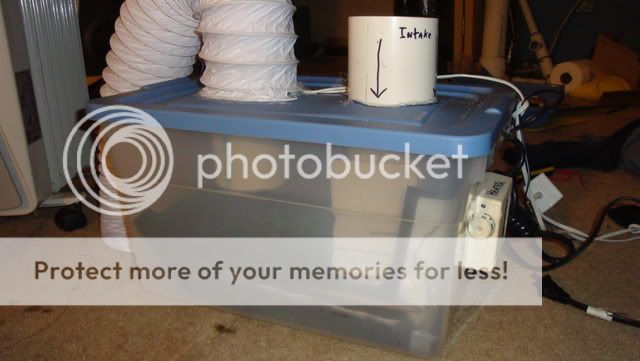
Overview, showing intake, exhaust, heater control and thermometer, and nozzle.
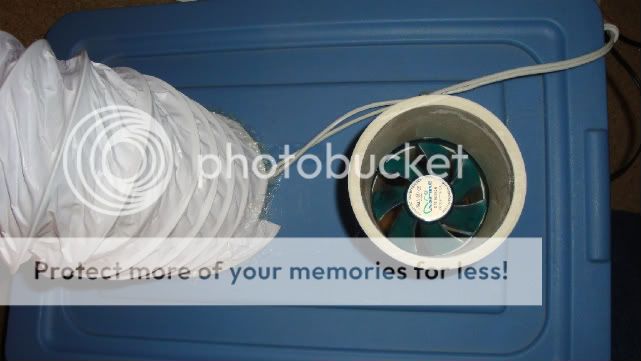
Closeup on Lid, detailing intake fan, exhaust ducting, and fan power supply cord.
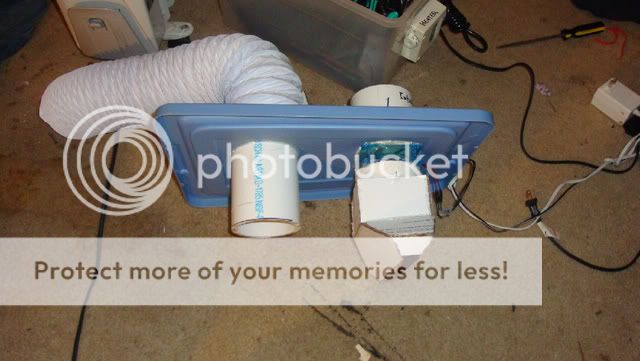
Closeup on Lid Underside, detailing intake fan, exhaust uptake, and cardboard nozzle.
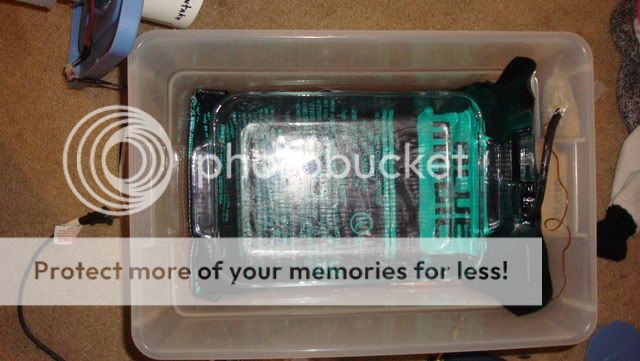
Closup on Evaporator Bottom, detailing heater pad, thermometer, and dish placement.
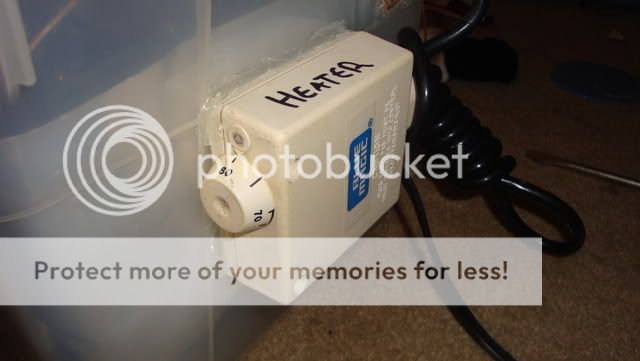
Closeup on heater control unit.
It also acts as the fan to speed evaporation.
It is a small rubbermaid storage container, that snugly fits a 8x11.5 glass baking/evaporating dish in the bottom. Then the top had two cirlcular holes cut in it, roughly 2.5in. in diameter, using some kitchen shears. Then two PC fans were utilized, along with 4 pieces of 2" PVC Conduit glued to either side of the holes, forming much more effective, Ducted fans. These computer fans were also beefed up by utilizing a 15v 1.33A Output wall-wart to power the two fans in paralell, making sure if one fan dies, the other continues running and takes up the other's power, for constant flow. The fans' intended voltage is 12v with a very low current, so these fans have been 'turbocharged' in sort, which may lead to diminished life.
Then for effective use of the intake fan's airflow, a nozzle was created with some scrap cardboard.
Version 2 of my design also utilizes a Blue Magic waterbed heater, handily had one around.
The exhaust fan duct snugly fits 2.5" Dryer Exhaust hose, its flexible and versitile, letting you decide what to do with the fumes, lead outdoors, carbon filter, even a reclaimation device if you happen to have the knowhow and some old fridge components.
Everything was assembled out of fairly common household materials, using a hot glue gun to glue everything together. The device is quiet, small, discreet, and with the heater, extremely fast at evaporating solvents, especially the slow evaporating ones like toulene and xylol.
Overview, showing intake, exhaust, heater control and thermometer, and nozzle.
Closeup on Lid, detailing intake fan, exhaust ducting, and fan power supply cord.
Closeup on Lid Underside, detailing intake fan, exhaust uptake, and cardboard nozzle.
Closup on Evaporator Bottom, detailing heater pad, thermometer, and dish placement.
Closeup on heater control unit.


