Add something like  as an option for reactions which could indicate full agreement and would enhance the like-emoji?
as an option for reactions which could indicate full agreement and would enhance the like-emoji? as an option for reactions which could indicate full agreement and would enhance the like-emoji?
The devil lies in details "Maybe"Maybe I like to fully agree?
Kind regards,
The Traveler

 (6-7)
(6-7)
It seems good to read your thoughts in a transparent way.I will speak for myself. I use the like, to just acknowledge or say I like a post, it has nothing to do with agreement. I like posts that I completely disagree with, but appreciate the thought process or something else about it.
The
One love

It confuses people that like to think on a deeper level because it induces hyper-rationalization driven by a specific form of apophenia known as "Compensatory Pattern Perception" - in order to downregulate the frustration stemming from the obscure meaning behind the meme, and the resulting lack of a sense of control, the mind manufactures control by imposing a familiar structure (i.e. your reference to the 6-7-8 thingy). It's really quite a fascinating thing if you look at it from a cognitive-behavioral standpoint. But in terms of pure meme quality, it's about as bad as it getsAhw, I can fully see why kids love this:
- Because 7 8 9 -> 7 ate 9
- 6 * 7 = 42
- Best one: It confuses the hell out of people! And I am one of those that really enjoys the moments where you can clearly see people slowly mentally breaking down due to this. I just love this enforcement of (critical) out of the box thinking
Kind regards,
The Traveler


Agree, it's about the same reason why my family can solve certain escape rooms that fully fit our thinking in record time, while at the same time we completely fail other escape rooms that can easily be solved by a small group of your average teenagers, because we easily move into way too complex forms of thinking.It confuses people that like to think on a deeper level because it induces hyper-rationalization driven by a specific form of apophenia known as "Compensatory Pattern Perception" - in order to downregulate the frustration stemming from the obscure meaning behind the meme, and the resulting lack of a sense of control, the mind manufactures control by imposing a familiar structure (i.e. your reference to the 6-7-8 thingy). It's really quite a fascinating thing if you look at it from a cognitive-behavioral standpoint.
Yeah, it's def not one of the best out there.But in terms of pure meme quality, it's about as bad as it gets
 :
:
Annoying and confusing adults is quite funny when one's a child or early teen.
BOBOGA

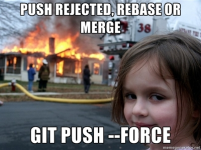
dont forget about git blameAgree, it's about the same reason why my family can solve certain escape rooms that fully fit our thinking in record time, while at the same time we completely fail other escape rooms that can easily be solved by a small group of your average teenagers.
Yeah, it's def not one of the best out there.
I guess you might like this one a lot more
View attachment 107388
Kind regards,
The Traveler
I guess you might like this one a lot more


I mean me being me and the monkey wrenches I throw, I appreciate that small part of it too. Unfortunately, it seems to have gotten out of hand. I'd hate to be an educator, call on a student to answer a question (that's not math related) and they respond with 6-7. Or I have to discipline them for poor and/or disruptive behavior, and they don't take me seriously or respectfully, instead responding with 6-7.However I just LOVE the side effect of it, that it forces people to completely throw away their adopted pillars of mental beliefs, and to move into unknown mental territory to accept it for just what it is: a practical joke that puts people like them into a complete visible mental chaos

I literally watched this like 3 minutes ago and then you post this...I mean me being me and the monkey wrenches I throw, I appreciate that small part of it too. Unfortunately, it seems to have gotten out of hand. I'd hate to be an educator, call on a student to answer a question (that's not math related) and they respond with 6-7. Or I have to discipline them for poor and/or disruptive behavior, and they don't take me seriously or respectfully, instead responding with 6-7.
One love
If what people report is true, it's a really sad situation.I literally watched this like 3 minutes ago and then you post this...
Not exactly the same, but it reminded me of one of the best acknowledgment pages ever in a manual: Scsh Reference ManualI literally watched this like 3 minutes ago and then you post this...
I'm confident I would've left turned it then too!but if I were 13 I probably would.


The amount of tech illiteracy and ignorance is what worries me. We are living on the same planet, and these people make choices that affect everyone.Not related, but I am dead!
This video highlights how people don't really know how deep the rabbit hole goes. Like, they're trying to use high level concepts that they don't actually grasp or understand evidenced my the contradiction, fallacy, and nonsense they go on about. It also highlights something for me that Turing may have not been trying to highlight, and that's how we don't have the cognitive apparatus to handle this. If someone thinks they're talking to a person and not a machine when talking to a machine, it is not guaranteed that it is sentient. It's simply the point at which we can't discern the difference. For all we know, it's not sentient and it's programming is so advanced that it tricks us. This is an epistemic, ontological, linguistic and philosophy of mind issue, things that most people don't pay any attention to. Nor do they want to... it's not easy.Not related, but I am dead!
One love
Agree with this vision. And the Turing test was actually one of the first ones to be easily bypassed by modern A.I., making for many new revisions of the Turing test.This video highlights how people don't really know how deep the rabbit hole goes. Like, they're trying to use high level concepts that they don't actually grasp or understand evidenced my the contradiction, fallacy, and nonsense they go on about. It also highlights something for me that Turing may have not been trying to highlight, and that's how we don't have the cognitive apparatus to handle this. If someone thinks they're talking to a person and not a machine when talking to a machine, it is not guaranteed that it is sentient. It's simply the point at which we can't discern the difference. For all we know, it's not sentient and it's programming is so advanced that it tricks us. This is an epistemic, ontological, linguistic and philosophy of mind issue, things that most people don't pay any attention to. Nor do they want to... it's not easy.

I'm not aware that the Turing test has been tried in its original formulation, where both a human and a machine try to convince another human that they are human and the other is a machine. They may still be able to pass that, but probably not in its commercial embodiments, as the simplest trick for the human would be to start talking about topics the commercial models aren't allowed to mention. This is of course not a limitation of the technology itself. Still, the original version of the test is harder than the versions that I've seen, where a human has a one on one conversation with an unknown entity and rates them as human or machine afterwards.vision. And the Turing test was actually one of the first ones to be easily bypassed by modern A.I.