


I don't know about the rest of you, but I find the cultural history of psychoactives to be absolutely fascinating. Lately I've been compiling sources on the historical use of ololiuqui (Turbina corymbosa) and tlitliltzin (Ipomoea violacea). At this point I'm fairly confident that I've turned up all the extant sources on ololiuqui from the early post-conquest literature (though if anyone knows of any that I haven't listed below, I'd love to hear about them!), but I only have one reference to tlitliltzin at present so I'm hoping I'll be able to find more of those in the next few days.
Two things before I begin:
First: I haven't been able to get my hands on a copy of Richard Evans Schultes' 1941 paper A Contribution to Our Knowledge of Rivea corymbosa, the Narcotic ololiuqui of the Aztecs. I've read so many other papers discussing it that I don't think I'm missing any crucial data, but there's one reference that eludes me. In his later papers on ololiuqui, Schultes was very lax about citations, and often refers simply to "an early account" or "a 17th century account" and cites his 1941 paper when quoting historical sources. I've identified the source of all these quotations except one, so if anyone has access to this paper, I'd be eternally grateful if you could check what his source for the quote was. The quotation in question begins: "... it was a serious fever and the medicine man advised the patient to take ololiuqui..." (for the full quote, see below).
Second: The identification of tlitliltzin as I. violacea is not as certain as ololiuqui; we don't have drawings of the plant or botanical descriptions in the historical records (as we do for ololiuqui). What the records do tell us is that tlitliltzin is a seed, and that it is not identical with ololiuqui. Of course, there are plenty of psychoactive seeds indigenous to the region, so the identification of it as morning glory seeds specifically rests on the name itself. In Nahuatl, tlitliltzin translates roughly to "divine black one"; it is literally composed of the Nahuatl word for black, with a reverential suffix attatched. Ipomoea violacea is the only black psychoactive seed that we know of in the region, so essentially the identification rests on the assumption that the Nahuatl name refers to the color of the seed.
But enough discussion; let's get on to the nitty gritty!
Early Post-Conquest Sources
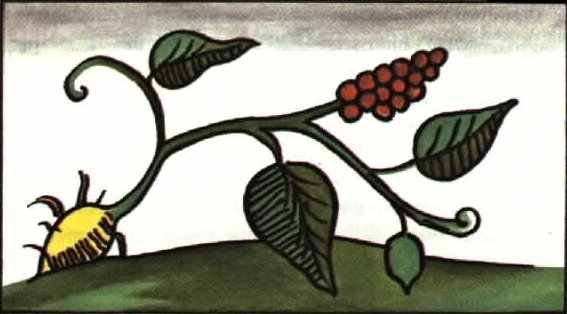
1547-1569 - Bernardino de Sahagún - A Franciscan missionary. While converting the native population was his objective, Sahagún also had a genuine interest in recording as much as he could of the Nahuatl language and Aztec culture. Between 1547 and 1569 he collected the information that comprises what we now know as the Florentine Codex, a record of the Aztec religion and culture based on interviews with native informants. While the Nahuatl text of the Codex was complete by 1569, Sahagún continued translating text and incorporating the illustrations for several year; it was not until approximately 1585 that the Codex was completed in the format available today. In addition to briefly noting the properties of ololiuqui, he also included an illustration of the fruiting plant (see below).
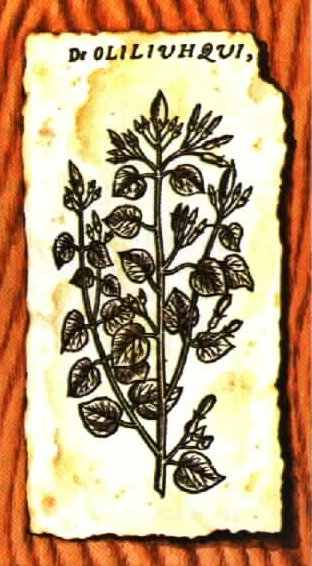
1571-1578 - Franisco Hernández - Court physician to the King of Spain, he was trained in botany and medicine, and embarked on the first scientific expedition to the New World from 1571 to 1578 to explore the native plants and medicine. Portions of his work were published in 1615 in Mexico by Francisco Ximénez (who had translated the manuscripts from Latin to Spanish) and in 1651 in Rome by Federico Cesi (in the original Latin) as Rerum medicarum Novae Hispaniae thesaurus. Ximénez took a dim view of the indigenous divinatory plants, commenting in the 1615 publication that "it matters little that this plant be here described or that Spaniards be made acquainted with it." In addition to recording information about the uses of ololiuqui, Hernández also provided an illustration of the plant (see below).
1574-1576 - Diego Durán - Dominican friar. Differed from his contemporaries in that he respected the Aztecs. Best known for his History of the Indies of New Spain (which was criticized for "helping the heathen maintain their culture" of all things). His clearest reference to ololiuqui comes from his Book of the Gods and Rites, composed between 1574 and 1576.
1590 - José de Acosta - Jesuit missionary and naturalist. His Historia Natural y Moral de las Indias (Natural and Moral History of the Indies), published in 1590 in Seville, mentions ololiuqui.
1629 - Hernándo Ruiz de Alarcón - A catholic priest, and a truly evil fuck if ever there was one. His torture of the natives was so extreme that the church intervened, upset that he was conducting auto-da-fés (though when they determined that he was simply overzealous and had not meant to exceed his authority, he was promoted). He published his Tratado de las supersticiones y costumbres gentílicas que hoy viven entre los indios naturales de esta Nueva España (Treatise on the heathen superstitions that today live among the Indians native to this New Spain) in 1629, devoting two chapters to the use of ololiuqui.
c. 1629 - Pedro Ponce - Beneficiado of the district of Zumpahuacán. Contemporary with Alarcón, his Breve relación de los dioses y ritos de la gentilidad (Brief Relation of the Gods and Rites of Heathenism) was published circa 1629. It mentions both ololiuqui and tlitliltzin, making clear that they are different materials, and that the latter is a seed.
1634 - Bartolomé de Alva - Secular mestizo priest. In 1634 he published a Nahuatl-language confessionary, Confessionario mayor y menor en lengua mexicana for priests ministering to the native population. Among the confessions, we find a poignant reference to the seeds.
1656 Jacinto de la Serna - A missionary. He composed a manual to aid other missionaries in ministering to the native population, Manual de Ministros de Indios para el Conocimiento de sus Idolatrias y Extirpación de Ellas, published in 1656. Among the native's "idolatries", he discusses ololiuqui.
17th century [Unknown] - This is the one quotation whose source I haven't been able to track down. I'd love it if someone could shed some light on where it comes from.
1780 - Francisco Javier Clavigero - A Jesuit scholar. In Botany and Chemistry of the Hallucinogens, Schultes and Hofmann quote the following passage along with José de Acosta's (see above), alleging them to be two "early accounts". This is a very misleading characterization considering that the Aztec civilization was long-dead when Clavigero composed the book from which the passage was excerpted (Historia Antigua de México). The passage is in fact either a retelling of Acosta's account, or possibly a synthesis of the accounts of Acosta and Durán. On the other hand, it is noteworthy for being an 18th century reference to ololiuqui; in fact it's the only such reference I'm aware of from that century. After the post-conquest accounts, ololiuqui pretty well drops off the radar for two centuries (I guess the indigenous people learned that bad things happened to them whenever Europeans saw them using their divine plants).
Two things before I begin:
First: I haven't been able to get my hands on a copy of Richard Evans Schultes' 1941 paper A Contribution to Our Knowledge of Rivea corymbosa, the Narcotic ololiuqui of the Aztecs. I've read so many other papers discussing it that I don't think I'm missing any crucial data, but there's one reference that eludes me. In his later papers on ololiuqui, Schultes was very lax about citations, and often refers simply to "an early account" or "a 17th century account" and cites his 1941 paper when quoting historical sources. I've identified the source of all these quotations except one, so if anyone has access to this paper, I'd be eternally grateful if you could check what his source for the quote was. The quotation in question begins: "... it was a serious fever and the medicine man advised the patient to take ololiuqui..." (for the full quote, see below).
Second: The identification of tlitliltzin as I. violacea is not as certain as ololiuqui; we don't have drawings of the plant or botanical descriptions in the historical records (as we do for ololiuqui). What the records do tell us is that tlitliltzin is a seed, and that it is not identical with ololiuqui. Of course, there are plenty of psychoactive seeds indigenous to the region, so the identification of it as morning glory seeds specifically rests on the name itself. In Nahuatl, tlitliltzin translates roughly to "divine black one"; it is literally composed of the Nahuatl word for black, with a reverential suffix attatched. Ipomoea violacea is the only black psychoactive seed that we know of in the region, so essentially the identification rests on the assumption that the Nahuatl name refers to the color of the seed.
But enough discussion; let's get on to the nitty gritty!
Early Post-Conquest Sources
1547-1569 - Bernardino de Sahagún - A Franciscan missionary. While converting the native population was his objective, Sahagún also had a genuine interest in recording as much as he could of the Nahuatl language and Aztec culture. Between 1547 and 1569 he collected the information that comprises what we now know as the Florentine Codex, a record of the Aztec religion and culture based on interviews with native informants. While the Nahuatl text of the Codex was complete by 1569, Sahagún continued translating text and incorporating the illustrations for several year; it was not until approximately 1585 that the Codex was completed in the format available today. In addition to briefly noting the properties of ololiuqui, he also included an illustration of the fruiting plant (see below).
[The] leaves [of the coaxihuitl (snakeplant)] are slender and ropelike, small. Its name is ololiuhqui. It inebriates one; it makes one crazy, stirs one up, makes one mad, makes one possessed. He who eats of it, he who drinks it, sees many things that will make him afraid to a high degree. He is truly terrified of the great snake that he sees for this reason.
He who hates people causes one to swallow it in drink and in food to make one mad. But it smells sour; it burns a little in the throat. It is applied on the surface alone to treat gout.
1571-1578 - Franisco Hernández - Court physician to the King of Spain, he was trained in botany and medicine, and embarked on the first scientific expedition to the New World from 1571 to 1578 to explore the native plants and medicine. Portions of his work were published in 1615 in Mexico by Francisco Ximénez (who had translated the manuscripts from Latin to Spanish) and in 1651 in Rome by Federico Cesi (in the original Latin) as Rerum medicarum Novae Hispaniae thesaurus. Ximénez took a dim view of the indigenous divinatory plants, commenting in the 1615 publication that "it matters little that this plant be here described or that Spaniards be made acquainted with it." In addition to recording information about the uses of ololiuqui, Hernández also provided an illustration of the plant (see below).
Ololiuhqui, which some call coaxihuitl, or snakeplant, is a twining herb with thin, green cordate leaves; slender, green, terete stems; and long, white flowers. The seed is round and very much like coriander whence the name (in Nahuatl, the term 'ololiuhqui' means 'round thing') of the plant. The roots are fibrous and slender. The plant is hot in the fourth degree [Note: this refers to the humoral theory of medicine] . . . . The seed has some medicinal use. If pulverized or taken in a decoction or used as a poultice on the head or forehead, with milk and chili, it is said to cure eye troubles. When drunk, it acts as an aphrodisiac. It has a sharp taste and is very hot. Formerly when the priests wanted to commune with their gods and to receive a message from them, they ate this plant to induce a delirium. A thousand visions and satanic hallucinations appeared to them. In its manner of action, this plant can be compared with Solanum Maniacum of Dioscorides.
1574-1576 - Diego Durán - Dominican friar. Differed from his contemporaries in that he respected the Aztecs. Best known for his History of the Indies of New Spain (which was criticized for "helping the heathen maintain their culture" of all things). His clearest reference to ololiuqui comes from his Book of the Gods and Rites, composed between 1574 and 1576.
... the priests covered themselves with a pitch made of soot from torch pine, combined with mashed spiders, scorpions, centipedes, vipers, and other poisonous creatures. Added to this mixture were ground seeds of ololiuhqui... This pitch was called teotlacualli ['food of the gods' or 'flesh of the gods'] and was thought to protect the wearer from all evil
1590 - José de Acosta - Jesuit missionary and naturalist. His Historia Natural y Moral de las Indias (Natural and Moral History of the Indies), published in 1590 in Seville, mentions ololiuqui.
They carried their hair in tresses... which they died black with pitch... for in antiquity it had been an offering they made unto their idols, and for this cause it was much revered. They were always dyed with this tincture from the foot to the head, so as they were like unto shining negroes... When they went to sacrifice and give incense in the mountains, or mountain tops, or in any dark and obscure caves where their idols were, they used another kind of unction... This unction was made with diverse little venomous beasts, such as spiders, scorpions, salamanders, and vipers... To make an ointment of these beasts they took them all together, and burnt them upon the harth of the temple, which was before the altar, until they were consumed to ashes; then they put them in mortars with much tobacco (being an herb that they use to benumb the flesh, so they do not feel the weariness of travel), with the which they mingle the ashes... likewise did they mingle live scorpions and spiders with these ashes... then they put to it a certain seed... which they call Ololuchqui, from which the Indians make a drink to see visions, for the virtue of this herb is to deprive man of sense... all this they mingled together with pitch... putting it in small pots which they set before their god, saying it was his meat... By means of this ointment they became witches, and did see and speak with the Devil. The priests being slobbered with this ointment lost all fear, putting on a spirit of cruelty. So anointed, they would boldly kill men in their sacrifices, going all alone in the night to the mountains and into obscure caves...
1629 - Hernándo Ruiz de Alarcón - A catholic priest, and a truly evil fuck if ever there was one. His torture of the natives was so extreme that the church intervened, upset that he was conducting auto-da-fés (though when they determined that he was simply overzealous and had not meant to exceed his authority, he was promoted). He published his Tratado de las supersticiones y costumbres gentílicas que hoy viven entre los indios naturales de esta Nueva España (Treatise on the heathen superstitions that today live among the Indians native to this New Spain) in 1629, devoting two chapters to the use of ololiuqui.
The so-called ololiuhqui is a seed like lentils or lentil vetch which, when drunk, deprives one of judgment. And the faith that these unhappy natives have in this seed is amazing, since, by drinking, they consult it like an oracle for everything whatever they want to know, even those things which are beyond human knowledge, such as knowing the cause of illnesses, because almost everyone among them who is consumptive, tubercular, with diarrhea, or with whatever other sickness of the persistent kind right away attributes it to sorcery. And in order to resolve this doubt and others like it, such as those about stolen things and of aggressors, they consult this seed by means of their deceitful doctors, some of whom have it as their job to drink this seed for such consultations, and this kind of doctor is called Pàyni, because of the job, for which he is paid very well, and they bribe him with meals and drinks in their fashion.
If the doctor either does not have this function or wishes to excuse himself from that torment, he advises the patient himself to drink that seed, or another person for whose services they pay as they do the doctor, but the doctor indicates to him the day and the hour in which to drink it, and he tells him for what purpose he will drink it.
Finally, whether it is the doctor or another person in his place, in order to drink the seed, or peyote, which is [a] small root and for which the have the same faith as for [the] seed, he closes himself up alone in a room, which usually is his oratory, where no one is to enter throughout all the time that the consultation lasts, which is for as long as the consultant is out of his mind, for then they believe the ololiuhqui or peyote is revealing to them that which they want to know. As soon as the intoxication or deprivation of judgment passes from this person, he tells two thousand hoaxes, among which the Devil usually includes some truths, so that he has them deceived or duped absolutely…
Also they make use of this drink to find things that have been stolen, lost, or misplaced and in order to know who took or stole them…
When the wife leaves the husband or the husband the wife, they also take advantage of ololiuhqui, and in this case the imagination and fantasy work also, and even better than in the case of sicknesses, because in this second case conjectures follow that are the cause of more vehement suspicion, and thus it works with greater strength at the time of the intoxication, since it is easily seen that one person will be persuaded that another carried off his wife or stole his property…
Finally these prophets make use of ololiuhqui or peyote to solve these riddles, in the way already described. Then they say that a venerable old man appears to them who says that he is the ololiuhqui or the peyote and that he has come at their call in order to help them in whatever way might be necessary. Then, being asked about the theft or about the absent wife, he answers where and how they will find it or her…
Here it should be carefully noted how much these miserable people hide this superstition of the ololiuhqui from us, and the reason is that, as they confess, the very one they consult orders them not to reveal it to us… And thus their excuse is ipampa àmo nechtlahueliz, which is to say ‘in order that the ololiuhqui will not declare himself to be my enemy...
Almost all of [the Indians] hold that the ololiuhqui is a divine thing… And with the same veneration they drink the said seed, shutting themselves in those places like one who was in the sanctasanctórum, with many other superstitions. And the veneration with which these barbarous people revere the seed is so excessive that part of their devotions include washing and sweeping even those places where the bushes are found which produce them, which are some heavy vines, even though they are in the wilderness and thickets.
Since preaching has not sufficed, rigorous punishment is needed, because, being – as they are – children of terror, it may be that punishment may accomplish what reason has not been sufficient to, since the Apostle said, compelle intrare [Compel them to come in; Luke 14:23].
c. 1629 - Pedro Ponce - Beneficiado of the district of Zumpahuacán. Contemporary with Alarcón, his Breve relación de los dioses y ritos de la gentilidad (Brief Relation of the Gods and Rites of Heathenism) was published circa 1629. It mentions both ololiuqui and tlitliltzin, making clear that they are different materials, and that the latter is a seed.
They drink ololiuhque, peyote, and a seed that they call tlitliltzin. These are so strong that they deprive them of their senses and they say that one like a little black man appears to them and tells them all they want. Others say that Our Lord appears to them, others the angels. And when they do this, they enter a room and close themselves in and set a guard so that he may hear what they say, and people are not to speak to them until the delirium has left them because they become like madmen. And then they ask what they have said, and that is what is certain.
1634 - Bartolomé de Alva - Secular mestizo priest. In 1634 he published a Nahuatl-language confessionary, Confessionario mayor y menor en lengua mexicana for priests ministering to the native population. Among the confessions, we find a poignant reference to the seeds.
"I have believed in dreams, in magic herbs, in peyote, and in ololiuqui, in the owl, etc."
1656 Jacinto de la Serna - A missionary. He composed a manual to aid other missionaries in ministering to the native population, Manual de Ministros de Indios para el Conocimiento de sus Idolatrias y Extirpación de Ellas, published in 1656. Among the native's "idolatries", he discusses ololiuqui.
They venerate these plants as though they were divine. When they drink these herbs, they consult them like oracles. . . . They consult these herbs about all things which cannot be fathomed by the human mind . . . consulting these plants . . . all their doubts and uncertainties are dispelled. These seeds . . . are held in great veneration. . . . They place offerings to the seeds . . . in secret places so that the offerings cannot be found if a search be made. They also place these seeds among the idols of their ancestors . . . the natives do these things with so much respect that when some transgressor of the law who has the seeds in his possession is arrested and is asked for the paraphernalia which are used in taking ololiuqui . . . or for the seeds themselves, he denies vehemently that he knows anything about the practices. The natives do this not so much because of fear of the law as because of the veneration in which they hold the seed ololiuqui. They do not wish to offend ololiuqui with demonstrations before the judges of the use of the seeds and with public destruction of the seed by burning.
17th century [Unknown] - This is the one quotation whose source I haven't been able to track down. I'd love it if someone could shed some light on where it comes from.
... it was a serious fever and the medicine man advised the patient to take ololiuqui. The patient refused. Finally, however, the medicine man persuaded all members of the family ... to drink ololiuqui to help the patient. After drinking, they lighted candles and gave ololiuqui to the sick man. All became drunk ... and when they regained their senses, the sick man began to rage in agony, calling the doctor a knave and witch. With this, the patient died ... It is not without concern that the Christian priests see the facility with which the devil works amongst these people, even after they have been ... accepted into the church.
1780 - Francisco Javier Clavigero - A Jesuit scholar. In Botany and Chemistry of the Hallucinogens, Schultes and Hofmann quote the following passage along with José de Acosta's (see above), alleging them to be two "early accounts". This is a very misleading characterization considering that the Aztec civilization was long-dead when Clavigero composed the book from which the passage was excerpted (Historia Antigua de México). The passage is in fact either a retelling of Acosta's account, or possibly a synthesis of the accounts of Acosta and Durán. On the other hand, it is noteworthy for being an 18th century reference to ololiuqui; in fact it's the only such reference I'm aware of from that century. After the post-conquest accounts, ololiuqui pretty well drops off the radar for two centuries (I guess the indigenous people learned that bad things happened to them whenever Europeans saw them using their divine plants).
The Aztec priests went to make sacrifices on the tops of mountains, or in the dark caverns of the earth. They took a large quantity of poisonous insects, burned them over a stove of their temple, and beat their ashes in a mortar together with the foot of the ocotl, tobacco, the herb ololiuqui, and some live insects… They presented this diabolical mixture in small vessels to their gods, and afterwards rubbed their bodies with it. When thus anointed, they became fearless to every danger… They called it Teopatli, the divine medicament


 makes me want to go for some lsa containing seeds maybe it's about time for another experience. The scorpion and spider maseratiion thing always intrigued me though I thought that wld be one gnarly way of imbibing in the lsa and maybe it had some way of combating the side effects from most of these seeds and the reference of a snuff is very intriguing.


