ChemicalEnthusiast
Rising Star
This post is meant to help people get a solution to the proper pH without using a pH meter or pH papers.
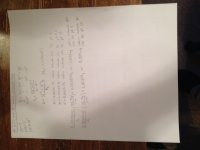
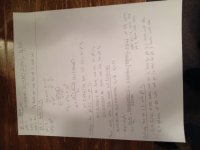
The solutions that I listed are used in most A/B extraction teks. I have attached my work on how I got these numbers and amounts.
The work I showed is for the following solutions:
pH 13 NaOH solution
pH 3, 3.5, and 4 acetic acid solutions starting from 5% acetic acid solution
pH 9, and 10 sodium carbonate solutions
Here are the conclusions that I came to:
Add 4 g NaOH per 1 L TOTAL solution to obtain a pH 13 NaOH solution
Add 69.5 ml of 5% acetic acid per 1 L TOTAL solution for pH 3 acetic acid solution
Add 7.2 ml of 5% acetic acid per 1 L TOTAL solution for pH 3.5 acetic acid solution
Add 0.8 ml of 5% acetic acid per 1 L TOTAL solution for pH 4 acetic acid solution
Add 1.06 mg of sodium carbonate per 1 L TOTAL solution for pH 9 sodium carbonate solution
Add 15.90 mg of sodium carbonate per 1 L TOTAL solution for pH 10 sodium carbonate solution
(I emphasize TOTAL solution because if you add 69.5 ml of acetic acid to 1 L of water you now have 1.0695 total solution and the ph will NOT be 3.)
Some things to note about these calculations:
When doing an acid base extraction, the first step is to do the acid extraction at ~pH 4. This means that you will need to add MORE than 4 g to obtain a solution at pH 13. A similar calculation can be done to determine exactly how much is needed but this informations is trivial. The solubility of NaOH in water is so high and adding too much does not have a negative effect so it is much safer to add much more than 4 g, as stated in most teks.
The second thing to note is that most teks say to do the acid extraction at pH 4. Without a pH meter or pH papers obtaining this exact pH is difficult or impossible for two reasons: store bought vinegar (5% acetic acid) is actually in-between 4% and 6%, and many of us do not have the ability to measure less than a milliliter. That is why I included the second two calculations at pH 3.5 and pH 3. Instead of aiming at exactly pH 4 I would recommend aiming for a solution in-between pH 3.5 and pH 4, recognizing that it is not necessary to be at exactly pH 4. Add anywhere between 2 and 5 ml to guarantee that you are within pH 3.5 and pH 4 and not below pH 3.5. This same logic applies to the sodium carbonate solutions.
One thing that is great about knowing how to do these calculations is that you can do them for ANY desired solution with ANY different type of acid or base.
Any other chemists out there please check my work to make 100% sure I did them correctly.
The solutions that I listed are used in most A/B extraction teks. I have attached my work on how I got these numbers and amounts.
The work I showed is for the following solutions:
pH 13 NaOH solution
pH 3, 3.5, and 4 acetic acid solutions starting from 5% acetic acid solution
pH 9, and 10 sodium carbonate solutions
Here are the conclusions that I came to:
Add 4 g NaOH per 1 L TOTAL solution to obtain a pH 13 NaOH solution
Add 69.5 ml of 5% acetic acid per 1 L TOTAL solution for pH 3 acetic acid solution
Add 7.2 ml of 5% acetic acid per 1 L TOTAL solution for pH 3.5 acetic acid solution
Add 0.8 ml of 5% acetic acid per 1 L TOTAL solution for pH 4 acetic acid solution
Add 1.06 mg of sodium carbonate per 1 L TOTAL solution for pH 9 sodium carbonate solution
Add 15.90 mg of sodium carbonate per 1 L TOTAL solution for pH 10 sodium carbonate solution
(I emphasize TOTAL solution because if you add 69.5 ml of acetic acid to 1 L of water you now have 1.0695 total solution and the ph will NOT be 3.)
Some things to note about these calculations:
When doing an acid base extraction, the first step is to do the acid extraction at ~pH 4. This means that you will need to add MORE than 4 g to obtain a solution at pH 13. A similar calculation can be done to determine exactly how much is needed but this informations is trivial. The solubility of NaOH in water is so high and adding too much does not have a negative effect so it is much safer to add much more than 4 g, as stated in most teks.
The second thing to note is that most teks say to do the acid extraction at pH 4. Without a pH meter or pH papers obtaining this exact pH is difficult or impossible for two reasons: store bought vinegar (5% acetic acid) is actually in-between 4% and 6%, and many of us do not have the ability to measure less than a milliliter. That is why I included the second two calculations at pH 3.5 and pH 3. Instead of aiming at exactly pH 4 I would recommend aiming for a solution in-between pH 3.5 and pH 4, recognizing that it is not necessary to be at exactly pH 4. Add anywhere between 2 and 5 ml to guarantee that you are within pH 3.5 and pH 4 and not below pH 3.5. This same logic applies to the sodium carbonate solutions.
One thing that is great about knowing how to do these calculations is that you can do them for ANY desired solution with ANY different type of acid or base.
Any other chemists out there please check my work to make 100% sure I did them correctly.