• Members of the previous forum can retrieve their temporary password here, (login and check your PM).

I am having trouble finding the necessary acid for Dmt production using the ab method.Is there any way to generate it with something close at hand?

ran

Rising Star
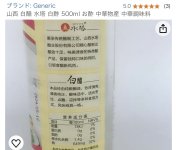
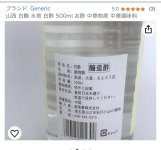
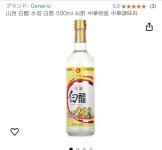
When making dmt, is it possible to use the ab extraction method with the following image (white vinegar)?
Hello. Nice to meet you. I want to make dmt using the ab extraction method. So, in the first process, where you use acid, can I make it without any problems using the white vinegar in the image below? It seems that I need to lower the pH from 3 to 4. I asked this question because I was worried that I wouldn't be able to make it without any problems using white vinegar. I would be very grateful if you could answer.
IMG_7605.jpegIMG_7603.jpegIMG_7602 (1).jpeg
 
I am having trouble finding the necessary acid for Dmt production using the ab method.Is there any way to generate it with something close at hand?
Hello, I am having trouble buying products after the New Year's holiday.I am having trouble buying products after the New Year vacations. is there any way to produce the acid used in the production of Dmt by the ab method, using household or Products at the home center?
 
Last edited:
Vinegar, citric, tartaric, ascorbic.. all fine. You don't need much and the acid part is a little overstated. In the plant material DMT is water soluble already.. probably in it's tannate salt form anyways. Don't overthink the acid part.
Thank you for your response, I read that when extracting Dmt with the ab method, the ph must be 3 to 4. With the plant material and water already present, wouldn't it have to be a somewhat strong acid to get the ph from 3 to 4? The books I read did not mention citric acid or ascorbic acid. Would it really work?
 
As long as it's pH 5 or below your sweet. Bark is often quite acidic due to tannins anyways. I've extracted into boiling water with no acid and it works fine. Is maybe slightly less efficient but I think people make too big a deal of the acid used. Boiling hot water is very efficient at pulling DMT and it will already be slightly acidic from the tannins in the plant material.. You can also add a little ethanol and this also reduces simmering time.
 
As long as it's pH 5 or below your sweet. Bark is often quite acidic due to tannins anyways. I've extracted into boiling water with no acid and it works fine. Is maybe slightly less efficient but I think people make too big a deal of the acid used. Boiling hot water is very efficient at pulling DMT and it will already be slightly acidic from the tannins in the plant material.. You can also add a little ethanol and this also reduces simmering time.
Thank you for your response. I sincerely appreciate it.
In the numerous books I have read, it says not to boil the ab method in the first process. I think it is because it degrades the dmt.
 
In the numerous books I have read, it says not to boil the ab method in the first process. I think it is because it degrades the dmt.
That is utter nonsense! Who wrote those books/texts? Can you give an exact quote from one or more of them?

A gentle simmer with a lid on is better than a rolling boil, however:
 
それはまったくのナンセンスです。それらの本や文章を書いたのは誰ですか? そのうちの 1 冊または複数冊から正確な引用を教えていただけますか?

ただし、蓋をして弱火で煮るほうが、激しく沸騰させるよりも良いです
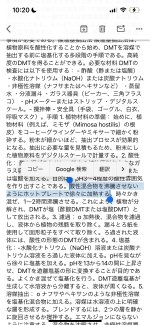
I may have misread it. However, when I read various books, I found that dmt is sensitive to heat. I sincerely appreciate your pointing this out. For now, I will share the sentence and book cover that I found.『酸性混合物を沸騰させないようにホットプレートで徐々に加熱する。(Gradually heat the acidic mixture on a hot plate so that it does not go cold.)』IMG_7608.jpgIMG_7609.jpg
 
Last edited:
Boiling does not degrade DMT (at least in the strictest sense).. if we are talking about the pure compound's boiling point, DMT's point of degradation is far far higher than 100 degrees in it's salt forms..

However.. since we are talking extraction from plants here: It's very likely that with certain plants prolonged heat can result in chemical complexes that either break down DMT OR somehow trap it in chemical matrixes; preventing extraction with NP solvent. Acacia pioneers nen888 and chocobeastie found this to be the case with plants like Acacia obtusifolia.. yields were found to be reduced with prolonged excessive heat. Plants like Mimosa hostilis or Acacia confusa clearly don't have this issue.. and many other Australian acacia's don't either.

So my argument here is that, yes, prolonged high heat can result in diminished yields with certain plants but that it has nothing to do with the boiling point of DMT.. it is the interactions of various compounds present in solution that can react - and as I said, either break DMT down or trap it within (currently not understood) chemical matrixes.

Is this speculative? Yes. But anecdotally, experienced people have found that some species don't like prolonged heat. We know that this isn't the case working with MHRB and ACRB.. so unless your from Australia and using local plants in your area I'd say you have nothing to worry about.

Here's a good example illustrating a different point but echoing the same sentiment .. why soaking material in ethanol for even 24 hours can result in nothing with some plants (some phyllodes for example), but then boiling that same material pulls good amounts of DMT out. DMT is very soluble in ethanol, especially if plant matter is ground down.. So why, in some cases is ethanol not working but heat is?. Maybe the heat needs to break certain things down in these cases.. no one really knows. But different plants can behave differently to one another.

 
Last edited:
Vinegar works fine.
Yes - if you really had to, you could ferment it from any sugary material, or even starchy produce with the adequate know-how. Just shaking up an opened bottle of wine every day would yield vinegar in a week or so.

Some other plant products can be quite acidic. for example:
Lemons - citric acid
Sour apples - malic acid
Grape must - tartaric acid
Hibiscus - isocitric acid
It's better to use a purified source of acid, but these and more still exist as alternatives in cases of absolute necessity.
 
Vinegar, citric, tartaric, ascorbic.. all fine. You don't need much and the acid part is a little overstated. In the plant material DMT is water soluble already.. probably in it's tannate salt form anyways. Don't overthink the acid part.
I read this thread backwards. That was fun.

So, I'm asking all the chemical peeps here. Does anyone think there may be an advantage to converting from one salt form may or may not be more efficient that converting from other salt form? Given the many considerations that @acacian made about reduced yields resulting from too much heat, but with mechanisms unknown, I started wondering if some salt forms along with interconnected exterior processes that impact the DMT salt during conversion, if this could also elicit a "chemical matrix" or destruction of DMT, under the pretext of @acacian reasoned speculations above.

A lot of the destruction or loss seems potentially negligible in this consideration, but I'm curious.

Sorry if I'm all sorts of off base 😅

One love
 
That’s a good question @Voidmatrix .. if there is a difference it would be very cool to pinpoint. I do remember nen saying that HCL and phosphoric acid can cause issues.. why that is though I’m not sure. And then others swear by phosphoric.
 
That’s a good question @Voidmatrix .. if there is a difference it would be very cool to pinpoint. I do remember nen saying that HCL and phosphoric acid can cause issues.. why that is though I’m not sure. And then others swear by phosphoric.
Hm, very interesting.
I probably shouldn't take on any new projects right now, but it would be interesting to collect several acids and run tandem extractions, seeing what differences there may be.

One love
 
That’s a good question @Voidmatrix .. if there is a difference it would be very cool to pinpoint. I do remember nen saying that HCL and phosphoric acid can cause issues.. why that is though I’m not sure. And then others swear by phosphoric.
One potential issue with phosphoric acid is its lack of volatility, coupled with it being a moderately strong and completely stable acid. This means it can theoretically be evaporated down to a hazardously strong concentration. Of course, this shouldn't be a problem if one uses minimal amounts for small-scale extractions.
 
Back
Top Bottom