• Members of the previous forum can retrieve their temporary password here, (login and check your PM).

Botany Larrea Tridentata

Growing logs with advice and results.

cubeananda

Interdependent Researcher

Larrea Tridentata (Creosote Bush) "Shegoi"
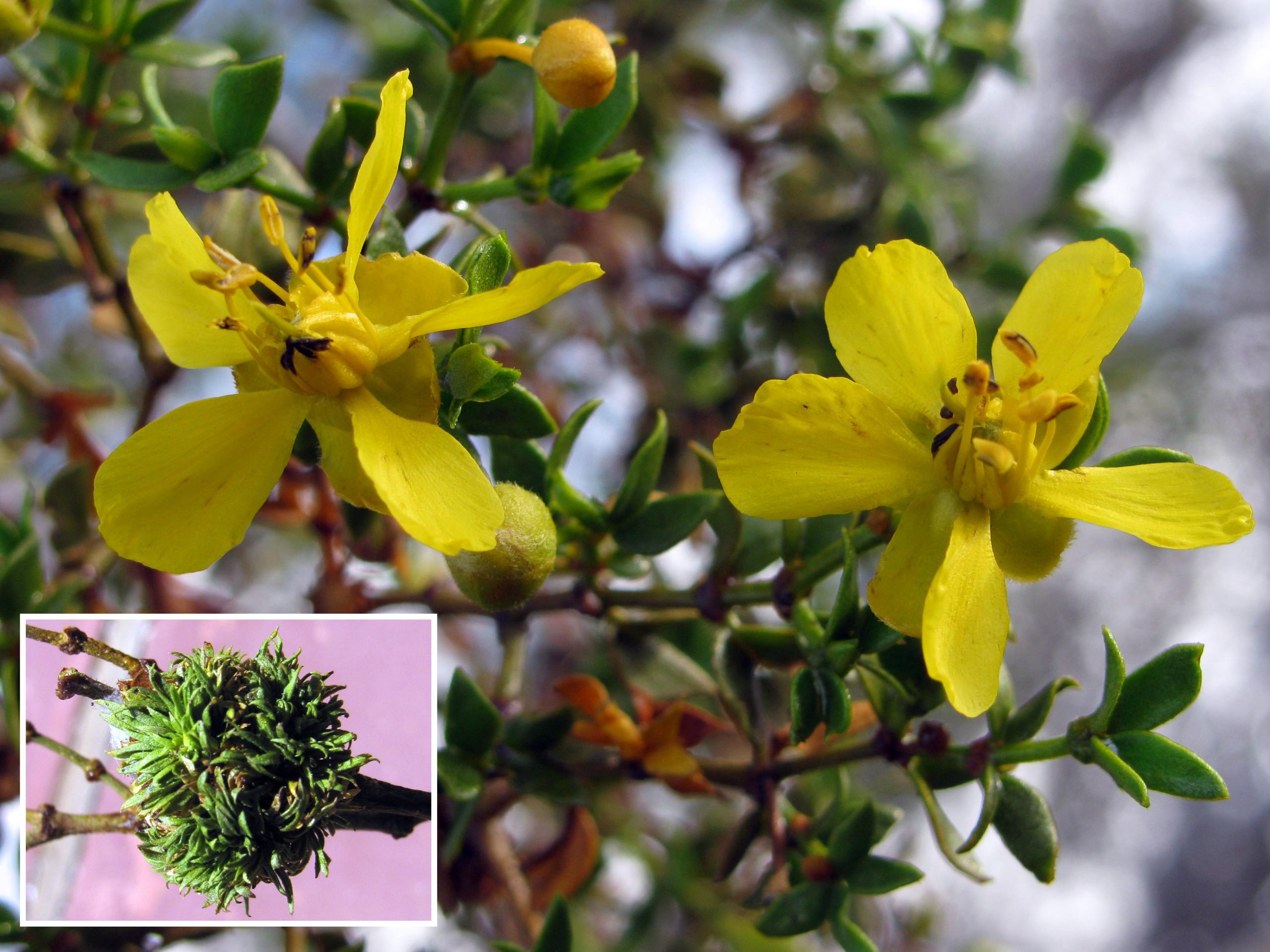

Larrea_tridentata-scaled.jpg

Also Known As: Covillea, Greasewood, Chapparal, Gobernadora, Hediondilla, Shegoi Family: Caltrop (Zygophyllaceae)

Phytochemistry:

Larrea tridentata is a valuable source of
secondary metabolite, considering that
approximately 50% of their dry weight of leaves
is extractable material; being the resin, the main reservoir of metabolite such as saponins,
sapogenins, tannins, sterols, monoterpenes,
sesquiterpenes, flavonoid glycoside (19 aglycone
flavonoids), a large amount of essential oils
(approximately 300 volatile compounds) and 67
non-volatile compounds.


Phenolic lignans are one of the most important
metabolites in Larrea species, being the
most prominent in relation to dry weight, followed
by saponins, flavonoids, amino acids and
minerals. In terms of natural chemical
products, creosote bush is well known for its
large amount of the acid lignan;
nordihydroguaiaretic acid (NDGA) its well known
as a powerful antioxidant. It is well
documented that this acid has antioxidant
properties, anti-inflammatory, cytotoxic,
antimicrobial and enzyme inhibitor.
The NDGA constitutes the 80% of all resin
phenols and 40 to 50% of total resin,
while the resin constitutes 5 to 15% of leaves dry weight.
Source: "Creosote Bush (Larrea tridentata) Phytochemical Traits and its Different uses: A Review"

Hello Nexians!

Cube here, and I am presenting some research about this plant known to certain natives as Shegoi, which apparently means "mother of all plants" and in my experience it is a title which seems apt. It comes from a very inhospitable place, but there is some tall tales which suggest Death Valley was once known as The Valley Of Life.
If you take a moment to dive into the few sources I am planting here in the ethnobotany forum, one finds a curious interdependence with the few species on Earth which are capable of surviving in the climate of Death Valley.
I first heard about this plant at a library somewhere in the desert. I met a beautiful older lady who is growing some in her permaculture garden. By her claim, the young new-growth leaves which are noticeably coated in a silvery oil are the medicine which she was using (along with some other holistics) to keep her breast cancer at bay.
Granted, this is not the type of claim which is yet substantiated by scientific study, some key points about this plant led me to some powerful hypotheses.
  • Shegoi inhibits the growth of other larrea as well as burro sage around it.
  • Shegoi exists in interdependence with gnat species and exists as a lifelines for these delicate insects. In return, the plants enrich their Phytochemical profile.
  • The disturbance and increased alkalinity of its environment seems to cause it to flourish.
These points have led me to believe there may be some sort of harmonic resonance which is able to travel far enough to communicate with the plants around them. A hypothesis which further speculates that the entire mass product, the whole plant within its environment, living in interdependence with the other plants, animals, and minerals around it cause it to refine its medicinal properties over very long scales of time. The final hypothesis is that science has isolated all of the factors, but is still unable to guage or measure the resonance of the plant in vivo and prove scientifically the means by which Shegoi is able to communicate.
In short, I genuinely believe there is a powerful anticancer agent which exists in connection to the presence of this plant, one which if understood properly would benefit holistic medicine as a whole.
Regardless, my personal beliefs can be taken with a grain of salt. Nevertheless, I present this favorite ethnobotanical specimen to the nexus. I hope you enjoy and help me to deepen my research!

[I will update this thread, and clarify sources with time. Working on a finicky handheld device has its drawbacks.]
 
Have you ever heard of or read the book The Secret Life of Plants by Peter Tompkins? It gets into how a hand-full of scientists were able to prove that plants can communicate with each other. The book might also get into how plants do this, but I don't remember... I read it over 20 years ago....
 
Have you ever heard of or read the book The Secret Life of Plants by Peter Tompkins? It gets into how a hand-full of scientists were able to prove that plants can communicate with each other. The book might also get into how plants do this, but I don't remember... I read it over 20 years ago....
So I just acquired a copy and I've begun to read through it. Really appreciate the mention. Its so on topic and helps set the stage for the major thesis of my thread here- so thank you!

Cheers! ~Cube 🍻
 
Have you ever heard of or read the book The Secret Life of Plants by Peter Tompkins? It gets into how a hand-full of scientists were able to prove that plants can communicate with each other. The book might also get into how plants do this, but I don't remember... I read it over 20 years ago....
This book is complete pseudoscience crap and none of the experiments have ever successfully been replicated.

Granted, this is not the type of claim which is yet substantiated by scientific study, some key points about this plant led me to some powerful hypotheses.
  • Shegoi inhibits the growth of other larrea as well as burro sage around it.
  • Shegoi exists in interdependence with gnat species and exists as a lifelines for these delicate insects. In return, the plants enrich their Phytochemical profile.
  • The disturbance and increased alkalinity of its environment seems to cause it to flourish.
These points have led me to believe there may be some sort of harmonic resonance which is able to travel far enough to communicate with the plants around them. A hypothesis which further speculates that the entire mass product, the whole plant within its environment, living in interdependence with the other plants, animals, and minerals around it cause it to refine its medicinal properties over very long scales of time. The final hypothesis is that science has isolated all of the factors, but is still unable to guage or measure the resonance of the plant in vivo and prove scientifically the means by which Shegoi is able to communicate.
The theory of evolution already unifies all of what you mentioned. Theres (likely) no mystical “harmonic resonance” by which the plant communicates with it’s environment. It is the product of millions of years of competition with thousands of other species of organisms trying to compete for resources and maximise their ability to produce viable offspring in a particular environment. Through random genetic mutation new traits emerge which allow a species to exploit a new competitive mechanism. This happens continuously between organisms which leads to variation and the eventual formation of new species with particular traits.

Many plants secrete compounds from their roots to prevent other plants from competing with them for resources. Many plants (and other organisms!) live in symbiosis with other organisms (such as the gants you mentioned). And plants evolve according to the environment and resources around it, and the opportunities that could be exploited. This is why some plants are more able to invade disturbed areas, and areas of specific soil composition (alkalinity etc.).

I hope it doesn’t come across as rude.

It just bothers me when people shy to pseudoscience, especially in these times of great misinformation. I’d advise you to read up more on evolution instead of reading the Secret Life of Plants (unless for pure entertainment).
 
Back
Top Bottom