• Members of the previous forum can retrieve their temporary password here, (login and check your PM).

making sticky DMT into a crystaline dry powder..

1Starway7

Established member
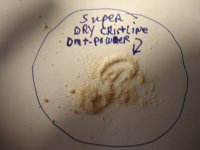
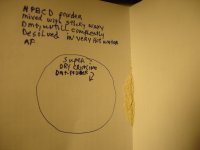
just trying to be open minded.... doing some experimenting with some ..[sticky waxy dmt]... i was able to mix the dmt with ...crystaline HBPCD powder]... in very hot water untill compleatly desolved...then after mixing compleatly ....evaporated the water out.... leaving a light super dry powdered sugar appearence...
I was a little impressed at how well the mix came out ...well desolved [or super complexed?]

THE ORIGINAL PERSON]..who isnt with us anymore....... who brought up ...[complexing DMT ]...for sublingual use .... said to mix the solution ....in a spoon wet ....and put under toung a more slopy way to try it...
My way.... is different from this persons way.... ....my way is to mix the the ....[dmt and hpbcd]... in very hot water untill compleatly desolved... then alow water to evaporate compleatly.... leaving a crusty very dry light brown sugar that crumbles easily into a fine crystiline powder that can be loaded into capsuls ..or tryed sublingualy///
Im hopeing alowing the...at the correct doses....[ two reasonably safe substances].......[i think one is a sugar molecule].... will complex better... and more compleatly this way... and can be tryed sublingualy....by putting the powder under toung...
only .... i haven got the nerve up yet to try it ....because ...something tells me it could work/ .... maybe too good? ....or ... maybe not at all?:unsure:

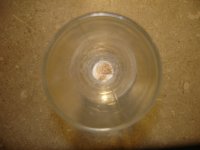
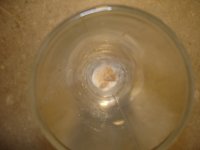
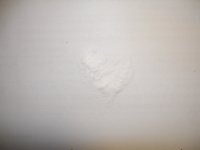
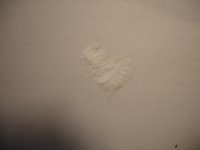
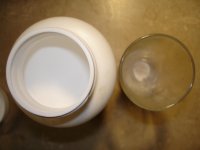
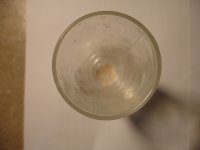
pictures below are of the results of mixing and drying the two substances...

picture..... 1339jpg shows the pure white hpbcd powder //and ....1344jpg shows the off white color after blending...
 

Attachments

  • DSC01326.JPG
    DSC01326.JPG
    2.6 MB · Views: 7
  • DSC01327.JPG
    DSC01327.JPG
    2.2 MB · Views: 4
  • DSC01331.JPG
    DSC01331.JPG
    2.4 MB · Views: 5
  • DSC01332.JPG
    DSC01332.JPG
    2.2 MB · Views: 6
  • DSC01339.JPG
    DSC01339.JPG
    2.1 MB · Views: 7
  • DSC01341.JPG
    DSC01341.JPG
    2.1 MB · Views: 9
  • DSC01344.JPG
    DSC01344.JPG
    2.6 MB · Views: 10
  • DSC01345.JPG
    DSC01345.JPG
    2.3 MB · Views: 10
Last edited:
Nice experiment, but that particular person was known for lying and making up stories to get attention. I’m really curious when you’ll test it on yourself. You could, of course, try a small dose to see how it goes and whether anything happens.
 
Presumably you've recorded both the amount of DMT and of HPBCD that you've used. You can use those figures to correct your dose in terms of DMT, but feel free to hit me up for help with the calculations if necessary.

The other assumption that might be being made here is that the DMT is evenly distributed throughout the mixture after evaporation. How can we be sure that a DMT-rich fraction of the HPBCD isn't precipitating firstt for example? This might not be an issue if the powder is being thoroughly and evenly mixed after drying.

One more caveat I recall from the old HPBCD threads is that high doses of HPBCD can cause hearing damage, although typical infequent use in the particular context here seems unlikely to present a great risk.
 
Presumably you've recorded both the amount of DMT and of HPBCD that you've used. You can use those figures to correct your dose in terms of DMT, but feel free to hit me up for help with the calculations if necessary.

The other assumption that might be being made here is that the DMT is evenly distributed throughout the mixture after evaporation. How can we be sure that a DMT-rich fraction of the HPBCD isn't precipitating firstt for example? This might not be an issue if the powder is being thoroughly and evenly mixed after drying.

One more caveat I recall from the old HPBCD threads is that high doses of HPBCD can cause hearing damage, although typical infequent use in the particular context here seems unlikely to present a great risk.
I didnt weigh the amounts of dmt ..i just scooped up 60 to 75mgs of old waxy dmt and mixed it with hpbcd in VERY... hot water and to my surprise it desolved very well together..the mixture was simi translucent...no lumps ..everything perfectly desolved in hot water!

Back then....Im the one.... ....that found that there was a possible negative effect on hearing..and posting this..... and this... made him irratated... [ to even sugest this posibility] ! [you can go back and read the posts back then] for proof..

from recent reading....Ive recently found that HPBCD is very poorly absorbed ....[less than...0.5 percent sublingualy.... goes into the blood... and really is concidered safe in most cases...

I keep forgetting what this guys name was?... But there may have been... a partial truth... to some of his past claims ...

HPBCD is known to make sublingual absorbtion of some drugs better.. Even when i ask ...AI .... this question ..it says the same ...that HBPCD is effective in making non sublingual drugs more sublingual...from trapping the drug in its circular cones ...i dont compleatly understand how this works though...

I dont want to start a negative argument on this subject....just trying to be open minded.....and report what ive found so far....

Im not trying to sell this idea to anyone untill its proven to work....it may or may not work.... im just impressed at how the.... dmt /hbpcd... melted into the hot water so easily it
made we wonder if it complexed better this way?


AI Overview

Yes,
hydroxypropyl-beta-cyclodextrin (HPBCD) can make some drugs work more effectively when administered sublingually. It works by forming an inclusion complex with poorly water-soluble drugs, thereby increasing their solubility, dissolution rate, and ultimately their absorption and bioavailability through the sublingual mucosa.

Mechanism of Action
  • Solubilization: HPBCD has a hydrophobic inner cavity and a hydrophilic outer surface, allowing it to encapsulate lipophilic (fat-loving) drug molecules. This process, known as inclusion complexation, increases the drug's apparent water solubility, which is crucial for absorption in the aqueous environment of the oral cavity.
  • Enhanced Permeation: HPBCD can transiently interact with the biological membranes (like the sublingual mucosa), potentially by extracting some membrane components like cholesterol. This can help the drug to more easily pass through the membrane into the bloodstream.
  • Increased Bioavailability: By improving solubility and permeation, HPBCD helps a higher concentration of the drug reach the systemic circulation more rapidly, bypassing the first-pass metabolism that occurs if the drug is swallowed and goes through the liver.
  • Stability and Taste Masking: The complexation can also protect the drug from degradation by environmental factors (light, oxidation) or enzymatic breakdown in the saliva, and can mask unpleasant tastes or odors, improving patient compliance with the sublingual method.

Examples of Drugs
HPBCD has been successfully used in formulations for the sublingual delivery of various drugs in research and commercial products, including:
  • Testosterone: Formulations with HPBCD showed rapid sublingual absorption and high bioavailability for testosterone replacement therapy.
  • Midazolam: HPBCD was used with sucrose to create a more concentrated and palatable sublingual solution for pediatric use, showing rapid absorption and high absolute bioavailability (>68%).
  • Piroxicam: HPBCD inclusion complexes were used in fast-disintegrating sublingual films to improve the dissolution rate and delivery of this poorly soluble anti-inflammatory drug.
  • Cannabinoids (THC and CBD): A related cyclodextrin (RM-beta-CD) significantly increased the sublingual bioavailability of THC in rabbit studies, suggesting potential for novel sublingual formulations.
  • 17β-estradiol: HPBCD has been evaluated for sublingual tablets containing estradiol to deliver the lipophilic drug effectively.


  • Sublingual administration of testosterone-hydroxypropyl-beta ...
    Abstract. In search of a more physiological testosterone (T) replacement therapy for hypogonadal states, we evaluated an inclusion...

    favicon
    National Institutes of Health (.gov)

  • The Effect of Hydroxypropyl-Beta-Cyclodextrin and Sucrose on the ...
    May 14, 2012 — In the present study, the complexation of midazolam with hydroxypropyl-beta-cyclodextrin (HP-β-CD) was investigated in...

    favicon
    National Institutes of Health (.gov)

  • Cyclodextrins in Drug Delivery Systems and Their Effects on ...
    Nov 19, 2019 — Abstract. Cyclodextrins are widely used excipients, composed of glucopyranose units with a cyclic structure. One of th...

    favicon
    MDPI

    1762111453930.jpeg

Show all


Dive deeper in AI Mode
This is for informational purposes only. For medical advice or diagnosis, consult a professional. AI responses may include mistakes. Learn more

Sublingual administration of testosterone-hydroxypropyl ...


1762111453957.png
National Institutes of Health (.gov)
https://pubmed.ncbi.nlm.nih.gov › ...

by CA Stuenkel · 1991 · Cited by 83 — We conclude that T, complexed with HPBCD, is rapidly absorbed by the SL route and quickly metabolized without sustained elevations of DHT or E2.
Missing: makework

People also ask

What are the disadvantages of sublingual route?

Can cyclodextrin remove plaque from arteries?

Who benefits most from sublingual medication?

How to dissolve beta cyclodextrin?

Feedback

Sublingual Administration of Testosterone-Hydroxypropyl-β ...


1762111453984.png
Oxford Academic
https://academic.oup.com › jcem › article-abstract


by CA STUENKEL · 1991 · Cited by 83 — We conclude that T, complexed with HPBCD, is rapidly absorbed by the SL route and quickly metabolized without sustained elevations of DHT or E 2.
Missing: makedrugs

application of hydroxypropyl beta-cyclodextrin and ...


1762111454008.png
ResearchGate
https://www.researchgate.net › publication › 34725899...

Aug 9, 2025 — The objective of this investigation is to investigate the feasibility of sublingual insulin administration. Insulin solutions formulated ...

Understanding the Effect of Hydroxypropyl‐β‐Cyclodextrin on ...

National Institutes of Health (.gov)
https://pmc.ncbi.nlm.nih.gov › articles › PMC7689742

by MR Durk · 2020 · Cited by 28 — This study validated the hypothesis that hydroxypropyl‐β‐cyclodextrin (HP‐β‐CD) in the itraconazole formulation reduced the absorption of fenebrutinib, ...

effects on drug permeation through biological membranes

1762111454035.png
Wiley Online Library
https://onlinelibrary.wiley.com › doi › pdf

by T Loftsson · 2011 · Cited by 334 — The effect of HPbCD appeared also to be related to the stability constant (K) of the drug/CD complex with flux increasing with increasing K- ...

Cyclodextrins in Drug Delivery Systems and Their Effects ...

1762111454055.png
MDPI
https://www.mdpi.com › ...

by Á Haimhoffer · 2019 · Cited by 197 — This modification is useful in sublingual, gastroretentive, or vaginal applications.

Sublingual delivery of 17β-estradiol from cyclodextrin ...

1762111454072.png
ResearchGate
https://www.researchgate.net › publication

Aug 6, 2025 — Thus, a testosterone compound (hormone, 10 mg) with HPBCD tablet administered sublingually to a Caucasian male with a hypopituitary ...

A sublingual effervescent tablet of progesterone associated ...

Google Patents
https://patents.google.com › patent

A pharmaceutical composition is described for the sublingual administration of progesterone in the form of a rapidly-disintegrating tablet, which is capable ...

Salvinorin Cyclodextrin Complexation for Sublingual ...

1762111454089.jpeg
the DMT-Nexus
https://forum.dmt-nexus.me › ... › Salvia Divinorum

Jul 21, 2012 — Since HPBCD can stabilize some drugs for long term storage maybe it protects salvinorin too. ... This is all theoretical, but could make for some ...

The Use of Cyclodextrins in Preparing a Pediatric Oral ...

1762111454105.png
Ashland
https://www.ashland.com › Ashland › links › PTR...
PDF

by F El-Saleh · Cited by 4 — The decrease of drug solubility after surpassing a certain HPBCD concentration could be attributed to formation of CD-aggregates and/or undissolved complex.

 
Last edited:
Nice experiment, but that particular person was known for lying and making up stories to get attention. I’m really curious when you’ll test it on yourself. You could, of course, try a small dose to see how it goes and whether anything happens.
Its just an experiment...and as ive said....im not claiming sucess untill it works on me....
But if you read the.... AI info below.... there must have been ...[some truth] to his claims...
AI Overview


HPBCD itself is poorly absorbed into the bloodstream from the sublingual route
, similar to its low absorption after oral administration. It is a large, hydrophilic molecule that is generally not absorbed well through biological membranes.
HPBCD is primarily used as a pharmaceutical excipient (an inactive ingredient) to enhance the solubility, dissolution rate, and membrane permeability of other, poorly soluble drugs. When a drug is complexed with HPBCD and administered sublingually:
  • The HPBCD increases the amount of the drug that can dissolve in the limited saliva volume under the tongue.
  • Only the uncomplexed, free drug is then absorbed through the sublingual mucosa into the systemic circulation.
  • The HPBCD molecule itself generally remains in the oral cavity or gastrointestinal tract (if swallowed) and is eventually excreted, with only a small percentage (around 3-6%) of the cyclodextrin being absorbed into the systemic circulation.
Studies have shown that sublingual formulations using HPBCD complexes can lead to rapid and effective absorption of the active drug (such as testosterone or midazolam) and result in high bioavailability of that drug. This efficacy is due to the enhanced drug solubility and the ability to bypass the first-pass metabolism in the liver, not because the HPBCD excipient is absorbed in large quantities.

but...for this to work sublingualy it may still require Harmala added to the picture...?
 
Last edited:
Its just an experiment...and as ive said....im not claiming sucess untill it works on me....
But if you read the.... AI info below.... there must have been ...[some truth] to his claims...
AI Overview


HPBCD itself is poorly absorbed into the bloodstream from the sublingual route
, similar to its low absorption after oral administration. It is a large, hydrophilic molecule that is generally not absorbed well through biological membranes.
HPBCD is primarily used as a pharmaceutical excipient (an inactive ingredient) to enhance the solubility, dissolution rate, and membrane permeability of other, poorly soluble drugs. When a drug is complexed with HPBCD and administered sublingually:
  • The HPBCD increases the amount of the drug that can dissolve in the limited saliva volume under the tongue.
  • Only the uncomplexed, free drug is then absorbed through the sublingual mucosa into the systemic circulation.
  • The HPBCD molecule itself generally remains in the oral cavity or gastrointestinal tract (if swallowed) and is eventually excreted, with only a small percentage (around 3-6%) of the cyclodextrin being absorbed into the systemic circulation.
Studies have shown that sublingual formulations using HPBCD complexes can lead to rapid and effective absorption of the active drug (such as testosterone or midazolam) and result in high bioavailability of that drug. This efficacy is due to the enhanced drug solubility and the ability to bypass the first-pass metabolism in the liver, not because the HPBCD excipient is absorbed in large quantities.
AI Overview


Yes,
HPBCD (hydroxypropyl beta cyclodextrin) is a sugar-based molecule and is generally considered safe for human ingestion within typical usage limits. It is widely used in the food and pharmaceutical industries.

Is HPBCD a Sugar Molecule?
  • HPBCD is a cyclic oligosaccharide, which is a type of sugar molecule.
  • It is derived from starch and composed of seven D-(+)-glucopyranose (glucose) units linked together in a ring shape.
  • The chemical structure is modified with hydroxypropyl groups, which makes it more soluble in water compared to native beta-cyclodextrin.
  • It has a sweet taste and is sometimes referred to as a "sugar derivative".

Is HPBCD Safe for Ingestion?
  • Generally Recognized as Safe (GRAS): Beta-cyclodextrin (the parent compound) is listed as GRAS by the U.S. FDA, and its derivative HPBCD is also considered safe for use in various applications, including food and pharmaceuticals.
  • Used as an excipient/additive: It is extensively used as an excipient (inactive ingredient) in over 35 marketed oral drug formulations and as an additive in various food products to improve solubility, stability, and bioavailability of other compounds or to mask unpleasant tastes.
  • Well-tolerated: Toxicological evaluations in both animals and humans show that HPBCD is well-tolerated when taken orally.
  • Potential side effects at high doses: The main adverse event reported in humans with very high oral doses (over 16 grams per day) is gastrointestinal discomfort, such as diarrhea.
  • Low oral absorption: A key factor in its safety profile is its very low oral bioavailability; less than 1% of the ingested amount is typically absorbed into the bloodstream, meaning most of it passes through the digestive system.
  • Regulatory approval: It is an FDA-approved inactive ingredient for both oral and intravenous administration in drug products.
In summary, HPBCD is a sugar-based ingredient considered safe for human consumption when used within approved guidelines, acting primarily as a delivery vehicle for other substances rather than a nutrient itself.
 
Did you add the references yourself, or were they provided by the 'AI'?

The complexation process seems valid enough; if you know how much HPBCD you started with, you should be able to set an upper limit for how much DMT you added, based on the weight of the complexed product.

I wonder if the uncertainty regarding the extent of complexation could be remedied by redissolving the complex and adding more DMT freebase until it stops dissolving.

Another experiment I'd be tempted to do is finding out whether addition of harmala freebase would also lead to some of the harmala becoming complexed by displacing DMT from the fully-complexed material. It just seems like it would be useful to know this. (There seems to be little point in complexing harmalas for their own sake, since harmala powder is easy enough to handle on its own.)

I could also go into a bit more of the physical chemistry behind what I'm really thinking there - mostly regarding dissociation equilibria and relative substrate affinities, blah blah - but that would be its own rabbit hole.
 
Did you add the references yourself, or were they provided by the 'AI'?

The complexation process seems valid enough; if you know how much HPBCD you started with, you should be able to set an upper limit for how much DMT you added, based on the weight of the complexed product.

I wonder if the uncertainty regarding the extent of complexation could be remedied by redissolving the complex and adding more DMT freebase until it stops dissolving.

Another experiment I'd be tempted to do is finding out whether addition of harmala freebase would also lead to some of the harmala becoming complexed by displacing DMT from the fully-complexed material. It just seems like it would be useful to know this. (There seems to be little point in complexing harmalas for their own sake, since harmala powder is easy enough to handle on its own.)

I could also go into a bit more of the physical chemistry behind what I'm really thinking there - mostly regarding dissociation equilibria and relative substrate affinities, blah blah - but that would be its own rabbit hole.
i asked the question ... and AI answered.... answers came from AI......and posted them... as it says ...[an overview]

i used the word drug with hpbcd]]....had i used the word DMT.......AI would have started by telling me how risky it was...the usual .... bla bla bla...
 
Last edited:
i found the refrences that came from AI..and posted them...
I'm impressed that you managed to avoid getting any hallucinated ones - did you check up on each one, or was my own experience thwarted by my choosing an extremely obscure subject with nothing to be found on it using a 'normal' search engine?
 
I'm impressed that you managed to avoid getting any hallucinated ones - did you check up on each one, or was my own experience thwarted by my choosing an extremely obscure subject with nothing to be found on it using a 'normal' search engine?
I simply asked AI the question...
can hpbcd improve.... or make drugs that are not normally sublingual...work sublingualy?
and it gives its answer...

but..... if i was to use the word DMT .... it would have given me a letcure in saftey..:giggle:

How does hpbcd work?

AI Overview......


HPBCD powder enables the sublingual absorption of drugs primarily by
significantly increasing the drug's solubility in the saliva and at the mucosal surface, and by acting as a permeation enhancer.
The key mechanisms are:
  • Enhanced Solubility via Inclusion Complexes: Many drugs that require sublingual administration are poorly water-soluble (lipophilic). HPBCD (hydroxypropyl-beta-cyclodextrin) has a unique structure with a hydrophobic inner cavity and a hydrophilic outer surface. It forms a "guest-host" or inclusion complex with the drug molecule, effectively "hiding" the hydrophobic drug within its cavity. This makes the overall complex water-soluble, allowing the drug to dissolve rapidly and completely in the small amount of saliva under the tongue.
  • Increased Local Concentration and Dissolution Rate: By improving solubility, HPBCD ensures a high concentration of the drug is available in solution at the sublingual mucosa surface. This high local concentration facilitates faster passive diffusion of the drug through the highly vascularized sublingual tissue into the bloodstream.
  • Improved Membrane Permeability: At sufficient concentrations, HPBCD can also act as an absorption or permeation enhancer by interacting directly and reversibly with the mucosal membranes. It may achieve this by temporarily and mildly perturbing the membrane integrity or by extracting membrane lipids (like cholesterol), which decreases the cell membrane's resistance to drug passage. This effect is temporary and reversible, ensuring the integrity of the tissue.
  • Bypassing First-Pass Metabolism: Once absorbed through the sublingual mucosa, the drug directly enters the systemic circulation, bypassing the gastrointestinal tract and the liver's first-pass metabolism, which can otherwise inactivate or significantly reduce the drug's effectiveness.
  • Stability: The formation of the inclusion complex also helps protect the drug from premature degradation by environmental factors like light, oxidation, or enzymes in the mouth, ensuring an effective dose reaches the bloodstream.
In essence, HPBCD makes sublingual absorption possible for poorly soluble drugs by overcoming the primary barrier of low solubility and dissolution rate, while also physically enhancing the ability of the drug to pass through the mucosal membrane.
 
Last edited:
Back
Top Bottom