• Members of the previous forum can retrieve their temporary password here, (login and check your PM).

mistletoe??

Migrated topic.

etherealsamba

Rising Star
Mistletoe (Loranthaceae)

The berries contains 1-ethyltryptamine (an true isomer of DMT with a 1-ethyl rather than N,N-dimethyl. Alexander Shulgin "TIHKAL"1997.


is 1-ethyltryptamine active by itself?
 
I was curious about missletoe as well. But the herb is used for centuries or probably even thousands of years in many traditions and i have never heard anything about psychedelic effects. I did hear about naussea at large doses though. If it is hallucinogenic than you probably have to take so much that you will have an extremely unpleasant trip.
 
From my limited knowledge of structure and activity, this would be an inactive compound. Perhaps a base for something else though. Wish I had more information to give.
 
Metta said:
Perhaps a base for something else though. Wish I had more information to give.

DET ,Diethyltryptamine perhaps ,thats pretty nice stuff !

I've read Mistletoe alkaloids are unstable and therefore hard to isolate/detect.
 
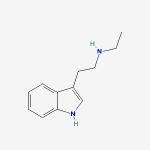
I very much doubt that 1-ethyltryptamine/N-ethyltryptamine/NET is active (structure is attached), as it is closely related to the inactive NMT.

:!: (Edit 2011: This claim is false, NMT is active, and NET may very well be too!)
 

Attachments

  • N-Ethyltryptamine.png
    N-Ethyltryptamine.png
    2.4 KB · Views: 0
I was referring more to bio-synthesis, meaning maybe another derivative of such could be useful, and perhaps found in nature. I mentioned nothing about synthesis, I know nothing about synthesis. I know your doing your job, I just wanted to be clear.
 
Yes it is. It grows mostly on trees. It's a very nice plant to see actually.
It's surrounded by myths of all sorts but none of them even hints at psychedelic effects.
In the famous french asterix comics it functions as the secret ingredient in the magic potion that makes the tribe invincible.
 
For quite a while I've been trying to find the primary reference for this. Unfortunately Shulgin doesn't say what species of mistletoe it was found in, and it's unclear whether the reference is in the TIHKAL bibliography or not. I've been searching through it tonight for any possible leads. The only likely candidates, that I haven't been able to find, are these -
Fan, J. & Yao, X. 1992. J. Shenyang College of Pharmacy 9:144-151 [in Chinese]
PSR Research Group Ltd. 1993. Speculations on 1-substituted tryptamines. Psychedelic Monographs & Essays Vol. 6:159-162.
Does anyone have access to either of those?
Another thing I wanted to clarify is what, if any, synonymy there is between alpha-ethyltryptamine (which has known pharmacology) and 1-ethyltryptamine (which Shulgin says has unknown pharmacology, and is the one said to have been found in berries of a mistletoe from the Loranthaceae family)? I gather from posts here that 1-acetyltryptamine and N-acetyltryptamine are at least the same thing.
 
The leaves can be used for toothache andthe plant has been found oxytocic and useful for arresting postpartum hemorrhage.

I feel a magic coming from the plant, even if only due to my germanic pagan ancestry. It is magical to see a plant thriving in the dead of winter, clinging to a slumbering oak.
 
Also interested in Mistletoe - it was sacred for a reason.

Has anyone else also heard that the seeds contain LSA?

Re entheogenic useage, my suspicions are that harvest at a particular time of year / day might be very important with this plant. It sounds a little silly, but weren't you supposed to harvest the mistletoe under a full moon - using a majical sickle? (or was that just Asterix and Obelix ???)

According to wiki it's a sacred herb, specifically the euro species that is....
"Viscum album, figured prominently in Greek mythology, and is believed to be The Golden Bough " Sacred herb - Wikipedia

Perhaps it is an ally, that requires some other herb to co-activate?

By strange coincidence, I was just given a text on Australian Mistletoes.

Now to collect some samples for experimentation...

any info on Alkaloid profiles or tech methods anyone?
 
Other interesting Misletoe tidbits


-from David Icke's site...

"A specific desert acacia, Sant, a host tree of the mistletoe-like loranthus, is Moses 'burning bush' and the source of mana (Graves 1948 264), which is the prime oracular tree of Canaan (440). If this contains tryptamines as many species do Moses could have had access to a potion much like ayahuasca."

Another tidbit - appears high nitrates are required in the soil to enable the mistletoe to produce alkaloids, thus can be high variability in yeilds?

Alkaloids: - Apparently Hyoscine is dominant in Aust mistletoes, and Tyramine in viscum album. [p24 "the mistltoes a literature review" Gill & Hawksworth - free google book.]

There's an ancient global tradition of sacred / powerful medicine that goes with this plant. Apparently Oz Aboriginals used them too - Blakely 1922
seems they'd just eat it.... * warning * probably causes miscarriage -

Seems to me the extract must be the secret to a safe yet sacred ride
- something that can leave the depressor toxins behind but save the entheogenic
goodies is required.

Anyone able to channel some ancient druidic intelligence and ask the recipe - please...?

:?

 
More clues - perhaps the tech must be a fermentation...???

"Fermentation of the mistletoe extract alters its medicinal activity to a significant degree and this change is thought to be related to the degradation of the most toxic lectins. It is postulated that the efficacy of mistletoe extracts like Iscador are due to a synergy between both its components that are medicinally active when isolated, and those components like polysaccharides that are medicinally unactive yet can conglomorate with the more active constituents to form complexes."

from mistletoe
 
More tid bits...

Interestingly - The mistletoe absorbs its nutrients by evaporating freely, causing osmotic pressure to draw water into the mistletoe. "Mistletoes can absorb and accumulate a large number of nutrients and chemicals from their hosts"

Seems you probably need right Mistletoe on right host tree...

Seems well known, Mistletoe has global ethno-botanical significance, for food, medicine and as a sacred plant. European Mistletoe - the one of interest is Viscum Album - apparently when growing on oaks. In Australia, the shiny leafed mistletoe - growing on corkwood - it was used by Aborigines for Pituri. Chem analysis suggested scopolamine, hyposcyamine and nicotine (among others?).

Apparently aboriginal beliefs about the west australian christmas tree, are that their anscestors where resting in the flowers - on their way to Kurannup...

from "Mistletoes of Southern Australia", David Watson - a fantastic piece of work...
 
Something reminded me of mistletoe containing DMT, 5meoDMT,
so tis the season for this very informative thread to be reborn.

Quote:
Mistletoe (Loranthaceae)
The berries contains 1-ethyltryptamine (an true isomer of DMT with a 1-ethyl rather than N,N-dimethyl. Alexander Shulgin "TIHKAL"1997
 
Back
Top Bottom