Has anybody heard of this? I seem to remember there was someone in the forum who met the Yawanawa tribe.


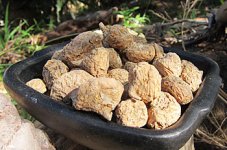
The Yawanawa people live in acre state of Brazil and neighbouring Peru and Bolivia. They also drink ayahuasca (Huni), use tobacco based snuffs and Sanango eyedrops. They consider these plants very sacred, but the most sacred for them is another yet unidentified plant, some kind of potato, which they call Rare Muka.
Muka is only given for those in the process of becoming spiritual leaders, pajés, shamans. In the past it was said to also be used in combat against enemies due to it's anaesthetic effects.
To eat Muka, a prolonged isolation and strict diet are necessary. They can only eat certain kinds of fish, they cannot even drink pure water, they have to drink the bitter juices of some types of lemons or forest berries, or also caiçuma (a manioc drink fermented by the saliva of women). No sex either. And this lasts for months, up to a year, and they stay all the time in an isolated house and restricted area around it, where they can only have contact with the shaman who's initiating the person,
The effects appear to be very slow and gradually building, and seem to be very existentially challenging... It seems the person has many dreams , like spiritual flights, which he/she must talk to the leading shaman about. Through the prolonged experience, the initiate's development is greatly potentiated. It is unclear whether the effects are mostly only during normal sleep, or if the visions happen also when awake, or if the whole reality becomes 'dream-like' so they are constantly under the effects. Also there is no mention of dosage, how often they would consume this plant during the period of isolation, etc.
It is the most important initiation or rite of passage for the Yawanawa tribe, and something there doesn't seem to be any research on it.
I would love to be able to find out, help expand ethnopharmacological knowledge. I just hope that this does not lead to a careless attention to this sacred plant.
(source of info in this post is from a book in portuguese about the Yawanawa sacred plants called Psico Trópicos, by Ricardo Moebus)
The Yawanawa people live in acre state of Brazil and neighbouring Peru and Bolivia. They also drink ayahuasca (Huni), use tobacco based snuffs and Sanango eyedrops. They consider these plants very sacred, but the most sacred for them is another yet unidentified plant, some kind of potato, which they call Rare Muka.
Muka is only given for those in the process of becoming spiritual leaders, pajés, shamans. In the past it was said to also be used in combat against enemies due to it's anaesthetic effects.
To eat Muka, a prolonged isolation and strict diet are necessary. They can only eat certain kinds of fish, they cannot even drink pure water, they have to drink the bitter juices of some types of lemons or forest berries, or also caiçuma (a manioc drink fermented by the saliva of women). No sex either. And this lasts for months, up to a year, and they stay all the time in an isolated house and restricted area around it, where they can only have contact with the shaman who's initiating the person,
The effects appear to be very slow and gradually building, and seem to be very existentially challenging... It seems the person has many dreams , like spiritual flights, which he/she must talk to the leading shaman about. Through the prolonged experience, the initiate's development is greatly potentiated. It is unclear whether the effects are mostly only during normal sleep, or if the visions happen also when awake, or if the whole reality becomes 'dream-like' so they are constantly under the effects. Also there is no mention of dosage, how often they would consume this plant during the period of isolation, etc.
It is the most important initiation or rite of passage for the Yawanawa tribe, and something there doesn't seem to be any research on it.
I would love to be able to find out, help expand ethnopharmacological knowledge. I just hope that this does not lead to a careless attention to this sacred plant.
(source of info in this post is from a book in portuguese about the Yawanawa sacred plants called Psico Trópicos, by Ricardo Moebus)