

-
Members of the previous forum can retrieve their temporary password here, (login and check your PM).
You are using an out of date browser. It may not display this or other websites correctly.
You should upgrade or use an alternative browser.
You should upgrade or use an alternative browser.
Post Pictures of anything nice
- Thread starter damiana
- Start date
Migrated topic.





downwardsfromzero
Boundary condition
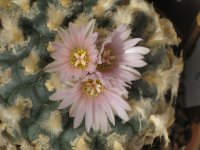
OK, this is a video but I guess that most of the frames would make a nice picture in their own right...
[youtube]
[youtube]
downwardsfromzero
Boundary condition
downwardsfromzero said:OK, this is a video but I guess that most of the frames would make a nice picture in their own right...
[youtube]
:thumb_up:





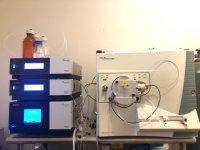
Got my charged aerosol detector, lower left, below the fluorescence detector. Those detectors can detect sub-nanogram quantities of analytes. I can think of two easy uses for this...detecting dmt polymers, and debunking the absurd "plant fats" in amber/orange residue conjecture.
Ordering the nitrogen generator this week. 8)
Ordering the nitrogen generator this week. 8)
Attachments

Seeingisbelieving
Rising Star
I'm not sure if anyone else collects art books but I have quite the collection. This is the art of Joe Roberts aka lsd world peace. His book is titled 61)A3HT3TA3W.. which is a mirror image of "we ate the acid". I'm not posting the best stuff or my favorites because I think everyone should buy his shit but here are a few goodies...



Seeingisbelieving
Rising Star
whoa just googled Mikael Takacs! very nice:thumb_up: :thumb_up:
Here is the Art of Oliver Hibert.


Here is the Art of Oliver Hibert.
Yeah, hes got some amazing [and strangely familiar] pieces out of his bunch, I liked these:
[especially the last one..]
Reading his about page:
[especially the last one..]
Reading his about page:
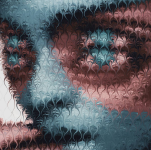
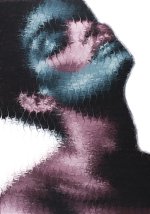
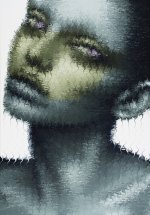
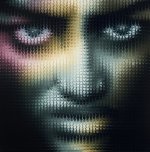
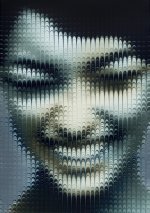
Mikael Takacs is a marbler based in Stockholm, Sweden. He uses pipettes to distribute acrylic paint across the canvas to create his subjects, which he then distorts by dragging the paint around using various tools, such as sticks and combs. He combines the classic abstract expression of marbling with concrete figures. This results in intricate razorsharp patterns swirling across the canvas as you look at it up close, which then takes the form of a portrait as you take a few steps back. Even though the patterns in themselves are very sharp they can make the figure look blurry or fuzzy. The vivid and abstract is in contrast to the vague and figurative.
Variations of this technique has been around for hundreds of years, but in spite of that, his pieces are often mistaken for digital art. Marbling is said to originate in the 12th century Japan as "Suminagashi", and centuries later made it's way to Europe through the Ottoman Empire and the "Ebru" method.
Attachments



neurobloom
Titanium Teammate





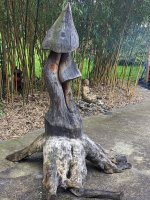

5 Dimensional Nick
"Full of multiversal flow!"




Similar threads

- Replies
- 14
- Views
- 993


