
• Members of the previous forum can retrieve their temporary password here, (login and check your PM).

Psst, Loveall, It Works...

Migrated topic.
Check in:

It was fortuitous that I procrastinated. I let the jar of the mock test solvent sit in my freezer for a few weeks, periodically checking. Over time, some itty-bitty white solids could be view floating in the solvent. I pulled the rest of the DMT out of the mini A/B and will now do another to clean it of the plastic particles in question.

One love
 
Voids feeling worrisome again :lol: maybe it's the flu.

Several months ago I proceeded with an extraction using a different solvent than my usual naphtha. Unfortunately, this solvent had a antitrust agent in it, which made me feel unsafe about trying to smoalk any of it. Following a recommendation (thanks loveall and dreamer), I back salted and re-extracted the DMT. Because I had some other DMT to re-x, I decided to re-x this batch as well.

During the first evap cycle, I noticed a dark reddish oil like liquid precipitating and floating in the solvent. During freeze precipitation, the reddish oil sank to the bottom of the dish and settled.

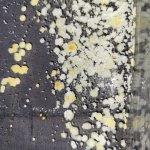
I performed two more recrystalizations. The picture shows some discoloration, that under normal circumstances I would just shrug off, but given the nature of the original solvents used, would like a little feedback before I decide to enjoy this.

One love
 

Attachments

  • 20230321_175210.jpg
    20230321_175210.jpg
    3.7 MB · Views: 1
Hi Voidmatrix,

hard to say. IIRC there could be some activated carbon wash somewhere in the process? If that would help against that antirust traces concern idk :oops:
 
Voidmatrix said:
this solvent had a antitrust agent
Are you worried your product may give you the urge to start pursuing the following activities:

  • prohibiting agreements or practices that restrict free trading and competition between business. This includes in particular the repression of free trade caused by cartels.

    banning abusive behavior by a firm dominating a market, or anti-competitive practices that tend to lead to such a dominant position. Practices controlled in this way may include predatory pricing, tying, price gouging, and refusal to deal.

    supervising the mergers and acquisitions of large corporations, including some joint ventures. Transactions that are considered to threaten the competitive process can be prohibited altogether, or approved subject to "remedies" such as an obligation to divest part of the merged business or to offer licenses or access to facilities to enable other businesses to continue competing.

You might want to be wary of your competitive MAO inhibitors....
And if you get the urge to get into competition law after a test ride, definitely do another re-x :lol:


Or a mini A/B should do the trick.

An important question would be, what exactly are the rust inhibitors comprised of? Corrosion inhibitor - Wikipedia gives a few options.

If you are not in a position to distill your solvent, it might be a good idea to treat it with active carbon before using it for extractions.
 
downwardsfromzero said:
Voidmatrix said:
this solvent had a antitrust agent
Are you worried your product may give you the urge to start pursuing the following activities:

  • prohibiting agreements or practices that restrict free trading and competition between business. This includes in particular the repression of free trade caused by cartels.

    banning abusive behavior by a firm dominating a market, or anti-competitive practices that tend to lead to such a dominant position. Practices controlled in this way may include predatory pricing, tying, price gouging, and refusal to deal.

    supervising the mergers and acquisitions of large corporations, including some joint ventures. Transactions that are considered to threaten the competitive process can be prohibited altogether, or approved subject to "remedies" such as an obligation to divest part of the merged business or to offer licenses or access to facilities to enable other businesses to continue competing.

You might want to be wary of your competitive MAO inhibitors....
And if you get the urge to get into competition law after a test ride, definitely do another re-x :lol:


Or a mini A/B should do the trick.

An important question would be, what exactly are the rust inhibitors comprised of? Corrosion inhibitor - Wikipedia gives a few options.

If you are not in a position to distill your solvent, it might be a good idea to treat it with active carbon before using it for extractions.

Oh, my, thank you so much for making me hate autocorrect that much more. That was great :lol: And yes, I'm too tired to do any of that, so that's what I'm worried about :D

The fuel is Crown brand white gas camping fuel. It says that it has a rust inhibitor to prevent rust and corrosion. It evaporate clean from what I recall (otherwise I wouldn't have went forward with the extraction).

I used about 1500ml of distilled water to perform an A/B. It sat until I had other spice to re-x.

I'm thinking that I may be in the clear now, but just wanted to check with those more chemically knowledgeable than myself because seeing the red oily precipitate with the DMT weirded me out.

One love
 
I got some Coleman because I heard it's mostly hexane, and at the time I didn't think to see if I could just buy hexane (you can). I did a side by side evap test with Klean Strip naphtha and Coleman. I evapped about a shotglass, what volume do other people do for the test? Coleman evapped faster obviously, and left no residue. Klean strip naphtha actually left some oily residue, but it also took 5x longer to evaporate, so maybe that was a factor. I was surprised by the results because "naphtha" is widely trusted and I read Coleman is supposed to turn your spice blue. But I don't worry too much about it because I intended to mini-a/b and recrystallize with more pure solvent anyway.

a mini A/B should do the trick.

An important question would be, what exactly are the rust inhibitors comprised of? Corrosion inhibitor - Wikipedia gives a few options.

If you are not in a position to distill your solvent, it might be a good idea to treat it with active carbon before using it for extractions.
Good advice. With how plentiful carbon is, it wouldn't hurt to treat all solvents before use, if you haven't distilled them yourself.

Just looking up what rust inhibitors do (inhibit rust) and how they work (leaving a thin protective coating), I'm thinking rust inhibitor won't evaporate cleanly. Otherwise the item would rust and people would complain the rust inhibitor doesn't work.
This reminds me of an accident that occurred that was potentially very dangerous unfortunately. I had a container of concentrated HCl in my cupboard, along with other solvent canisters. The HCl gas was escaping its container and over a year or so the entire kitchen slowly rusted. Was cleaning out the cupboards and discovered an unopened gallon canister of naphtha, totally empty. I guess if I was lucky it rusted through on the top of the canister and the solvent slowly evaporated. Maybe better than through the bottom and leaking. Probably was through the top since that got more air exchange. But still, nasty to have that evaporating into the home. I keep all my hazmats in separate airtight totes now, but it doesn't totally satisfy me. I switched the HCl to thicker bottles with GL45 caps, but even then there seems to be some escaping. I really underestimated concentrated HCl.
 
Last edited:
This reminds me of an accident that occurred that was potentially very dangerous unfortunately. I had a container of concentrated HCl in my cupboard, along with other solvent canisters. The HCl gas was escaping its container and over a year or so the entire kitchen slowly rusted. Was cleaning out the cupboards and discovered an unopened gallon canister of naphtha, totally empty. I guess if I was lucky it rusted through on the top of the canister and the solvent slowly evaporated. Maybe better than through the bottom and leaking. Probably was through the top since that got more air exchange. But still, nasty to have that evaporating into the home. I keep all my hazmats in separate airtight totes now, but it doesn't totally satisfy me. I switched the HCl to thicker bottles with GL45 caps, but even then there seems to be some escaping. I really underestimated concentrated HCl
Glad to hear you survived that incident unscathed. I know how it feels when you find something like that has happened 😬

Yes, even 20% HCl has something of a habit of escaping in gaseous from its container and attacking things - nickel plating gets dulled and brass slowly tarnishes in its vicinity. A "fun" thing is, if you store ammonia solution next to it, everything starts developing a bloom of ammonium chloride, which, despite being neutral, isn't exactly 100% friendly to metals either.

Of course, pinhole rusting of steel containers happens even in a damp environment (like my father's garage 🤦‍♂️ ), albeit rather more slowly than with HCl. For HCl storage, some people use a container of base (lime) to absorb the fumes inside the secondary container (like your tote boxes). This is something I've also considered and probably should do since having slightly weaker HCl is probably better than corroding all the metal objects and infrastructure (particularly, electrics) in the building.

Sealing the HCl container inside several successive plastic bags also helps to keep it in check and slows the rate of diffusion somewhat. I've also found that food-grade silicone will get destroyed by prolonged contact with HCl vapours, after attempting to use a glass jar with a silicone lid for containment.
 
Back
Top Bottom