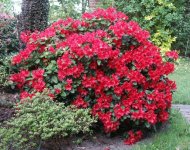
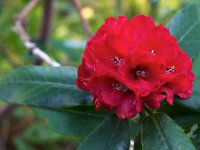
Whoops. Feeling silly. Here:
ABSTRACT
Herein a brief review, with 49 references, of the history and phytochemistry of toxic honeys, in which bees have sequestered plant secondary compounds naturally occurring in plant nectars (floral and extrafloral). It is hypothesized that such toxic honeys could have served as pointers to psychoactive and other medicinal plants for human beings exploring novel ecosystems, causing such plants to stand out, even against a background of extreme biodiversity. After reviewing various ethnomedicinal uses of toxic honeys, the author suggests that pre-Columbian Yucatecan Mayans intentionally produced a psychoactive honey from the shamanic inebriant Turbina corymbosa as a visionary substrate for manufacture of their ritual metheglin, balché. Se presenta una breve reseña, con 49 citas bibliográficas, de la historia y fitoquímica de mieles tóxicas, en las cuales las abejas han secuestrado compuestos secundarios de plantas, de ocurrencia natural en sus néctares (florales y extraflorales). Se hipotiza que semejantes mieles tóxicas podrían haber funcionado como indicadores hacia plantas psicoactivas y otras plantas medicinales, para seres humanos explorando ecosistemas novedosos, haciendo destacar semejantes plantas, aún contra un trasfondo de biodiversidad extrema. Después de reseñar varios usos etnomedicinales de mieles tóxicas, el autor sugiere que los mayas yucatecos precolombinos produjeron a propósito una miel psicoactiva del embriagante chamánico Turbina corymbosa como substrato visionario de su aloja ritual balché.
Key Words: balché; meads; Turbina corymbosa; entheogens; Mayan Indians: Lonchocarpus violaceus.
Tradition holds the famous Delphic Oracle was revealed by a swarm of bees, and the Pythia or divinatory priestesses in Delphi's Temple of Apollo were affectionately called 'Delphic Bees', while virgin priestesses of Greek Goddesses like Rhea and Demeter were called melissai, 'bees'; the hierophants essenes, 'king bees'. Great musicians and poets like Pindar were inspired by the Muses, who bestowed the sacred enthusiasm of the logos, sending bees to anoint the poets' lips with honey (Ransome 1937). Some hold the vatic revelations of the Pythia were stimulated by inhaling visionary vapors of henbane, Hyoscyamus niger L., issuing from a fumarole over which the Delphic Bees were suspended, and into which the plant had been cast (Rätsch 1987). The primordial Eurasian entheogenic plant soma/haoma, known in the Vedas as amrta, the potion of immortality, was called ambrosia by the Greeks, and with nektar, the other sustenance of the Immortals, was associated with bees and honey (Roscher 1883). This curious lore may represent a sort of mythological fossil, concealing a hitherto overlooked mechanism of drug-discovery. I suggest that immemorial pursuit of wild honey, the only concentrated sweet which occurs naturally, could have led inexorably to the discovery of psychoactive and other toxic honeys, while subsequent observation of bees' foraging habits could easily have led preliterate shaman/pharmacognosists to single out toxic plant species, even against a background of extreme biodiversity, as in Amazonia.
Xenophon's 4th century B.C. Anabasis (IV, VII, 20) described psychoactive honey-poisoning during the 'Retreat of the Ten Thousand' in the ill-starred expedition of Cyrus. Countless soldiers in the Greek army, encamped near Trebizonde in Asia Minor, ate liberally of honey found there, "lost their senses and vomited," and "resembled drunken persons." Pliny (XXI, XLV) described madness-inducing honey from this area as meli moenomenon ('mad honey'), and also mentioned (XXI, XLVI) a medicinal honey from Crete, miraculum mellis or 'wondrous honey' (Halliday 1922; Ransome 1937). The 6th-8th century B.C. Homeric Hymn to Hermes referred to melissai or bee-oracles from Delphi's Mt. Parnassos, who could prophesy only after ingesting meli chloron or 'green honey', perhaps a reference to Pliny's 'mad honey'. It was conjectured that these bee-oracles were the Pythia, hence psychotropic honey could have been a catalyst for the mantic utterances of the Delphic Bees (Mayor 1995). It is thought the source of meli moenomenon was Rhododendron ponticum L., which contains toxic glucosides called andromedotoxins or grayanotoxins (Krause 1926; Plugge 1891; Wood, et al. 1954), found in other species of Ericaceae, notably Kalmia latifolia L., another plant whose honey has provoked poisonings (Howes 1949; Jones 1947). Grayanotoxins occur in North American toxic honeys, presumably from K. latifolia (Scott, Coldwell, and Wiberg 1971). Frequent honey poisonings in Japan (Kohanawa 1957; Tokuda and Sumita 1925) were traced to ericaceous Tripetaleia paniculata Sieb. et Zucc., and grayanotoxins were found in these honeys (Tsuchiya et al. 1977). Another toxic glucoside, ericolin, is known from ericaceous Ledum palustre L., and from honeys derived from this plant, which caused human poisonings (Kozolva 1957; Palmer-Jones 1965). Both L. palustre and L. hypoleucum Kam. are used as shamanic inebriants by Tungusic tribes of Siberia (Brekhman and Sam 1967); while 'Labrador tea', L. groenlandicum Oeder of the Kwakiutl Indians is said to have 'narcotic properties' (Turner and Bell 1973). Similarly, the well-known ericaceous kinnikinnick, Arctostaphylos uva-ursi (L.) Sprenger, is smoked as an inebriant by Kwakiutl and other North American Indians (Ott 1993; Turner and Bell 1973), pointing to possible content of ericolin or grayanotoxins.
An 'epidemic' of honey poisoning in New Zealand was traced to honeydew or excrement of Scolypopa australis Walker, which had fed on leaves of tutu, Coriaria arborea Lindsay, Coriariaceae (Palmer-Jones 1947; Palmer-Jones 1965; Palmer-Jones and White 1949). 'Mellitoxin' isolated from the honey was identical to hyaenanchin from euphorbiaceous Hyoenanche globosa Lamb; and a second honey toxin, tutin, is found in C. arborea (Clinch and Turner 1968; Palmer-Jones 1965). This leaf-hopper had transformed tutin from tutu leaves into hyaenanchin during digestion; the bees making honey from its excrement. Symptoms of this honey poisoning included giddiness, delirium and excitement, suggesting toxicological relationship to the Ecuadorian shamanic inebriant C. thymifolia Humb. et Bonpl. ex Willd., shanshi, used to induce sensations of flight (Naranjo 1969). Preliminary investigations of shanshi suggested presence of a toxic glucoside (Naranjo and Naranjo 1961).
Solanaceae are known both for shamanic inebriants and toxic honeys. Human honey poisonings in Hungary were traced to Atropa belladonna L. or Datura metel L., and symptoms resembled those of tropane alkaloids scopolamine and hyoscyamine found in both (Hazslinszky 1956). Polish honey poisonings were traced to D. inoxia Miller (=D. meteloides DC. ex Dunal), and scopolamine found in the honey (Lutomski, Debska and Gorecka 1972). Both scopolamine and atropine were detected in toxic honey from Colombia, of unknown provenience (Barragán de Domínguez 1973). Perhaps Brugmansia species were involved--these Andean shamanic inebriants (Ott 1993) yield toxic honeys (Lockwood 1979). Indole alkaloid gelsemine could account for honey poisoning from loganiaceous Gelsemium sempervirens (L.) Aiton in 19th century South Carolina--symptoms also included giddiness (Kebler 1896).
Brasilian inebriating honey from stingless bee Trigona recurva Smith is called feiticeira ('sorceress') or vamo-nos-embora ('let's go!')--in "allusion to the reeling, half-drunken condition in which one falls after partaking of this honey" (Ihering 1903[4]). Mombuca, Argentine stingless bee (Melipona sp.) honey had "inebriating effects owing to the fact that the little bees harvest it from some flowers with narcotic properties" (Spegazzini 1909). Toxic honeys oreceroch and overecepes occur in Chiquitos, Bolivia; also a delicious honey, omocayoch, said to be as inebriating as liquor (D'Orbigny 1839); while a Paraguayan honey was characterized "as intoxicating as aqua vita" (Schwarz 1948).
So at least three categories of psychoactive phytotoxins--indole and tropane alkaloids and glucosides--occur in toxic honeys, and likewise in nectars from which such are made (vide: reviews of non-sugar floral-nectar chemistry: Baker 1977; Baker and Baker 1983). Psychoactive cannabinoids occur in pollen of marijuana, cannabinaceous Cannabis sativa L. (Paris, Boucher and Cosson 1975). Pollen toxins could be sequestered by bees in honeys, as are nectar or honeydew toxins. Cannabis nectar likely also contains cannabinoids, explaining a common belief of marijuana growers, that marijuana honeys are psychotropic.
One of the more recondite Mesoamerican inebriants is the Mayan metheglin balché, a mead of stingless-bee honey, water and bark of leguminaceous balché, Lonchocarpus violaceus (Jacquin) DC. (Goncalves de Lima, et al. 1977). L. violaceus is psychoactive, owing to content of longistylines (Delle Monache, et al. 1977) or piscicidal rotenone, and Mayaist C. Rätsch proposed other shamanic inebriants, like psilocybian mushrooms and ololiuhqui (Turbina corymbosa [L.] Rafinesque, xtabentún in Mayan; Fig. 1), were once added to balché (Rätsch 1992). Rätsch thought feasible my suggestion that xtabentún may have been a balché ingredient, as honey rich in psychotropic ergoline alkaloids of this Convolvulaceae (Hofmann 1963)--noting the Lacandón Indians, avid balché consumers, know of inebriating honeys. Contemporary shamanic use of T. corymbosa has not been documented among the Mayans, but is all but universal among indigenous groups in Oaxaca, and occurs elsewhere in México (Lipp 1991; Wasson 1963). Besides psychoactivity, ergolines have potent uterotonic effects, and seeds of ololiuhqui/xtabentún are also used as ecbolics/oxytocics (to precipitate childbirth) by indigenous groups in Oaxaca (Browner 1985; Ortíz de Montellano and Browner 1985). 'Virgin honey' of stingless bees (Trigona sp.) is used in ethnogynecology in Huejutla, Hidalgo (Ramos-Elorduy de Conconi and Pino Moreno 1988), and R.L. Roys documented use of wild stingless-bee honey in Mayan ethnogynecology, noting of Tabentun (xtabentún, identified as convolvulaceous): "the aromatic honey from its flower is said to be the source of a potent drink" (Roys 1931). Oaxacan Mixe use T. corymbosa as a shamanic inebriant, and also employ "special honey" from Trigona sp. as an ethnogynecological remedy (Lipp 1991). Clavigero highly praised estabentùn honey (Clavigero 1780); entomologist H.F. Schwarz attributed xtabentún honey to Melipona beecheii Bennett, noting it was still produced in Yucatán in the 1940s, being the most esteemed of many ethnomedicinal Mexican honeys (Schwarz 1948). An article on Mayan apiculture described situating hives near natural stands of xtabentún, noting "all their honey comes from this flower. No other is allowed to prosper in the immediate vicinity" (Mediz Bolio 1974). These clues suggest colelcab (M. beecheii) T. corymbosa honeys were produced intentionally and much esteemed for constituent ergoline alkaloids conferring uterotonic and psychoactive properties. Such honeys may have been exploited by the Mayans in fabrication of their ritual metheglin balché, endowing the sacred inebriant with the plant's legendary and chemically-verified entheogenic properties.
Field work in Yucatán and Quintana Roo revealed xtabentún honey was no longer of economic importance, and traditional Mayan hollow-log apiculture was found sadly degenerated (Fig. 2, 3). We failed to obtain samples of xtabentún honey for bioassay and chemical analysis, but attempts to produce it are underway. In Mérida and Valladolid, Yucatán, there survives production of a distilled liqueur from fermented honey, and known as Xtabentún! A modern liqueur named for a pre-Columbian entheogen, is yet another clue pointing to existence of inebriating T. corymbosa honey, and its probable use as traditional fermentation substrate for the sacred Mayan metheglin balché.
Xtabentún liqueur and conjectured use of psychoactive honey in balché have parallels in the classical and modern worlds. Pliny noted meli moenomenon of Asia Minor was made into a mead or metheglin, and toxic Ericaceae honey was traditionally added to alcoholic beverages in the Caucasus, to enhance their inebriating properties; while such toxic honey, deli bal, is taken in Turkey as a tonic in milk. Deli bal was an important export from this region in the 18th century, widely used to potentiate liquors in Europe--called miel fou, 'crazy honey' in France (Mayor 1995). "Very intoxicating" honey, likely from Kalmia spp. (mountain laurel) was used in 18th century New Jersey to 'spike' liquor sold under the appropriate trade-name 'Metheglin' (Jones 1947; Kebler 1896).
Toxic honeys are not unusual (I have intentionally ignored the literature on non-psychoactive plant [and industrial] toxins sequestered in honeys), nor are accidental inebriations by psychoactive honeys exceptional. In satisfying the universal human "sweet tooth" during human explorations of any given ecosystems, foragers would encounter psychoactive and other toxic honeys. Having consumed such honeys and experienced psychoactive or other medicinal properties of their contained alkaloids and allied phytochemicals, it would require no special technology nor great imagination to follow the bees to the nectar source, thereby easily finding valuable plants. It has been suggested that ethnomedicinal and culinary plants were discovered by a systematic process of ingesting all species, in the eternal search for food. Some have questioned whether such an extensive bioassay program were feasible in areas of extraordinarily-high biodiversity, such as Amazonia, thought to be home to at least 80 000 species of higher plants (Schultes 1988)! Apart from observation of the effects of bioactive plants on domestic and wild animals, serendipitous encounters with phytotoxins in honeys could have served as highly-specific and efficient pointers to medicinal, especially psychoactive, plants, which would thus stand out in deep relief, even against a backdrop of extreme phytodiversity.
There is evidence that in the case of T. corymbosa among the Yucatecan Mayans, a toxic honey may have attained exalted status as a preferred method of ingesting a psychoactive plant, even being produced intentionally. These Mayans came to worship bee-gods like Ah-Muzen-Cab, 'Great Lord Bee', who can be seen descending even today, above the entrances to pyramid-top temples at Tulúm and Cobá, his ancestral home (Fig. 4). Much as we sweeten our bitter medicines with sugary syrups, bees collecting toxic nectars from flowers might naturally have prepared and concentrated a sweetened drug for the delectation of awed human votaries of Ah-Muzen-Cab and his industrious, heavenly host.
LITERATURE CITED
Baker, H. G. 1977. Non-sugar chemical constituents of nectar. Apidologie 8:349-356.
Baker, H. G., and I. Baker. 1983. A brief historical review of the chemistry of floral nectar. Pages 126-152 in B. Bentley and T. Elias, eds., The biology of nectaries. Columbia University Press, New York.
Barragán de Domínguez, M.C. 1973. Contribución al estudio de mieles tóxicas colombianas. Revista Colombiana de Ciéncias Químico-Farmaceúticas 2(2):5-31.
Brekhman, I. I., and Y. A. Sam. 1967. Ethnopharmacological investigation of some psychoactive drugs used by Siberian and far-eastern minor nationalities of U.S.S.R. Page 415 in D. H. Efron et al., eds., Ethnopharmacologic search for psychoactive drugs. U.S. Government Printing Office, Washington, D.C.
Browner, C. H. 1985. Plants used for reproductive health in Oaxaca, Mexico. Economic Botany 39:482-504.
Clavigero, F. S. [F. J. Clavijero]. 1780. Storia antica del Messico; cavata da'migliori storici spagnuoli, e da'manoscritti, e dalle pitture antiche degl'indiani. Cesana 1:107-108.
Clinch, P. G., and J. C. Turner. 1968. Estimation of tutin and hyenanchin in honey 2. The toxicity of honey samples from test hives during the period 1962-1967. New Zealand Journal of Science 11:346-351.
Delle Monache, F. et al. 1977. Isolation and structure of longistylines A,B,C, and D, new prenylated stilbenes from Lonchocarpus violaceus. Lloydia 40:201-208.
Goncalves de Lima, O. et al. 1977. Contribution to the knowledge of the Maya ritual wine: Balche. Lloydia 40:195-200.
Halliday, W. R. 1922. Honey that drove men mad. Discovery 3:231-233.
Hazslinszky, B. 1956. Toxische Wirkung eines Honigs der Tollkirsche (Atropa belladonna L). Zeitschrift für Bienenforschung 3(5):93-96. Commentary in 1957. Hazslinszky, B.: "Toxische Wirkung eines Honigs der Tollkirsche" (Berichtigung). Zeitschrift für Bienenforschung 3(10):240.
Hofmann, A. 1963. The active principles of the seeds of Rivea corymbosa and Ipomoea violacea. Botanical Museum Leaflets Harvard University 20(6):194-212. Reprint, 1964. The Psychedelic Review 1:302-316.
Howes, F. N. 1949. Sources of poisonous honey. Kew Bulletin 2:167-171.
Ihering, H. von. 1903[4]. Biologie der stachellosen Honigbienen Brasiliens. Zoologische Jahrbuch 19:270-274.
Jones, W. R. 1947. Honey poisoning. Gleanings in Bee Culture 75:76-77.
Kebler, L. F. 1896. Poisonous honey. Proceedings of the American Pharmaceutical Association 44:167-173.
Kohanawa, M. 1957. Significance of Tripetaleia paniculata, Sieb. et Zucc. as the chief source of poisonous honey in Japan. Journal of the Pharmacological Society of Japan 53:49-53.
Kozlova, M. V. 1957. Nectar of Ledum palustre as a possible source of the toxicity of honey. Vaporosy Pitaniia 16(4):80.
Krause, K. 1926. Über den giftigen Honig des pontischen Kleinasien. Die Naturwissenschaften 44:976-978. Letter: H. Fühner, 1926. ibid. 52:1283.
Lipp, F. J. 1991. The Mixe of Oaxaca: Religion, ritual, and healing. University of Texas Press, Austin.
Lockwood, T. E. 1979. The ethnobotany of Brugmansia. Journal of Ethnopharmacology 1:147-164.
Lutomski, J., W. Debska, and M. Gorecka. 1972. Przypadek skazenia miodu skopolamina [Poisoning honey with scopolamine]. Pszczelarstwo 23(10):5-6. [Chemical Abstracts 83:109560x].
Mayor, A. 1995. Bees and the baneful Rhododendron: Mad honey! Archaeology 48(6):32-40.
Mediz Bolio, A. 1974. El Maya y la miel. Apicultura en México 4(6):31-33.
Naranjo, P. 1969. Etnofarmacología de las plantas psicotrópicas de América. Terápia 24:5-63.
Naranjo, P., and E. Naranjo. 1961. Estudio farmacodinámico de una planta psicotomimética: Coriaria thymifolia (shanshi). Archivos de Criminología Neuro-Psiquiátrica y Disciplinas Conexas 9:600-616.
D'Orbigny, A. C. V. D. 1839-1843. Voyage dans l'Amérique Méridionale ... Vol. 2, p. 600, 614, 617. Paris and Strasbourg, France.
Ortíz de Montellano, B. R., and C. H. Browner. 1985. Chemical bases for medicinal plant use in Oaxaca, Mexico. Journal of Ethnopharmacology 13:57-88.
Ott, J. 1993. Pharmacotheon: Entheogenic drugs, their plant sources and history. Natural Products Co., Kennewick, WA. Revised ed., 1996.
Palmer-Jones, T. 1947. A recent outbreak of honey poisoning Part I. Historical and descriptive. The New Zealand Journal of Science and Technology 29(3):107-114.
Palmer-Jones, T. 1965. Poisonous honey overseas and in New Zealand. New Zealand Medical Journal 64:631-637.
Palmer-Jones, T., and E. P. White. 1949. A recent outbreak of honey poisoning Part VII. Observations on the toxicity and toxins of the tutu (Coriaria Arborea Lindsay). The New Zealand Journal of Science and Technology 31(Section A):246-256.
Paris, M., F. Boucher, and L. Cosson. 1975. The constituents of Cannabis sativa pollen. Economic Botany 29:245-253.
Plugge, P. C. 1891. II. Giftiger Honig von Rhododendron ponticum. Archiv der Pharmazie 229:554-558.
Ramos-Elorduy de Conconi, J., and J. M. Pino Moreno. 1988. The utilization of insects in the empirical medicine of ancient Mexicans. Journal of Ethnobiology 8:195-202.
Ransome, H. M. 1937. The sacred bee in ancient times and folklore. Houghton Mifflin Co., Boston.
Rätsch, C. 1987. Der Rauch von Delphi. Eine ethnopharmakologische Annäherung. Curare: Zeitschrift für Ethnomedizin 10:215-228.
Rätsch, C. 1992. The dictionary of sacred and magical plants. Prism Press, Bridport, England. Trans. by J. Baker of: Lexikon der Zauberpflanzen, 1988.
Roscher, W. H. 1883. Nektar und Ambrosia. Mit einem Anhang über die Grundbedeutung der Aphrodite und Athene. Druck und Verlag von B.G. Teubner, Leipzig, Germany.
Roys, R. L. 1931. The ethno-botany of the Maya. Middle American Research Series Publication No. 2. The Tulane University of Louisiana, New Orleans.
Schultes, R. E. 1988. Where the gods reign: Plants and peoples of the Colombian Amazon. Synergetic Press, Oracle, AZ.
Schwarz, H. F. 1948. Stingless bees (Meliponidae) of the Western Hemisphere. Bulletin of the American Museum of Natural History, Vol. 90. New York.
Scott, P. M., B. B. Coldwell, and G. S. Wiberg. 1971. Grayanotoxins. Occurrence and analysis in honey and a comparison of toxicities in mice. Food and Cosmetic Toxicology 9:179-184.
Spegazzini, C. 1909. Al través de Misiones. Revista de la Facultad Agrícola y Veterinária de la Universidad Nacional La Plata. 5:40.
Tokuda, Y., and E. Sumita. 1925. Studies on poisonous honey in Japan. 1. On the source of poisonous honey. The Bee World 7:4-5.
Tsuchiya, H. et al. 1977. Studies on a poisonous honey originated from azalea, Tripetaleia paniculata. Kanagawa-ken Eisei Kenkyusho Kenkyu Hokoku 7:19-28. [Chemical Abstracts 91:84673m].
Turner, N. C., and M. A. M. Bell. 1973. The ethnobotany of the southern Kwakiutl Indians of British Columbia. Economic Botany 27:257-310.
Wasson, R. G. 1963. Notes on the present status of ololiuhqui and the other hallucinogens of Mexico. Botanical Museum Leaflets Harvard University 20(6):161-193. Reprint, 1964. The Psychedelic Review 1:275-301.
Wood, Jr., H. B. et al. 1954. Andromedotoxin: A potent hypotensive agent from Rhododendron maximum. Journal of the American Chemical Society 76:5689-5692.