• Members of the previous forum can retrieve their temporary password here, (login and check your PM).

SFiRAL - Science Fiction I've Read And Loved

View attachment 111917

As promised to @blig-blug, I read Stanisław Lem's "Memoirs Found in a Bathtub", and once again I find myself confounded by Lem's work.

Spoilers ahead!

The plot's convolution is the heart of the book's philosophical mechanism, and through it, Lem constructs a world where signal and noise are mathematically indistinguishable, trapping both the protagonist and the reader in an infinite hermeneutic loop. In the "Building" everything is assumed to be a coded message, a provocation, or a loyalty test. Governed by an administrative horror vacui, accidents and random events do not exist as a concept, and are instead interpreted as masterstrokes of counter-intelligence and subterfuge.

Throughout the book it is made apparent that any action can mean its exact opposite, with two prominent examples being loyalty expressed through apparent treason, or treason cloaked in hyper-loyalty. By virtue of this mechanism of converting random entropy to deliberate encryption, Lem masterfully guides the reader into a pervasive sense that objective truth simply does not exist anymore. That a difference between signal and noise is not only undiscoverable, but that a difference does not exist in the first place, and furthermore - that even if it did exist, it would not matter at all.

For all the reader knows (and is told), the outer world might not exist at all; reality is sustained strictly intra muros, where the Building maintains its operation by feeding itself on manufactured and simulated subversion and treason, all wrapped in "missions" that need to be "solved" by the people that inhabit the sterile corridors and endless rooms of this cursed entity.

The protagonist also has a "mission" assigned to him, yet he doesn't know what the requirements are; it functions as a pure qualitas occulta, invoked to explain the unexplainable without possessing any mechanical substance. The instructions first appear to be modified on the go, then are lost in a sequence of freak accidents, leading the increasingly desperate main character to wander around in search of an illusive truth - an endeavor that ultimately never bears fruit. Through this, Lem not only establishes the rigid sense of hopelessness that will accompany the reader throughout the entire journey, but also hints at the notion that the human mind is not built to tolerate pure contingency.

The need for a "grand architect" that humans have exhibited for millenia can be depicted by virtue of taking classical theology as an example, wherein suffering and chaos are rationalized through divine will. In the Building, this impulse is transplanted onto bureaucracy. The protagonist prefers to believe that an all-powerful, omniscient "Command" is testing him through deliberate cruelty rather than face the terrifying alternative: that nobody is in charge, there is no plan, and the system runs on mindless momentum.

Paranoia has become liturgy - an endless pilgrimage ad altarem mente captorum - and to doubt the existence of the Mission at all is equivalent to heresy.

To properly convey the sense of inaccessible yet all-powerful authority, Lem reframes the problem through an algorithmic lens. The Pentagon-like underground redoubt was built to protect against a military adversary, but it evolved into an autonomous organism whose sole operational imperative is self-preservation. One of its defining characteristics is anti-individualism, betrayed by the fact that the protagonist doesn't even have a name. This is not to impart some sense of mystique, but to emphasize that humans are irrelevant in this loop - the institution assigns roles, scripts, and betrayals purely to maintain state cycles.

Within the Building's logic, living requires accepting an assigned role in an endless theater of mutual espionage and profoundly pervasive paranoia. Refusing to decode the indecipherable is the only way to break the loop, and that refusal can only take one form within the oppressive confines of this soulless institution - suicide. Whether that was also in the script or not is beyond the point, because suicide is the only way anyone can wrestle control away from the bureaucratic monster, even if for but a fleeting moment before darkness descends forever.

It is hard for me to "rate" this book because it was for sure one of the most difficult reads I've had lately. It is infuriating in a flavor similar to Orwell's "1984" but in a different way. A helpless, powerless fury that overtook me in both books, but at least in 1984 I had, even if for a very short moment, some glimmer of hope that the oppressive regime can fall. In this book, the sense of hopelessness only tightened its grip the more I read, and by the end it was suffocating and heavy. So much so, in fact, that I found the ending liberating, and that says a lot.

I recognize Lem's brilliance in this work, but I doubt I have it in me to revisit it, regardless of how much time passes. More than that, I hope it never serves as a prophetic signum temporis for the future of our species - though such an outcome remains uncomfortably plausible. Thank you for the recommendation @blig-blug. You have good taste in literature.

Read on <3
Very interesting to see how differently we reacted to that book! Even though I recognize a similar meaning in the book as you did, to me it had me frequently laughing and ended up causing in me a feeling similar to the "cosmic joke", which rather than hopeless is infinitely hopeful. It's actually one of the funniest books I've read. So seeing that it affected you in the opposite way is surprising, and further makes me think that it's an excellent book, as good literature doesn't force a message on you, but lets you project part of your own beliefs, hopes, and fears in it. Similar to a psychedelic, in a way.

Thank you for your excellent review! This was very, very interesting for me to read. I'll be re-reading that book soon.
 
Very interesting to see how differently we reacted to that book! Even though I recognize a similar meaning in the book as you did, to me it had me frequently laughing and ended up causing in me a feeling similar to the "cosmic joke", which rather than hopeless is infinitely hopeful. It's actually one of the funniest books I've read. So seeing that it affected you in the opposite way is surprising, and further makes me think that it's an excellent book, as good literature doesn't force a message on you, but lets you project part of your own beliefs, hopes, and fears in it. Similar to a psychedelic, in a way.

Thank you for your excellent review! This was very, very interesting for me to read. I'll be re-reading that book soon.

Quite interesting indeed! I found this book many things, but funny was not among them. There were some moments that approached being funny solely by virtue of how ridiculous and absurd they were, but for some reason I saw no humour in it at all, just oppressive gloom and hopelessness. What that says about me is a good question.
 
I think it can be seen that way as well, definitely. In the end, the story is quite tragic. But for some reason I've always found it humorous. Maybe because of the similarities between its exaggerated ridiculousness and "real life".

It also has a more evident political reading where it's talking about the Cold War paranoia. Interesting to keep in mind that Philip K. Dick, one of the few American sci-fi authors Lem respected, accused him of actually being a committee of writers created by the Communist Party of Poland, and not a real person. Many people understand this to be the "correct" way to understand it, but like you I think it points beyond politics.
 
What about a scifi shorts collection, or a tried & true vibe like a Philip K Dick compilation, for example?

One short collection close to my heart is "State of the art" by Iain M Banks, but if you went the multi-author compilation route, then you have a lot more 'flavours' coming your way and might find something that really does it for you.

Short stories can be a fantastic way to reflex the ol' reading muscles.
 
I wos not shur if it wud arive enee mor, if it wos akchewly reel or not, or if it wos jus sum faydin dreem abowt sumthin I 4got.

Ennyway, it is now on the shelff, and I reekowntid and on that shelff thur r now akchewly sevn buks. Yeh, I think thur r sevn buks now...


1789750501751.png


Yrs truly,

The Travlr
 
What about a scifi shorts collection, or a tried & true vibe like a Philip K Dick compilation, for example?

One short collection close to my heart is "State of the art" by Iain M Banks, but if you went the multi-author compilation route, then you have a lot more 'flavours' coming your way and might find something that really does it for you.

Short stories can be a fantastic way to reflex the ol' reading muscles.
I've read many Sci-Fi bundles and short story collections, there's lots of gems in them to be found indeed.

In the European Union, the UK, and several other jurisdictions, copyright generally lasts for the life of the author plus 70 years. So currently there is a lot of free (or very cheap for compiling them) books out there now in epub format to read, including many lovely Sci-Fi bundles.


Kind regards,

The Traveler
 
I wos not shur if it wud arive enee mor, if it wos akchewly reel or not, or if it wos jus sum faydin dreem abowt sumthin I 4got.

Ennyway, it is now on the shelff, and I reekowntid and on that shelff thur r now akchewly sevn buks. Yeh, I think thur r sevn buks now...


View attachment 111946


Yrs truly,

The Travlr
Reading that one right now, I'm just a few chapters in and so far the premise is incredibly interesting. Very much looking forward to the plot unraveling. I know I'll have a blast reviewing that one.
 
Dear The Travlr,
haha!
And thanks for the EPUB heads up- I've just gotten an ereader for (largely) fiction purposes, so a few collections like that are definitely on the agenda for easy access.
On that note, I went on a fiction spree over the last days; reading qntms 'There is no antimemetics division' and 'Valuable humans in transit' among other bits n bobs.

I hope you both (@The Traveller, @Nydex) enjoy 'There is no antimemetics division'! I certainly had plenty fun with it.
'Valuable humans in transit' was quite a juicy compilation, bit of variety to it. 'Lena' (which can be read for free on the authors blog) in particular really got me going.
It's an easy recommend.

As it stands, my next fiction read is unknown...

Happy reading to all, and I hope you find (or perhaps even have found) something tasty @JungleGhost. Maybe even give this a read online and see how it grabs you!
:alien:
 
1790714157500.jpeg

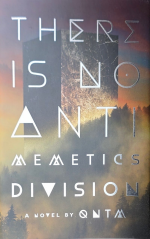
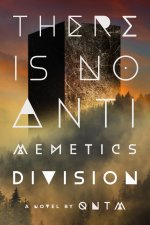
Man...what a wild ride this one was...There Is No Antimemetics Division (abbreviated TINAD going forward, for readability purposes) is a novel written by qntm - a software developer and writer with several well-received short stories - that plays with ideas (literally) which left me quite shaken. At this point I think I've read a respectable amount of science fiction, but none of it has gone as deep into the concept of an idea as this novel did.

Many people in the past have talked about what a meme is. We all know it instinctively, but technically speaking, a meme is, as Terence McKenna once said, the smallest unit of an idea that still has coherency.

Within qntm's cosmology, memes compete and survive by spreading from mind to mind. There is also a subset of memes called "antimemes" which employ an active "camouflage", a sort of self-censorship that prevents them from being recorded, communicated or memorized.

Using this as foundation, qntm introduces a series of increasingly interesting and bizarre "antimemes" throughout the book. Because they are effectively an organism, they have an inherent urge to survive. And their modus operandi of doing so is quite varied - some are quite peaceful, whereas others have particularly horrible ways of...disposing of people that perceive them - this is considered a threat to their survival, and they will defend themselves in various ways.

In an attempt to not spoil the good stuff, I will not dive into the peculiar ideas that qntm plays with in this sense, because there really isn't a good way to talk about them without giving away too much. Suffice it to say, the main antagonist of the book is impressive, to say the least.

If I have to be honest, I'm not particularly fond of how qntm designed the final encounter between it and the protagonist, but the idea of it in the first place - how it functions, what its agenda is, and just how incredibly difficult it is to deal with it - is nothing short of extraordinary.

There are a few philosophical aspects of this book that I quite like. Looking at the world around me right now, with the lighting fast advent of technology, I'm often reminded of the opening line of Lovecraft's infamous "The Call Of Cthulhu":
The most merciful thing in the world, I think, is the inability of the human mind to correlate all its contents. We live on a placid island of ignorance in the midst of black seas of infinity, and it was not meant that we should voyage far. The sciences, each straining in its own direction, have hitherto harmed us little; but some day the piecing together of dissociated knowledge will open up such terrifying vistas of reality, and of our frightful position therein, that we shall either go mad from the revelation or flee from the deadly light into the peace and safety of a new dark age.

In TINAD, qntm proposes that information is not inherently neutral or benevolent. That knowledge can be an invasive parasite, and ignorance can serve as an evolutionary defense mechanism. Ultimately, the book challenges the Enlightenment ideal that 'the truth will set you free,' reframing ignoramus et ignorabimus not as an intellectual defeat, but as a vital evolutionary defense mechanism - certain truths are actively lethal to the consciousness that hosts them.

Furthermore, he toys with the idea that a person's identity is not contained purely in physical biology. The book treats relationships, diaries, institutional protocols, and mnemonic aids as extensions of the self, arguing that human consciousness is fundamentally distributed and not localized within the individual - an idea that I'm honestly quite fond of.

The essence of the antagonist, as well as the book's ending, serve as an allegory for how civilizations process systemic horrors, wars, and pandemics. Society possesses a terrifying capacity to look away from catastrophic failure and simulate normalcy rather than confront an unmanageable reality. To be ignorant is to survive.

I struggle to write more without diving into heavy spoilers, and this is a book that can quite easily be spoiled, so I will stop here. This book will not be for everyone. It is a comparatively dense read because it wrestles with complex ideas within an already complex framework. I personally enjoyed it and consider it a truly sui generis work of conceptual horror, executing ideas that few other authors (at least to my knowledge) have managed to articulate. I'll keep my eye on qntm's future work for sure.

Next on the list, The Metamorphosis of Prime Intellect by Roger Williams. Quite excited about that one.

Read on <3
 
Back
Top Bottom