


Dear Internet Users:
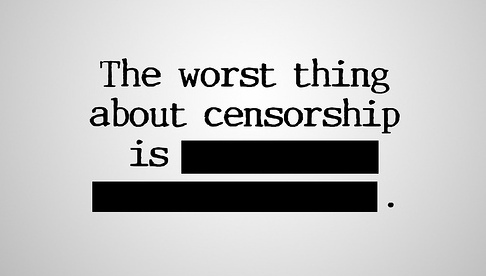
Our friends over in the House and Senate are working very hard to write Internet censorship into Law. While explicitly targeting pirates, the language could be applied to sites like the DMT-Nexus. These bills aim to stop websites “dedicated to infringing activities.” Please take a moment to consider the following proposed legislation and act if you feel appropriate. Thank you.
-a1pha
-----
US SENATE
PROTECT-IP
Revised 'Net censorship bill requires search engines to block sites, too
The "PROTECT IP" Act: COICA Redux
The More Things Change...: PROTECT IP Updates
-----
US HOUSE OF REPRESENTATIVES
SOPA
Disastrous IP Legislation Is Back – And It’s Worse than Ever
House takes Senate's bad Internet censorship bill, tries making it worse
SOPA: US House of Reps copyright bill proposes national censorship, attacks on hosting services, Twitter, YouTube
-----
What can I do?
Our friends over in the House and Senate are working very hard to write Internet censorship into Law. While explicitly targeting pirates, the language could be applied to sites like the DMT-Nexus. These bills aim to stop websites “dedicated to infringing activities.” Please take a moment to consider the following proposed legislation and act if you feel appropriate. Thank you.
-a1pha
-----
US SENATE
PROTECT-IP
Revised 'Net censorship bill requires search engines to block sites, too
Surprise! After months in the oven, the soon-to-be-released new version of a major US Internet censorship bill didn't shrink in scope—it got much broader. Under the new proposal, search engines, Internet providers, credit card companies, and ad networks would all have cut off access to foreign "rogue sites"—and such court orders would not be limited to the government. Private rightsholders could go to court and target foreign domains, too.
As for sites which simply change their domain name slightly after being targeted, the new bill will let the government and private parties bring quick action against each new variation.
Get ready for the "PROTECT IP Act."
The "PROTECT IP" Act: COICA Redux
This means that IP owners as well as the government can seek injunctions against websites "dedicated to infringing activities" in addition to court orders against third parties providing services to those sites.
The More Things Change...: PROTECT IP Updates
The current amendment includes an especially unfortunate edit that the Senate Judiciary Committee failed to highlight in a summary of changes. PIPA enables both the Attorney General and private parties to bring cases against websites “dedicated to infringing activities.” Under the first version of the bill, if a plaintiff “through due diligence” couldn’t find someone within the United States to sue, the Attorney General but not a private litigant was allowed to pursue a claim directly against the domain name of the site. This kind of action is called in rem and refers to a court’s power to issue orders against property without involvement of the owner or other person related to the property. After yesterday's amendments, PIPA allows private litigants to sue in rem as well. As a general matter, the ability to get court orders against an entire website without the site owner’s prior knowledge, much less ability to protest, in and of itself raises concerns about due process. It also raises First Amendment concerns given that the actions target entire websites, including lawful speech on those sites. Extending this power to private parties increases the likelihood that it will be abused.
-----
US HOUSE OF REPRESENTATIVES
SOPA
Disastrous IP Legislation Is Back – And It’s Worse than Ever
As with its Senate-side evil sister, PROTECT-IP, SOPA would require service providers to “disappear” certain websites, endangering Internet security and sending a troubling message to the world: it’s okay to interfere with the Internet, even effectively blacklisting entire domains, as long as you do it in the name of IP enforcement. Of course blacklisting entire domains can mean turning off thousands of underlying websites that may have done nothing wrong. And in what has to be an ironic touch, the very first clause of SOPA states that it shall not be “construed to impose a prior restraint on free speech.” As if that little recitation could prevent the obvious constitutional problem in what the statute actually does.
House takes Senate's bad Internet censorship bill, tries making it worse
It's the world envisioned by Rep. Lamar Smith (R-TX) in today's introduction of the Stop Online Piracy Act in the US House of Representatives. This isn't some off-the-wall piece of legislation with no chance of passing, either; it's the House equivalent to the Senate's PROTECT IP Act, which would officially bring Internet censorship to the US as a matter of law.
SOPA: US House of Reps copyright bill proposes national censorship, attacks on hosting services, Twitter, YouTube
PROTECT-IP is a US Senate bill that establishes a draconian censorship and surveillance regime in America in the name of protecting copyright. Its House version, SOPA, has just been introduced, and it's even worse than PROTECT-IP. Much, much worse:
-----
What can I do?
The Internet Blacklist Legislation– known as PROTECT IP Act in the Senate and Stop Online Piracy Act (SOPA) in the House - is a threatening sequel to last year's COICA Internet censorship bill. Like its predecessor, this legislation invites Internet security risks, threatens online speech, and hampers Internet innovation. Urge your members of Congress to reject this Internet blacklist campaign in both its forms!


