• Members of the previous forum can retrieve their temporary password here, (login and check your PM).

Tabernaemontana sananho / undulata / spp. Workspace

Migrated topic.
From Ayahuasca Admixtures Workspace

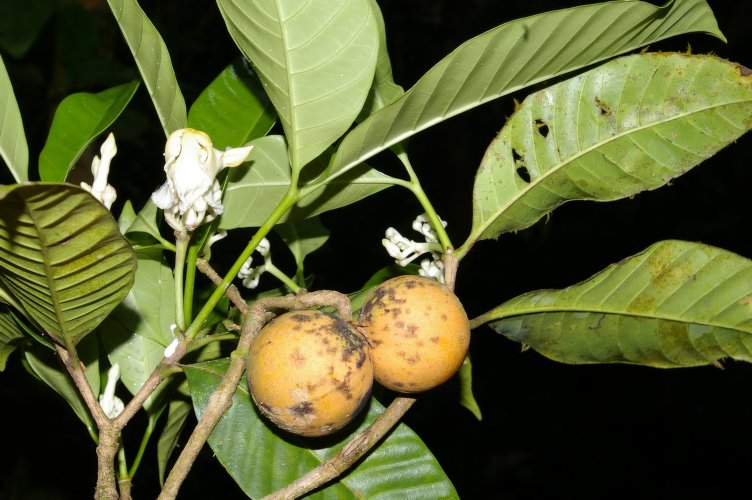
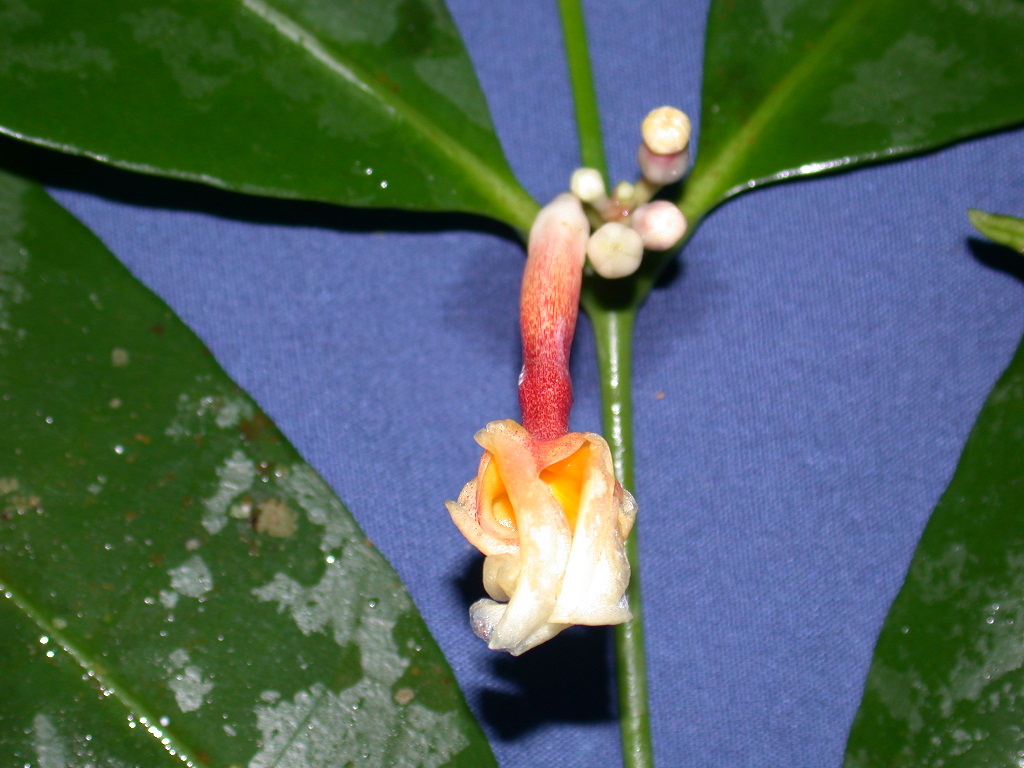
Tabernaemontana sananho Ruiz & Pav.
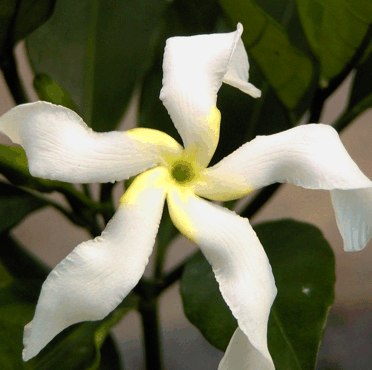
T.sananho.jpg

0bbb6eaa7188757086ba624c7d10ecf08d1c9570.jpg


Synonyms (Tropicos.org) : Bonafousia sananho (Ruiz & Pav.) Markgr ; Merizadenia sananho (Ruiz & Pav.) Miers ; Taberna poeppigii (Müll. Arg.) Miers ; Tabernaemontana poeppigii Müll. Arg.

Herbarium Botanical Voucher: Link

Distribution
(discoverlife.org):
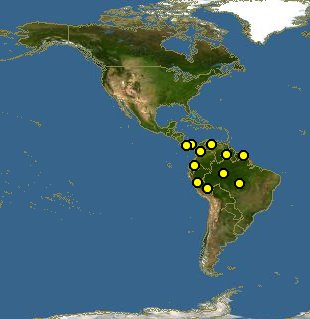
Tsananhomap.jpg


Ethnomedicinal use

Apparently added to ayahuasca (bark? root? Citation needed)

It is used as eyedrops by the Kaxinawa, using the juice (acqueous extraction? Squeezed 'resin'?) of the root and trunk scrapes, for the purpose of improving luck and concentration when hunting. Also when being stung by "tocandira" and stingray, topically applied. Also the latex from the bark is used for tooth ache, topically applied with some cloth, until the tooth falls out. (Ika Muru, 2014)

Much as T. rimulosa. The leaves, softened by fire, are applied to relieve rheumatic pains. In Pastaza, taken one week after delivery. "Pulp is used as a gargle for sore throat and colds". "Tikuna" mix the latex with water for eye wounds . "Jivaro" apply the bark juice to toothache. Considered sudorific, tonic, used for colds, obesity, rheumatism, syphilis. (Amazonian Ethnobotanical Dictionary)

Colombia: A mixture of latex and water can be used to cure eye wounds [375]. (Van Beek et al 1984)

Peru: In the upper part of the Amazon the plant has long been considereda panacea, the name sanango signifies a more or less all-purpose medicinal plant. In the Leticia area it is employed as a febrifuge, emetic, diuretic, calmative and for various minor ailments. A tepid decoction of the leaves and bark is used to wash wounds and afterwards powdered bark is put
over the wound; this is repeated three times a day for 10 days. A water extract of the root is drunk three times a day during 15 days against rheumatism and for wounds [ 375]. (Van Beek et al 1984)

Peru, Brazil: An infusion of the roots is used against rheumatic pains
[376]. (Van Beek et al 1984)


Alkaloid content: 1% alkaloids (sample from Satipo) - 7.5% alkaloids (sample from Tarapoto) of which Coronaridine 30-38% , Heyneanine 18-20% , 10% 19-Hydroxycoronaridine, 0-2% Ibogamine and 2-3% Voacangine (G. delle Monache et al 1977)
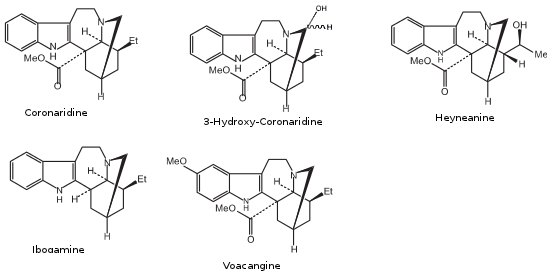
Tsananhoalks.jpg


Alkaloid info and pharmacology (Van Beek et al 1984)
Coronoaridine
CAS: 467-77-6
338.44 g/mol
The alkaloid has been tested in the mouse, cat, dog, monkey and rat by a variety of pharmacological procedures. It showed autonomic and CNS activity. In mice it produced analgesia and was effective in suppressing rage caused by foot-shock. Toxicity in the anesthetised cat appeared to be associated with respiratory depression. Coronaridine was inactive in the 9 KB system in cell culture [ 150]. In a general pharmacological screening, the compound exhibited little activity [164]. A single 30 mg/kg p.o. dose of coronaridine prevented pregnancy in rats when given on day 1, 2, 3 or 4 after coitus. When given on day 5, 6, 7 or 8 of pregnancy, the results were only partially successful. The substance showed estrogenic activity, and it was this activity which appeared to be responsible for the antifertility action. However, the alkaloid was devoid of anti-estrogenic, androgenic, anti-androgenic, progestational, anti-progestational and uterine-stimulant

3-hydroxy-Coronaridine
CAS: 56867-69-7
354.19 g/mol
The substance had strong antibiotic activity [ 382]

Ibogamine
CAS: 481-87-8
280.41 g/mol
Central-stimulating properties were observed in a general pharmacological screening, and in mice, when administered S.C. together with Rididyl i.p., the alkaloid produced jactatio capitis [164]. On iv. injection into anesthetised guinea pigs, the effects observed were the same as with ibogaine (q.v.) [221]. Ibogamine was not active in the P-388 or KB test systems in cell culture [ 353]

Voacangine
CAS: 510-22-5
368.21 g/mol
In a general pharmacological screening, voacangine exhibited a slight central stimulating effect. The LDSo i.v. in the mouse was 54 mg/kg [ 164]. When injected i.v. into anesthetised guinea pigs it produced the same effects as did ibogaine (q.v.) [221]. Voacangine had no effect on the heart [ 178]. The alkaloid was not active in the P-388 and KB test systems in cell culture [353].

Analysis Data
GC-MS data (still lacking info on 3-Hydroxy-Coronaridine) : Mass Spectrometry Data table (Zocoler et al 2005)

TLC system: toluene-ethanol-ammonia (95:5:5, v/v/v ).
Reagents used for TLC visualization: Dragendorff's reagent, iodoplatinate, ferric chloride-perchloric acid (FCPA), and ceric sulphate-sulfuric acid (CSSA) (Zocoler et al 2005)


Plant vendors:
USA: Plant Cutting
Europe: Wood (bark?)


DMT Nexus related threads: Tabernaemontana sananho ; Ayahuasca Admixtures Workspace


Tabernaemontana undulata Vahl
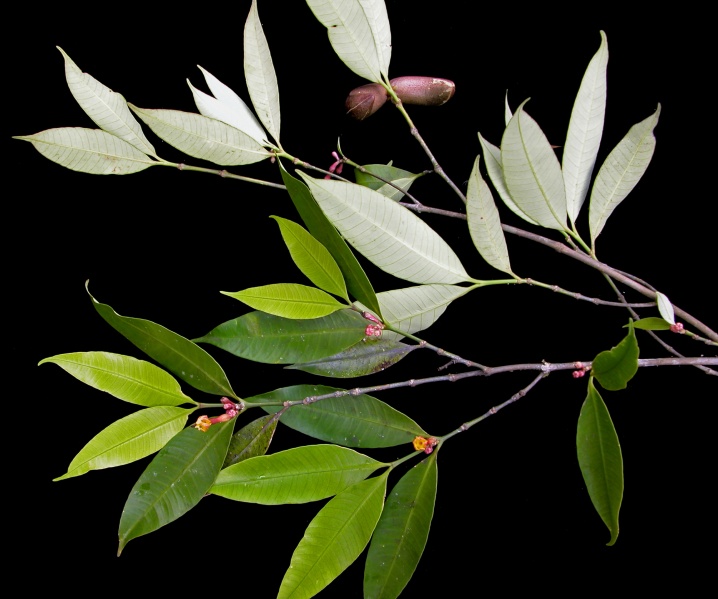
718px-Undulata.jpg

18410.JPG


Synonyms (tropicos.org): Anacampta albescens (Rusby) Mrkgr; Anartia meyeri (G. Don) Miers; Bonafousia obliqua Miers; Bonafousia perrottetii (A. DC.) Miers; Bonafousia undulata (Vahl) A. DC. ; Bonafousia undulata var. ovalifolia Miers; Echites brasiliensis Thunb. ; Peschiera surinamensis Miq. ; Stemmadenia nervosa Standl. & L.O. Williams; Tabernaemontana albescens Rusby ; Tabernaemontana meyeri G. Don ; Tabernaemontana meyeri G. Don ; Tabernaemontana perrottetii A. DC.(tropicos.org)

Herbarium Botanical Voucher: Smithsonian Tropical Research Institute ; FMNH

Distribution: Brasil, Colombia, Costa Rica, Ecuador, Guyana, Guyana Francesa, Panamá, Perú, Surinam, Trinidad y Tobago, Venezuela (STRI)

Ethnomedicinal use
Called Becchete (pronounced B'-chew-teh by the Mati and Matses tribe, applied to the eye to improve eyesight also for better hunting. (Lambert et al 2010)
Matis-Becchete.jpg


Alkaloid content: Quebrachidine, Voaphylline, Coronaridine, (-)-19-epi-Heyneanine, Voacangine, Unknown base (M+ 382) (Van Beek et al, 1984)

Eglandine, voacangine, Isovoacangine, Conopharyngine, Jollyanine, (-)-19-epi-Heyneanine, Heyneanine / 20-hydroxycoronaridine, Coronaridine, Ibophyllidine, hydroxy-7-indolenine, 11-hydroxy-coronaridine, 10-hydroxy-heyneanine, 11-hydroxy-heyneanine, dimer alkaloid mass 706 (Ladhar et al 1981)

coronaridine, voacangine, 19R-heyneanine, 19R-voacristine, 18-hydroxy-coronaridine, 18-hydroxy-voacangine Van Beek et al 1985


DMT-Nexus related thread Becchete visionary eyedrops

Vendors:
Seeds - potential vendor 1 (not checked yet)


References

Cardoso et al 1997. Gas chromatographic analysis of indole alkaloids from
Tabernaemontana hilariana. Journal of Chromatography A, 788 (1997) 204-206

Ika Muru, Agostinho Manduca Mateus (2014). Una Isi Kayawa: Livro da cura do povo Huni Kuin do Rio Jordao. Dantes Ed., Rio de Janeiro, 2014

Lambert M Surhone, Mariam T Tennoe, Susan F Henssonow 2010 Tabernaemontana undulata (Link). Verlag Dr. Mueller AG & Co.

Van Beek et al, 1984. Tabernaemontana L. (Apocynaceae): A review of its taxonomy, phytochemistry, ethnobotany and pharmacology. Download link

Zocoler et al 2005. Qualitative determination of indole alkaloids of Tabernaemontana fuchsiaefolia (Apocynaceae). J. Braz. Chem. Soc. vol.16 no.6b São Paulo Nov./Dec. 2005. Download link

G. delle Monache, S.M. de Matta, F. delle Monache and G.B. Marini-Bettolo (1977) Sugli alcaloidi di Tabernaemontana sananho R. & P. Atti Accademia Nazionale dei Lincei, Memorie, Classe di Scienze Fisiche, Matematiche et Natumli [viii] 62, 221.
 
----
Source
Author(s): Kevin A Jernigan
Year Published: 2009
Title: Barking up the same tree: a comparison of ethnomedicine and canine ethnoveterinary medicine among the Aguaruna
Pages: n/a
Journal: Journal of Ethnobiology and Ethnomedicine, 5:33
Link/URL: http://www.ncbi.nlm.nih.gov/pmc/articles/PMC2777850/pdf/1746-4269-5-33.pdf

Information
T. sananho known locally as "kunakip" among the Aguaruna. Said to be "waimatai" (vision-producing).

Bark and roots are administered to dogs to improve hunting ability; route of administration (ROA): "inhaled in mouth, nose, fed". Used similarly by humans, but with different ROA (human ROA not specified). The bark is fed to dogs to treat lack of appetite (a use not seen in humans). The sap is applied topically to treat dermatitis in dogs and humans.
----
 
[The following are all in reference to Tabernaemontana sananho]

A few additional notes on Van Beek et al. 1984 (referenced in the first post of this thread):

The passages on ethnomedicinal uses cite other sources ([375] and [376]). Here are full citations for those sources:
  • [375]: R.E. Schultes (1979) Journal of Ethnopharmacology 1, 165.
  • [376]: Simposio internazionale sulla medicina indigena e popolare dell’America latina, Dec. 1977, Istituto Halo-Latino-Americano, Rome, 1979, p. 100.
All the alkaloids listed (coronaridine, 3-hydroxycoronaridine, (-)-heyneanine, (-)-ibogamine, and voacangine) were isolated from the bark. Van Beek et al. cite the following reference as the source of this information:
  • [338]: G. delle Monache, S.M. de Matta, F. delle Monache and G.B. Marini-Bettolo (1977) Atti Accademia Nazionale dei Lincei, Memorie, Classe di Science Fisiche, Matematiche et Natumli [viii] 62, 221.

Now for some new sources:
----

Source: Ott, J. 2001. Shamanic Snuffs or Entheogenic Errhines. Entheobotanica: Solothurn, Switzerland.

TABERNAEMONTANA SANANHO (RUIZ& PAV.) MARKGR. - A sticky latex from the fruit of this Apocynaceae species, called bai su'u by the Amazonian Siona-Secoya Indians, is placed into the nostrils of hunting-dogs to augment their olfactory range [Russo 1999; Schultes & Raffauf 1990]. Extracts of bark of tsicta, most probably T. sananho, are ingested both by human beings and their dogs as hunting-aid in the Ecuadorian Amazon. Tabernaemontana is related to iboga, Tabernanthe iboga BAILL., and some of its species contain a variety of the same visionary ibogane alkaloids [Ott 1996].

Ott's References:
  • Ott, J. 1996. Pharmacotheon: Entheogenic Drugs, their Plant Sources and History. Natural Products Company: Kennewick, WA.
  • Russo, E. 1999. "Veterinaty hunting magic treatments of the Machiguenga tribe or, the canine conundrum." Unpublished manuscript.
  • Schultes, R.E., and R.F. Raffauf. 1990. The Healing Forest: Medicinal and Toxic Plants of the Northwest Amazonia. Dioscorides Press: Portland, OR.
----

Source: Ott, J. 1996. Pharmacotheon: Entheogenic Drugs, their Plant Sources and History. Natural Products Company: Kennewick, WA.

Under the name sananho, a Tabernaemontana species is used as an ayahuasca additive (Schultes & Hofmann 1979), and under the same name a species of Tabernaemontana is used as an ingredient of South American dart poisons (Bisset 1992A). This might represent T. sananho, a species reported to be strongly-positive for alkaloids in field tests (Schultes 1985A) and employed under the name tsicta as a hunting aid in Ecuador. Bark extracts of tsicta are given both to human hunters and their dogs, to sharpen their senses for hunting, after weathering the initial, disagreeable effects (Miller 1993).
Sananho, a Tabernaemontana species, is a known ingredient of South American dart poisons (Bisset 1992A), and under the name tsicta, T. sananho and other Tabernaemontana species are used in Ecuadorian ethnomedicine (Kohn 1992).

Ott's References:
  • Schultes, R.E., and A. Hofmann. 1979. Plants of the Gods: Origins of Hallucinogenic Use. McGraw-Hill: New York.
  • Bisset, N.G. 1992. War and hunting poisons of the New World. Part 1. Notes on the early history of curare. Journal of Ethnopharmacology 36(1): 1-26.
  • Schultes, R.E. 1985. De plantis toxicariis e mundo novo tropicale commentationes XXXV. Miscellaneous notes on biodynamic plants of the northwest Amazon. Journal of Ethnopharmacology 14(2,3): 125-158.
  • Miller, J.S. 1993. Personal communications, Catemaco, Veracruz, México.
  • Kohn, E.O. 1992. Some observations on the use of medicinal plants from primary and secondary growth by the Runa of eastern lowland Ecuador. Journal of Ethnobiology 12(1): 141-152.
----

Source: Ott, J. 1994. Ayahuasca Analogues: Pangaean Entheogens. Natural Products Co.: Kennewick, WA.

Ott includes Tabernaemontana spp. on a list of ayahuasca additives, citing: Luna 1984A, Luna 1984B, Pinkley 1969, and Schultes 1972A.

Ott reports that the Quijos Quichua Indians use the sap of Osteophloem platyspermum combined with Tabernaemontana sananho and a species of Brugmansia as an oral entheogen (citing Alarcón 1990).

Ott's References:
  • Alarcón, R. 1990. Personal communications, Jatun Sacha, Ecuador.
  • Luna, L.E. 1984A. The healing practices of a Peruvian shaman. Journal of Ethnopharmacology 11(2): 123-133.
  • Luna, L.E. 1984B. The concept of plants as teachers among four mestizo shamans of Iquitos, northeastern Peru. Journal of Ethnopharmacology 11(2): 135-156.
  • Pinkley, H.V. 1969. Plant admixtures to ayahuasca, the South American hallucinogenic drink. Lloydia 32(3): 305-314.
  • Schultes, R.E. 1972. De plantis toxicariis e mundo novo tropicale commentationes X. New data on the malpighiaceous narcotics of South America. Botanical Museum Leaflets Harvard University 23(3): 137-147.
----

Source: Rapini, A., Koch, I., Kinoshita, L.S., Simões, A.O., Spina, A.P. 2010. Apocynaceae in Lista de Espécies da Flora do Brasil. Jardim Botânico do Rio de Janeiro. (http://floradobrasil.jbrj.gov.br/2010/FB015609).

Vernacular names in Brasil include: abiu bravo; sanango.
 
Source: Voogelbreinder, S. 2009. Garden of Eden.

Vernacular names for T. sananho: lobo sanango, yacu sanango, sanango de altura, tsicta, tsiikat, bai-su-su. Notes that T. rimulosa may also be referred to as sanango or lobo sanango.

Snu also gives references to sources that discuss a Tabernaemontana species known as "sananho" or "uchu sanango" which could be referring to T. sananho:
  • Bear, J. and A.R. Vasquez. 2000. Amazon Magic - The Life Story of Ayahuasquero and Shaman Don Agustin Rivas Vasquez. Colibri Publ., New Mexico.
  • Luna, L.E. 1984. The concept of plants as teachers among four mestizo shamans of Iquitos, northeastern Peru. Journal of Ethnopharmacology 11(2): 135-156.
  • Luna, L.E. and P. Amaringo. 1991. Ayahuasca Visions: The Religious Iconography of a Peruvian Shaman. North Atlantic Books, Berkeley, CA.
  • McKenna, D.J. et al. 1995. Biodynamic constituents in ayahuasca admixture plants: an uninvestigated folk pharmacopeia. In Schultes, R.E. and S. Von Reis, eds. Ethnobotany: Evolution of a Discipline. Dioscorides Press, Portland, OR.
  • Ott, J. 1993. Pharmacotheon: Entheogenic Drugs, their Plant Sources and History. Natural Products Company: Kennewick, WA.
  • Schultes, R.E. 1972. De plantis toxicariis e mundo novo tropicale commentationes X. New data on the malpighiaceous narcotics of South America. Botanical Museum Leaflets Harvard University 23(3): 137-147.

----


It would be good for someone to follow up on all those sources. This topic seems a bit messy to sort out, since there are so many different plants called sananho/sanango.

Also: Can anyone track down the original paper detailing which alkaloids were found in T. sananho? As far as I can tell, it's not online... but Italian sources with ridiculously long names aren't exactly my specialty. I can't even tell whether it's a book or a journal title.

My next post here will cover: Pharmacology of the T. sananho alkaloids.
 
More info on the alkaloids from T. sananho:

Coronaridine
IUPAC name: IUPAC: methyl (1S,15S,17S,18S)-17-ethyl-3,13-diazapentacyclo[13.3.1.0^{2,10}.0^{4,9}.0^{13,18}]nonadeca-2(10),4,6,8-tetraene-1-carboxylate
SMILES: CC[C@H]1C[C@@H]2CN3CCC4=C(NC5=CC=CC=C45)[C@](C2)([C@H]13)C(=O)OC
Formula: C21H26N2O2
Mass: 338.4433
Exact mass: 338.199428086
Van Beek et al. 1984 said:
The alkaloid has been tested in the mouse, cat, dog, monkey and rat by a variety of pharmacological procedures. It showed autonomic and CNS activity. In mice it produced analgesia and was effective in suppressing rage caused by foot-shock. Toxicity in the anesthetised cat appeared to be associated with respiratory depression. Coronaridine was inactive in the 9 KB system in cell culture [150]. In a general pharmacological screening, the compound exhibited little activity [164]. A single 30 mg/kg p.o. dose of coronaridine prevented pregnancy in rats when given on day 1, 2, 3 or 4 after coitus. When given on day 5, 6, 7 or 8 of pregnancy, the results were only partially successful. The substance showed estrogenic activity, and it was this activity which appeared to be responsible for the antifertility action. However, the alkaloid was devoid of anti-estrogenic, androgenic, progestational, anti-progestational and uterine-stimulant activities, although there was partial inhibition of oxytocin-induced uterine response [356]. The alkaloid was active against the P-388 test system in cell culture, the ED50 being 0.43 ug/ml [396].
Compound was active in a screening assay for compounds that allosterically activate MrgX1 receptor signaling. [National Center for Biotechnology Information. PubChem BioAssay Database; AID=588675, Source=Johns Hopkins Ion Channel Center(JHICC_MrgX1_AlloAgonist_Primary), Legacy BioAssay Tools (accessed 19 Jun 2012).]
IC50 = 11.5 ug/ml for cytotoxic activity against vincristine-sensitive human oral epidermoid carcinoma cell line(KB/S) (Kam et al. 2004)
ED50 > 20 ug/ml for cytotoxicity against human ZR-75-1 cells, SK-MEL-2 cells, Col2 cells, and HT cells by SRB assay (You et al. 1994)
ED50 = 3.8 ug/ml for cytotoxicity against mouse P388 cells after 48 hrs by SRB assay (You et al. 1994)
IC50 = 8600 nM for inhibition of electric eel AChE by Ellman's method (Zhan et al. 2010)
ED50 = 7.5 ug/ml for cytotoxicity against human BC1 cells by SRB assay (You et al. 1994)
ED50 = 12 ug/ml for cytotoxicity against human U373 cells by SRB assay (You et al. 1994)
ED50 = 10.9 ug/ml for cytotoxicity against human Lu1 cells by SRB assay (You et al. 1994)
ED50 = 19.1 ug/ml for cytotoxicity against human A431 cells by SRB assay (You et al. 1994)
ED50 = 11.2 ug/ml for cytotoxicity against human drug-resistant KBV1 cells by SRB assay in absence of vinblastine (You et al. 1994)
ED50 = 1.9 ug/ml for cytotoxicity against human drug-resistant KBV1 cells by SRB assay in presence of vinblastine (You et al. 1994)
ED50 = 10.7 ug/ml for cytotoxicity against human LNCAP cells by SRB assay (You et al. 1994)
ED50 = 13.6 ug/ml for cytotoxicity against human KB cells by SRB assay (You et al. 1994)


3-Hydroxycoronaridine
IUPAC: methyl (1S,15S,17S,18S)-17-ethyl-14-hydroxy-3,13-diazapentacyclo[13.3.1.0^{2,10}.0^{4,9}.0^{13,18}]nonadeca-2(10),4,6,8-tetraene-1-carboxylate
SMILES: CC[C@H]1C[C@H]2C[C@@]3([C@H]1N(CCC1=C3NC3=CC=CC=C13)C2O)C(=O)OC
Formula: C21H26N2O3
Mass: 354.4427
Exact mass: 354.194342708
Van Beek et al. 1984 said:
The substance had strong antibiotic activity [382].

(-)-Heyneanine
Van Beek et al. 1984 said:
This alkaloid was not active in the P-388 system in cell culture [396]
[I'm not sure if the structure given in Van Beek et al. 1984 is correct; at a glance, the structure given doesn't seem to match the molecular formula. At some point it would be a good idea to check what structure is given for the compound in other sources.]

(-)-Ibogamine
IUPAC: (1R,15R,17S,18S)-17-ethyl-3,13-diazapentacyclo[13.3.1.0^{2,10}.0^{4,9}.0^{13,18}]nonadeca-2(10),4,6,8-tetraene
SMILES: CC[C@H]1C[C@@H]2C[C@@H]3[C@H]1N(C2)CCC1=C3NC2=CC=CC=C12
Formula: C19H24N2
Mass: 280.4073
Exact mass: 280.193948778
Van Beek et al. 1984 said:
Cental-stimulating properties were observed in a general pharmacological screening, and in mice, when administered S.C. together with Rididyl i.p., the alkaloid produced jactatio capitis [164]. On i.v. injection into anesthetised guinea pigs, the effects observed were the same as with ibogaine (q.v.) [221]. Ibogamine was not active in the P-388 or KB test systems in cell culture [354].
IC50 = 3.5 ug/ml for cytotoxicity against human A2780 (ovarian carcinoma) cells (Prakash Chaturvedula et al. 2003)

Voacangine
IUPAC: methyl 17-ethyl-7-methoxy-3,13-diazapentacyclo[13.3.1.0^{2,10}.0^{4,9}.0^{13,18}]nonadeca-2(10),4,6,8-tetraene-1-carboxylate
SMILES: CCC1CC2CN3CCC4=C(NC5=CC=C(OC)C=C45)C(C2)(C13)C(=O)OC
Formula: C22H28N2O3
Mass: 368.4693
Exact mass: 368.209992772
Van Beek et al. 1984 said:
In a general pharmacological screening, voacangine exhibited a slight central stimulating effect. The LD50 i.v. in the mouse was 54 mg/kg [164]. When injected i.v. into anesthetised guinea pigs it produced the same effects as did ibogaine (q.v.) [221]. Voacangine had no effect on the heart [178]. The alkaloid was not active in the P-388 and KB test systems in cell culture [353].
IC50 = 4400 nM for inhibition of electric eel AChE by Ellman's method (Zhan et al. 2010)
IC50 > 25 ug/ml for cytotoxic activity against vincristine-resistant or vincristine-sensitive human oral epidermoid carcinoma cell lines (Kam et al. 2004)
IC50 = 10.4 ug/ml for cytotoxicity against human A2780 ovarian carcinoma cells (Prakash Chaturvedula et al. 2003)


My References
  • Kam TS, Sim KM, Pang HS, Koyano T, Hayashi M, Komiyama K. 2004. Cytotoxic effects and reversal of multidrug resistance by ibogan and related indole alkaloids. Bioorganic and Medicinal Chemistry Letters 14: 4487-4489
  • You, M., X. Ma, R. Mukherjee, N.R. Farnsworth, G.A. Cordell, A.D. Kinghorn, J.M. Pezzuto. 1994. Indole Alkaloids from Peschiera laeta That Enhance Vinblastine-Mediated Cytotoxicity with Multi-drug-Resistant Cells. Journal of Natural Products 57(11): 1517-1522.
  • Zhan ZJ, Yu Q, Wang ZL, Shan WG. 2010. Indole alkaloids from Ervatamia hainanensis with potent acetylcholinesterase inhibition activities. Bioorganic and Medicinal Chemistry Letters 20:6185-6187
  • Prakash Chaturvedula VS, Sprague S, Schilling JK, Kingston DG. 2003. New cytotoxic indole alkaloids from Tabernaemontana calcarea from the Madagascar rainforest. Journal of Natural Products 66: 528-531.
References from Van Beek et al. 1984
  • [150] SM. Kupchan, A. Bright and E. Macko (1963) Journal of Pharmaceutical Science 52, 598.
  • [164] G. Zetler (1964) Arzneimittelforschung 14, 1277
  • [178] A. Quevauviller, O. Foussard-Blanpin and J. Pottier (1965) Compte Rendus des Seances de la Societe de Biologie 159,821.
  • [221] G. Zetler, E. Lenschow and W. Prenger-Berninghoff (1968) Naunyn Schmiedeberg’s Archiv für Pharmakologie 260, 26.
  • [353] D.G.I. Kingston (1978) Journal of Pharmaceutical Sciences 67, 272
  • [354] D.G.I. Kingston, B-B. Gerhart, F. Ionescu, M.M. Mangino and S.M. Sami (1978) Journal of Pharmaceutical Sciences, 67, 249.
  • [356] P-K. Mehrotra and V.P. Kamboj (1978) Planta Medtca 33, 345
  • [382] H. Achenbach, B. Raffelaherger and G.U. Brillinger (1980) Phytochemistry 19, 2186.
  • [396] S.P. Gunasekera, G.A. Cordell and N.R. Farmworth (1980) Phytochemistry 19, 1213.

It turns out that ChEMBL's weakness is that it doesn't index older literature. None of Van Beek et al.'s sources turned up with ChEMBL's pharmacological activity searches.
 
About the Undulata and Becchete association. I began trying the drops over a month ago. Never got the 2-3 week duration effects that I had read about. Then the other day I did 3 drops per eye and was launched into strobe world for 7 days now. Fractals all around, geometric designs et all. It seems to be looming on the dangerous side as 3 drops causes considerable pain that doesn't just go away, it sticks around for a awhile. Another way to get stronger effects is to do it right on the iris and pupil.

I thought it was slightly a myth at how long they say it lasts...I was wrong. Just depends on how far one goes, but must be very careful.
 
Will be doing TA extracts of Undulata Roots and Sananho Roots over the course of the next year or so and see if microdosing my way up to a considerable dose if it mirrors the effects of Iboga TA at all.


The Sanango Diet is a pinnacle experience of Amazonian Shamanism. The diet consists of drinking the inner bark of the roots of the Sanango tree for three consecutive nights followed by another 4 days of dieta. A solution is made by adding water to the roots and allowing them to sit for hours. That solution is filtered through cheese cloth and is consumed at 3:00 A.M. It is hot and spicy and can cause vomiting and diarrhea. 20 to 30 minutes after ingesting Sanango the visionary effects begin. The journey lasts up to 5 hours with mild visions and very strong corporal sensations. Some people express difficulty with seeing straight and equilibrium the day after the Sanango Ceremony.

Sanango’s head medicine spirit presents himself in the form of an old man and is affectionately referred to as Abuelo Sanango or Grandfather Sanango. He is known to be very strict and very compassionate. His principle teaching is integrity and Truth. The Sanango diet moves methodically. As it straightens your energy, you face all your thoughts, desires, attitudes and understandings. They will be transformed.Uchu Sanango cleaned and ready for the dieta

Its movement is likened to a glacier. As it moves slowly, sometimes so slowly it seems like it is stopped, it pulverizes all resistance and leaves in its path a beautiful living sculpture. There is no movement in Sanango that can be resisted. It is infinitely patient as it reminds you that you will redefine your life in Truth and Heart.

Due to the strict nature of the medicine the rules need to be heeded and followed. Not following the rules can bring tremendous affliction by traditional definitions and it is expected that anyone that does not follow them will have to come back to straighten it out with Abuelo Sanango. This does not mean that there need be any fear about the diet. On the contrary the diet takes its own path, making your job very easy. All you have to do is follow the rules and follow the direction the medicine heads.

Uchu Sanango up close

Sanango Medicine is of a very high vibration making it very gentle and beautiful. Its predominantly violet medicine is an expression of pure Love. It helps you to face your deepest inner Truth and bring that as en expression of integrity into your daily life. It gives you the strength to overcome your fears and stand in the glory of your individual expression of humanity.
 
Just further commenting on the effects of taking Becchete/Sananga eye drops in larger amounts. During the day and light everything is significantly brighter, many designs form, but no strobe like effects. Third eye is beaming to a point of a dull pain even. Behind eyes this slight dull pain is also felt, like a warning signal to a migraine that never develops into anything.

Once night comes it totally adjusts or morphs into an Iboga like effect or more relative to most akin to large MAOI dosages. Strobes all around with lights and forms, can be overwhelming. It really comes out at night and faces and forms appear in a beauty that is very potentiated. I am finding it gets a bit old as these effects don't seem to die down. Now I am wondering if when the indigenous people do it they might be doing +1 eye drop, maybe 3-5 to get the long lasting effects. Despite my month long experimentation doing 1 drop per eye every other day, I feel like only now do I properly understand the effects and what it is truly for.

Must be one of the most mysterious medicines and ways of administering an entheogen that is known to man. So perplexing how these simple methods are so far advanced and well thought out.
 
Medicinal use by Yanesha (Amuesha) in the Peruvian Amazon.

Local Name: Patohuare’ (Tabernaemontana sananho Ruiz & Pav.) (CV272)

Uses: Aneamia, flu, amygdalitis, rheumatism, legs oedema

Preparation: Grated root is boiled or macerated in alcohol. Drink one small glass every day. Preparation is rubbed over legs


Reference: http://www.sciencedirect.com/science/article/pii/S0378874109005844

Valadeau et al (2010) The rainbow hurts my skin: Medicinal concepts and plants uses among the Yanesha (Amuesha), an Amazonian Peruvian ethnic group
Journal of Ethnopharmacology
Volume 127, Issue 1, 8 January 2010, Pages 175–192
 
I finally tried this yesterday, the sanango eyedrops from the Yawanawa people, during an ayahuasca ceremony. One drop to each eye... The moment it hits the eye, it takes about a second for it to start burning A LOT. It's a very intense piercing pain, my instinct was to contract muscles and hold my face with my hands, but my good friend who applied it passed his hand softly on my forehead and told me to try to relax.

The burning sensation lasted for maybe 5 minutes, but the first minute or two are the worse. Then the pain gives way to a lot of tears and clearing of synus, and a sensation of opened headspace and improved eyesight/deeper vision. This lasted for many hours, with a feeling of healing me too! Very special medicine!
 
endlessness said:
I finally tried this yesterday, the sanango eyedrops from the Yawanawa people, during an ayahuasca ceremony. One drop to each eye... The moment it hits the eye, it takes about a second for it to start burning A LOT. It's a very intense piercing pain, my instinct was to contract muscles and hold my face with my hands, but my good friend who applied it passed his hand softly on my forehead and told me to try to relax.

The burning sensation lasted for maybe 5 minutes, but the first minute or two are the worse. Then the pain gives way to a lot of tears and clearing of synus, and a sensation of opened headspace and improved eyesight/deeper vision. This lasted for many hours, with a feeling of healing me too! Very special medicine!

Amazing and special, enjoy!
The Yawanawas use it during hunts at night, for this vision improving effect.
I'll try it soon.
Great informative thread.
 
iracema said:
Amazing and special, enjoy!
The Yawanawas use it during hunts at night, for this vision improving effect.
I'll try it soon.
Great informative thread.

Yes agreed interesting stuff, especially the eye drops thing never heard of that before, thanks endlessness you think you have heard it all too sometimes :thumb_up:
 
endlessness said:
I finally tried this yesterday, the sanango eyedrops from the Yawanawa people, during an ayahuasca ceremony. One drop to each eye... The moment it hits the eye, it takes about a second for it to start burning A LOT. It's a very intense piercing pain, my instinct was to contract muscles and hold my face with my hands, but my good friend who applied it passed his hand softly on my forehead and told me to try to relax.

The burning sensation lasted for maybe 5 minutes, but the first minute or two are the worse. Then the pain gives way to a lot of tears and clearing of synus, and a sensation of opened headspace and improved eyesight/deeper vision. This lasted for many hours, with a feeling of healing me too! Very special medicine!

Endlessness

This is incredibly fascinating and has definitely sparked my interest in Tabernaemontana sananho, may I ask what is the method of preparation that the Yawanawa people use to make the eye drops?


Much Peace and Kindness
 
They use a simple process, but they don't use preservatives so it goes "bad" after 4 months (that's what I was told through the Kaxinawa making it although I would assume it would not stay good for quite that long) without a preservative (like Colloidal Silver or others). Preservatives are very difficult for eye drops as there are few that are good for the eyes.

There is a hard to find video showing how the Matses make Becchete which is the "sister" named Tabernaemontana Undulata the Kaxinawa and Yawanawa are using the roots of Uchu Sanango aka Tabernaemontana Sananho. In the video I saw of the Matses making Becchete which lasted for only a minute they grate it super fine (the root) and then strain through water. Ultra simple.

Although the recipe is simple to make it with preservative can be complicated. Personally I risked my eyes to get it right with success, because of the risks involved I can't rationally tell how it is done. Too much work/risk to simply give away. Also more profound effects can be made by extracting the roots rather than just straining. The hard part is getting the roots of these plants (for now) once the medicinal effects are more out to the world I slightly worry that harvesting will be quite prevalent.

These types of threads revealing so much quality infos are a double edges sword for this reason. The good old supply and demand very rarely takes into account sustainability.
 
I've been working with a much stronger sample of Sananga from the Huni Kuin. I have to say that it is probably the most amazing medicine I have ever worked with. I think if anything the first reports of it that I had ever read...
Actually very much underestimate the power and ability of Sananga. I would without a doubt put it on par with the other head totem medicinals.

One of the most astounding miracles I've observed is it's ability to last for days on end. And to go along with this it's ability to make other entheogens such as Kambo(technically not an entheogen to most), Iboga, Ruma snuff, and Ayahuasca last for days and very much amplified.

There is something very strange as well where when I do one drop of Sananga in each eye and the burning stops after about 5-7 minutes, it totally cleanses my sinuses like a rebirth and when I open my eyes tears come flooding out in such a healthy way like waterfalls. Then because my sinuses are so clear, I had realized this would be a good time to do the Huni Kuin Rape' snuff (which I find to be very potent it is brownish and Chai tasting) and then it goes straight to the back of my brain. The effects of this synergy very mysteriously mimic that of Ayahuasca if a substantial amount of Rape' is done. It is a hard ordeal that is extremely rewarding in nature.

I still don't know how safe it is to do Sananga on a daily basis? Like once a day or once every ceremony? These answers I can't get out of the Huni Kuin. They seem to leave it up to me to find out for myself.

But for sure this medicine is sooooo utterly amazing and vastly underestimated by all previous writings in my opinion. So much more study needs to be done.

I tried to change my name here to "Kambogahuascanga" due to this new found devotion to these sacred drops.
 
"I tried to change my name here to "Kambogahuascanga" due to this new found devotion to these sacred drops"

Just ask Trav if you want to change your name.
 
^ Thank you, I took your suggestion and will see if it is possible. I know it is quite strange for me to do this, but for some reason such things are important to me. New chapters I suppose.
 
3-Hydroxycoronaridine

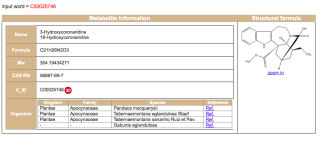
I hope the attatched file helps answer a few of the questions regarding needed info on 3-Hydroxycoronaridine. This is my 1st attempt to attatch a file. I hope it works and is useful. I am personally VERY interested in T. Iboga for reasons that shall become obvious in my posts in the near future.


Metabolite Information Structural formula
Name 3-Hydroxycoronaridine
19-Hydroxycoronaridine
Formula C21H26N2O3
Mw 354.19434271
CAS RN 56867-69-7
C_ID
C00025748
Organism
Kingdom Family Species Reference
Plantae Apocynaceae Pandaca mocquerysii Ref.
Plantae Apocynaceae Tabernaemontana eglandulosa Stapf Ref.
Plantae Apocynaceae Tabernaemontana sananho Ruiz et Pav. Ref.
- - Gabunia eglandulosa Ref.

zoom in
 

Attachments

  • Screen+Shot+2014-07-21+at+23931+PM.png
    Screen+Shot+2014-07-21+at+23931+PM.png
    70 KB · Views: 0
Back
Top Bottom