• Members of the previous forum can retrieve their temporary password here, (login and check your PM).

The Acacia Confusa thread

Migrated topic.
3rdI said:
ArkaneMist said:
Not sure where I can find this naphfta or shellite stuff.
look for lighter fluid but do an evap test first.

Yes will do.

ArkaneMist said:
Root Bark vs Bark.

Root bark is just bark that's close to the roots right?
root bark is bark off the roots I think

Maybe it's just bark off the main trunk and not the branch.
anyway its Juicy and Tender, perhaps a good sign, almost like flesh actually...
 
I was wondering if anyone on the Nexus has attempted to extract alkaloid from the phyllodes, and if so, what was the alkaloid content as a %of original weight and was it psychoactive? Also, would you recommend brewing it with syrian rue and/or caapi for anahuasca?
 
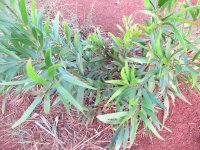
Nice young plant ;)
 

Attachments

  • youngconfusa.jpg
    youngconfusa.jpg
    250.5 KB · Views: 0
nen888 said:
^..thanks monk..on behalf of the other contributors too..and thanks Thoughtful Tree!
hey jamie, got any more pics of your babies..?:)

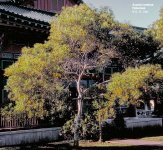
below photos of 台湾相思 growing in 1) a park in China. & 2) in the Phillipines (i know there's a few nexians there:))


Hello nen888 i live in the Philippines and Acacia Confusa is native in my land but the problem is it is very rare and hard to find. I wonder where in the philippines you took the second photo. Thanks cheers
 

Attachments

  • 4151589196_55070de966_z.jpg
    4151589196_55070de966_z.jpg
    77.1 KB · Views: 1
Hey guys. I have close to a thousand experiences with Syrian Rue and A. confusa root bark. Among all the dmt bearing plants that I have so far had experience with (chacruna, chaliponga, jurema, and a. confusa), I felt Acacia to be the most compatible, workable, practical, and safe choice for adding to Syrian Rue. My intention was always to find a local dmt bearing plant for the long term, but after so many years of training with this plant (I hold circles), it seems my ceremonial craft is deeply interwined/rooted in the spirit and energy of this plant. Acacia confusa in my experience is markedly masculine, and of the Sky and Heaven/Divine realms. His main teaching appears to revolve around remenbering our true essence, which is of Divine origin, and gathering the willpower to overcome the Nefs (ego). The duality of soul and ego is highly emphasized and life appears to be all about transcending earthly traps. He is pure love, angelic. However, he is not interested in earthly matters, going deep into darker aspects of our psyche, or earthly beings such as animal spirits. He is highly detached from this world. This is likely why some people find him lacking in depth. For me this has been a reason to look for alternative plants to accompany rue, because true healing requires going into both the darkness and the light, facing the darkness is a prerequisite to purge it from our being. Plus, I am craving an earthly connection as we need to embrace the Earth, not just transcend it, in this age. That's what brought me to mushrooms, and semilanceata surely is a earthly as well as a divine spirit 🌈 I need much experience and training before I can switch to another plant /mushroom. However, Acacia confusa has taken his place in my heart. İ
İt's the first time I read that the phyllodes can also be used and that intrigued me. Perhaps this is the part of the plant which needs to be used for this purpose, rather than the bark... Does anybody have experience with Syrian Rue and a confusa phyllodes? Thank you very much for devoting a thread to this beautiful plant... ❤️
 
I have been growing confusa as a houseplant, and have one bonsai'd tree that's about 3&1/2 years now. I'll be interested to try the phyllodes once enough of them drop this winter. Previous attempts at ayahuasca analogs with the phyllodes from the tree when it was younger were not fruitful, the tea had no indolic smell and not much of any bitterness. No bite or potent tastes of any sort to the phyllode tea, really.

I didn't try large doses of the phyllodes, since my tree is pretty small, and has to go inside with low light for the winter here in zone 6b.

The bark at the base of the tree is starting to turn purple now, and I suspect it may start to display its adult alkaloidal characteristics soon. I'm going to continue bioassays with the new years growth, though I'm usually really slow to bioassay these days.

I am finding Psychotria nexus to have more fruitful foliage production as a grower with cold winters.
 
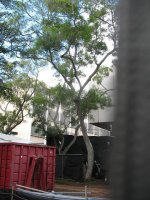
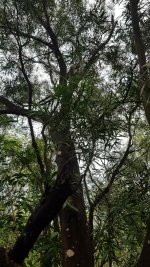
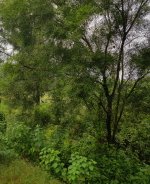
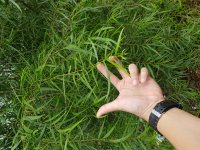
I just want to share with you all our native acacia confusa of ph:)
Sadly this tree is very rare and hard to find. The goverment didnt propagate it for reforestration project instead they use exotic acacia auriculiformis which is already invaded a lot of acacia confusa natives.
I tried to propagate this tree by cuttings without success
 

Attachments

  • VideoCapture_20191122-080539.jpg
    VideoCapture_20191122-080539.jpg
    527.1 KB · Views: 5
  • 20191122_080620.jpg
    20191122_080620.jpg
    6.3 MB · Views: 6
  • 20190908_140702.jpg
    20190908_140702.jpg
    5.5 MB · Views: 6
thank you Nirvana21
..these trees in their truly native environment are beautiful to see, thank you. As they are known to have indigenous medicinal significance, and are now rare, i would hope they remain respected there..Genetic studies indicated that A. confusa originally evolved as a species in the northern Philippines, and was taken to Taiwan some time in the distant past...where it's been incorporated into local customs for quite a while..
thank you dithyramb for those insights too

_____________________________________________________________________________________________

..in the interests of keeping this thread more up to date, i'm mentioning some recent findings for the species, which could provide an answer to the mystery of A. confusa bark Oral Activity, on it's own without the addition of MAOIs..for that original report see page 1 of the thread (#2)

A paper published a few months ago has reported some interesting new indole alkaloids in the bark..
"Indole alkaloids from the bark of Acacia confusa and their potential antinociceptive and anti-inflammatory activities"
by Yang Wang,Shuang-Gang Ma,Li Li &Shi-Shan Yu, Journal of Asian Natural Products Research, Aug 2022

the abstract:

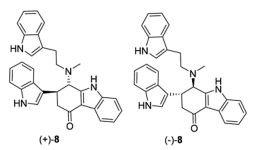
"A pair of novel trimeric indole alkaloid enantiomers [( ± ) -8], five new bisindole alkaloids [4–7 and ( ± ) -9], and three pairs of new monomeric indole alkaloid enantiomers [(± ) -1–( ± ) -3], together with seven known alkaloids (10–16), were isolated from the bark of Acacia confusa. Their structures were determined on the basis of spectroscopic methods, especially by NMR data analyses combined with single-crystal X-ray diffraction and electronic circular dichroism analyses. Compounds 4 and 11–16 exhibited significant antinociceptive activities in an acetic acid-induced writhing test. Compounds (+)-9 and (−)-9 displayed anti-inflammatory activities through the inhibition of the NF-κB pathway, with inhibitory rates of 68.9% and 59.5%, respectively, at a concentration of 10 µM."

..I haven't seen the full paper yet or had time to investigate more, but I've attached the structure of the 'trimeric indole alkaloid enantiomers'

Something crucial here is that these alkaloids don't seem to make it through an acid/base/non polar extraction process (where all our known tryptamines have been found) ..we can speculate on 2 possible explanations. Firstly, that the alkaloids are of a kind that will migrate to the polar phase of a basic solution..as flavonoid derivatives or histamines in acacias usually would.

And secondly, and more interestingly, that the compounds are broken apart by heat or pH change, much like the complex indole Yuremamine in Mimosa hostillis (tenuiflora)..Yuremamine won't make it through such extraction processes, it's broken into other constituents (it has a DMT molecule within it), and has been found to be an MAOI, explaining the oral activity of some cold water only mimosa preparations..it's also interestingly a Flavonoid derivative...

These new confusa compounds (complex indoles) would seem to be in the raw bark, but not extractions or heated preparations. The original report of oral activity was from bark powdered and simmered..for how long is unclear..
while there was speculation a betacarboline could be responsible, they are only found in small traces in A. confusa, not enough to provide required MAO inhibition..

These new and fascinating looking bisindoles (and other indoles) provide another potential mechanism for the oral activity, and have their own potential activity, and offer much new research material. Pain reducing is already noted...the researchers only looked at this and anti-oxidant activity...

A. confusa is certainly a tree of deep cultural significance, and medicinal use, in it's indigenous environments, as part of the TCM pharmacopeia, and now in modern research fields.


other recent results - there is also a second Stem bark test that endlessness has run, in the Acacia Analysis Thread, showing appreciable amounts of tryptamines..

PS some parts of SE Asia have done a very good job of developing sustainable cultivation models for useful acacias

PPS any chemists that want to speculate on these new compounds (bisindoles, complex indoles etc) - please step in


As a plant, Acacia confusa is a tree with folkloric themes of faithful love, birds, and reunification...most beautiful

 

Attachments

  • +trimeric+indole+alkaloid+enantiomers+-+A+confusa.png
    +trimeric+indole+alkaloid+enantiomers+-+A+confusa.png
    161.8 KB · Views: 0
dithyramb said:
Hey guys. I have close to a thousand experiences with Syrian Rue and A. confusa root bark. Among all the dmt bearing plants that I have so far had experience with (chacruna, chaliponga, jurema, and a. confusa), I felt Acacia to be the most compatible, workable, practical, and safe choice for adding to Syrian Rue. My intention was always to find a local dmt bearing plant for the long term, but after so many years of training with this plant (I hold circles), it seems my ceremonial craft is deeply interwined/rooted in the spirit and energy of this plant. Acacia confusa in my experience is markedly masculine, and of the Sky and Heaven/Divine realms. His main teaching appears to revolve around remenbering our true essence, which is of Divine origin, and gathering the willpower to overcome the Nefs (ego). The duality of soul and ego is highly emphasized and life appears to be all about transcending earthly traps. He is pure love, angelic. However, he is not interested in earthly matters, going deep into darker aspects of our psyche, or earthly beings such as animal spirits. He is highly detached from this world. This is likely why some people find him lacking in depth. For me this has been a reason to look for alternative plants to accompany rue, because true healing requires going into both the darkness and the light, facing the darkness is a prerequisite to purge it from our being. Plus, I am craving an earthly connection as we need to embrace the Earth, not just transcend it, in this age. That's what brought me to mushrooms, and semilanceata surely is a earthly as well as a divine spirit 🌈 I need much experience and training before I can switch to another plant /mushroom. However, Acacia confusa has taken his place in my heart. İ
İt's the first time I read that the phyllodes can also be used and that intrigued me. Perhaps this is the part of the plant which needs to be used for this purpose, rather than the bark... Does anybody have experience with Syrian Rue and a confusa phyllodes? Thank you very much for devoting a thread to this beautiful plant... ❤️

Hi. What have you found to be a dependable, but mild, Ayahuasca experience with confusa?

Let's say 3 grams of Syrian Rue and a half tablespoon of confusa? (How many grams confusa?)
Would that be a good dependable place to have a mild start without a surprise brought on by a light meal? How does one avoid the surprise many seem to get from eating? If you could avoid that, it would be easier to work up.
 
nen888 - that carbonyl group in the trisindole/indolyltetrahydrocarbazolone molecules you attached would be key in effecting polar solubility under alkaline conditions. It can conjugate with the pyrrole double bond and thereby increases the acidity of the indolic proton in the triple ring part of the molecule. The negative charge left by the loss of this proton is delocalised betweeen the carbonyl oxygen and the indole nitrogen via the 2,3-double bond and the resulting enolate anion is likely to be soluble in water.

The carbonyl-indole bond may also be susceptible to hydrolysis by strong base, cleaving into the decyclised indolepropanoic acid derivative. I'll add some explanatory diagrams in due course, but both of these products would indeed be soluble in basic water.
 
^..appreciate that, thanks downwardsfromzero..
So, the plot indeed thickens...if those compounds are broken down or degraded by prolonged heat or drying will make it even more interesting
..look forward to greater understanding..and diagrams! :)
.

brokendownpalace10 - i can't speak for the post you quoted, but there should be a fair bit in other areas of the nexus on methods of that combination, even the wiki..your question really relates to ayahuasca analogues in general, in which there is much subjectivity in what you ask...

we should remember that A. confusa isn't traditionally in its native regions combined with rue or ayahuasca..it's a medicine unto itself
 
Back
Top Bottom