• Members of the previous forum can retrieve their temporary password here, (login and check your PM).

The Acacia Confusa thread

Migrated topic.
The true power of a personal statement Go for Writing a Personal Statement With Well-Experienced Pros lies in its ability to connect with the values and expectations of the audience – whether it's a university admissions committee or a prospective employer. These writing services are adept at deciphering these expectations and guiding you to shape your story in a way that aligns seamlessly, ensuring your narrative leaves a lasting impression. Furthermore, Personal Statement Writing Help serves as a mentor, offering feedback and insights that enhance your narrative. Their role is not just about refining content; it's about empowering you to present your story with authenticity and impact.
 
^that's fascinating downwardsfromzero, thank you..it's really cool you have worked that out..kudos to your skills..invaluable

before i make a few more comments on alkaloids,
also wanted to belatedly thank kerelsk for the earlier contribution...
phyllodes are more likely to be seasonally variable, and some acacias in cultivation have taken 3 years to reach full alkaloid spectrum..i'm not sure how bonzai conditions may affect this, but also there are dwarf strains of confusa (see later on)
..i've spent most of my time spent studying Australian, and a few African, species (with an aim to publish) , so A. confusa is a plant i've admired more as a respectful holiday, and a nice one at that...i have looked into it a bit, as any acacia with known traditional use that i can..if it was one i grew i'd certainly be conducting more experiments

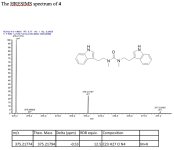
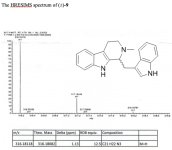
ok, going back to newly characterized indole alkaloids from A. confusa, that don't appear in acid/base NP extractions and potentially not in long heated 'ayahuasca' type preparations: - i’ve attached the structures of two more compounds found in the plant (4 and 9), which showed activity (either antinociceptive - pain blocking but not anaesthetic - or anti-inflammatory)
They are ‘bisindoles’ (alkaloids containing two indole nuclei)
if we look at their structures...there seems to be something a little familiar going on there, yeah..?


These most recent findings on A. Confusa highlight an aspect of ongoing plant phytochemical research - that the state of alkaloids in the plant as it lives, or in fresh material, can potentially be different to a boiled, or acidified preparation…

I’ve already mentioned Yuremamine (and while apparently the structure has been revised, it’s activity hasn’t been adequately studied). A great example of what i’m talking about would be, when we go beyond ordinary bisinoldes into truly complex indoles. For instance, Hodgkinsine, from Hodgkinsonia frutescens (Rubiaceae) , is composed of three distinct N-methyltryptamine units…interestingly Hodgkinsine, in alkaline solution is converted to a tri-indoline base..this apparently reacts with sodium borohydride in ethanol to make a tetrahydro derivative which then fragments to give dimethyltryptamine, and an indoxyl-indoline..Now, sodium borohydride is a lab catalyst, but certainly manipulation by heat and/or ph change can potentially break apart some of these bisindoles (and complex indoles) into smaller fragments… And, the complex indoles (i once called them ‘hyper-molecules’ ) can show CNS and other activity unto themselves, prior to being split into fragmentary constituents…

This really is at the cutting edge of plant alkaloid research, and I commend the authors of the recent A. confusa paper for their work


So, more research is clearly required regarding the CNS activity of the species..

As far as reported bio-assay experiments with A. confusa, and no additives, it’s simply inadequate…the original report (on p1) is encouraging, but without higher dosage follow-up..there’s a not adequate at all report on (the now not doing much) erowid, in which we have acidification, and no follow up at larger ammount…this report is naive to reach the conclusion it does…It also needs to be tried with no heat (or minimal heat) in the process..


Another factor affecting alkaloid content can be genetic variation/sub-type…this is not well known with A. confusa, and not well established whether it has definite sub-species..
A study in 1978 self-pollinated a single A. confusa tree, and found variation in the seedlings (including a ‘dwarf’ subtype) - [see Seedling Variation of Open-Pollinated Seeds from a Single Tree of Acacia confusa Merr. , Siao-Jong Li, Kew Bulletin, Vol. 32, No. 3 1978]
..this is indicative of polyploidy, which is common in acacias..

it’s very closely related to some species in Australia, who would be it's 'parents’ or 'cousins' …it’s worth considering, though, that even when two different acacia species have apparently similar alkaloid profiles, they can be quite different in ‘character’…
Though they retain something in common - there is no need to touch the roots of and thus harm the tree, in order to explore it’s teaching… indeed this may be one of it’s teachings..

A. confusa is a plant with a unique asian/pacific history, with it's own 'traditions' to teach us..
 

Attachments

  • A+Confusa+Compound+4.jpg
    A+Confusa+Compound+4.jpg
    375.5 KB · Views: 4
  • A+Confusa+Compound+9.jpg
    A+Confusa+Compound+9.jpg
    481.5 KB · Views: 4
Does anyone have much experience with a STB and Acacia confusa.
My initial thoughts are that Naptha might not be suitable since the NMT seems to be the predominant alkaloid and NMT isn't nearly as soluble in Naptha as DMT. The Wiki says that NMT is "probably" soluble in Xylene. Anyone know for sure?
Are A/B that much more efficient with confusa than STB? Wondering if the gooey, fatty nature of things makes the base breaking down the bark less efficient.
It seems desirable, the NMT.
 
Acacia Confusia Phyllode Extraction
May 2025

Collected phyllodes from a short, scraggly tree with lots of random branches popping out of the trunk (sorry – I forget the botanical name for these) in mid-afternoon on a sunny day. These were dried slowly over the course of a week before being completely dried out in a convection oven in small batches, 60 minutes at 100°C.

After the twigs were removed, the phyllodes were ground up into a powder then simmered in 1.5 liters of water acidified to pH 3.5 with rice vinegar (this is the only type of vinegar sold at supermarkets where I live) for ~90 minutes. Afterwards, the olive green/yellow tea was collected, and the phyllodes were simmered again two more times.

The three teas were simmered down to ~1 liter, then filtered through a cotton t-shirt.

A solution of 150ml water + 40g sea salt was brought to a boil then added to the filtered tea.

Since the liquid level was too high for the proof bottle, the salted tea was put in a pot and simmered down to a workable amount. It was then poured back into the proof bottle.

A solution of 200ml water + 100g lye were added, turning the tea from olive green/brown to black.

VM&P naphtha was added until it filled almost the entire neck of the liter-sized proof bottle. It turned a golden color instantly after shaking and placing in a heat bath!

The first 4 pulls were added to a freezer dish; two more pulls were added to a separate evaporation dish after a sodium bicarbonate wash.

After a six days in the freezer (I was too busy to proceed with the experiment), the naphtha from the freezer dish was decanted and filtered into a bottle. It was golden yellow! At the bottom of the freezer dish was lots of green residue, which was set aside to evaporate.

The two naphtha pulls from the evaporation dish had finally evaporated, leaving behind a gold/brown resin. The resin was scrapped up with a 533mg razor and weighed. The yeild was 71mg, which was put into a glass base pipe. It gave a mild body load that was short-lived: a +1 on the Shulgin Scale.

The green resin from the freezer dish (no – the green wasn't from the naphtha, which I've used before without this occurring) was scrapped up and weighed: 89mg. All of it was smoked in a base pipe; it was not active. I assume it was chlorophyll.

A seventh naphtha pull was made and evaporated down to 35mg. All was smoked in one toke giving threshold effects: a twisting sinking feeling coupled with hypnogogic closed-eye visuals. The visuals lasted 5-10 minutes while the sedative effects lasted for at least 45 minutes.

Two additional pulls were made with toluene. The first pull yielded 65mg and the second 60mg of a greenish/black resin. This was not active.

The golden colored naphtha collected from the freezer dish a week before was finally set out to evaporate. After two days, it evaporated down to a brownish/orange floral smelling oil. Two weeks later, ~73mg of the oil was placed in the base pipe and partially smoked. A heavy, bufotenine-like rush hit straight away, causing the pipe to be put down. This was followed by the urge to lie down and not move. Clear, layered, dream-like closed eye visuals ensued, coupled with auditory effects, not unlike a dream. A definite +2 on the Shulgin scale!
 

Attachments

  • Phyllode Resin.png
    Phyllode Resin.png
    2.5 MB · Views: 10
Back
Top Bottom