The Tao of Harmala Resin Extraction
Safety:
Harmala alkaloids—primarily harmine, harmaline, and tetrahydroharmine—are naturally occurring compounds found in plants like Peganum harmala (Syrian rue) and are monoamine oxidase inhibitors (MAOIs). Because of their pharmacology, they carry several potential dangers:
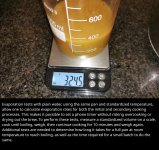
Evaporation tests using plain water, the same pan, and a standardized temperature make it possible to calculate evaporation rates for both the initial and secondary cooking stages. This allows a phone timer to be set accurately, reducing the risk of overcooking or drying out the brew. To conduct these tests, measure a standardized volume on a scale, heat until boiling, weigh it, then continue cooking for 10 minutes and weigh again. Additional tests are required to determine the time needed for a full pan at room temperature to reach boiling, as well as the time required for a small batch to do the same. (content does not depict a container with plain water)
Step 2: - Weighing
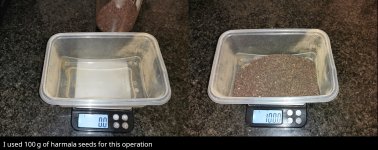
Weighing the seeds in this operation, I used 100 g Harmala seeds.
Step 3.A.: - Grinding
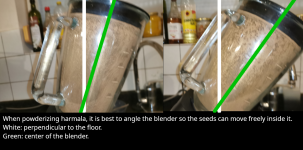
When grinding the seeds, I do not bother freezing them due to limited freezer capacity and instead prefer using a blender. When powderizing Harmala, it is best to angle the blender so the seeds can move freely inside. I have also heard that it can be beneficial to first cook the seeds and then place both the liquid and seeds in the freezer, as water expands when it freezes, which helps break open the cell walls of the seeds or herbs.
White line: perpendicular to the floor.
Green line: center of the blender.
Step 3.B.: - Grinding
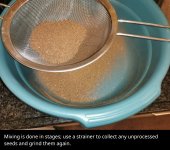
Mixing is done in stages; use a strainer to collect any unprocessed seeds and grind them again.
Step 4: - Acid
Adding an acid can facilitate the extraction of the Harmala alkaloids, these were my findings.
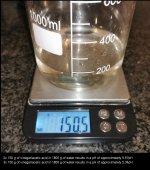
I used 1800 g tap water and 100 g powder Harmala seeds which resulted in.
2x 150 g of vinegar/acetic acid in 1800 g of water results in a pH of approximately 5.97pH
3x 150 g of vinegar/acetic acid in 1800 g of water results in a pH of approximately 5.34pH
Step 5: - Cooking
Cooking process, I typically cook for 2H adding water if needed. During this experiment, I used a normal stainless steel pan with a glass lid. In previous resin extractions, I used a pressure cooker.
Step 6: - Gross Filtration
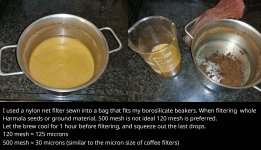
I used a nylon net filter sewn into a bag that fits my borosilicate beakers. When filtering whole
Harmala seeds or ground material, 500 mesh is not ideal 120 mesh is preferred.
Let the brew cool for 1 hour before filtering, and squeeze out the last drops.
120 mesh = 125 microns
500 mesh = 30 microns (similar to the micron size of coffee filters)
*Sewing it into a bag is not strictly necessary; it can simply be used as a cloth, or one can use an old T-shirt instead.
Step 7: - Sedimentation
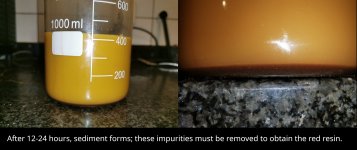
After 12-24 hours, sediment forms; these impurities must be removed to obtain the red resin. Otherwise, the resin will be dark brown, which will make it less effective.
Step 8: - Siphonification
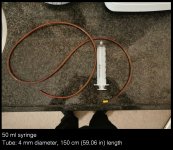
I used a 50 ml syringe and a tube 4mm diameter, which has a length of 150cm/59,69”
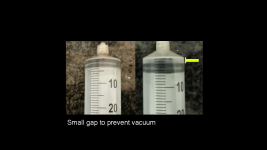
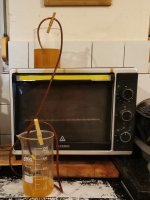
Leaving a small gap between the barrel and plunger of a large syringe prevents jerky suction, allowing the plunger to move smoothly and draw liquid evenly. At the edge of the beaker, I place a clothespin, which will hold the tube in place. Although I’m not actually gripping the tube, I just put in between the two open legs.
This method of transferring the liquid from one container is an excellent way to separate the sediment. Once the liquid is completely transferred from one container to the other. It is best to fill the syringe with plain water and flush the tube once or twice to remove all leftover Harmala liquid to prevent mold from forming. After that is done, it would be equally important to fill the syringe with empty air and blow through the tube again to remove all leftover water.
Step 9.A.: - Resinification
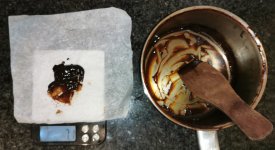
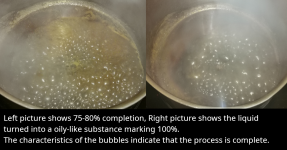
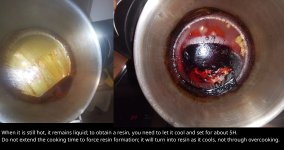
Left picture shows 75-80% completion, Right picture shows the liquid turned into a oily-like substance marking 100%. The characteristics of the bubbles indicate that the process is complete.
Step 9.B.: - Resinification
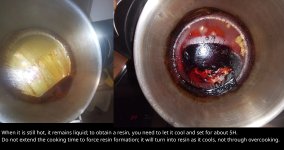
When it is still hot, it remains liquid; to obtain a resin, you need to let it cool and set for about 5H.
Do not extend the cooking time to force resin formation; it will turn into resin as it cools, not through overcooking.
Step 10: - Re-liquefying of resin residue
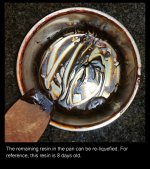
(after scooping all the resin) the remaining resin in the pan can be re-liquefied. For reference, this resin is 8 days old. Pulverized seeds yield more, be sure to add enough vinegar/acetic acid. I used 1800g of water and 3x 150g of vinegar, resulting in a measured pH of around 5.37pH. You can use AI for calculations to adjust the amounts based on your chosen water volume. When collecting the resin from the pan, avoid using metal tools, as scraping can produce carcinogenic compounds. Some resin will inevitably remain, but it can be liquefied again and converted back into resin. 100 g of seeds can yield approximately 15-20 g of red gold. In this case 24 g.
Step 11: - Weighing of Dosage
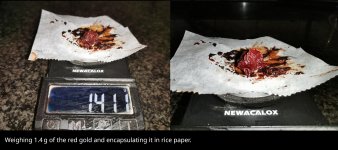
Weighing 1.4 g of the red gold and encapsulating it in rice paper.
*I would suggest starting with 0.5 g/500 mg and go from there if you are new to resin extraction.
Make sure once done with weighing, to place the weight resin on a spoon to prepare for step 12.
Step 12: - Capsulate through Rice Paper
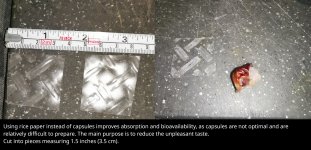
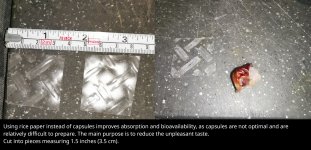
Using rice paper instead of capsules improves absorption and bioavailability, as capsules are not optimal and are relatively difficult to prepare. The main purpose is to reduce the unpleasant taste. Cut into pieces measuring 1.5 inches (3.5 cm). To create the squares of rice paper I have noticed that scissors do not work, it will break the paper. Take a knife and press hard on the rice paper this is break the paper cleanly. Use small squares, around 3.5cm. Then heat up water i.e. from the water cooker or use a pan to cook a cup size of water. Dip the rice paper until its becomes soft, this will take 7-16secs, then dip the other side of the paper. When the paper is soft take the prepared spoon (step 11) with resin, and put the paper over the resin on the spoon. And then fold the paper.
Author notes:
1. It takes approximately 2 hours before it begins to take effect, so make sure not to redose before that point.
2. After approximately 6 months, the resin may have dried out somewhat compared with when it was freshly prepared. If it becomes too dry, it may no longer dissolve optimally in the stomach. At that point, it may be an option to repeat steps 10–9 (re-liquefying the resin residue and subsequent resinification).
Safety:
Harmala alkaloids—primarily harmine, harmaline, and tetrahydroharmine—are naturally occurring compounds found in plants like Peganum harmala (Syrian rue) and are monoamine oxidase inhibitors (MAOIs). Because of their pharmacology, they carry several potential dangers:
- Harmala inhibits MAO-A, which is critical for breaking down monoamines such as serotonin, dopamine, and norepinephrine.
- Taking harmala alongside SSRIs, SNRIs, tricyclic antidepressants, or other serotonergic drugs can cause serotonin syndrome, a life-threatening condition marked by agitation, rapid heartbeat, high blood pressure, fever, tremors, and seizures.
- Combining harmala with certain foods high in tyramine (aged cheeses, cured meats, soy products) can trigger hypertensive crises, with dangerous spikes in blood pressure.
- Harmala is psychoactive; high doses can induce hallucinations, intense nausea, vomiting, and dizziness.
- Overstimulation may cause anxiety, panic attacks, or paranoia.
- High or repeated doses may stress the liver and nervous system, potentially causing neurotoxicity.
- Harmala can increase heart rate and blood pressure, especially in sensitive individuals.
- People with heart disease or hypertension are at higher risk for dangerous cardiovascular reactions.
- Common effects include nausea, vomiting, abdominal pain, and diarrhea.
- Raw seeds or large doses of harmala are particularly prone to cause strong gastrointestinal upset.
- Harmaline and related compounds are tremorogenic and pro-convulsant at high doses, which can trigger seizures, especially in people with epilepsy or seizure history.
- Harmala is unsafe during pregnancy, as it may stimulate uterine contractions and harm fetal development.
- Lactating women should also avoid it due to unknown effects on infants.
- While not typically addictive, repeated use can lead to tolerance and psychological dependence in some users.
- Frequent use may also lead to mood dysregulation or sleep disturbances.
Key Safety Notes
- Harmala should never be combined with other MAOIs, antidepressants, or recreational substances that affect serotonin or blood pressure.
- Start with very low doses if experimenting, ideally under guidance, and avoid chronic high intake.
- Be aware of all medications and foods consumed in the same window.
Background:
I have been using Harmala for over 10 years and have experimented with many different routes of administration. As with most substances, the effects vary significantly depending on the ROA. With Harmala, my approach has always been to explore its full range of effects while minimizing the unpleasant taste and maintaining sufficient effectiveness. In this TEK, I will demonstrate how to produce Harmala resin and encapsulate it in rice paper, allowing Harmala to be consumed without the characteristic unpleasant taste. I chose to experiment with rice paper instead of traditional capsules because I suspected that capsules significantly delayed the onset of Harmala compared to non-capsulated forms. This led me to explore rice paper as an alternative method.
Previous experiments of ROA:
Powdered raw seeds or ground seeds.
Powdered raw seeds or ground seeds – in capsules.
Harmala Tea – pouring hot water over either powdered or whole seeds.
Brewing Harmala (cooking).
Brewing Harmala (cooking) – with roasted seeds prior to cooking.
Gravity drip infusion.
Full-spectrum extract.
Harmala alkaloid mix: harmaline, harmine.
Isolated harmaline alkaloid.
Isolated harmine alkaloid.
Harmala resin via “dry” cooking.
Harmala resin extraction using 92% alcohol.
Extracting Harmala in 92% alcohol for several weeks, then adding water, cooking the solution, evaporating the alcohol, reducing the alcohol-based extract, and consuming it. (made sure it did not contain any alcohol anymore)
Brewing Harmala and administering it through the lower orifice.
Materials that are used in this TEK:
Raw Materials
- Harmala (Syrian Rue) seeds
- Tap water (for evaporation tests, cooking, and cleaning)
- Vinegar / acetic acid
- Rice paper (edible)
- Digital scale (gram accuracy)
- pH meter
- Measuring container(s)
- Phone or timer
- Blender
- Strainer (for re-grinding unprocessed seeds)
- Freezer (optional, for freeze–thaw experimentation)
- Stainless steel pan
- Stove or heat source
- Pressure cooker (optional; previously used)
- Electric kettle or secondary pan (for heating water)
- Spoon (non-metal preferred for resin handling)
- Nylon mesh filter (120 mesh preferred)
- Alternative cloth (old T-shirt or similar)
- Borosilicate beakers or similar containers
- 50 ml syringe (large barrel)
- Flexible tube (4 mm diameter, ~150 cm length)
- Clothespin (to secure tubing)
- Secondary container or beaker
- Cooking pan (same as above)
- Heat-resistant surface
- Non-metal scraping or handling tool (e.g., silicone, wood, or plastic)
- Baking paper (optional, for resin placement)
- Knife (for cutting rice paper)
- Cutting surface
- Cup (for hot water)
- Spoon (for holding weighed resin)
- Cardboard or protective covering for surfaces
- Stainless steel work surface (preferred)
- Mr. Clean Magic Erasers (or equivalent)
- Water for flushing tubing and syringes
- Freezer-safe containers
- Storage container for finished resin
- Airtight container (to reduce long-term drying)
- Handle with care! Harmala is a strong dye and will stain if not cleaned up right away. Work in an area where stains won’t be an issue, or use stainless steel surfaces if possible. You can also lay down cardboard on countertops and floors for protection. For cleanup, Mr. Clean Magic Erasers are very effective with some scrubbing.
- Harmala resin can be consumed on the same day it is produced; however, at that stage, it is usually too semi-liquid to be effectively encapsulated in rice paper. Typically, it requires at least several days to harden sufficiently for reliable encapsulation. It should be noted that rice paper encapsulation is not the only method of consuming Harmala resin, but for those seeking to completely avoid the unpleasant taste, it is the most reliable approach.
- Harmala resin may dry out after approximately six months, at which point its bioavailability can be significantly reduced. In such cases, the resin can be easily re-liquefied: add a cup of water to a pan, heat it, and once warm, introduce the resin and allow it to dissolve, before re-resinifying the solution.
- When cooking the seeds, if one is too late, the pan may run dry. In that situation, half a cup of water should be added immediately and swirled around to check whether the bottom of the pan contains burned seeds. In many cases, the batch is not ruined, as the important alkaloids are still present in the now semi-wet seeds. Simply add one or two cups of water and resume cooking.
- The items listed can be adapted at the user’s discretion—work with what you have available. The key is to focus on the purpose of each step rather than the exact tool or material, and you will achieve the desired results.
Evaporation tests using plain water, the same pan, and a standardized temperature make it possible to calculate evaporation rates for both the initial and secondary cooking stages. This allows a phone timer to be set accurately, reducing the risk of overcooking or drying out the brew. To conduct these tests, measure a standardized volume on a scale, heat until boiling, weigh it, then continue cooking for 10 minutes and weigh again. Additional tests are required to determine the time needed for a full pan at room temperature to reach boiling, as well as the time required for a small batch to do the same. (content does not depict a container with plain water)
Step 2: - Weighing
Weighing the seeds in this operation, I used 100 g Harmala seeds.
Step 3.A.: - Grinding
When grinding the seeds, I do not bother freezing them due to limited freezer capacity and instead prefer using a blender. When powderizing Harmala, it is best to angle the blender so the seeds can move freely inside. I have also heard that it can be beneficial to first cook the seeds and then place both the liquid and seeds in the freezer, as water expands when it freezes, which helps break open the cell walls of the seeds or herbs.
White line: perpendicular to the floor.
Green line: center of the blender.
Step 3.B.: - Grinding
Mixing is done in stages; use a strainer to collect any unprocessed seeds and grind them again.
Step 4: - Acid
Adding an acid can facilitate the extraction of the Harmala alkaloids, these were my findings.
I used 1800 g tap water and 100 g powder Harmala seeds which resulted in.
2x 150 g of vinegar/acetic acid in 1800 g of water results in a pH of approximately 5.97pH
3x 150 g of vinegar/acetic acid in 1800 g of water results in a pH of approximately 5.34pH
Step 5: - Cooking
Cooking process, I typically cook for 2H adding water if needed. During this experiment, I used a normal stainless steel pan with a glass lid. In previous resin extractions, I used a pressure cooker.
Step 6: - Gross Filtration
I used a nylon net filter sewn into a bag that fits my borosilicate beakers. When filtering whole
Harmala seeds or ground material, 500 mesh is not ideal 120 mesh is preferred.
Let the brew cool for 1 hour before filtering, and squeeze out the last drops.
120 mesh = 125 microns
500 mesh = 30 microns (similar to the micron size of coffee filters)
*Sewing it into a bag is not strictly necessary; it can simply be used as a cloth, or one can use an old T-shirt instead.
Step 7: - Sedimentation
After 12-24 hours, sediment forms; these impurities must be removed to obtain the red resin. Otherwise, the resin will be dark brown, which will make it less effective.
Step 8: - Siphonification
I used a 50 ml syringe and a tube 4mm diameter, which has a length of 150cm/59,69”
Leaving a small gap between the barrel and plunger of a large syringe prevents jerky suction, allowing the plunger to move smoothly and draw liquid evenly. At the edge of the beaker, I place a clothespin, which will hold the tube in place. Although I’m not actually gripping the tube, I just put in between the two open legs.
This method of transferring the liquid from one container is an excellent way to separate the sediment. Once the liquid is completely transferred from one container to the other. It is best to fill the syringe with plain water and flush the tube once or twice to remove all leftover Harmala liquid to prevent mold from forming. After that is done, it would be equally important to fill the syringe with empty air and blow through the tube again to remove all leftover water.
Step 9.A.: - Resinification
Left picture shows 75-80% completion, Right picture shows the liquid turned into a oily-like substance marking 100%. The characteristics of the bubbles indicate that the process is complete.
Step 9.B.: - Resinification
When it is still hot, it remains liquid; to obtain a resin, you need to let it cool and set for about 5H.
Do not extend the cooking time to force resin formation; it will turn into resin as it cools, not through overcooking.
Step 10: - Re-liquefying of resin residue
(after scooping all the resin) the remaining resin in the pan can be re-liquefied. For reference, this resin is 8 days old. Pulverized seeds yield more, be sure to add enough vinegar/acetic acid. I used 1800g of water and 3x 150g of vinegar, resulting in a measured pH of around 5.37pH. You can use AI for calculations to adjust the amounts based on your chosen water volume. When collecting the resin from the pan, avoid using metal tools, as scraping can produce carcinogenic compounds. Some resin will inevitably remain, but it can be liquefied again and converted back into resin. 100 g of seeds can yield approximately 15-20 g of red gold. In this case 24 g.
Step 11: - Weighing of Dosage
Weighing 1.4 g of the red gold and encapsulating it in rice paper.
*I would suggest starting with 0.5 g/500 mg and go from there if you are new to resin extraction.
Make sure once done with weighing, to place the weight resin on a spoon to prepare for step 12.
Step 12: - Capsulate through Rice Paper
Using rice paper instead of capsules improves absorption and bioavailability, as capsules are not optimal and are relatively difficult to prepare. The main purpose is to reduce the unpleasant taste. Cut into pieces measuring 1.5 inches (3.5 cm). To create the squares of rice paper I have noticed that scissors do not work, it will break the paper. Take a knife and press hard on the rice paper this is break the paper cleanly. Use small squares, around 3.5cm. Then heat up water i.e. from the water cooker or use a pan to cook a cup size of water. Dip the rice paper until its becomes soft, this will take 7-16secs, then dip the other side of the paper. When the paper is soft take the prepared spoon (step 11) with resin, and put the paper over the resin on the spoon. And then fold the paper.
Author notes:
1. It takes approximately 2 hours before it begins to take effect, so make sure not to redose before that point.
2. After approximately 6 months, the resin may have dried out somewhat compared with when it was freshly prepared. If it becomes too dry, it may no longer dissolve optimally in the stomach. At that point, it may be an option to repeat steps 10–9 (re-liquefying the resin residue and subsequent resinification).
Attachments
Last edited by a moderator: