• Members of the previous forum can retrieve their temporary password here, (login and check your PM).

Ultrasonic mixer/sonicator Help

the_Architect

Established member
Donator
Dear Nexians, hi, thank you for your time.šŸ™

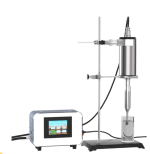
I was planning to buy one of this so called ultrasonic mixers, or sonicator, or homogenizer, or cell disruptor. I am not sure what“s the technical name.

I would like to get some insight from people who have access to this type of advanced equipmentšŸ§‘ā€šŸ”¬ . To hear how they incorporate it in DMT extraction (or harmalas, or other). What are the pros and cons.

My initial idea was getting a 500 to 1000W one. Not sure if the frequency should be 20khz or 35khz. Maybe spending as much as 500 euro + shipment (probably from aliexpress or one of those chinese stores).
1762972711647.png
My main goal is to save time in extractions, the long boilings of large amounts of solution (lately I like making acid baths and filter several times to separate the liquid from solid plant material, so that I can later work with a reduced volume of liquid, and smaller glassware).

I am not a lab technician by education, just been doing dmt extractions for years (A/B Max ion tek from cyb) and also grow mushrooms indoor.
I want to venture into harmalas extraction from syrian rue, try to make my own THH (which I love). And also DMT and triptamine extractions from other plants such us Chacruna or Chapilonga.
I am also interested in perfumery and essential oil extraction, so having good lab equipment can help me with other endevours. Who knows, maybe get a soxhlet later on or stuff like that.

I appreciate your time and all the help and wisdom that people share in this forum.šŸ’œ
 
The date on your post just says "Wednesday"... When did you post this?


I am working on this very thing. I have an older, 1000w sonicator. The study is in the early stages and I will provide more data as the work progresses.
So far I have just done a couple 100g MHRB STB extractions. 100g MHRB in 1L 13ph water. 1 sonicated for an hour, other flask stirred. Both room temp. Then it all went to hell. Lab issues(roof leak) and subsequent focus/schedule changes led to some really bad lab practices and zero note taking. I was so frustrated by the end of the roof repairs that I just pulled it all, lumped it together, washed it hot and got high. Didn't even weigh it.

Does any of that help? šŸ˜‚šŸ˜‚

I will say this: The slurries were visibly different. One being much finer than the other. So I dried the samples to get a better look at the material. I didn't do any particle size analysis on the powder but the difference between the sonicated and non-sonicated samples was obvious. The sonicated material was extremely fine compared to the non-sonicated.


I would think Sonication will rip the material apart better than any other method including freezing, boiling etc. I'm told it will crack the material on a cellular level. That said, would it not be possible to soak MHRB in naphtha then sonicate the bejeezus out of it for an "StS", straight to solvent, Tek?
 
The date on your post just says "Wednesday"... When did you post this?
Hi.
I posted it last wednesday, I guess 12th November 2015.
I am very interested in the sonicator and also some other advanced stuff... like vacuum evaporator with condensator to recover solvent and stuff like that... maybe for Syrian Rue, not exactly for DMT.
Also saw that sonicators are used for a bunch of stuff... like harvesting more olive oil from olives... or magically infused oak or wood scent in alcoholic beverages (60 min vs 16 year whiskey aging). Essential oil and tinctures... specially interesting with materials that can“t withstand high boiling temperatures (like some flowers I guess), and other stuff.

Anyway, about sonicator breaking the cells, yeah... they are called "cell disruptors". I read about people freezing and thawing mimosa soup repeatedly to break down the cells. Getting the dmt out or something... this method seems faster.

Lastly, about using the sonicator in combination with naptha (or hot naphta...)... or anything flamable like alcohol. That makes me wonder about a fire hazard. Could it set the solution on fire? (maybe also producing and evil sentient emulsion and setting your basement on fire).
I“d like to know what experts think about it... I was wondering about using the sonicator with herbs and ethanol to make tinctures and later essential oils (rosemary or lavender, etc).
 
would it not be possible to soak MHRB in naphtha then sonicate the bejeezus out of it for an "StS", straight to solvent, Tek?
The DMT first must be converted to a freebase before it will dissolve in naphtha, regardless of the equipment. Almost any realistic process at the domestic hobbyist level would involve some kind of aqueous mixture, since it's not worth the trouble of playing with, say liquid or gaseous pure ammonia, or a solution of ammonia in naphtha, just to avoid an aqueous phase.

You would have to check whether your device is compatible with flammable solvents before attempting any experiments, as @the_Architect rightly suggests.

Thinking a little more about this, tribochemistry is also an up-and-coming area of interest (as well as being ancient pre-chemistry) so your question has set me wondering what could be achieved by ball-milling MHRB with a suitable base as a pre-treatment - but again, would that really offer any significant advantage over simply using water? Maybe it would if it meant we could use sodium carbonate (washing soda) - whizz it in the ball mill for a bit, add naphtha, sonicate, freeze, done…?

Sodium carbonate being the decahydrate might just help stick the solid mass together enough to prevent excessive dispersion of unwanted particulates into the naphtha during sonication, but I wouldn't bet my house on it. And do make sure sonicating naphtha won't turn your shed/basement/garage into an inconvenient fireball before proceeding.

If all the safety boxes are ticked, I'd be interested to know the outcome of this specific approach. To reiterate
  • mix MHRB with ~equal weight of washing soda
  • ball mill overnight
  • add milled material to spark-safe sonicator
  • zap for suitable time
  • check for full separation of solids
    • use spark-safe centrifuge if necessary
  • freeze precipitate
Once more, do not use any electrical equipment with naphtha unless you've clearly established that it's safe to do so. Solvent vapour explosions are no joke.

Edit: see further safety notes below
The thing that keeps me from using my ultrasonic with volatile stuff is potential flash point issues. I thought cavitation gets really hot in a tiny localized area where the bubble collapses. I haven't researched it enough but I'd be worried about cavitation exceeding the flash point.
That is a very good point. Basically, anybody who is even beginning to contemplate any kind of test with sonication on a combustible liquid should only proceed on the assumption that it will be catching fire, and treat it as a fire safety demonstration, unless they are using specially designed equipment after having received thorough training in its use.

To restate, it is imperative to consult and fully understand the appropriate sources of expertise and to use only sonication equipment which has been specifically designated as compatible for use with flammable liquids.

 
Last edited:
I was thinking of using the sonicator (for a A/B tek) during the acid bath. Which would be safe to use, no fire hazard or evil alcaline emulsion spraying your ceiling.
You can do like 3 cycles of sonification and filtering.
20 min sonificaiton of acidic solution... then some good filtering, like vacuum filtering or just a big ass fruit press, something heavy.
Make more acidic soup with solid remains and repeat.
You do that 3-4 times. If you have a lot of acid soup, you can boil it and reduce it to an amount of liquid that is more convenient to you.

This will save time. if 20-30 mins of sonification are equivalent of 6-8 hours of acid soup boiling.
 
I was thinking of using the sonicator (for a A/B tek) during the acid bath. Which would be safe to use, no fire hazard or evil alcaline emulsion spraying your ceiling.
You can do like 3 cycles of sonification and filtering.
20 min sonificaiton of acidic solution... then some good filtering, like vacuum filtering or just a big ass fruit press, something heavy.
Make more acidic soup with solid remains and repeat.
You do that 3-4 times. If you have a lot of acid soup, you can boil it and reduce it to an amount of liquid that is more convenient to you.

This will save time. if 20-30 mins of sonification are equivalent of 6-8 hours of acid soup boiling.
You probably won't need to add very much acid at all, either.
 
The thing that keeps me from using my ultrasonic with volatile stuff is potential flash point issues. I thought cavitation gets really hot in a tiny localized area where the bubble collapses. I haven't researched it enough but I'd be worried about cavitation exceeding the flash point.

If it's safe though I'd be curious to see the results of an experiment with just solvent and MHRB. I've presumably seen DMT-benzoate, dissolved in water, get suspended in non-polar solvent during heavy mixing. Not sure if it was the whole benzoate getting suspended or if it was freebase that somehow separated from the salt.

Getting it out of the bark is another story, but maybe.
 
The thing that keeps me from using my ultrasonic with volatile stuff is potential flash point issues. I thought cavitation gets really hot in a tiny localized area where the bubble collapses.
That is a very good point. Basically, anybody who is even beginning to contemplate any kind of test with sonication on a combustible liquid should only proceed on the assumption that it will be catching fire, and treat it as a fire safety demonstration, unless they are using specially designed equipment after having received thorough training in its use.

Safety Risks in Sonication of Flammable Liquids

Sonication of flammable liquids presents significant safety hazards that require careful attention and strict precautionary measures. The primary risks include:

Thermal and Spark Ignition Risks

- Heat generation during sonication can create dangerous temperature increases
- Ultrasonic energy can produce localized hot spots
- Potential for spontaneous ignition of flammable vapors
- Risk of creating sparks or electrical discharge that could ignite flammable substances

Vapor Concentration and Explosion Hazards

- Flammable liquids release volatile vapors during sonication
- Vapor concentration can reach explosive limits in confined spaces
- Increased surface area and agitation can accelerate vapor release
- Potential for rapid pressure buildup in sealed containers

Recommended Safety Precautions

1. Use only in well-ventilated areas with explosion-proof equipment
2. Employ chemical fume hoods or specialized containment systems
3. Wear appropriate personal protective equipment (PPE):
- Chemical-resistant gloves
- Safety goggles
- Lab coat
- Potential face shield

Equipment and Environmental Considerations


Use sonication equipment rated for flammable liquid processing
- Ensure electrical equipment is explosion-proof
- Maintain distance from potential ignition sources
- Use grounded and intrinsically safe electrical connections
- Control ambient temperature and humidity

Specific Handling Recommendations

- Work in small volumes to minimize risk
- Use low-power sonication settings
- Implement cooling mechanisms
- Have fire suppression equipment immediately available
- Conduct risk assessment before beginning sonication


Critical Warning

Never sonicate flammable liquids without:
- Proper training
- Appropriate safety equipment
- Comprehensive risk assessment
The potential for fire, explosion, and personal injury is extremely high when improper techniques are employed.
To restate, it is imperative to consult and fully understand the appropriate sources of expertise and to use only sonication equipment which has been specifically designated as compatible for use with flammable liquids.

 
Last edited:
Sonication of plant material in methanol for analysis is pretty common in the literature. I've never heard of a fire. I don't know whether the temperature never goes above the autoignition point even locally, or whether it does but only where it's too rich to burn, or whether the explanation is something else.

I've sonicated various flammable solvents on a household ultrasonic cleaner's water bath, and I've never had a fire. My guess is that ignition from acoustic energy isn't a big risk, though I'd rather not bet my life on that. Vapors absolutely are a risk. The flash point for most common solvents is below room temperature already, and both the heating and the sonication itself increase the danger. My ultrasonic cleaner isn't explosion-proof (a mechanical relay controls the heating element and that might spark), so I'm depending on good airflow to keep the vapors below the lower explosive limit. I think that's pretty common; most lab hot plates aren't explosion-proof either.

If you're sonicating a volume of solvent that would be more than a slight nuisance if it ignited, then I would cover the container. If you're near the boiling point, then don't cover it tightly. You should have a plan to control a fire without serious damage in any case. All my comments above apply to household ultrasonic cleaners. A probe sonicator has much higher acoustic power and could be different, not sure. Solid structures near the flammable solvent with an acoustic resonance near the operating frequency (a spatula left in the jar, etc.) may couple acoustic energy especially effectively and increase the risk. In addition to localized heating from cavitation, sonication will also raise the bulk temperature of the solvent.

I use my ultrasonic cleaner often, though mostly for aqueous extraction. I don't think the result is that different from shaking or stirring, but it's more convenient. Beyond extraction from raw plant material, sonication will dissolve or disperse sticky resins quickly and with no need to retrieve a stir bar. The hot water bath is also a convenient heat source for evaporating solvent, hot pulls, etc.
 
One particular point to keep in mind is that the heat capacity of most liquids is considerably less than that of water, meaning that the same amount of energy will cause a far greater temperature rise with many common solvents than with the same amount of water.

If this seems likely to lead to boiling of the solvent to any significant degree - and the latent heat of vaporisation can be taken into account here - it would appear wise to add a reflux condenser to the set up if at all possible.

By taking into account all the relevant physical properties of the solvent in use, working safety can be optimised and appropriate procedures set in place accordingly.

What I'm thinking of in addition to the aforementioned ones is stuff like viscosity, surface tension, flammability and explosive limits, autoignition temperature, molar mass, etc. which can be assembled in various ways to help with approximating the safety parameters.

Or just use adequate, directional ventilation, as @aizoaceous says :LOL: although it would seem sensible to check whether cavitation-induced ignition is technically possible for any given solvent, especially ones with higher viscosity and/or oxygen solubility.

Excuse my rambling!
 
That is a very good point. Basically, anybody who is even beginning to contemplate any kind of test with sonication on a combustible liquid should only proceed on the assumption that it will be catching fire, and treat it as a fire safety demonstration, unless they are using specially designed equipment after having received thorough training in its use.

To restate, it is imperative to consult and fully understand the appropriate sources of expertise and to use only sonication equipment which has been specifically designated as compatible for use with flammable liquids.

This is very nice. Thanks.
You forgot to mention the electrostatic spark hazard...
Let say you wear a wool sweater and you rub yourself agaings plastic or celophan... or use the hairdrier a lot.
There are actually machines that prevent this (mostly for factories... for dust sticking to plastic, not so much for ignition hazard). They blow postive or negative ions, interesting stuff.
 
Sonication of plant material in methanol for analysis is pretty common in the literature. I've never heard of a fire. I don't know whether the temperature never goes above the autoignition point even locally, or whether it does but only where it's too rich to burn, or whether the explanation is something else.
Some of the big sonificators look quite intimidating... 1000W gizmo that actually makes the liquid heat up a little in a short amount of time.

Anyway, I think the vapor is more dangeours than just setting a solvent on fire...
The giant fire cloud scares me...

When I was a kid I was making homemade candles with my sister... we let a can with hot wax on the fire... and I made the mistake of trying to turn it off by throwing water on it...
A big ass cloud like a atomic mushroom emerged and climbed to the roof... went up... it cut the cord of a hung lump... the curtains shrunk to 50% size, rigid by wax bath... Luckily I was not burnt.
 
This is very nice. Thanks.
You forgot to mention the electrostatic spark hazard...
Let say you wear a wool sweater and you rub yourself agaings plastic or celophan... or use the hairdrier a lot.
There are actually machines that prevent this (mostly for factories... for dust sticking to plastic, not so much for ignition hazard). They blow postive or negative ions, interesting stuff.
Yes - dry winter weather can be particularly bad for this, but adequate fume extraction should ensure that the atmospheric vapour concentration does not reach an explosive level.
 
When I was a kid I was making homemade candles with my sister... we let a can with hot wax on the fire... and I made the mistake of trying to turn it off by throwing water on it...
A big ass cloud like a atomic mushroom emerged and climbed to the roof... went up... it cut the cord of a hung lump... the curtains shrunk to 50% size, rigid by wax bath... Luckily I was not burnt.
That's the same effect as the classic UK chip (i.e. french fries) pan fire scenario, as demonstrated by every local fire brigade showing exactly why you absolutely must not throw water onto burning oil. Scary stuff, but on the other hand, if you know exactly what you're doing (like, don't do it indoors!) it can be highly entertaining at a size no bigger than a tea light. Some cheap and dangerous tea lights can overheat so that the whole upper surface of the molten wax catches fire. Those ones are ideal for this - and mulled wine works particularly well as the aqueous fluid for some seasonal fun. (Yes, it's dangerous, kids - don't do it! I'm a highly trained pyromaniac.)

Steering back towards the topic, always ensure you have the correct type of fire extinguisher for the solvent you're using, and be mindful of the involvement of electrical apparatus (i.e., no water-based foam without first completely isolating the electrical supply.)
 
That's the same effect as the classic UK chip (i.e. french fries) pan fire scenario, as demonstrated by every local fire brigade showing exactly why you absolutely must not throw water onto burning oil. Scary stuff, but on the other hand, if you know exactly what you're doing (like, don't do it indoors!) it can be highly entertaining at a size no bigger than a tea light.
Tea light?, ha, mine was like a big can of peaches. I guess 350ml of hot wax.
Dang, I actually live nearby a mountain so dry that can easily light on fire. Sometimes I am worried about smoking a mapacho cigar outside... I leave no used cigarette butts.
I have no fire extinguiser sadly... but there“s a garden house nearby the basement door.
I remember going to some university lab, they had this funny thing, like a emergency bath in case you set yourself on fire... you pull a chain and there“s like a bucket pouring some special water/foam mix onto you, haha. I shall make my own bucket+chain emergency shower.
 
I guess 350ml of hot wax.
That very much explains the fate of your (parents') curtains :LOL:
You were lucky to emerge alive, let alone unscathed, as was your entire region by the sounds of it!

The emergency shower is also in case you've doused yourself in some kind of dangerous chemical, not necessarily just stuff (solvents, clothing, body parts…) being on fire.
 
Hi.
I posted it last wednesday, I guess 12th November 2015.
I am very interested in the sonicator and also some other advanced stuff... like vacuum evaporator with condensator to recover solvent and stuff like that... maybe for Syrian Rue, not exactly for DMT.
Also saw that sonicators are used for a bunch of stuff... like harvesting more olive oil from olives... or magically infused oak or wood scent in alcoholic beverages (60 min vs 16 year whiskey aging). Essential oil and tinctures... specially interesting with materials that can“t withstand high boiling temperatures (like some flowers I guess), and other stuff.

Anyway, about sonicator breaking the cells, yeah... they are called "cell disruptors". I read about people freezing and thawing mimosa soup repeatedly to break down the cells. Getting the dmt out or something... this method seems faster.

Lastly, about using the sonicator in combination with naptha (or hot naphta...)... or anything flamable like alcohol. That makes me wonder about a fire hazard. Could it set the solution on fire? (maybe also producing and evil sentient emulsion and setting your basement on fire).
I“d like to know what experts think about it... I was wondering about using the sonicator with herbs and ethanol to make tinctures and later essential oils (rosemary or lavender, etc).
The flashpoint of Naptha is say around 10C. I know my sonicator head can get hotter than that but the hot spot, the head, is submerged. No O2, no flash. But it still "feels" dicey, doesn't it??Naptha has an lel of about 1.5% so doing it in a confined space is not advised. Sonicators usually have a pulse feature that minimizes increase in temperature. Mine does have that feature.
With your advice and input, and that of you other guys, I'm going to work out a solid test plan. With mhrb.
Syrian rue seeds is also an excellent candidate for sonication.

As an aside I've been sonication the shit out of everything just for fun. Remember that time you rented a power washer and EVERYTHING you owned was power washed by the end of the weekend? Yeah, it's analogous to that.
 
You probably won't need to add very much acid at all, either.
The DMT first must be converted to a freebase before it will dissolve in naphtha, regardless of the equipment. Almost any realistic process at the domestic hobbyist level would involve some kind of aqueous mixture, since it's not worth the trouble of playing with, say liquid or gaseous pure ammonia, or a solution of ammonia in naphtha, just to avoid an aqueous phase.

You would have to check whether your device is compatible with flammable solvents before attempting any experiments, as @the_Architect rightly suggests.

Thinking a little more about this, tribochemistry is also an up-and-coming area of interest (as well as being ancient pre-chemistry) so your question has set me wondering what could be achieved by ball-milling MHRB with a suitable base as a pre-treatment - but again, would that really offer any significant advantage over simply using water? Maybe it would if it meant we could use sodium carbonate (washing soda) - whizz it in the ball mill for a bit, add naphtha, sonicate, freeze, done…?

Sodium carbonate being the decahydrate might just help stick the solid mass together enough to prevent excessive dispersion of unwanted particulates into the naphtha during sonication, but I wouldn't bet my house on it. And do make sure sonicating naphtha won't turn your shed/basement/garage into an inconvenient fireball before proceeding.

If all the safety boxes are ticked, I'd be interested to know the outcome of this specific approach. To reiterate
  • mix MHRB with ~equal weight of washing soda
  • ball mill overnight
  • add milled material to spark-safe sonicator
  • zap for suitable time
  • check for full separation of solids
    • use spark-safe centrifuge if necessary
  • freeze precipitate
Once more, do not use any electrical equipment with naphtha unless you've clearly established that it's safe to do so. Solvent vapour explosions are no joke.

Edit: see further safety notes below
Tonight I'm going to put some powder under the scope to get a baseline particle size then sonicate and remeasure. It's more of a curiosity than anything but it might help develop a target length of time or intensity to sonicate MHRB. And you mentioned Syrian Rue seeds. That's a tough little nut to crack! I should do a baseline on that too.
 
I was thinking of using the sonicator (for a A/B tek) during the acid bath. Which would be safe to use, no fire hazard or evil alcaline emulsion spraying your ceiling.
You can do like 3 cycles of sonification and filtering.
20 min sonificaiton of acidic solution... then some good filtering, like vacuum filtering or just a big ass fruit press, something heavy.
Make more acidic soup with solid remains and repeat.
You do that 3-4 times. If you have a lot of acid soup, you can boil it and reduce it to an amount of liquid that is more convenient to you.

This will save time. if 20-30 mins of sonification are equivalent of 6-8 hours of acid soup boiling.
"This will save time... ".
That is a great piece of data!
 
Tea light?, ha, mine was like a big can of peaches. I guess 350ml of hot wax.
Dang, I actually live nearby a mountain so dry that can easily light on fire. Sometimes I am worried about smoking a mapacho cigar outside... I leave no used cigarette butts.
I have no fire extinguiser sadly... but there“s a garden house nearby the basement door.
I remember going to some university lab, they had this funny thing, like a emergency bath in case you set yourself on fire... you pull a chain and there“s like a bucket pouring some special water/foam mix onto you, haha. I shall make my own bucket+chain emergency shower.
Eeeeh… looks like Action Lab was reading our thread :p
 
Back
Top Bottom