• Members of the previous forum can retrieve their temporary password here, (login and check your PM).

Undiscovered DMT-containing Plants

Migrated topic.
Eranik said:
Is there any magic mushrooms here in Iran? SWIM stumbles upon some wild mushrooms often at the feet of old trees but never dares to touch them.

There is indeed:
Amanita muscaria var. muscaria (debatable, mixed opinions)
Panaeolus papilionaceus var. porvispora

WARNING:
Be VERY careful with mushrooms. DO NOT pick them unless you are TOTALLY sure your identification is correct. If you cannot identify them whilst in the field, wear gloves to pick them and store them in a box until you get home. Do not touch anything else with the gloves. Sterilise/throw away the box after you are done identifying the mushrooms.
Also if you find a selection of mushrooms, use a different glove to pick each species and store in separate boxes to avoid cross contamination. Especially if your friend is intending to eat them after identification.

Helpful??
xx
 
Just to point out that Amanita Muscaria contains a lot of bad stuff too that's bad for your organs and needs to be dried for atleast 2 months before consuming. Native shamans here used to feed amanitas for reindeer and drank their urine to avoid most of the unhealthy stuff
 
Thanks for the hints.

What SWIM sees frequently is something like this:

Don't know if it's exactly that or not. maybe you can guess if i tell more info about it:
The caps have a brown "toasted bread" like colour. the tops are more bright and the edges look more toasted. they grow in large packs (numbers reaching 20) at the feet of old trees in shady spots. once SWIM picked them by bare hand and he's still alive :p he bruised them to see if that turns blue or not but did see nothing except a very weak dark purple hue after a 1-2 minutes. What's your guess? magic or not?

Can you post some exact pics of this "Panaeolus papilionaceus var. porvispora" please?
 
CosmicFool said:
Just to point out that Amanita Muscaria contains a lot of bad stuff too that's bad for your organs and needs to be dried for atleast 2 months before consuming. Native shamans here used to feed amanitas for reindeer and drank their urine to avoid most of the unhealthy stuff

Thanks, I forgot to mention that :)
I can never decide as to whether the origins of Rudolph and friends is a bit gross or not LOL :P

xx
 
Eranik said:
What SWIM sees frequently is something like this:

Don't know if it's exactly that or not. maybe you can guess if i tell more info about it:
The caps have a brown "toasted bread" like colour. the tops are more bright and the edges look more toasted. they grow in large packs (numbers reaching 20) at the feet of old trees in shady spots. once SWIM picked them by bare hand and he's still alive :p he bruised them to see if that turns blue or not but did see nothing except a very weak dark purple hue after a 1-2 minutes. What's your guess? magic or not?

Can you post some exact pics of this "Panaeolus papilionaceus var. porvispora" please?

1)Panaeolus papilionaceus is a different fungus to Panaeolus papilionaceus var. porvispora a link for the latter has been provided below :)

2)I avoid guessing at mushrooms because of its lethal consequences :shock: maybe get a photograph of these mushrooms that you see and we can try identifying from there. Make note of the gill formation, that is the best place to start. Mushrooms look different depending on their age also. The caps may open with age, so try and get a selection of pictures

3)Sorry, I spelt it wrong before: Panaeolus papilionaceus var. parvisporus
 
Eranik said:
I will post a pic tomorrow. btw what's "gill"?

Look underneath the cap. This picture might help, those lines are gills. Different species of mushrooms have different types of gills.

By the way, that picture is just a random mushroom. Not an indicator to the type of mushroom you are looking for!

Does that help? I'm terrible at describing stuff!!
xx
 
Sally said:
Aw, thank you :) No, I spent 3 months collecting as much information as I could on the native locations of all hallucinogenic (and suspected hallucinogenic) and MAOI plants, fungi, toads and fish :P It was for research for my uni course. I found that all the encyclopaedia books I have on entheogens just weren't providing enough thorough information, so I did it myself!! Took me ages :P Mushrooms were the worst I have to say. In total, the research is 1187 A4 pages long :)

So if you need to know about plants that grow in your area, give me a shout :) Maybe I should start a thread offering the help? What do you think?
xxx

That is proper dedication right there! And that idea of a help thread sounds brilliant!
 
MffnMn said:
That is proper dedication right there! And that idea of a help thread sounds brilliant!

Thanks. I was often referred to as 'the machine' whilst writing that work up. LOL :lol:
alrighty then, If I get out the nexus nursery that will be my first thread :)

xx
 
jbark said:
Why not publish it?:)

Well... I finish my course in January. As soon as that is done, I'm going to add to the information I've already got with more ethnobotany, identification of plants, pictures etc. Stick in more credible sources of information, and I then I might publish it.

Got to get dissertation done first though :(

xx
 
My theory as to why there may be so many plants in the South American region that contain psychoactive substances comes out of a question of probability. The South American region contains some of the world's most fertile ecosystems and is a "breeding ground" so-to-speak for evolution. Rain forests for example have highly diverse species of all kinds, and I think it's due mainly to the fact that A) a wide variety of plants to chose from will be more likely to yield plants that contain psychoactive substances and B) if plants that already contain psychoactive substances are located near each other, there may be a higher chance for cross pollination and such. I haven't heard anything to back these assumptions up, but those are my hypotheses after reading your question.
 
gobalswg said:
My theory as to why there may be so many plants in the South American region that contain psychoactive substances comes out of a question of probability. The South American region contains some of the world's most fertile ecosystems and is a "breeding ground" so-to-speak for evolution. Rain forests for example have highly diverse species of all kinds, and I think it's due mainly to the fact that A) a wide variety of plants to chose from will be more likely to yield plants that contain psychoactive substances and B) if plants that already contain psychoactive substances are located near each other, there may be a higher chance for cross pollination and such. I haven't heard anything to back these assumptions up, but those are my hypotheses after reading your question.

Actually you are right, can't remember where I read it, but whoever it was, said that exact same thing :)
Also, there is a variety of climates in South American, allowing for a higher diversity in plants that require specific conditions to flourish.

xx
 
A bundle of information coming from Sally, nice :)

Hope to read more from you around the forum!
 
MffnMn said:
And that idea of a help thread sounds brilliant!

That very thread is here

:d

EDIT: thread got taken down as some people wish to preserve their anonymity. Nevermind!

gammagore said:
A bundle of information coming from Sally, nice
Hope to read more from you around the forum!

Thanks again gammagore. I look forward to contributing to the nexus!

xx
 
Sally said:
That very thread is here

:d

EDIT: thread got taken down as some people wish to preserve their anonymity. Nevermind!

Huh? I don't understand how your thread compromised anyone's anonymity... Well I guess we can still PM you to access that awesome source of knowledge :)
 
MffnMn said:
Huh? I don't understand how your thread compromised anyone's anonymity... Well I guess we can still PM you to access that awesome source of knowledge :)

Here at the the Nexus we discourage members to give away too much personal information. Things like knowing members locations could lead to all sort's of unwanted people joining to "try and hook up" with members for class 1 drugs and the likes of.
The last thing I want to see is a member of this community being nagged by unknown people about hooking up the their city.

This is an open forum so we have many undesirables lurking about.

I get a real nice feeling about this forum, in a kind of loving and caring way, but lets remember that what we do here is frowned upon by the general society and illegal.
 
SWIM went to the woods to find the mushrooms spoiled and dry, but she picked them anyway. She also spotted another type, a really big yellow mushroom the size of a plate! also spoiled and dry, but she didn't touch this one. I don't think pics of spoiled mushrooms may do any help so i will wait for fresh ones...

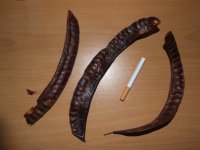
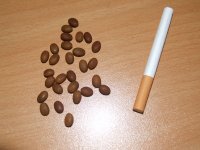
But here's some unknown beauty:

What's your guess? I can take photos of the tree or bark texture or leafs too, but realized maybe the seeds and seed pods alone would do (due to distinct and strange seed pods). The tree has pale grayish bark and mimosa like leafs plus really sharp single thorns like needles. needles were bright red in the young trees but couldn't see them at older tree (they're very tall).

The seed pods have a sweet smell when cracked/opened. SWIM found the smell was from dried red/orange goo/resin like substance in the seed pods, she tasted a bit of that and it tasted sweet and a bit bitter. fortunately she was lucky again and still alive :d
 

Attachments

  • DSCF1280.JPG
    DSCF1280.JPG
    688.1 KB · Views: 0
  • DSCF1284.JPG
    DSCF1284.JPG
    711.4 KB · Views: 0
Eranik said:
she tasted a bit of that and it tasted sweet and a bit bitter. fortunately she was lucky again and still alive :d

ERANIK!! Tell your friend that they are not meant to eat something just randomly without knowing what it is!! Please don't let them do it again, it makes me sad! If they continue to do so I won't help any more :shock:

Be careful and use your noggin please

In the mean time I'll look into those plants
xx
 
Eranik said:
The tree has pale grayish bark and mimosa like leafs plus really sharp single thorns like needles. needles were bright red in the young trees but couldn't see them at older tree (they're very tall).

My boyfriend just took a look at the description (he loves plants) he informs me that from your description, it sounds like an acacia. Now all we need to do is narrow it down to which species it is. Which shouldn't be hard considering there is only 1300!!

Onward and forward :lol:

xx
 
Back
Top Bottom