• Members of the previous forum can retrieve their temporary password here, (login and check your PM).

WARNING ~ DO NOT USE BIG GLASS JARS FOR EXTRACTIONS

Migrated topic.
Much love dude... I feel ya...

And what a great idea to use those large HDPE tubs!

I have to say though, what a slick style you have goin on! I like the plant + couch + foldable room separator. New carpets are easy to find, glad to hear no one was burned...
 
Wow... That must have been a really fun mess to clean up after! I use glass jars for my extractions too but I ALWAYS make sure to keep them inside a larger pot or a sink just in case. preferably a larger pot so in case the glass breaks your extraction is still contained and not a total loss.
 
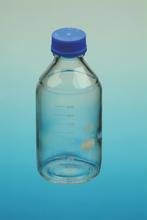
Get some 2L bottel Borosilicate glass... SWIM used one for more than 10 extractions and is still using it ;) They are not that expensive.... Uh by the way, expensive ones hold up to 20L :)
Nevertheless its always a good thing to place them in an bucket.

Sorry for the mess on your rug.. that sucks...
 

Attachments

  • 105504.jpg
    105504.jpg
    3.3 KB · Views: 0
Wow suks. I remember reading about someone's NaOH jar busting while they were holding it and it spilled all over their legs. They ran to the shower immediately and suffered only minor irritation.
I prefer to use sodium carbonate for my work.
 
thanks for the advise guys, wish I would have thought beforehand , oh well, live and learn. I Just hope people can learn from my mistake.
 
It is a very good thing you posted this unfortunate mishap of yours. You just may have prevented this from happening to someone else.
Wishing you the best of luck and safety on all your future extractions.
 
It seems that people have also had problems with plastic containers as well. I read a thread several months ago about someone using plastic that split open in a book shelf or cupboard and it made a hell of a mess....

I think it is best to be careful about whatever container that you are using and inspect it for visible flaws. If you see no flaws, I would still advise placing the container in another if you are not going to be attending to it all of the time. My preference is to work in or near a sink when working with caustics and solvents. In addition I also work under a good kitchen hood that ventilates outdoors.

It behooves each of us to be safe protecting our eyes and skin as well as being careful to avoid situations which will cause a fire. Basified solvents in containers with an extraction solvent are a hazard in multiple ways for sure.

Be safe my friends....
 
Absolutely LOVE these things. They just keep going and going and.....

RBopwBVAW5uJgj_ukMo5rUwH-cA7xP-VUUiteYiiXIKq17Tjh2gjKJsVw6sEa3hw1Qou9aQDmkU1d9o2uem5WORw4vfvmTBrSmikkC7lKCDKr98-cR8rYTL6C_TfdnmO1hlmRBlU8kCo3lnVxlCIf-LIcxJx-nUdSPdUN9GEL0LkPGty
 
I've had borosilicated erlenmeyer flasks filled with NaOH-saturated water sit for months without issue, maybe only standard glass is dangerous to use with lye ?
 
I think a lot of the issues with lye and glass might be related to temperature changes, instead of only about lye etching glass. If you dont add lye slowly and/or keep stirring very well as you add lye, the temperature change will be concentrated in one spot of the glass where lye sits undissolved, and this can cause glasses to crack. Maybe this also in general would make glass less resistant to the etching, as well as to bumps and movements.

So yeah, use borosilicate or general good quality thick glass, mix well/add slowly, work in a safe place (bathtub, sink, with container inside a bucket, etc), avoid bumping, and if it isnt for sure quality glass, dont leave lye for too long.

For those using hdpe or other good plastic, I anyways would recommend salting your solvent, evaporating to have the salt, wash with dry acetone or similar and then freebase if wanted, to remove possible plasticizer/plastic traces
 
endlessness said:
For those using hdpe or other good plastic, I anyways would recommend salting your solvent, evaporating to have the salt, wash with dry acetone or similar and then freebase if wanted, to remove possible plasticizer/plastic traces
Thanks for that, I wasn't aware.
 
DeMenTed said:
I dont understand why anyone would use big glass containers when hdpe2 jugs are readily available 'sigh'
Maybe people don't want plastic in their product?

In addition to many individual chemicals (mentioned below), Phillips lists two major classes of chemicals that are not compatible with HDPE: aromatic hydrocarbons, and halogenated hydrocarbons. The basic aromatic hydrocarbon is benzene (a major component of gasoline); others are toluene (also called methylbenzene), and the three xylenes (o-, m-and p-xylene). Others include naphthalene (moth balls), and pdichlorobenzene (also moth balls). These aromatic hydrocarbons "permeate excessively and cause package deformation," says Phillips.

Full link
 
DeMenTed said:
I dont understand why anyone would use big glass containers when hdpe2 jugs are readily available 'sigh'

I dont want plastics in my stew, but most importantly...

My Old Granny has been using 1\2 gallon and Mason jars for many years. They work great for everything. They get boiled and pressure cooked they get basified and acidified and heated and pressurized. They work without failure. I just chance the lids each extraction.

These jars work without failure IME.

Fuck Plastic

I dont care if it is hdpe2 or HDTV2

Lab glass or canning jars. Canning jars like Grandma used were made to withstand the riggors of extractions.

I'm very sorry you had to go through that.
 
Back
Top Bottom