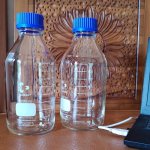
What is the best vessel/seal to extract in?
There are three versions:
1) first acid, then base. Includes some kind off naphtha.
2) direct base. Includes naphtha.
3) naphtha only, for things like re-x
The ones I used where PET plastic, soda-lime (normal) glass, borosilicate (Pyrex) glass.
Then there is the seal. Sometimes it can/will touch (swirling), sometimes it wont (re-x).
Things I used for re-x are plastic foil, aluminium foil, lose glass covering.
Things I used for the base are twist on plastic screws, wide metal screws (with some rubbery foil that crumbles rather fast, yuk!), cork, glass on glass..
But its all a bit... hmmm...
What is the best fabric to contain, and the best fabric to seal?
It should be resistant to
1) acid, base, naphtha
2) neutral, base, naphtha
3) naphtha
or all three at once, if possible
It should resist heat and cold a bit (-30C -22F to 80C 176F so it can be heated in a warm water bath and frozen cold during crystallization)
The seal should not 'get into' the solution at all. Perhaps by creating an odd shape for the bottle (long neck? tilted neck?), so it can be swirled without the base touching the seal...
The best I can find at the moment seems to be this 500ml soda-lime bottle with soda-lime seal:
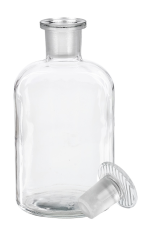
But it is not 1000ml, and its not borosilicate, and a base will etch the glass over time, if I am not mistaken....?
What, would you say, is the best? And why?
There are three versions:
1) first acid, then base. Includes some kind off naphtha.
2) direct base. Includes naphtha.
3) naphtha only, for things like re-x
The ones I used where PET plastic, soda-lime (normal) glass, borosilicate (Pyrex) glass.
Then there is the seal. Sometimes it can/will touch (swirling), sometimes it wont (re-x).
Things I used for re-x are plastic foil, aluminium foil, lose glass covering.
Things I used for the base are twist on plastic screws, wide metal screws (with some rubbery foil that crumbles rather fast, yuk!), cork, glass on glass..
But its all a bit... hmmm...
What is the best fabric to contain, and the best fabric to seal?
It should be resistant to
1) acid, base, naphtha
2) neutral, base, naphtha
3) naphtha
or all three at once, if possible
It should resist heat and cold a bit (-30C -22F to 80C 176F so it can be heated in a warm water bath and frozen cold during crystallization)
The seal should not 'get into' the solution at all. Perhaps by creating an odd shape for the bottle (long neck? tilted neck?), so it can be swirled without the base touching the seal...
The best I can find at the moment seems to be this 500ml soda-lime bottle with soda-lime seal:
But it is not 1000ml, and its not borosilicate, and a base will etch the glass over time, if I am not mistaken....?
What, would you say, is the best? And why?


 . Or if you’re going fancy go for a media bottle, see picture, as they are very robust and are the safest option.