• Members of the previous forum can retrieve their temporary password here, (login and check your PM).

C.Paspali

Migrated topic.
Joined
May 21, 2008
Messages
7,208
Merits
174
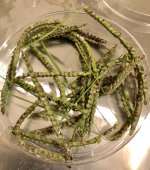
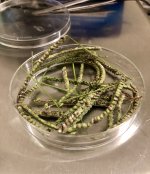
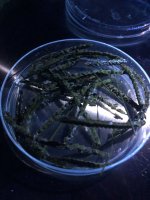
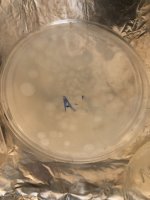
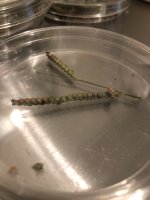
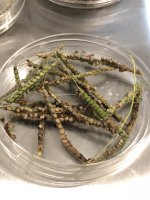
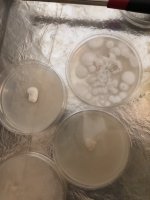
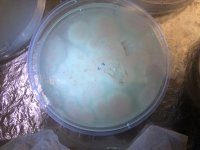
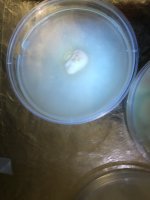
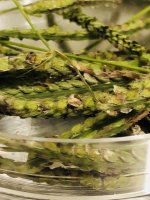
From what I've seen, there aren't many close up photos (besides microscopic) on the webs. I just collected these specimens, not even an hour ago. The close-up middle of the top photo is newly formed sclerotia.
Still early in the season, they typically form hardened brown/black brain-like sclerotia when the weather gets cold in late fall/early winter.
 

Attachments

  • IMG_5305.jpg
    IMG_5305.jpg
    2.2 MB · Views: 2
  • IMG_5304.jpg
    IMG_5304.jpg
    2.7 MB · Views: 2
  • IMG_5309.jpg
    IMG_5309.jpg
    2.9 MB · Views: 1
  • IMG_5307.jpg
    IMG_5307.jpg
    2 MB · Views: 2
Are you gonna make yourself some kykeon benz?

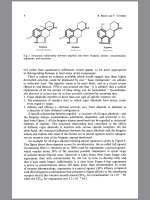
But seriously, how is it that all naturally occurring lysergamides come from fungi that grow on the seeds of plants? Is claviceps related to the fungi on morning glory and hawaian baby woodrose, or is it just something in the biochemistry of fungi in general that makes fungi produce lysergamides, but not plants or algea?
 
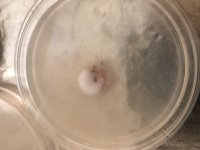
first, I’ll plate honeydew; and get some pics of the organism under the [compound] microscope.
Then sterilize the sclerotia in 15% saline, and cut slerotia, then plate those. after a couple weeks, I’d do a couple transfers, and do characterization under UV, and some preliminary Van urk’s reagent tests. if they check out, onto fermentation of secondary metabolites.

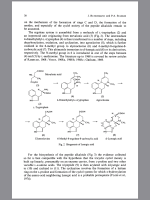
I don’t know the relation to endophytic fungi found in HBWR and MG; they may be distant cousins. their mechanism is the same: hijack tryptophan, and use it in the DMATS pathway. Humidity and temp tend to influence the levels of alk production of the fungus on live plants.
 
dragonrider said:
how is it that all naturally occurring lysergamides come from fungi that grow on the seeds of plants?
Footnote here: Some races of Lolium arundinaceum syn. Festuca arundinacea (tall fescue) contain ergoline alkaloids, principally ergovaline, in the leaves. I haven't found anything about the alkaloid content of its seeds yet. Epichloë coenophiala is the endophyte responsible for alkaloid production in this instance. (Published yields would suggest that tall fescue is not a viable source species for ergoline alkaloids.)

benzyme said:
Humidity and temp tend to influence the levels of alk production of the fungus on live plants.
Me being lazy and all, do you have a good reference for some specific data on this?

Great project, looking forward to further reports :thumb_up:
 
Thanks for the link.

I'll continue with my general-purpose data scouring and will be sure to post any relevant comments brought up.
 
It is a while ago now, but on a couple of occasions i have taken 1P-LSD in conjunction with some morning glory seeds.

The very odd thing was...when the seeds where old, the effects of the 1P-LSD where dulled, but with fresh seeds the effects where being amplified...significantly. It went as far as having OBE's, wich i never had with LSD by itself.

It may seem as if the degradation of LSH into LSA, is responsible for this. But i wonder if there may be other substances in these seeds, and probably the claviceps species as well, that could explain the very extreme synergistic effects i experienced.

Are there lysergamides, that modulate receptors that LSD is active on?
 

Attachments

  • 7037329D-5987-436B-B1D2-598E429A64F4.png
    7037329D-5987-436B-B1D2-598E429A64F4.png
    1.2 MB · Views: 0
  • 3997A1B2-1023-4E12-9B5B-CF745181A216.png
    3997A1B2-1023-4E12-9B5B-CF745181A216.png
    881.6 KB · Views: 0
  • 7DC50E81-47F7-4A63-B59D-335E5CBB8F46.png
    7DC50E81-47F7-4A63-B59D-335E5CBB8F46.png
    590 KB · Views: 0
  • AD48FE1D-858A-44CF-A998-19A5E76BB4EE.png
    AD48FE1D-858A-44CF-A998-19A5E76BB4EE.png
    1 MB · Views: 0
benzyme said:
in short, yes..with varying degrees of agonism/antagonism. Ergoline pharmacology is rather complex, given the variety of structures and their different binding affinities on the various 5HT-subtypes
That is very interesting. I was planning to do some more experiments with combining lysergamides, but the times it DID work, the effects where so extreme and unpredictable that it frightened me a little.

But maybe i should not let that put me off. If i can get my hands on some fresh seeds again, wich shouldn't be too difficult.....

If we would know more about how this works exactly, wich chemicals in wich quantities, etc, the consequences could be significant. It's like adding a whole new dimension to the LSD experience.
 
Back
Top Bottom