Is it true that people are getting higher yields salting with fumaric acid rather than citric acid using CIELO?


Is it true that people are getting higher yields salting with fumaric acid rather than citric acid using CIELO?
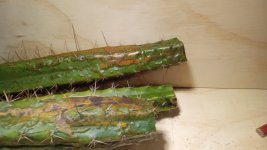
I did for sure. Also I wanted to post an interesting preparation result: I grew 25 Trichocereus b outside in pots and got a pillbug infestation. In attempting to remedy the problem I inadvertantly used a strong detergent/water solution instead of safer soap. This unfortunately destroyed the Epicuticular Wax layer and my plants were subject to extreme UV damage resulting in black to orange areas with liquid blistering under the skin covering up to 25% of some plants. As this seemed to be killing them I harvested and performed the CIELO extract/crystal procedure. The results were amazing! Previously I averaged 2.2% to 2.4% mescaline fumarate by dry weight but the damaged plants increased yield by 50% yielding an average 3.5%. I have performed 4 CIELO processes and the results are consistent. Any thoughts?Is it true that people are getting higher yields salting with fumaric acid rather than citric acid using CIELO?
That is interesting. What detergent did you use? How long between damage and harvest? Have any pictures?I did for sure. Also I wanted to post an interesting preparation result: I grew 25 Trichocereus b outside in pots and got a pillbug infestation. In attempting to remedy the problem I inadvertantly used a strong detergent/water solution instead of safer soap. This unfortunately destroyed the Epicuticular Wax layer and my plants were subject to extreme UV damage resulting in black to orange areas with liquid blistering under the skin covering up to 25% of some plants. As this seemed to be killing them I harvested and performed the CIELO extract/crystal procedure. The results were amazing! Previously I averaged 2.2% to 2.4% mescaline fumarate by dry weight but the damaged plants increased yield by 50% yielding an average 3.5%. I have performed 4 CIELO processes and the results are consistent. Any thoughts?

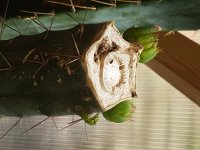
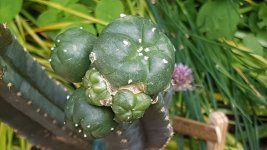
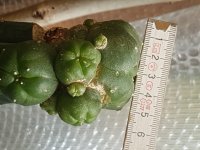
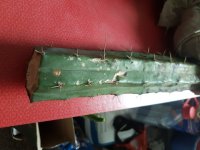
That might be an infection though. Pics would definitely help.my plants were subject to extreme UV damage resulting in black to orange areas with liquid blistering under the skin
I used the liquid hand soap from the bulk section at the local co-op. About a week between applying the soap and seeing the damage. About another week wondering what caused it. Then I read about how detergents destroy the natural UV protection. Does the damage look like an infection? It happened to ALL of the plants within a day of each other.That is interesting. What detergent did you use? How long between damage and harvest? Have any pictures?
OK, that's probably soap burn - but removal of the cuticular wax would also lessen resistance to the ingress of pathogen, maybe increasing the risk of infection in sunburned sites. A strong cactus will be able to get over this and it ends up merely being a bit unsightly. Other, weaker cacti might develop an ongoing problem, however.I used the liquid hand soap from the bulk section at the local co-op. About a week between applying the soap and seeing the damage. About another week wondering what caused it. Then I read about how detergents destroy the natural UV protection. Does the damage look like an infection? It happened to ALL of the plants within a day of each other.
If by this you mean T. bridgesii, those are particularly prone to the weeping black spot disease - and, of course, sap-sucking insects or other arthropods which break the skin of the cactus are another possible infection vector.Trichocereus b
Thanks for the counsel, and thanks for the proper term "T. bridgesii". I am new to this biz and it is always good to learn proper terms. So in your opinion would the removal of the protective wax and subsequent UV damage increase the mescaline production by the 50% I have seen? Armadillidiidae were observed in moderate quantities to clarify the pest situation.OK, that's probably soap burn - but removal of the cuticular wax would also lessen resistance to the ingress of pathogen, maybe increasing the risk of infection in sunburned sites. A strong cactus will be able to get over this and it ends up merely being a bit unsightly. Other, weaker cacti might develop an ongoing problem, however.
If by this you mean T. bridgesii, those are particularly prone to the weeping black spot disease - and, of course, sap-sucking insects or other arthropods which break the skin of the cactus are another possible infection vector.
Did you mean pillbugs, aka woodlice, or mealybugs, the latter being an all-too-common pest for the cactus grower? I've never really noticed any trouble with woodlice, but snails have sometimes munched my babies' apical meristems.
Mealybugs are an absolute plague - if you have to spray them with soap, do so in the evening next time. I'd recommend picking them off one by one with tweezers, then dabbing over any egg sacs with isopropanol.
Be careful of dropping the bugs into the soil if picking them off. Consider fitting a sheet of paper, cut to fit, around the base of the cactus to catch any would-be escapees.
Yes, it's possible that the sunburn increased mescaline production. We would need to do more tests to verify (that is why I asked which soap you used). Of course, there could be another explanation, but we should try to get to the bottom of this.Thanks for the counsel, and thanks for the proper term "T. bridgesii". I am new to this biz and it is always good to learn proper terms. So in your opinion would the removal of the protective wax and subsequent UV damage increase the mescaline production by the 50% I have seen? Armadillidiidae were observed in moderate quantities to clarify the pest situation.
Gotcha, definitely pillbug woodlice then. What damage did they cause? How does it look?Armadillidiidae
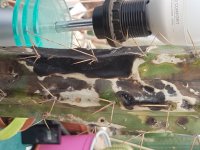
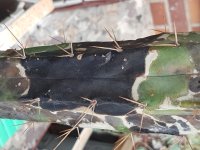
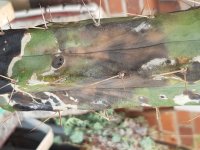
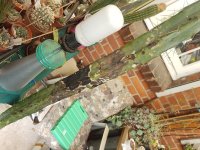

Well, much of the time it does eventually crust over and dry out, although the wounds can be quite deep. I've also had dubious success in spraying it with nutmeg tincture and some diluted essential oils (I forget which, but they're recorded in a post somewhere around here).I've had black spots which some have oozed black liquid out like a pimple on my bridgeseii. Usually goes away and heal into scabs / scars. None black to that extent.
If you cut it into slices and dry rapidly under a fan may be able to get it dry to then powderize it for a 'stressed test' extract.
Is that fungal? What's the method to rectify? Add it in the knowledge bank if I encounter it.
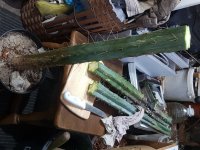
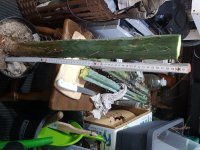
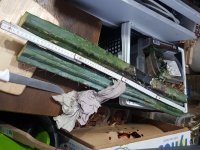
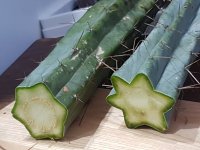
I am going to the co-op today and will get the data on the soap and post it for you. As I have no undamaged cacti left I myself have no way to do the control experiment yet. I will order some more seeds and start over......Yes, it's possible that the sunburn increased mescaline production. We would need to do more tests to verify (that is why I asked which soap you used). Of course, there could be another explanation, but we should try to get to the bottom of this.
One possible experiment is to add the soap in sections. For example cover the cactus with paper towels alternatively into ~ 4 sections in the middle (+cover the head and bottom but exclude that from the extraction to propagate the head and keep on growing the rooted bottom), Then spray with soap so only two alternating exposed sections are damaged with sunburn after removing the paper towels. Then, extract each section separately. There will be 4 data points, and check if the two sunburnt sections have more mescaline. Would be fascinating data no matter what the result is. Or maybe there is another way to design an experiment around this.
It is an interesting observation/hypothesis for sure.
Best of luck, and keep us updated with a growlogorder some more seeds and start over.


Greatfill citrus and fir handwash was the soap. The ingredients follow: Key Ingredients (Citrus + Fir):Scent: Pure Essential Oils (Grapefruit, Sweet Orange, Ginger, Cardamom).Base: Water, Aloe Barbadensis Leaf Juice, Sodium Methyl 2-Sulfolaurate, Cocamidopropyl Hydroxysultaine, Disodium 2-Sulfolaurate.Moisturizing/Cleansing: Glycerin, Coco-Glucoside, Glyceryl Oleate.Preservatives/Agents: Polysorbate 20, Sodium Benzoate, Sodium Gluconate, Potassium Sorbate.Yes, it's possible that the sunburn increased mescaline production. We would need to do more tests to verify (that is why I asked which soap you used). Of course, there could be another explanation, but we should try to get to the bottom of this.
One possible experiment is to add the soap in sections. For example cover the cactus with paper towels alternatively into ~ 4 sections in the middle (+cover the head and bottom but exclude that from the extraction to propagate the head and keep on growing the rooted bottom), Then spray with soap so only two alternating exposed sections are damaged with sunburn after removing the paper towels. Then, extract each section separately. There will be 4 data points, and check if the two sunburnt sections have more mescaline. Would be fascinating data no matter what the result is. Or maybe there is another way to design an experiment around this.
It is an interesting observation/hypothesis for sure.

The top's also still good, as well as the base, and both of those are at least 60cm. My other bridgesii that I chopped cast has three pups popping out of the top already, so I've reasonable hopes for further puppage on this recent cut.Transform are you gonna do a few emergency slab/ wedge grafts on that bridgesii? The bottom if the damagaed cutting looks good enough to graft still.