May there be no clone wars.
Make your own. Find a good strain through gradual work with this teacher.
AQ-1 and Big Medicine are good DMT strains of Phalaris Aquatica and P. Arundinacea.
Cloning is really the only way to consistently attain cleaner levels of tryptamine alkaloids if you have a set extraction procedure that works(room temp naphtha/limonene) and perform TLC seasonally. Check out the Phalaris analysis thread and see how the last statement can be contradicted. Figure out a good extraction procedure. This is much different than Acacia and a bit more messy since so much raw material generally is used to perform extractions. Small amounts are used for ingestion. 10-40g should usually do it dry or fresh of P. Arundinacea, P. Aquatica and P. Brachystachys.
I personally have not performed TLC though subjective effects tell me P. Brachystachys is the most consistent in terms of producing healing effects. P. Arundinacea, Paradoxa and Aquatica are variable as most of you know.
Cloning is extremely easy. Simply pull apart individual plants with their roots attached and clip down the foliage as the long leaf blades will likely decompose though new shoots will arise. They will arise more quickly with the clipping of the stem/shoots.
This demonstration is with Phalaris Arundinacea var. 'Picta'
Not known to contain entheogenic levels of tryptamines, yet this procedure is universal for Phalaris cloning.
When you pull apart the rhizomes it is good to soak the individual plants(at least the rhizome) in a good transplant fertilizer solution combination such as Glacial rock dust and Kelp meal.
First, create a solution of a couple handfuls or pinches(whatever you feel, these will not burn your plants) of Glacial rock dust(handful) and Kelp meal(few tablespoons) in a gallon of water and let soak overnight.
When you're ready to transplant, fill up separate buckets for your plants to soak before you plant them in your soil medium.
An easy soil mix would be any organic soil with perlite/pumice mixed in to have moderate drainage. Top it off with organic compost/mulch. You will want to give these plants water often so having a well drained mix won't have a detrimental effect if you consistently maintain adequate moisture levels. Phalaris LOVES earthworm castings.
You can expect new shoots to pop out within a week or two depending on the season you perform this clone operation. This will work without soaking in a transplant-solution, I only mention it so you could give your plants more vigor and not endure a stressful transplant.
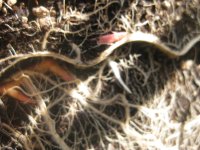
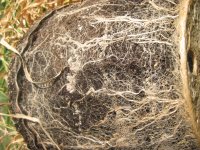
Photo 1-2: P. Arundinacea 'Picta' rhizomes
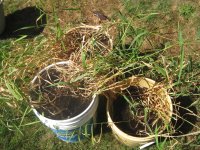
Photo 3: Separate plants soaking in buckets full of Glacial rock dust/kelp meal solution
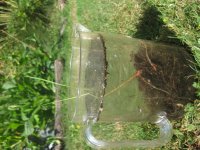
Photo 4: Baby soakin'
Then simply give it a nice home to dig its feet into.
This thread will be updated with different species of Phalaris' cloning procedures as the warm season embraces the world around me.
May the Clone galore not be ignored
Z
Make your own. Find a good strain through gradual work with this teacher.
AQ-1 and Big Medicine are good DMT strains of Phalaris Aquatica and P. Arundinacea.
Cloning is really the only way to consistently attain cleaner levels of tryptamine alkaloids if you have a set extraction procedure that works(room temp naphtha/limonene) and perform TLC seasonally. Check out the Phalaris analysis thread and see how the last statement can be contradicted. Figure out a good extraction procedure. This is much different than Acacia and a bit more messy since so much raw material generally is used to perform extractions. Small amounts are used for ingestion. 10-40g should usually do it dry or fresh of P. Arundinacea, P. Aquatica and P. Brachystachys.
I personally have not performed TLC though subjective effects tell me P. Brachystachys is the most consistent in terms of producing healing effects. P. Arundinacea, Paradoxa and Aquatica are variable as most of you know.
Cloning is extremely easy. Simply pull apart individual plants with their roots attached and clip down the foliage as the long leaf blades will likely decompose though new shoots will arise. They will arise more quickly with the clipping of the stem/shoots.
This demonstration is with Phalaris Arundinacea var. 'Picta'
Not known to contain entheogenic levels of tryptamines, yet this procedure is universal for Phalaris cloning.
When you pull apart the rhizomes it is good to soak the individual plants(at least the rhizome) in a good transplant fertilizer solution combination such as Glacial rock dust and Kelp meal.
First, create a solution of a couple handfuls or pinches(whatever you feel, these will not burn your plants) of Glacial rock dust(handful) and Kelp meal(few tablespoons) in a gallon of water and let soak overnight.
When you're ready to transplant, fill up separate buckets for your plants to soak before you plant them in your soil medium.
An easy soil mix would be any organic soil with perlite/pumice mixed in to have moderate drainage. Top it off with organic compost/mulch. You will want to give these plants water often so having a well drained mix won't have a detrimental effect if you consistently maintain adequate moisture levels. Phalaris LOVES earthworm castings.
You can expect new shoots to pop out within a week or two depending on the season you perform this clone operation. This will work without soaking in a transplant-solution, I only mention it so you could give your plants more vigor and not endure a stressful transplant.
Photo 1-2: P. Arundinacea 'Picta' rhizomes
Photo 3: Separate plants soaking in buckets full of Glacial rock dust/kelp meal solution
Photo 4: Baby soakin'
Then simply give it a nice home to dig its feet into.
This thread will be updated with different species of Phalaris' cloning procedures as the warm season embraces the world around me.
May the Clone galore not be ignored
Z