• Members of the previous forum can retrieve their temporary password here, (login and check your PM).

EthnoBotanical Handbook Idea!

Migrated topic.

SKA

Rising Star
For a long time I've had this idea and now I'll just share it here.

I've long dreamt of making a small handbook with detailed pictures &
descriptions of plants containing significant amounts of Entheogenic
compounds. It would contain pictures of each of these plants 3 stages
(seedling, bush, tree) in all 4 seasons. With close-up pictures of the
bark, leaves, flowers & seedpods.

Each plant would also have some information on chemical contents,
simple extraction methods & cultivation methods.

I imagine the setup to be something like this:

-Chapter 1: Plant 1
* subchapter 1.1: Identification. Page # to page#
* subchapter 1.2: Cultivation. Page# to page#
* subchapter 1.3: Chemical Contents. Page# to page#
* subchapter 1.4: Extracting Valuables Page# to page#
* subchapter 1.5: Live plant/Seed Suppliers Page# to page
-Chapter 2: Plant 2....
And so on. The goal being to create a compact, yet rich Entheogenic
handbook to help Identify, Grow & Extract (from) these plants.

Main substances & Vegetation to be included:
DMT:
-Various Acacia species
-Mimosa Hostilis
5-HO-DMT:
-Anadenanthera Peregrina(Yopo)
-Anadenanthera Colubrina
5-MeO-DMT:
-Virola species
4-HO-DMT(Psilocyn):
-Various Psilocybe mushroom species
Mescaline:
-Lophophora Williamsii(Peyote)
-Trichocereus Pachanoi(San Pedro)
Salvinorin A:
-Salvia Divinorum

Other fascinating compounds & their plant sources that I
failed to mention here are welcome to join the list.
I'm open to suggestions.


-------------------------------------


I've posted this to ask for your help.
Obviously finding Cultivation info, extraction teks,
identification info & suppliers of Salvia, Mushrooms,
Peyote and some others is no problem.

One problem is that it's hard to find images of all
DMT-rich Acacias in all 4 seasons. Let alone of all plant-parts.
Perhaps you guys could help to gather/make a load of pictures,
Photo-documenting all worthwhile DMT-rich Acacias in all 4 seasons
& as seedlings, bushes and as tall trees. Enough to be able to
identify a treasure of an Acacia might you run into it somewhere.
You Australian Nexus members could be of mayor help in this quest.

I've also had quite some trouble searching the internet for suppliers of
seeds from many of these DMT-rich Acacias. Perhaps some of you could help
me in this search of suppliers. The main Acacias I found hard
to find suppliers of seeds/cuttings for are A.Acuminata, A.Simplex(Simplicifolia)and A. Podalyriifolia


If you guys could help me gather the nececairy pictures & information to make this
book I'd be most gracefull. We'd all win. This handbook, once ready, could be made
into a PDF and added to the DMT-nexus library, accessable to all members. Easy to
print out and bundle into a physical handbook to take with you in a backpack.

Surely you'll understand what a treasure such a neat little handbook would be ;)
I hope you guys are willing & able to help me complete this really handy book.
 
Like it, i could be very useful for such a handbook. Short and to the point and informative. Looking forward if this happens : )
 
I'd be interested in contributing. Let me know if you decide to start it. One critique though, maybe make it a multi-book series or something, the list of plants included so far is quite small ;).
 
This is a great idea, I'd love to help gather images. I can only make a couple suggestions, one is to focus on plant I.D. by region including more commonly found plants geared toward the average Joe who can identify what's in his local area, as well as what's classic and commonly bought online like Mimosa. Uploading the guide throughout the wiki as it goes along.
 
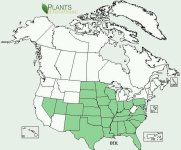
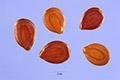
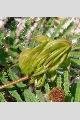
Desmanthus illinoensis. ID

Kingdom Plantae –
Plants Subkingdom Tracheobionta –
Vascular plants Superdivision Spermatophyta –
Seed plants Division Magnoliophyta – Flowering plants Class Magnoliopsida – Dicotyledons Subclass Rosidae Order Fabales Family Fabaceae – Pea family
Genus Desmanthus Willd. – bundleflower
Species Desmanthus illinoensis
(Michx.) MacMill. ex B.L. Rob. & Fernald – Illinois bundleflower

COMMON NAMES. Bundle Flower ; Illinois Bundle Weed


Region:
 

Attachments

  • rps20121017_230044.jpg
    rps20121017_230044.jpg
    61.3 KB · Views: 0
  • deil_003_thp.jpg
    deil_003_thp.jpg
    2 KB · Views: 0
  • deil_004_thp.jpg
    deil_004_thp.jpg
    2.4 KB · Views: 0
  • deil_010_tvp.jpg
    deil_010_tvp.jpg
    3.6 KB · Views: 0
  • acil2_001_tvd.jpg
    acil2_001_tvd.jpg
    2.1 KB · Views: 0
Sounds good :) I think this subforum has already very useful material in the 'workthreads'. I think maybe the ideal is that we collect material for specific plants by starting a dedicated Workthread for each plant, and then we can pool the knowledge slowly. Once a significant advance has been made, someone can collect the organzied info into a PDF file.


ntwhtyouknw, if you want, you can start a "Desmanthus spp. Workthread" thread and post what you just posted there, and others can add more things :)
 
I imagine that a lot of this information is contained here on the forum already, just spread out over a number of threads... possiblY?
 
Great to see this idea is so well received.
I agree that the plant/substance list is short. I should probably
include various MAOI's & their plant sources in there too. The thing is
I personally know very little about Harmine, Harmaline, Beta-harmaline..ect
Luckily, around here, there are plenty people who know all about these compounds.


I'll just kickstart the process of gathering images, starting with [b/]Acacia Acuminata.
Handy Identification collage of A.Acuminata:
imgres


Young tree A.Acuminata:
imgres


Matured/Old A.Acuminata tree:
imgres


Closeup of young Acuminata flowers & leaves:
Acacia_Acuminata_.jpg


These were found on google. We could still use images of Acuminata seedlings and
of the bush stages. Also we need to find images of Acuminata in different seasons.
This bright yellow blossom is probably typical of spring and summer, right?
We need images that show what Acuminata and other Acacias look like in Fall & Winter.

Here's some neat A.Acuminata info on Cultivation and Habitat:
And similair images of Acacia Simplicifolia, Podalyriifolia & Confusa should be
gathered. Once we have all these images, we can start organising the data.


As for other compounds & plants to be added to the list: I'm open to suggestions. I do
want to keep it a somewhat brief guide about only the most essential compounds & plants...
 
I'd like to offer any help I can in the design, formatting and/or construction of this handbook, I have strong graphic design skills and a professional setup here with which I could do any artwork-related stuff that might be needed.
 
sounds like a great idea SKA! i'd be keen to help in anyway possible and have a good collection of acacia photos which i've taken along the way....i've started uploading in this thread .. Acacia photo gallery - The Ethnobotanical Garden - Welcome to the DMT-Nexus .. i posted some photos of active acacias below

by the way ;) ... that picture of acuminata is not acacia acuminata. it needs to have the rod flowers rather than the balls

below is a pic of the rare, powerful and nurturing teacher, acacia phlebophylla, toward the end of october. some were still in flowering.. others weren't anymore. I've got some pics of flowering plants i'll chuck em up if you like but the quality isn't as good. if people can get seeds for this plant, they would be doing it a service, as its population is low and confined to one area. The living plant needn't EVER be touched as the fallen phyllodes work fine and are so tough and leathery that they last a long while after falling. a stunning plant with a powerful teacher presence

img1681cc.jpg


img1673k.jpg


acacia oxycedrus:

img1441t.jpg


img1469ik.jpg


acacia longifolia:

img0719zd.jpg


img0718sm.jpg


Acacia floribunda: other than acacia acuminata this sounds like the pick of the lot if you can get an active strain.

1005437w.jpg


1005434r.jpg


1005434r.jpg


1005438.jpg


and i'm pretty sure (nen please correct me if i'm wrong) that this is acacia mucronata subs. longifolia

img1186pn.jpg


acacia mucronata below

img1103zr.jpg


img1101b.jpg
 
..a nexus handbook would be great!..there is an incredible amount of info already in the Nexus..a lot needs organising..also, re seeds of those acacia species, SKA, see the sustainable seed suppliers section..
happy to help..
.
 
Great to have an Acacia expert like you helping out, Acacian.

Good point, Enoon, about including LSA & Iboga. Not so sure about Amanita Muscaria. tried to eat
them once, never felt a thing. Tried an extract too. Nothing happened. I've never really heard a
first hand experience report of a succesfull Amanita Muscaria trip. But some other psychoactive
plants may well be included.

A little revision of the substance list;
-DMT
-5-HO-DMT(Bufotenine)
-4-HO-DMT(Psilocin)
-5-MeO-DMT
-Harmine & Harmaline (as they're usually found together)
-THH
-LSA
-Mescaline
-Salvinorin A
-Ibogaine
-THC


Any other compounds are welcome to join this list, as long as they are Entheogenic in nature
& found in natural sources like plants or fungi.


Another idea I had is to give each of those compounds listed above a Chapter
of it's own and then give each of those chapters sub-chapters about the various
plants/fungi that contain the compound featured in each Chapter. Like this:

Chapter 1: DMT
0 - Brief explanation of what DMT is/does.(Solvability, Melting & Vaporisation Point, Methods of Ingestion, Effects)
1.1 - Identification of DMT's various plant sources( Acacia Acuminata, A.Simplex, A.Podalyriifolia, M.Hostilis..etc)
1.2 - Cultivation of mentioned plant sources.
1.3 - DMT extraction from mentioned plant sources.(2 Teks, 1 of which requires only easily available solvents&bases)
1.4 - Natural & Commercial sources of seeds from mentioned plants.

Chapter 2: 5-HO-DMT(Bufotenine)
0 - Brief explanation of what 5-HO-DMT is/does(" ")
2.1 Identification of 5-HO-DMT's plant sources(A.Peregrina, A.Colubrina)
2.2 Cultivation of these plant sources.... And so on.

How about that way of arranging the chapters & subchapters?


Off course it should be added to the DMT-nexus Wiki when finished, but it
should also be made available as a downloadable E-book so it can easily
be printed on paper to be bound into an actual handbook for fieldwork.
 
hehe, i'm no expert just a keen researcher who's fallen int love with the beautiful acacia along the way... the real deal when it comes to acacia knowledge is nen888 ... this guy knows his stuff and has taught me much of what i know, and his trying to improve acacia info thread is an absolute goldmine of info for this project.. i salute you nen!
 
SKA said:
I'm glad to see so much enthusiams. Great to have an Acacia expert like you helping out, Acacian.

Another idea I had is to give each of those compounds listed above a Chapter
of it's own and then give each of those chapters sub-chapters about the various
plants/fungi that contain the compound featured in each Chapter. Like this:

Chapter 1: DMT
0 - Brief explanation of what DMT is/does.(Solvability, Melting & Vaporisation Point, Methods of Ingestion, Effects)
1.1 - Identification of DMT's various plant sources( Acacia Acuminata, A.Simplex, A.Podalyriifolia, M.Hostilis..etc)
1.2 - Cultivation of mentioned plant sources.
1.3 - DMT extraction from mentioned plant sources.(2 Teks, 1 of which requires only easily available solvents&bases)
1.4 - Natural & Commercial sources of seeds from mentioned plants.

Chapter 2: 5-HO-DMT(Bufotenine)
0 - Brief explanation of what 5-HO-DMT is/does(" ")
1.1 Identification of 5-HO-DMT's plant sources(A.Peregrina, A.Colubrina)
1.2 Cultivation of these plant sources.... And so on.

How about that way of arranging the chapters & subchapters?


Off course it should be added to the DMT-nexus Wiki when finished, but it
should also be made available as a downloadable E-book so it can easily
be printed on paper to be bound into an actual handbook for fieldwork.

yeah this sounds like a good way to do it. there maybe could be a small section about the tryptamine family a bit more broadly too, elaborating on the large family of compounds, their roles in nature, their close relatives etc and then perhaps a sub section exploring each specific tryptamine

eg.
Part 1- The Tryptramine family
Chapter 1 - DMT
0 - Brief explanation of what DMT is/does.(Solvability, Melting & Vaporisation Point, Methods of Ingestion, Effects)
1.1 - Identification of DMT's various plant sources( Acacia Acuminata, A.Simplex, A.Podalyriifolia, M.Hostilis..etc)
1.2 - Cultivation of mentioned plant sources.
1.3 - DMT extraction from mentioned plant sources.(2 Teks, 1 of which requires only easily available solvents&bases)
1.4 - Natural & Commercial sources of seeds from mentioned plants.
... and the same template for each compound

Chapter 2 - 5-HO-DMT
Chapter 3 - 4-HO-DMT

Part 2 - The Phenethylamine Family
Chapter 1 - Mescaline etc etc ( i dont know of many of these compounds)

Part 3 The Beta Carboline Family
Chapter 1 - Harmine
Chapter 2 - Harmaline


Chapter 3 - Tetrahydroharmine
 
Yeah. That would be the perfect way to arrange it for sure.

Whoever here is knowledgable in the Beta Carboline family &/or
the Phenethylamine family should be able to fill in those blanks.

Then again this forum isn't accessable to all members or is it?
If anyone knows nexus members with knowledge of the beta-carbolines
& the phenethylamines and other lesser-known compounds (like Salvinorin A & Ibogaine)
please PM them to get involved in this Topic. Cultivation info, Chemical info,
Source info, Extraction info...all bits & pieces are welcome.
 
endlessness and nen would be good to talk to about beta carbolines.. nen knows a few acacias found with them.. the only ones i can remember are acacia baileyana which had trace findings of THH, and acacia mucronata which had a finding of harmine in young plants

i've heard of acacia acuminata being orally active on its own.. though haven't seen any analysis finding beta carbolines
 
Back
Top Bottom