
• Members of the previous forum can retrieve their temporary password here, (login and check your PM).

TEK Ethyl acetate approach [CIELO]

This topic contain a TEK
Migrated topic.
It's worth doing the Marquis test just for peace of mind since it's also a good idea not to take any assurances of safety at face value if there's something missing in your understanding of the situation.

That said, your product should be safe - fumaric acid is an edible acid at mescaline dosage levels. The question is, how active will it be, since your results seem to suggest a considerable amount of fumaric acid contamination. This throws off the accuracy of dosing, so ideally we'd work out a way of sorting this out.

If there's no specific recommended recrystallisation solvent for M fumarate yet, I'd probably start with IPA. There's a possible issue with fumaric acid itself being difficultly soluble in most solvents which ought to be taken into account.

To me it feels like adding an excess of fumaric acid crystals to the EA essentially in one go may have been the source of the problem. Do you think this section of the method ought to be rewritten in order to articulate that nuance more clearly?
 
It's worth doing the Marquis test just for peace of mind since it's also a good idea not to take any assurances of safety at face value if there's something missing in your understanding of the situation.

That said, your product should be safe - fumaric acid is an edible acid at mescaline dosage levels. The question is, how active will it be, since your results seem to suggest a considerable amount of fumaric acid contamination. This throws off the accuracy of dosing, so ideally we'd work out a way of sorting this out.

If there's no specific recommended recrystallisation solvent for M fumarate yet, I'd probably start with IPA. There's a possible issue with fumaric acid itself being difficultly soluble in most solvents which ought to be taken into account.

To me it feels like adding an excess of fumaric acid crystals to the EA essentially in one go may have been the source of the problem. Do you think this section of the method ought to be rewritten in order to articulate that nuance more clearly?
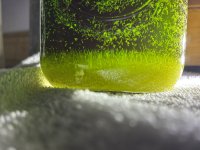
No I don’t think it should be rewritten, I don’t know Jack about chemistry. I followed the tek. I mean have people added less than 3 g?
 
It's worth doing the Marquis test just for peace of mind since it's also a good idea not to take any assurances of safety at face value if there's something missing in your understanding of the situation.

That said, your product should be safe - fumaric acid is an edible acid at mescaline dosage levels. The question is, how active will it be, since your results seem to suggest a considerable amount of fumaric acid contamination. This throws off the accuracy of dosing, so ideally we'd work out a way of sorting this out.

If there's no specific recommended recrystallisation solvent for M fumarate yet, I'd probably start with IPA. There's a possible issue with fumaric acid itself being difficultly soluble in most solvents which ought to be taken into account.

To me it feels like adding an excess of fumaric acid crystals to the EA essentially in one go may have been the source of the problem. Do you think this section of the method ought to be rewritten in order to articulate that nuance more clearly?
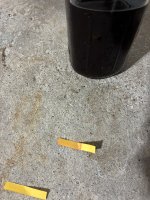
And in regards to safety, I mainly mean like it being Fumaric acid or lime and giving me a horrible stomach ache, vomitting, that’s all
 
And in regards to safety, I mainly mean like it being Fumaric acid or lime and giving me a horrible stomach ache, vomitting, that’s all
It won't be lime, that much is sure. And mescaline could cause those kinds of symptoms by itself, at least in some cases.

If you're worried about the acidity, add something like bicarb to raise the pH - but then you'd have to watch your sodium levels. Edible chalk would be an alternative if that's the case.

The other thing to do (besides attempting some kind of quantitative TLC) would be to check what makes a sensible dose for fumaric acid, so you can compare your intended mescaline dose size with that figure.
 
It won't be lime, that much is sure. And mescaline could cause those kinds of symptoms by itself, at least in some cases.

If you're worried about the acidity, add something like bicarb to raise the pH - but then you'd have to watch your sodium levels. Edible chalk would be an alternative if that's the case.

The other thing to do (besides attempting some kind of quantitative TLC) would be to check what makes a sensible dose for fumaric acid, so you can compare your intended mescaline dose size with that figure.
Transform, as always you are a huge help. Yeah and I do get acid reflux so that might be a good idea. I’ll post a pic here of my first run. The end product was also denser and more sandy. I’m wondering where I went wrong. I used the same Fumaric for both batches. For an IPA rinse, 99%?
 

Attachments

  • IMG_4947.jpeg
    IMG_4947.jpeg
    3 MB · Views: 7
Anyone care to share their experience double this recipe?
I did 225g in a 1.5L press. Simultaneously I tried doing the 3 pull double EA method but there wasn't enough room in the press. I think I ended up using around 1.5x the amount of EA and did 5 pulls.

Therefore my only takeaway is measure out your volumes beforehand to make sure you have room in the press. Account for sloshing when stirring.

If I wanted to do this with more volume for my low yield PC (0.1-0.25%), I think a filtered pump system may work. Does anyone have experience with this?
 
Last edited:
I did 225g in a 1.5L press. Simultaneously I tried doing the 3 pull double EA method but there wasn't enough room in the press. I think I ended up using around 1.5x the amount of EA and did 5 pulls. Yield was pretty much what I expected. 1% for a big fat PC without the wood core. It looked like mescaline and my neighbor's daughter's friend hasn't tripped on it yet.

Therefore my only takeaway is measure out your volumes beforehand to make sure you have room in the press. Account for sloshing when stirring.

Next time I will stick to 200g. I'm going to do a 0.25x recipe soon as well to check the potency of a new cutting I got. Yes I know potency is variable throughout but I really just want to make sure it has over 2% yield before I propagate it.

I want more scale though. What I guess I need is a big ass over the counter, non glassware press or filtration method. I guess a big pot could work with a filtered pump. Maybe I could do 5kg at once in the big pizza shop dough mixer. I have no idea what sort of filtered pump would work. I guess the process could be:

Add powder to dough vat mixer
Add lime
Stir
Add EA
Let dough vat stir the mix
Stop mixer
Wait until cactus settles
put in pump tube, put liquid into empty pizza dough bins
salt them bitches

The big question is what pump would be best. Needs to be EA compatible and able to accomodate a huge high flow filter that is easy to change out. Maybe something for winemaking or disillation could work. They deal with particulates. IDK anyone have any ideas?
Her-hum…

No commercial-scaled extractions and reckless “spreading”

The Nexus is not a place for commercial operations and we do not want to support drug dealers; we believe in using these substances for personal use.

If and when sharing these substances, we believe that it has to be done without money or other payments involved, with a careful approach and care when facilitating the introduction and/or experience of others.

It is imperative to take care that the person ingesting has no contraindicating medical/psychological history, takes it in a proper set and setting, and correct dosage/method of ingestion. This cannot be done if the substances are spread on a large scale. We do not want to "turn on the world", those who are ready will seek it. Indiscriminate spreading of psychedelics can lead to potential serious damage to people and is a big legal liability. Big extractions (and the preparations leading to it and gathering of materials) can attract the attention of the Law.

Spreading of the message of psychedelics itself through superficial YouTube videos showing use or extractions can also cause a lot of damage to the community (as happened with salvia) and is frowned upon.
To reiterate the section I've highlighted:

"Big extractions (and the preparations leading to it and gathering of materials) can attract the attention of the Law."

Please rephrase your post.
Thank you.

 
It won't be lime, that much is sure. And mescaline could cause those kinds of symptoms by itself, at least in some cases.

If you're worried about the acidity, add something like bicarb to raise the pH - but then you'd have to watch your sodium levels. Edible chalk would be an alternative if that's the case.

The other thing to do (besides attempting some kind of quantitative TLC) would be to check what makes a sensible dose for fumaric acid, so you can compare your intended mescaline dose size with that figure.
So this is the unreclaimed ea ph (and I will reuse it I already have, as long as that wouldn’t be the issue). If the Fumaric is still in the EA, I just don’t understand the difference in consistencies of the batches. Maybe it was just using the mag stirrer this time. I’ll check the ph of the end result. It did get closer to neutral last time I checked.
 

Attachments

  • IMG_5013.jpeg
    IMG_5013.jpeg
    4.1 MB · Views: 7
So this is the unreclaimed ea ph (and I will reuse it I already have, as long as that wouldn’t be the issue). If the Fumaric is still in the EA, I just don’t understand the difference in consistencies of the batches. Maybe it was just using the mag stirrer this time. I’ll check the ph of the end result. It did get closer to neutral last time I checked.
Ph of product mixed with water, and the difference in density between the two batches. Both around the same weight. The first batch probably 1.7 and second vial is 1.5
 

Attachments

  • IMG_5016.jpeg
    IMG_5016.jpeg
    2.2 MB · Views: 6
  • IMG_5015.jpeg
    IMG_5015.jpeg
    2.7 MB · Views: 6
We cannot confirm anything from behind a computer screen.

I can give some information on what I think the most likely situation is here.

1) Yes, likely safe if you followed the TEK
2) Difference in appearance is normal. For example, the shine you see in one of the batches can occur if there is delay in turning on the mag stirrer after adding the acid. This is because seed xtlas have time grow first, changing the xtalization dynamics. Other variables can affect final appearance (e..g water content, mescaline concentration, etc., etc.)
3)monomescaline fumerate salt is slightly acidic, consistent with your pH strip result.
4) The driver for the EA pull pH result is pull efficiency, which is mainly driven by the amount of EA used and the ratio of EA pulled into the collection jar to the EA trapped in the press. Less water should help make the pulls more efficient, but this effect is small by comparison to the EA volume/ratios. What I think happened to you, is that in one extraction the crumbs were a little too dry, which caused more loose particles (not bound by water) to come out of the press, which in turn made you stop the pull earlier and leave more EA in the press. This is just a guess, but it would explain your results.
5) To improve your pull efficiency you need to target and measure the EA use. Use the checklist extraction calculator linked in the TEK (Overview section).
6) Marquis can confirm the presence of mescaline, but it has to be fresh and not expired. Cannot determine exact purity, but you can compare it to the marquis result in the TEK to get a rough idea if it looks as it should.

Let us know if you have any other questions.
 
Ph of product mixed with water, and the difference in density between the two batches. Both around the same weight. The first batch probably 1.7 and second vial is 1.5
Do you have a close-up photo of the crystal forms of the two batches? That's a huge difference in density, so it would be interesting to see whether the righthand specimen looks obviously fluffier than the lefthand one.
 
Do you have a close-up photo of the crystal forms of the two batches? That's a huge difference in density, so it would be interesting to see whether the righthand specimen looks obviously fluffier than

We cannot confirm anything from behind a computer screen.

I can give some information on what I think the most likely situation is here.

1) Yes, likely safe if you followed the TEK
2) Difference in appearance is normal. For example, the shine you see in one of the batches can occur if there is delay in turning on the mag stirrer after adding the acid. This is because seed xtlas have time grow first, changing the xtalization dynamics. Other variables can affect final appearance (e..g water content, mescaline concentration, etc., etc.)
3)monomescaline fumerate salt is slightly acidic, consistent with your pH strip result.
4) The driver for the EA pull pH result is pull efficiency, which is mainly driven by the amount of EA used and the ratio of EA pulled into the collection jar to the EA trapped in the press. Less water should help make the pulls more efficient, but this effect is small by comparison to the EA volume/ratios. What I think happened to you, is that in one extraction the crumbs were a little too dry, which caused more loose particles (not bound by water) to come out of the press, which in turn made you stop the pull earlier and leave more EA in the press. This is just a guess, but it would explain your results.
5) To improve your pull efficiency you need to target and measure the EA use. Use the checklist extraction calculator linked in the TEK (Overview section).
6) Marquis can confirm the presence of mescaline, but it has to be fresh and not expired. Cannot determine exact purity, but you can compare it to the marquis result in the TEK to get a rough idea if it looks as it should.

Let us know if you have any other questions.
Thanks for the reply. And I know you guys can’t tell from the computer screen, I’m just seeing if other people have had mixed results. I had the mag stirrer on before the drop. I pressed the crumb mix fairly well during each press, but it’s entirely possible I left some behind. One problem I had was after 7 pulls, the ea was still basic. I had reclaimed the ea from the first run. But you are right, it was probably too dry and all the other points are possible explanations for the difference. Will definitely check the calculator. Thanks for your help
 
Do you have a close-up photo of the crystal forms of the two batches? That's a huge difference in density, so it would be interesting to see whether the righthand specimen looks obviously fluffier than the lefthand one.
It’s definitely fluffier. It smudges like powder, whereas the other is more shiny and sandy consistency
 
Back
Top Bottom