I want to experiment with recrystallizing in degassed solvents. The freeze - pump - thaw method for degassing sounds the most appropriate for hydrocarbons like heptane that would boil under vacuum. I want to scale it down to the minimum amount of special hardware. I don't think I need a whole schlenk line for example. But I already have a vacuum pump and cryogenic dewars. I believe drying and degassing are prerequisites to crystalizing under inert gas, so I'm looking forward to unlocking that potential.
Here's a couple good videos on the process that helped me understand the concept:
As I was researching, my rough draft plan was to freeze with liquid nitrogen, and back fill with argon. I can't remember why I decided argon might be a better inert gas than nitrogen. But then I came across a video (below) of a lab explosion cause by freeze pump thaw on hexane. They concluded that it could have been from accumulating liquid argon, that expanded when thawed, over-pressurizing the flask. The previous video also mentioned the risk of liquid oxygen.
Safety officer's solution was to use nitrogen instead of argon for inert gas. I guess I'll be following that advice too unless anyone thinks otherwise?
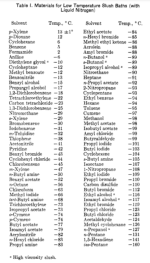
Another alternative would be not freezing in liquid nitrogen. Dry ice can't freeze heptane alone, but I believe it can in a salty IPA bath? And then I could use argon without fear of liquid argon or liquid oxygen.

In the videos, they have an oil bubbler on the inert gas line. Is that necessary? I found these in-line drierite desiccators that I plan to use for drying the inert gas stream. Is that what the oil bubbler is for -- to trap water vapor? Or is it just a flow indicator? It has reportedly caused many headaches if oil gets drawn into the schlenk manifold.
And how necessary is the cold trap? Is that just to protect the pump from trace solvent gas that was in the headspace?
I found this great video on preparing inert atmospheres that I'll be following:
That's about as far as I am right now. I'm shopping for schlenk flasks but there seems to be a couple different styles I haven't fully figured out yet. Then I'll probably just connect it directly between the pump and inert gas tank, skipping the manifold, bubbler and trap unless necessary.
Here's a couple good videos on the process that helped me understand the concept:
As I was researching, my rough draft plan was to freeze with liquid nitrogen, and back fill with argon. I can't remember why I decided argon might be a better inert gas than nitrogen. But then I came across a video (below) of a lab explosion cause by freeze pump thaw on hexane. They concluded that it could have been from accumulating liquid argon, that expanded when thawed, over-pressurizing the flask. The previous video also mentioned the risk of liquid oxygen.
Safety officer's solution was to use nitrogen instead of argon for inert gas. I guess I'll be following that advice too unless anyone thinks otherwise?
Another alternative would be not freezing in liquid nitrogen. Dry ice can't freeze heptane alone, but I believe it can in a salty IPA bath? And then I could use argon without fear of liquid argon or liquid oxygen.
In the videos, they have an oil bubbler on the inert gas line. Is that necessary? I found these in-line drierite desiccators that I plan to use for drying the inert gas stream. Is that what the oil bubbler is for -- to trap water vapor? Or is it just a flow indicator? It has reportedly caused many headaches if oil gets drawn into the schlenk manifold.
And how necessary is the cold trap? Is that just to protect the pump from trace solvent gas that was in the headspace?
I found this great video on preparing inert atmospheres that I'll be following:
That's about as far as I am right now. I'm shopping for schlenk flasks but there seems to be a couple different styles I haven't fully figured out yet. Then I'll probably just connect it directly between the pump and inert gas tank, skipping the manifold, bubbler and trap unless necessary.
Last edited: