




I've always been deeply, ineffably fascinated by high-res images of space, of galaxies, of gas clouds, and of all the various stellar and interstellar constructs that exist right there above our heads, hidden from plain sight. Every time I lay eyes on a nebula or face-on galaxy, I feel this deep, powerful emotion that I find difficult to put into words, but "awe" somewhat describes it.
With that being said, one of the most powerful emotions I felt in the last couple of years was the successful launch of the James Webb Space Telescope and its reaching of the L2 point where it orbits now. If I said I didn't shed a tear when the mission was announced successful, I'd lie. It was and still is one of the greatest scientific collaborative projects ever executed. The existence of this phenomenal piece of technology is the product of 30 years of collaboration between 14 different countries who spent a total of $10,000,000,000 on it. And the success it saw is a testament of human ingenuity and the things we're capable of when we come together behind a shared goal which we believe will benefit humanity.
So I'm making this thread with the purpose of sharing some nice images by JWST (but also other telescopes and imaging arrays). If you share my enthusiasm for astrophysics and cosmology, please feel welcome to chime in with some interesting info or images.
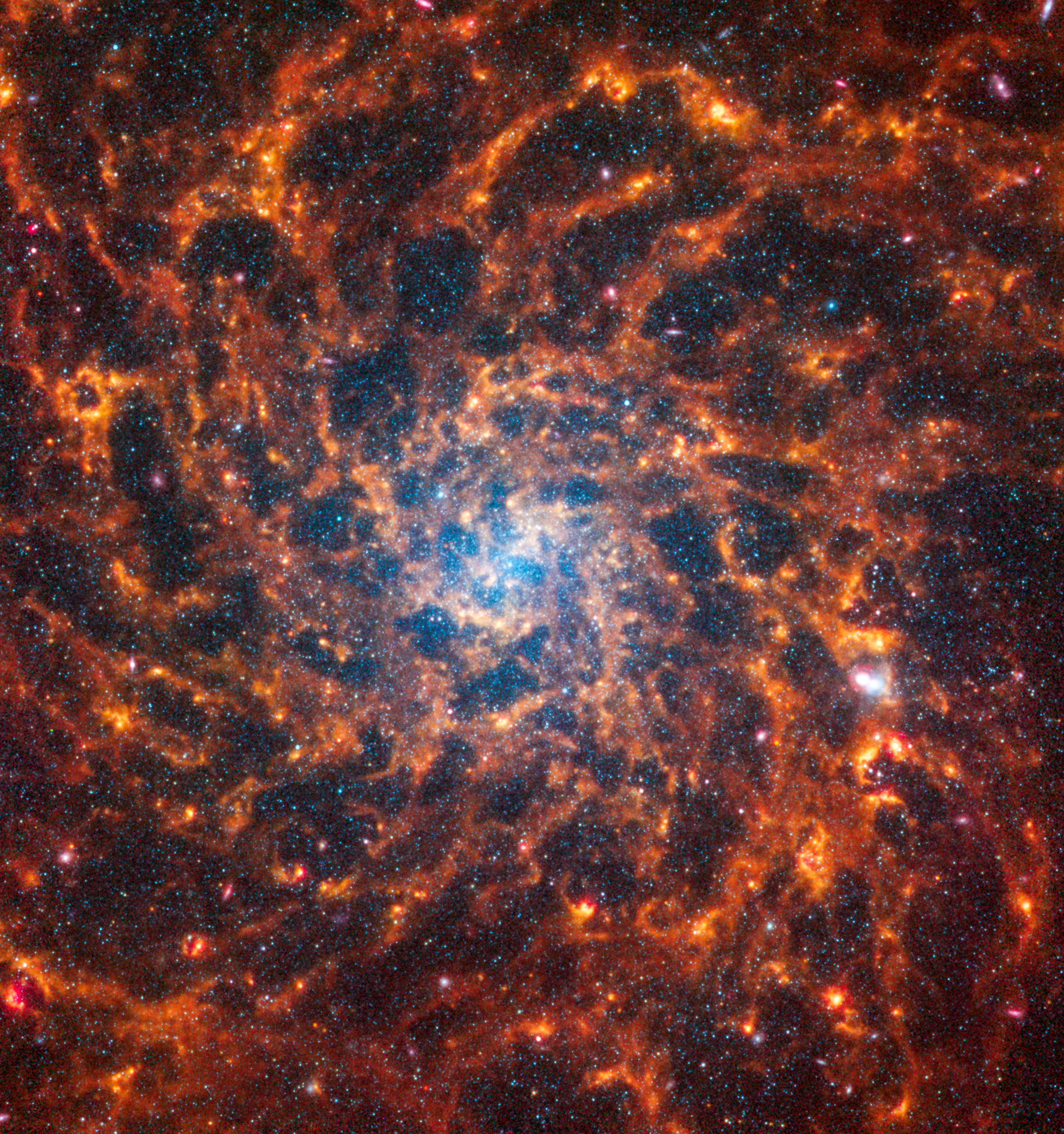
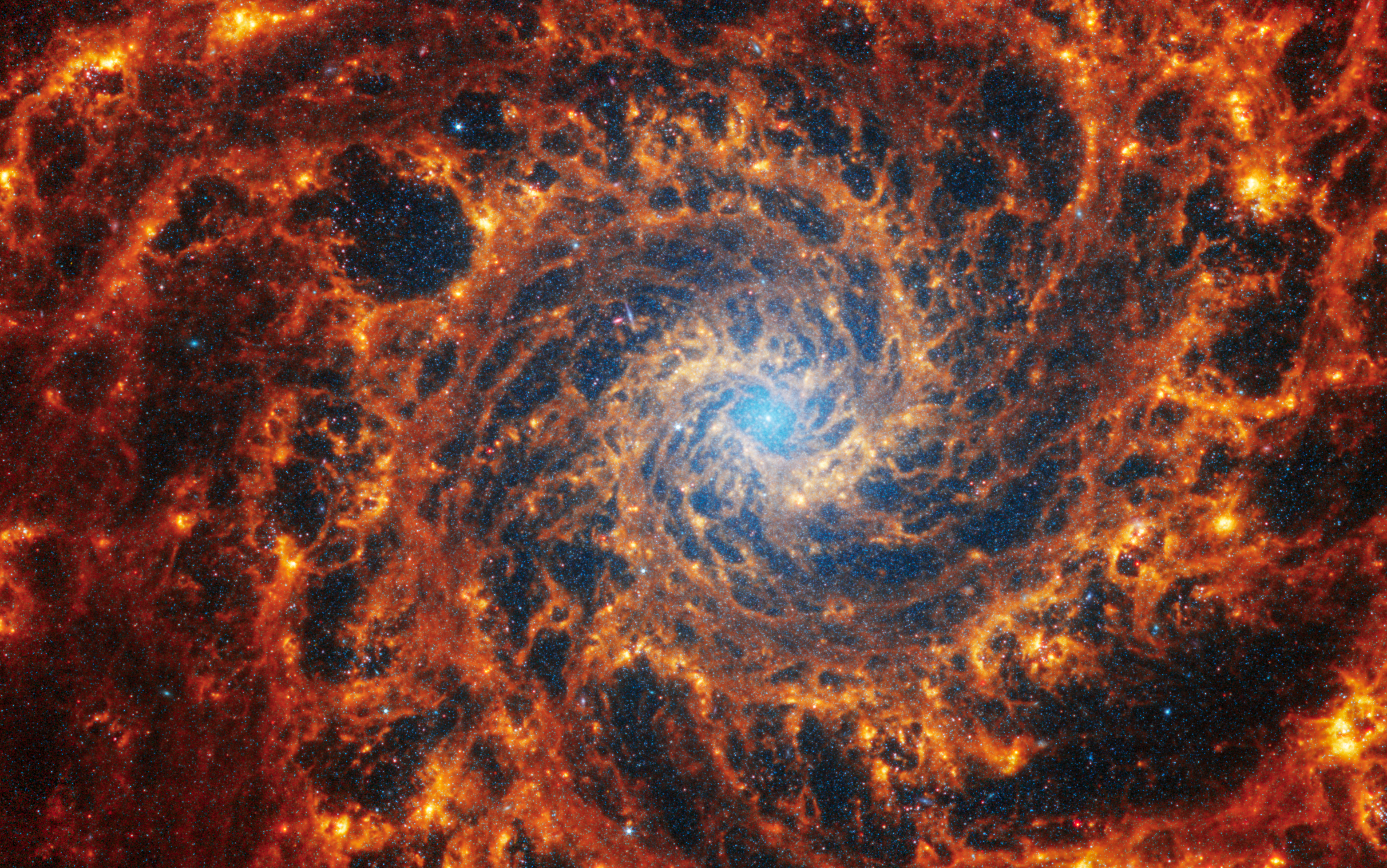
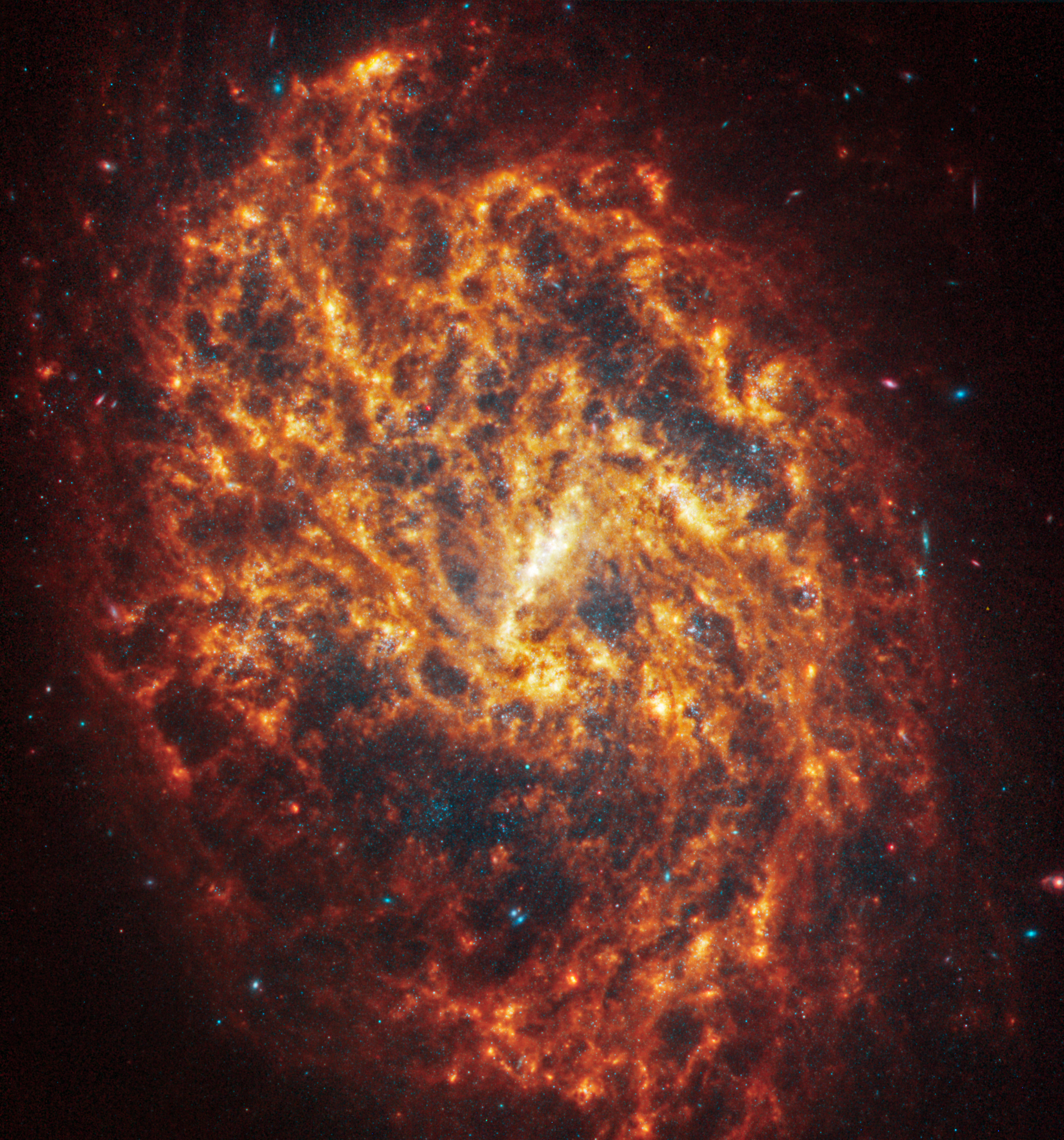
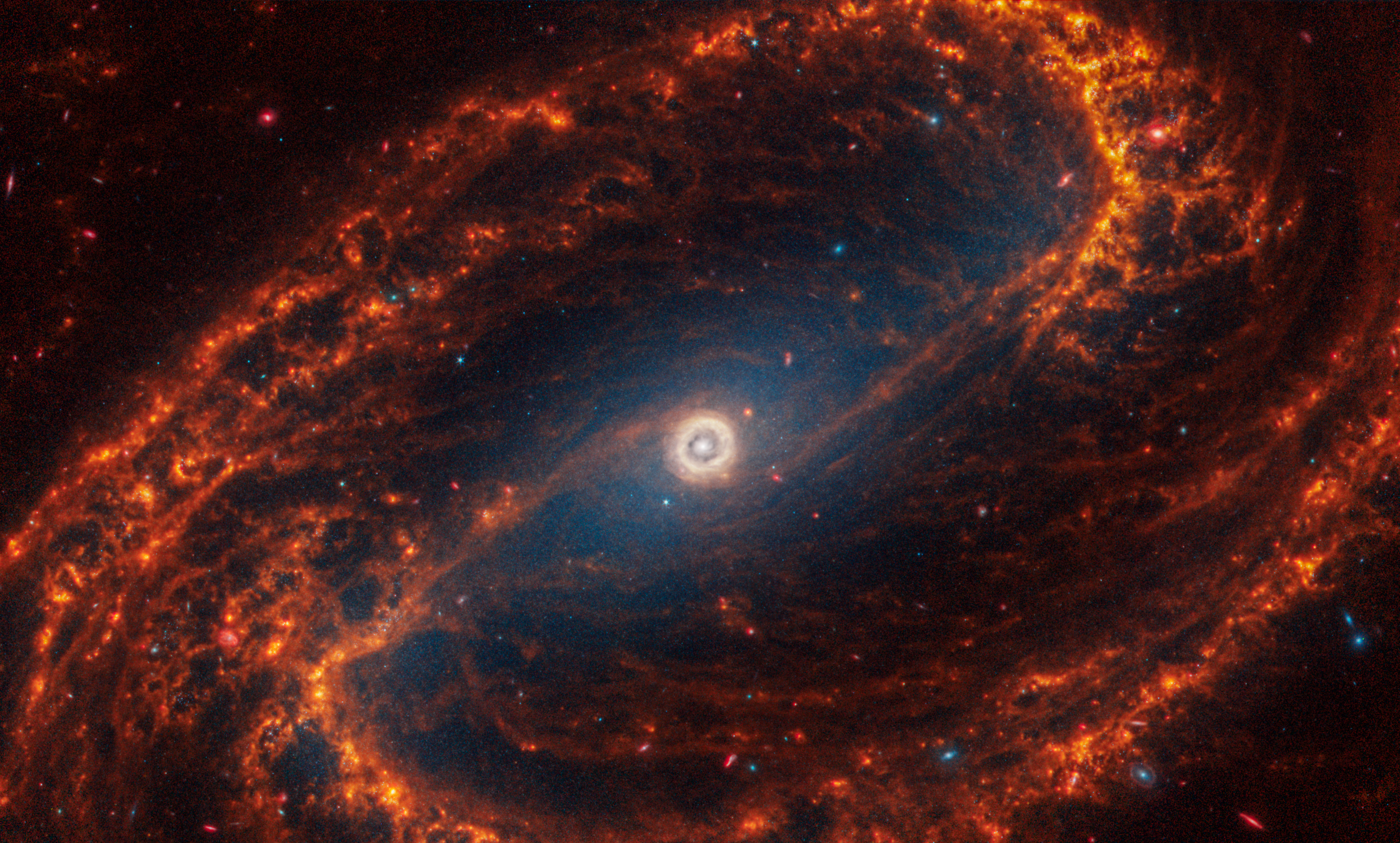
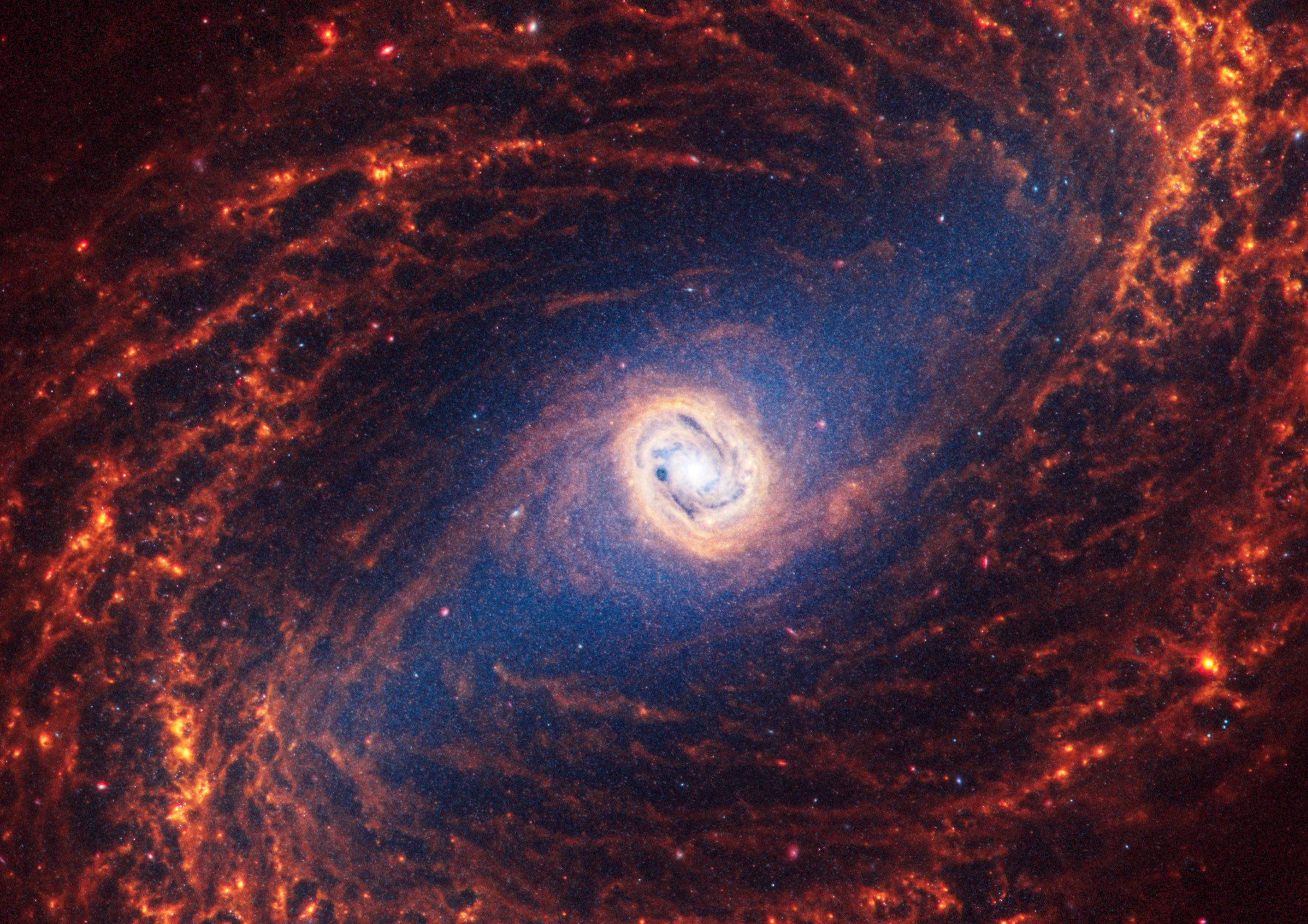
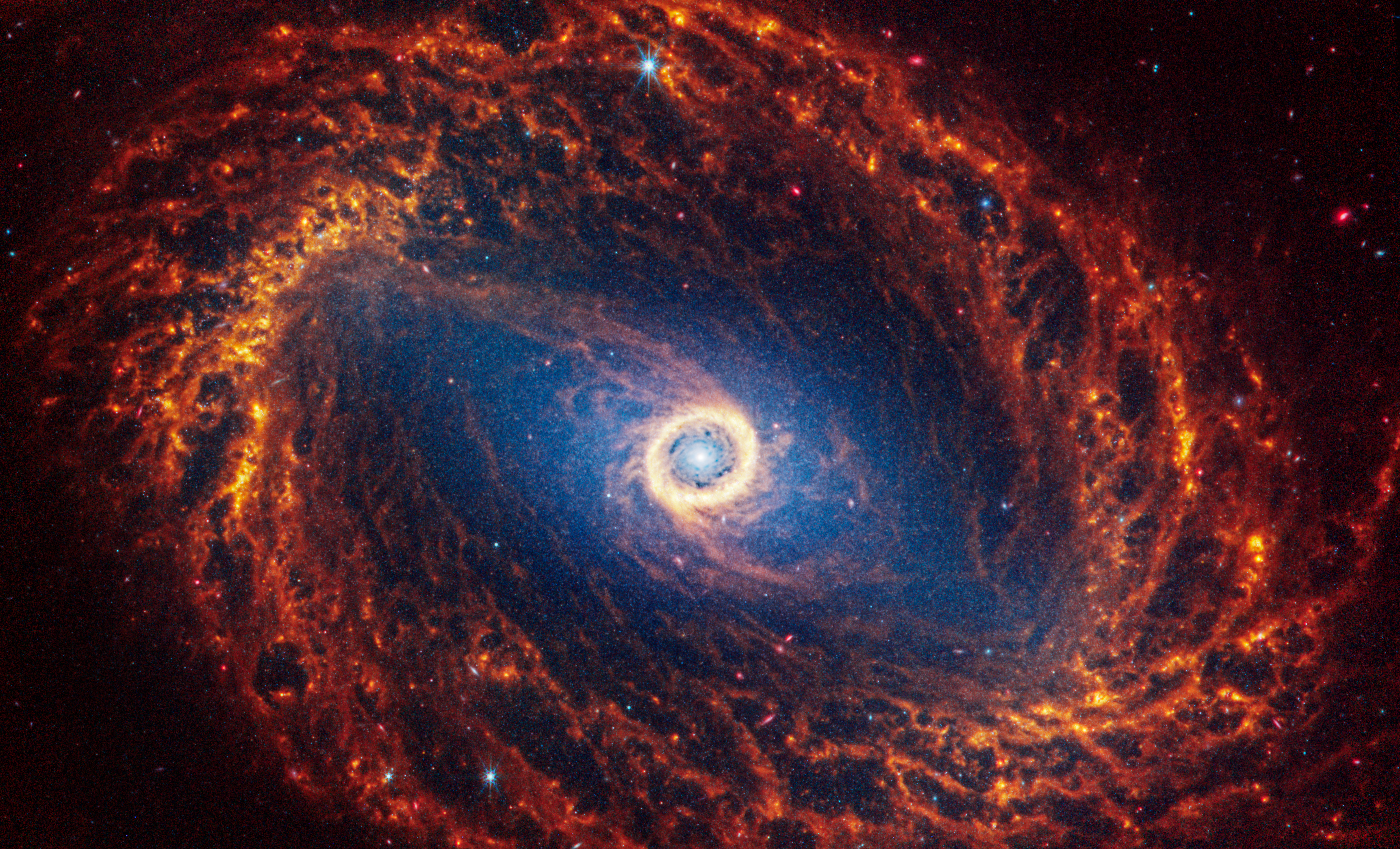
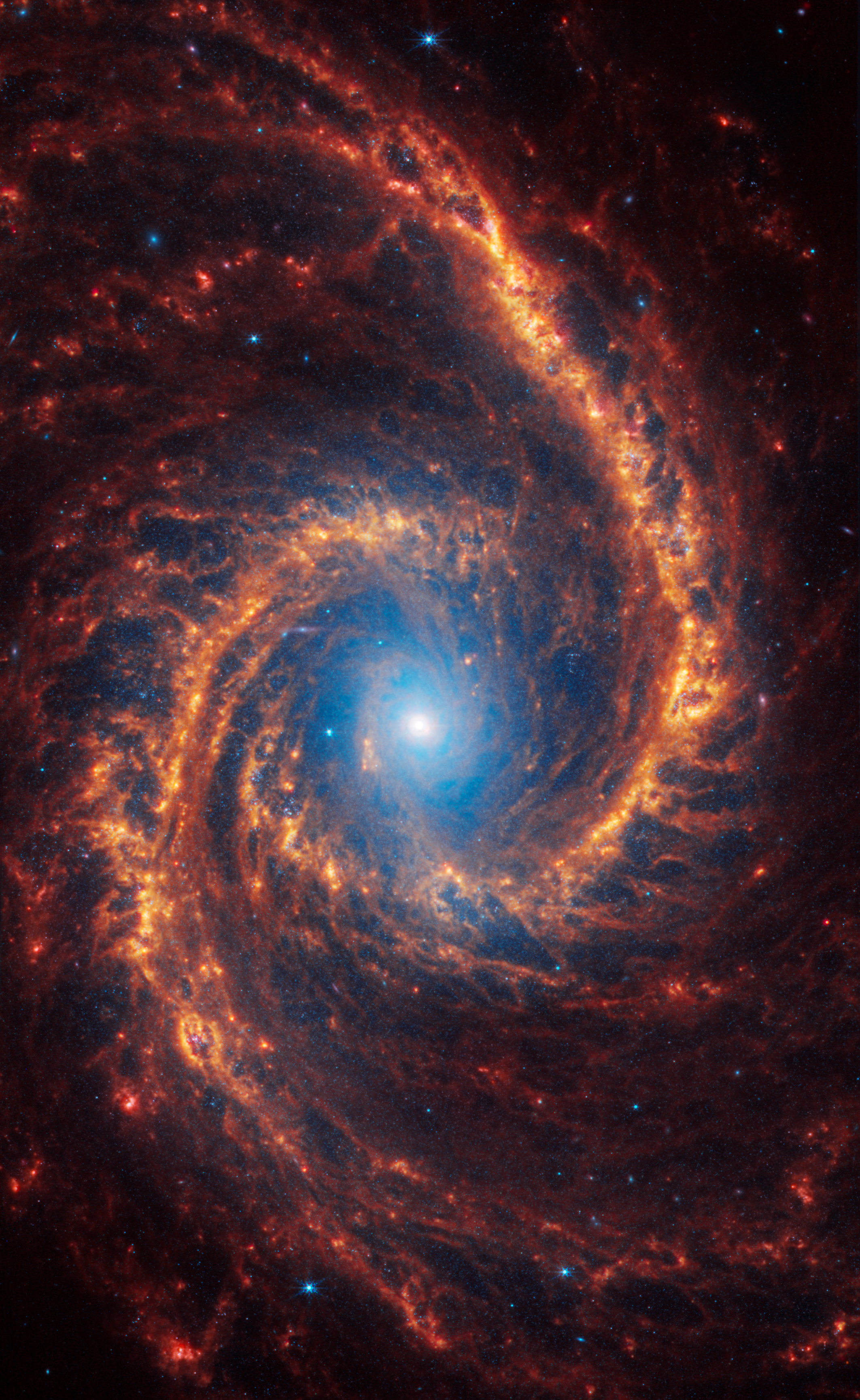
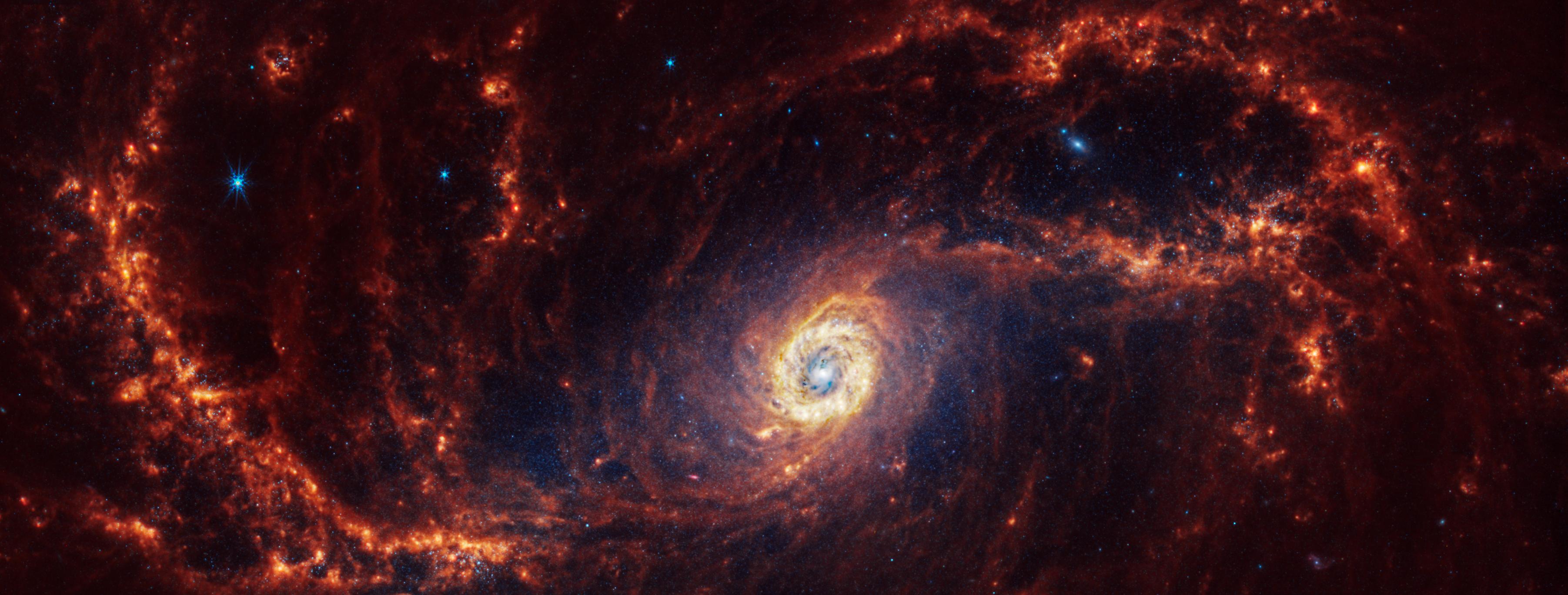
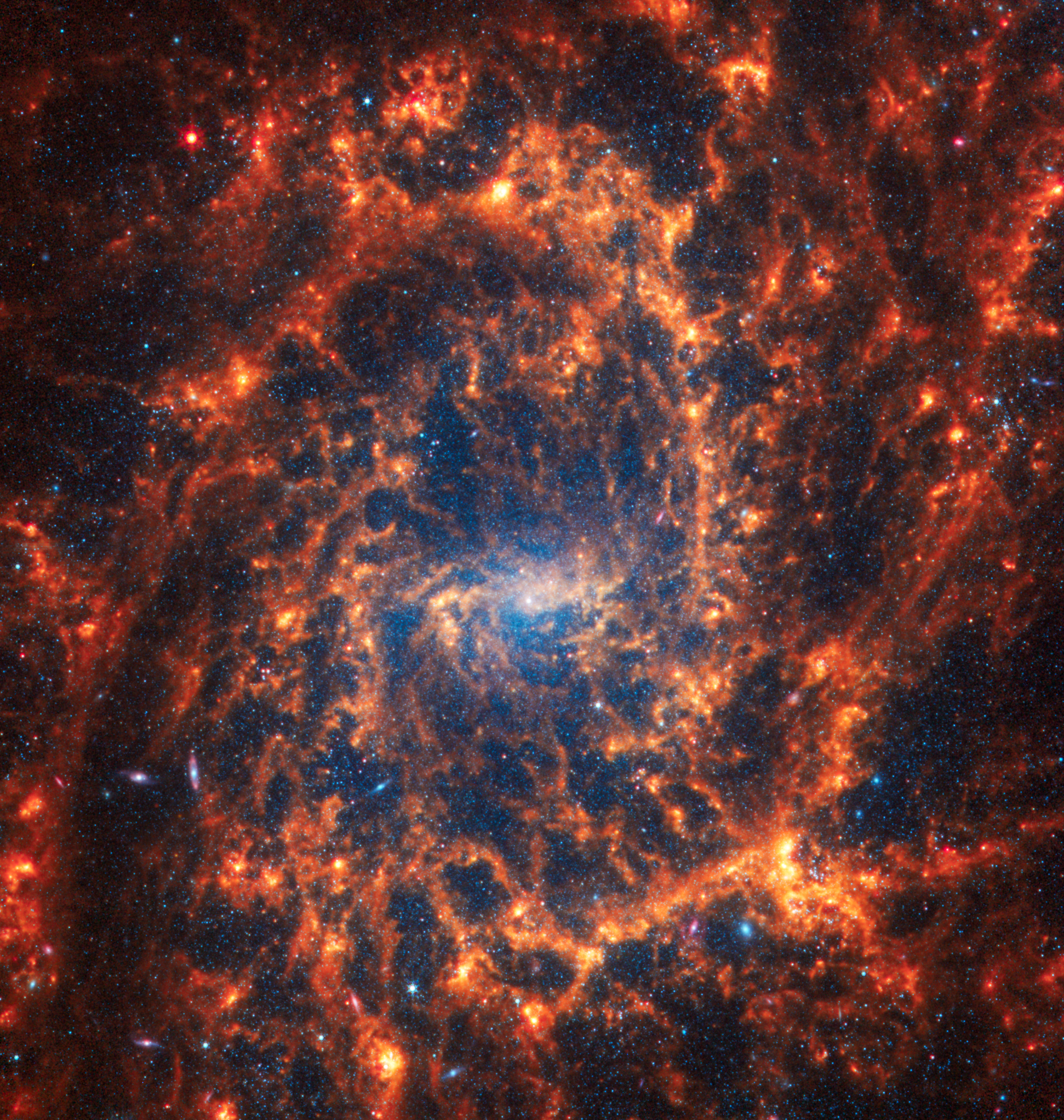
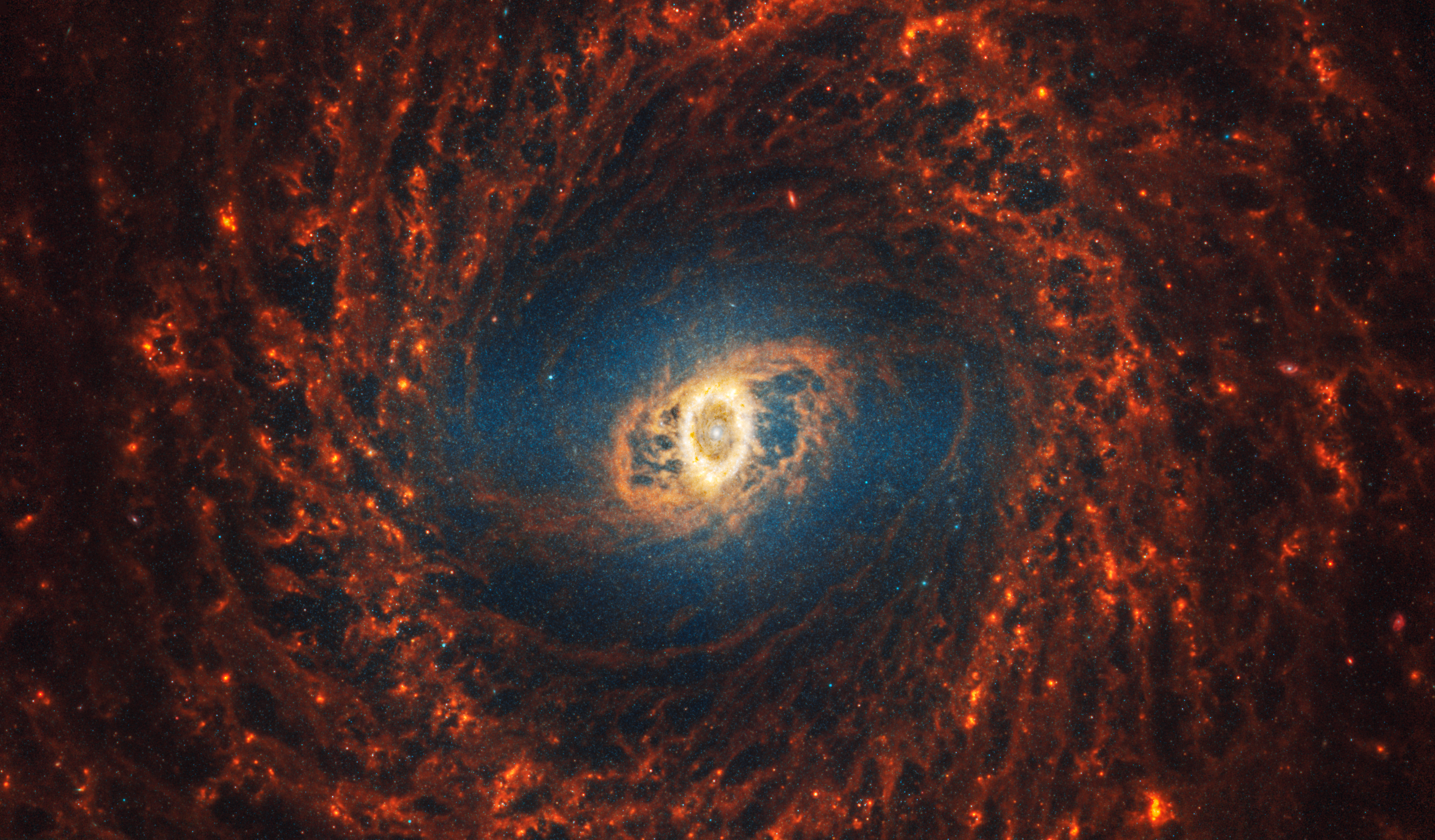
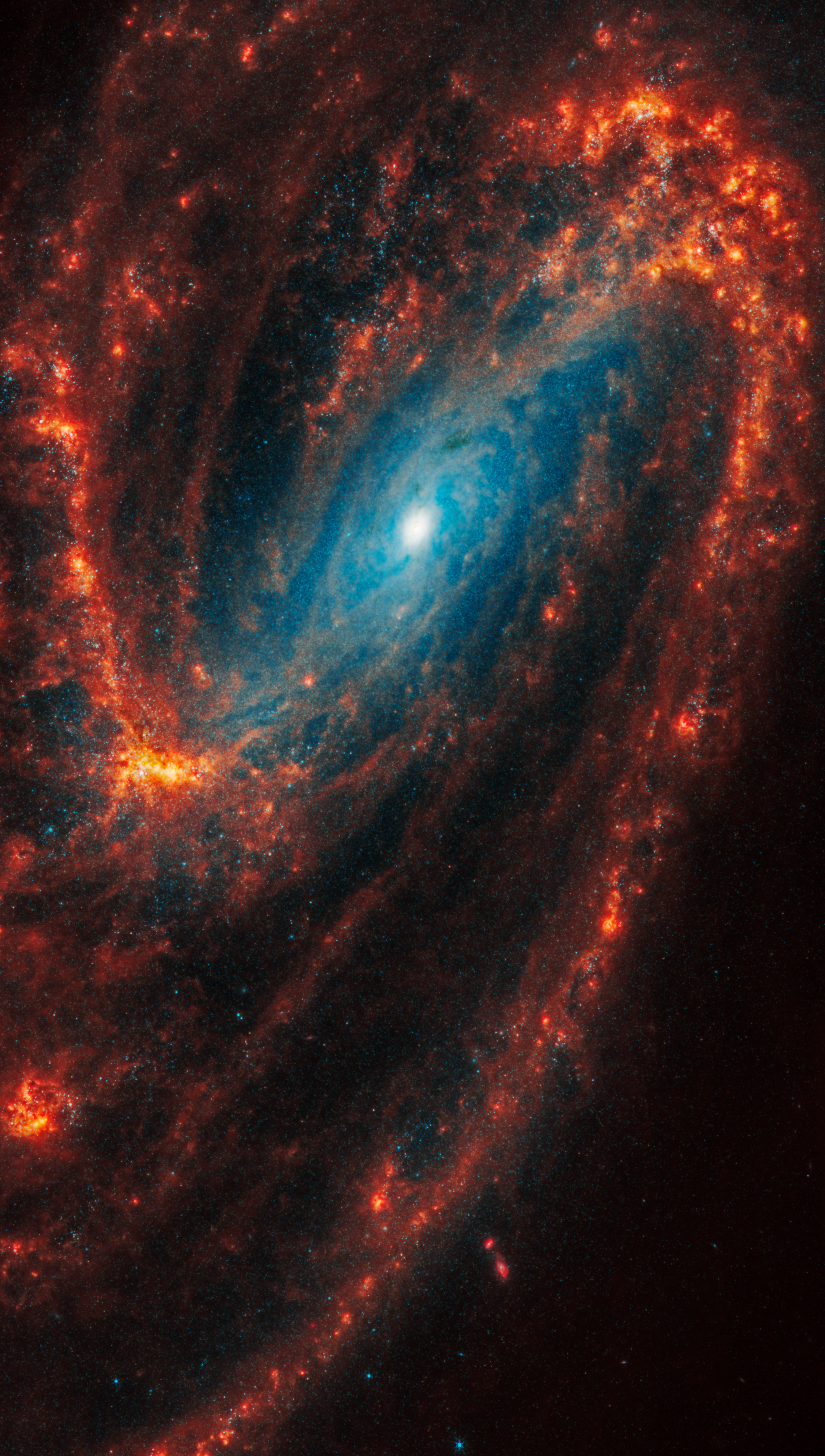
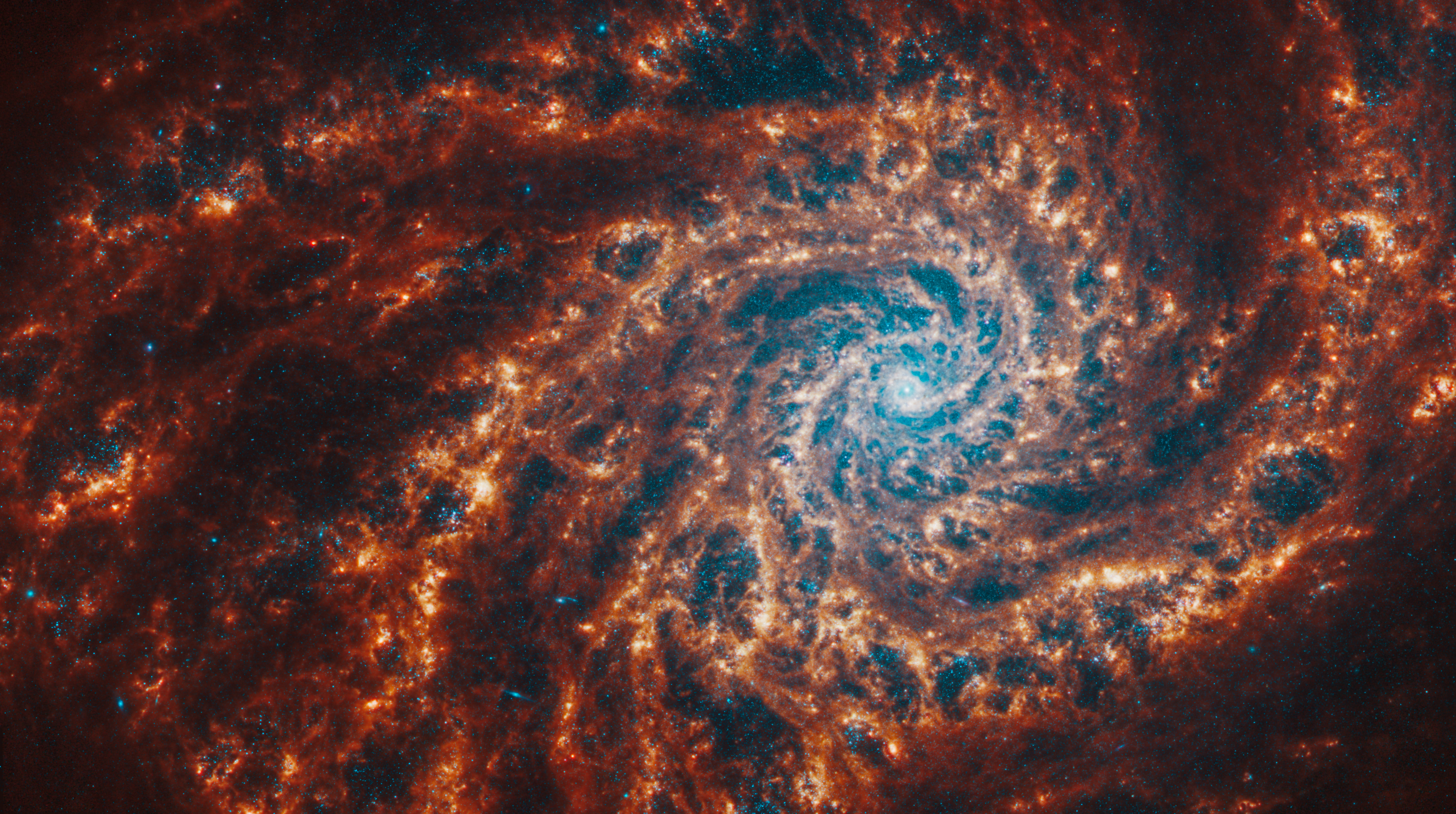
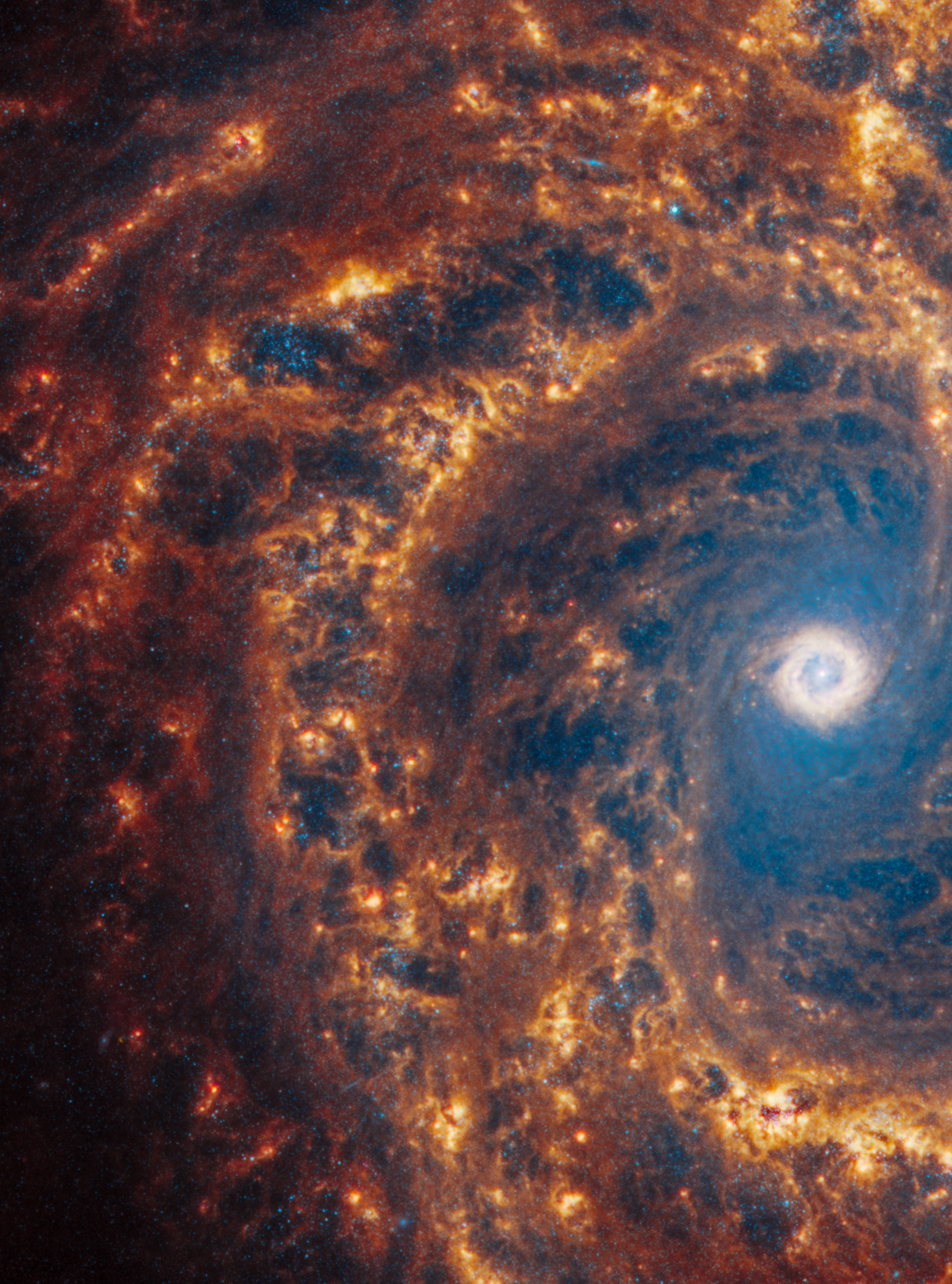
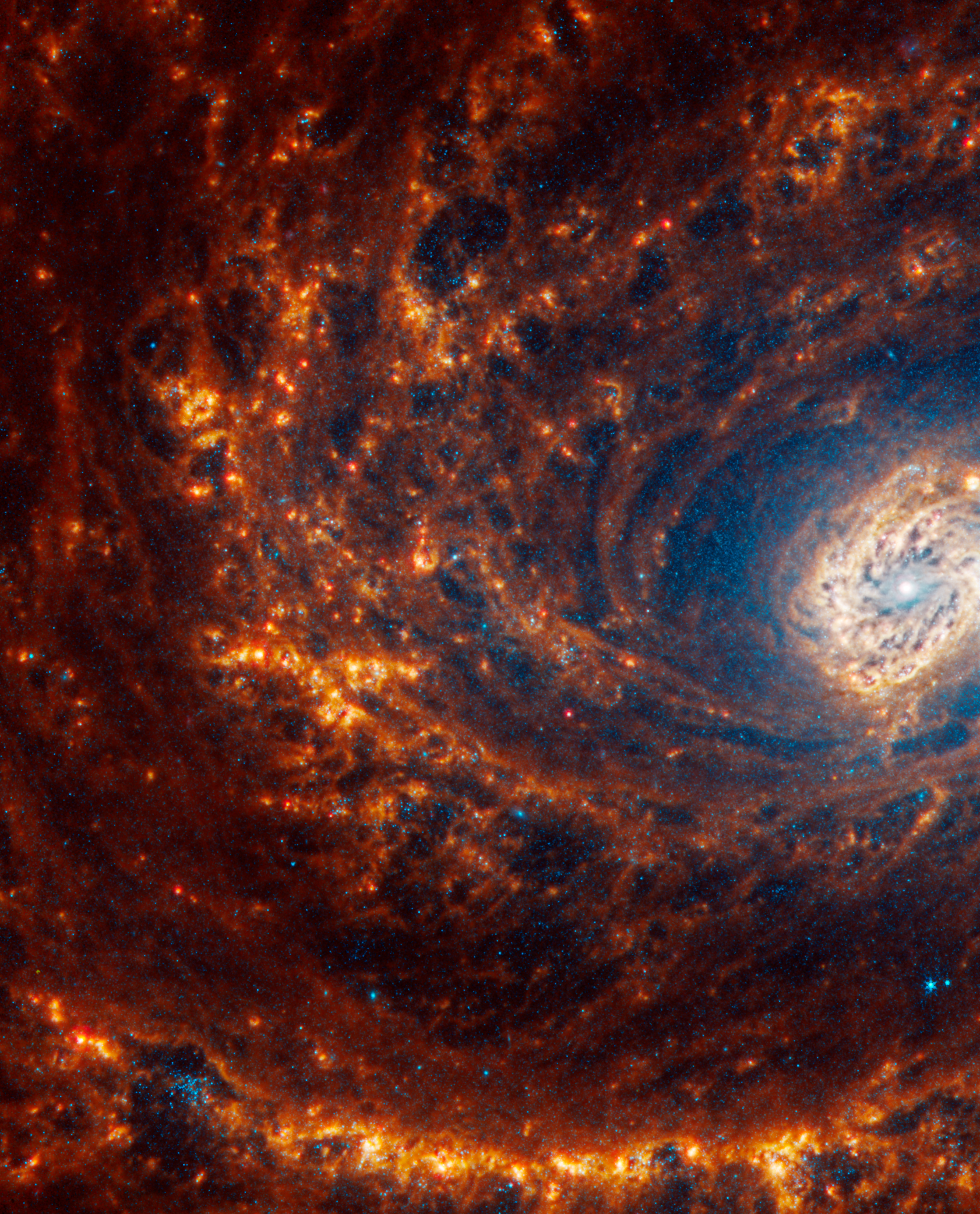
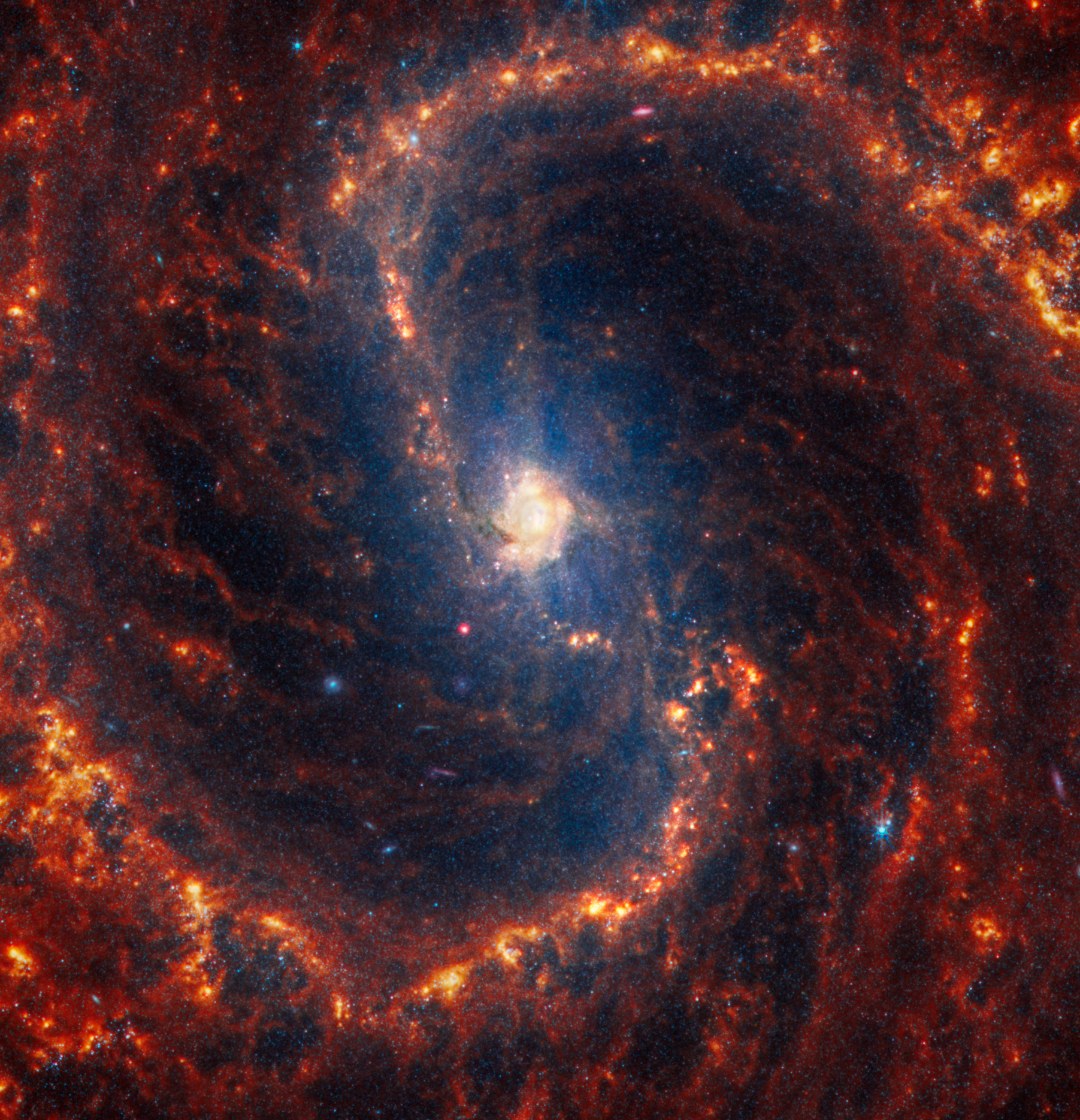
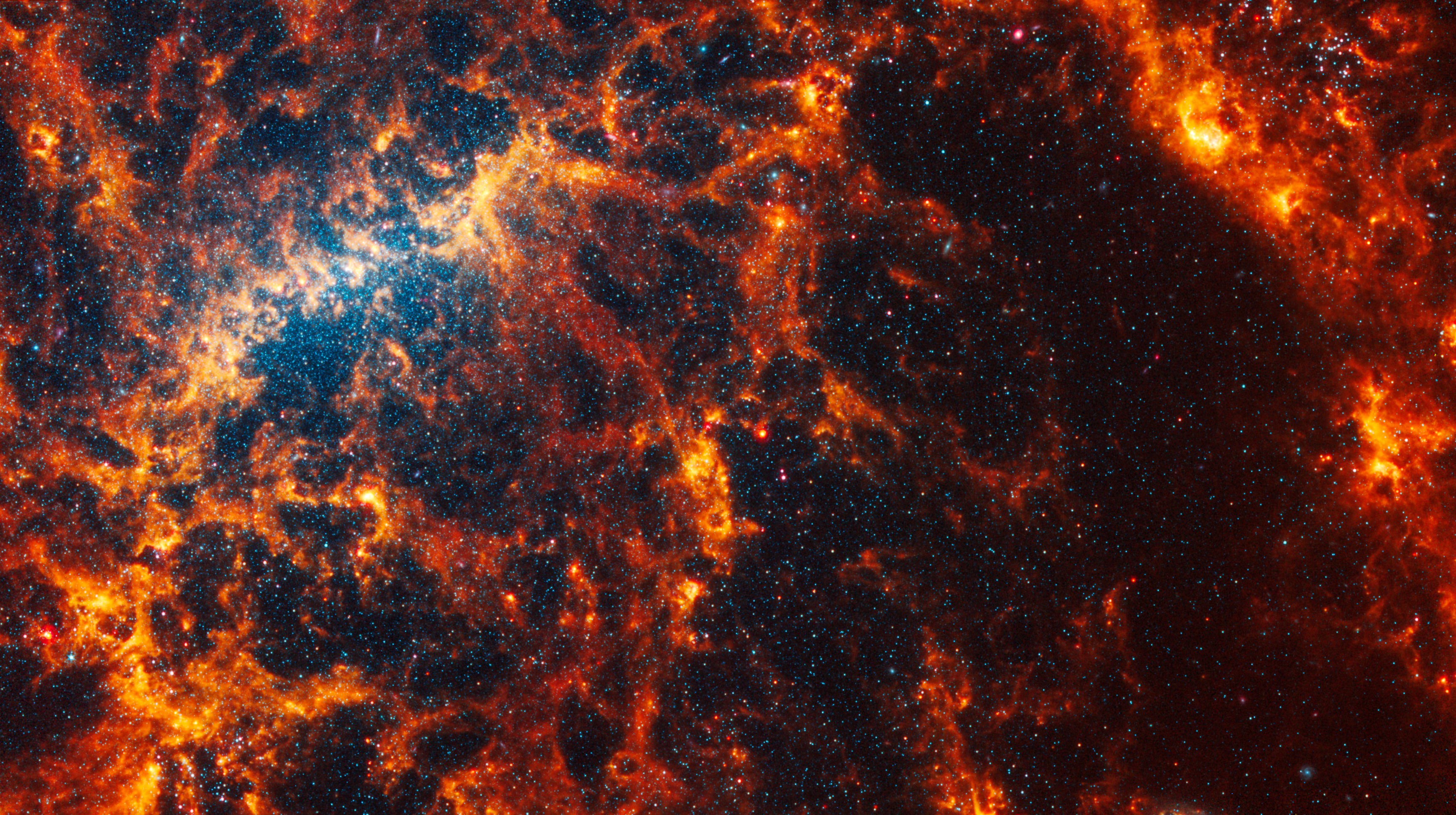
And to open up this thread, I'll share with you a set of 19 images that were made publicly available by NASA just a couple of weeks ago.
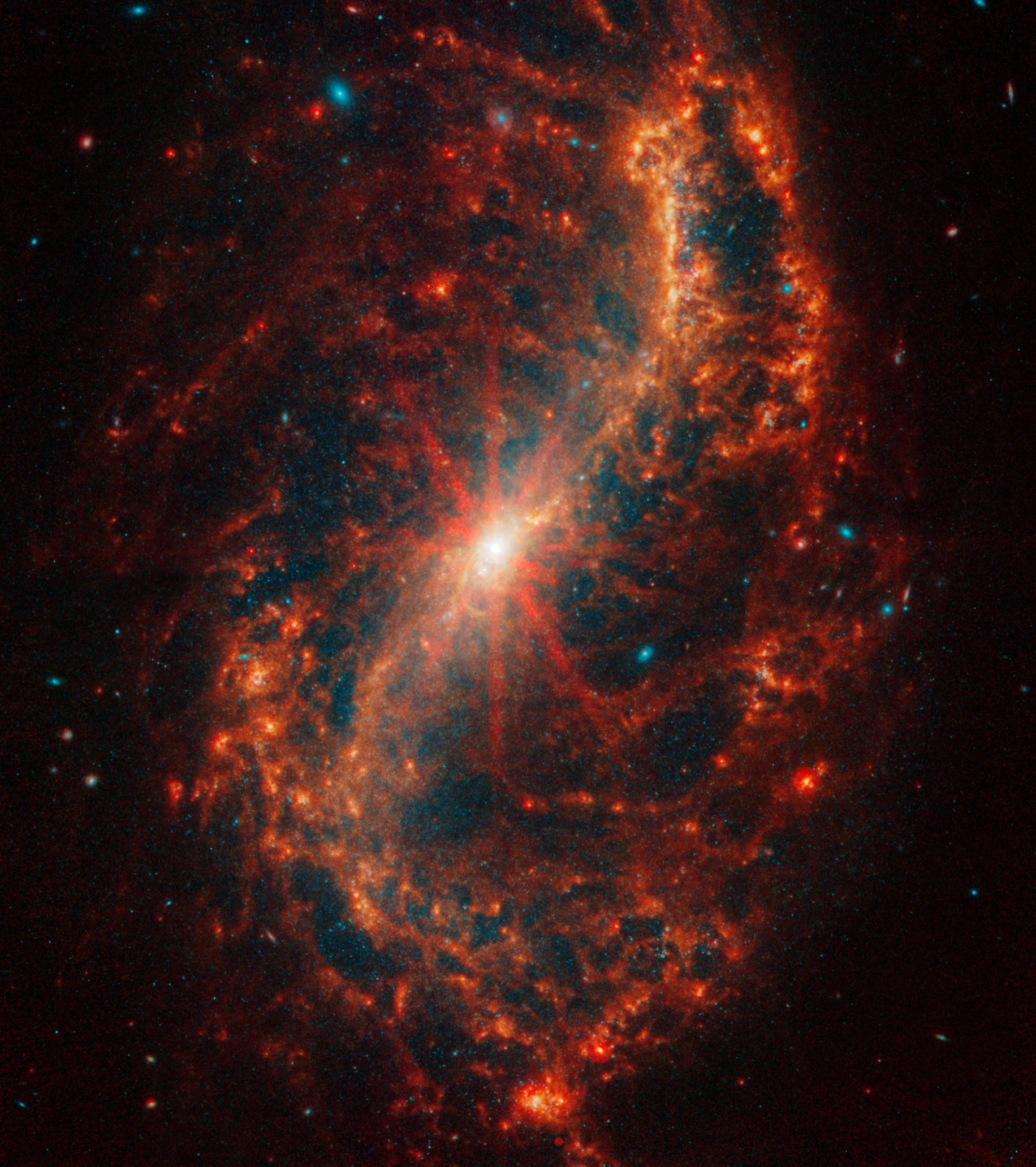
These Webb images of several nearby face-on galaxies are part of a large, long-standing project - the Physics at High Angular resolution in Nearby GalaxieS (PHANGS) program - which is supported by more than 150 astronomers from different associations worldwide. Before Webb took these images, PHANGS already had a lot of data from NASA's Hubble Space Telescope, the European Southern Observatory’s Very Large Telescope’s Multi-Unit Spectroscopic Explorer, and the Atacama Large Millimeter/submillimeter Array, including observations in ultraviolet, visible, and radio light. Webb’s near- and mid-infrared contributions have provided not only some amazing eye candy, but also several new pieces of a puzzle that scientists have been putting together for quite a while.
Webb’s NIRCam (Near-Infrared Camera) captured millions of stars in these images, which sparkle in blue tones. The telescope’s MIRI (Mid-Infrared Instrument) data highlights glowing dust, showing where it exists around and between stars. It also spotlights stars that haven’t yet fully formed - they are still encased in the gas and dust that feed their growth, like bright red seeds at the tips of dusty peaks.
And the spherical shells in the gas and dust - each of those might have been created by one or more stars that went supernova, carving out giant holes in the interstellar material.
In addition to releasing these images, the PHANGS team has also released the largest star cluster catalog to date, containing roughly 100,000 clusters. The amount of research that can be done on this data is nothing short of extraordinary, and the potential revelations this research might bring about can completely redefine how we think about star formation within galaxies, and the galactic lifecycle as a whole.
I frequently find it hard to believe that right there above me in the sky lay hidden such indescribably beautiful structures. It's hard to look at those images and put into perspective not only the scale of those formations, but also the intricate beauty they possess, the delicate patterns (which, by the way, we can find all throughout nature, from snail shells, to plants, to aspects of the nervous system) which they express, and the awe-inspiring sense those sights induce.
Out of all of those images, I think that of NGC 4254 (a.k.a. Messier 99) is my favorite. There's just something about its geometric properties that makes my stomach become host of a rabble of cosmic butterflies
Enjoy!


With that being said, one of the most powerful emotions I felt in the last couple of years was the successful launch of the James Webb Space Telescope and its reaching of the L2 point where it orbits now. If I said I didn't shed a tear when the mission was announced successful, I'd lie. It was and still is one of the greatest scientific collaborative projects ever executed. The existence of this phenomenal piece of technology is the product of 30 years of collaboration between 14 different countries who spent a total of $10,000,000,000 on it. And the success it saw is a testament of human ingenuity and the things we're capable of when we come together behind a shared goal which we believe will benefit humanity.
So I'm making this thread with the purpose of sharing some nice images by JWST (but also other telescopes and imaging arrays). If you share my enthusiasm for astrophysics and cosmology, please feel welcome to chime in with some interesting info or images.
And to open up this thread, I'll share with you a set of 19 images that were made publicly available by NASA just a couple of weeks ago.
These Webb images of several nearby face-on galaxies are part of a large, long-standing project - the Physics at High Angular resolution in Nearby GalaxieS (PHANGS) program - which is supported by more than 150 astronomers from different associations worldwide. Before Webb took these images, PHANGS already had a lot of data from NASA's Hubble Space Telescope, the European Southern Observatory’s Very Large Telescope’s Multi-Unit Spectroscopic Explorer, and the Atacama Large Millimeter/submillimeter Array, including observations in ultraviolet, visible, and radio light. Webb’s near- and mid-infrared contributions have provided not only some amazing eye candy, but also several new pieces of a puzzle that scientists have been putting together for quite a while.
Webb’s NIRCam (Near-Infrared Camera) captured millions of stars in these images, which sparkle in blue tones. The telescope’s MIRI (Mid-Infrared Instrument) data highlights glowing dust, showing where it exists around and between stars. It also spotlights stars that haven’t yet fully formed - they are still encased in the gas and dust that feed their growth, like bright red seeds at the tips of dusty peaks.
And the spherical shells in the gas and dust - each of those might have been created by one or more stars that went supernova, carving out giant holes in the interstellar material.
In addition to releasing these images, the PHANGS team has also released the largest star cluster catalog to date, containing roughly 100,000 clusters. The amount of research that can be done on this data is nothing short of extraordinary, and the potential revelations this research might bring about can completely redefine how we think about star formation within galaxies, and the galactic lifecycle as a whole.
I frequently find it hard to believe that right there above me in the sky lay hidden such indescribably beautiful structures. It's hard to look at those images and put into perspective not only the scale of those formations, but also the intricate beauty they possess, the delicate patterns (which, by the way, we can find all throughout nature, from snail shells, to plants, to aspects of the nervous system) which they express, and the awe-inspiring sense those sights induce.
Out of all of those images, I think that of NGC 4254 (a.k.a. Messier 99) is my favorite. There's just something about its geometric properties that makes my stomach become host of a rabble of cosmic butterflies
Enjoy!
IC 5332:
NGC 628:
NGC 1087:
NGC 1300:
NGC 1365:
NGC 1385:
NGC 1433:
NGC 1512:
NGC 1566:
NGC 1672:
NGC 2835:
NGC 3351:
NGC 3627:
NGC 4254:
NGC 4303:
NGC 4321:
NGC 4535:
NGC 5068:
NGC 7496:


